The answer is: no one knows.
#AI
#GenerativeAI
#BrandAwareness
#DomainAuthority
#2023
#ContentMarketing
#Blogging
#SEO






April 4, 2023
The answer is: no one knows.
#AI
#GenerativeAI
#BrandAwareness
#DomainAuthority
#2023
#ContentMarketing
#Blogging
#SEO
April 4, 2023
I buy a new purse about once or twice a decade. Yesterday I bought two (TWO!) in the span of an hour. No more spending until 2033.
You see, I moved into my brick-and-beam condo without checking the closet space. A walk-in is for other people. I have a shoulder-in closet and a ton of stuff rammed under my bed.
I signed on the dotted line for my condo because I open the front door to the sight of two (TWO!) six-and-a-half-foot tall windows that offer a “big sky” view of Toronto’s west end and, at sunrise, the distant gleaming skyscrapers of Mississauga, which I’ve taken to calling Hoboken from my perch (snooty, I know).
In the past few weeks, I’ve been running to these windows every time I hear the oncoming honks of a trio of Canadian geese, back from wherever because it’s spring here in Toronto. As they fly past and head towards Lake Ontario, I get a very intimate view of their fat, fuzzy bellies, blinking eyes, and poo drops ( like B-17 bombing raids over Europe during WWII). The theatre through these windows never disappoints.
But let’s get back to the purses, which I have taken to displaying on my bookshelves because of the closet problem. The first two are a pair of beauties I purchased yesterday at Toronto’s annual Vintage Show at the historical Canadian Exhibition grounds. The colourful one is a hard shell with a snap clasp covered in a swirly silk scarf pattern that dates back to about 1962. I’m sure its previous owner paired it with white cat’s-eye sunglasses, a crinoline dress or pencil skirt with a matching sweater, and kitten heels.
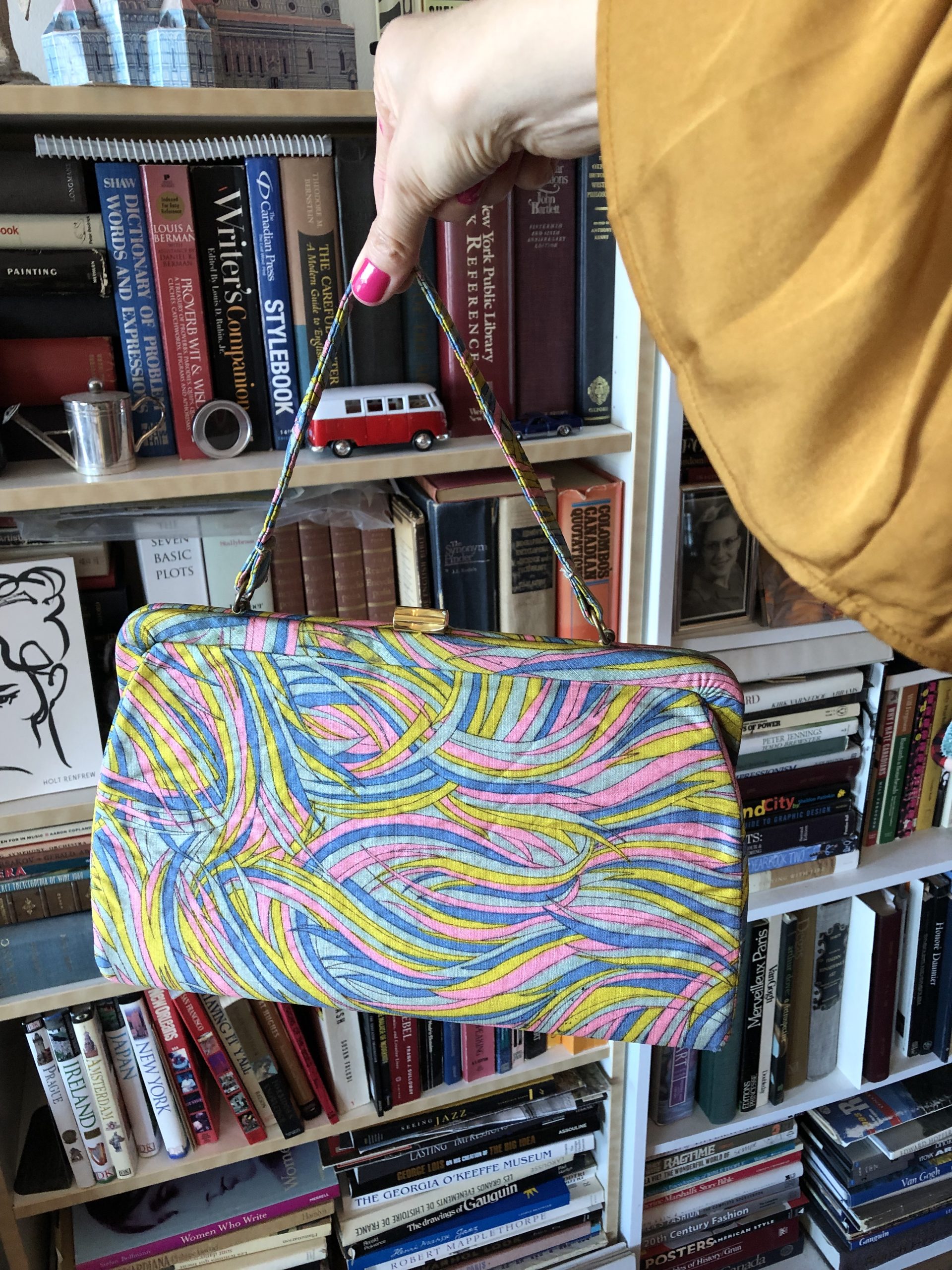
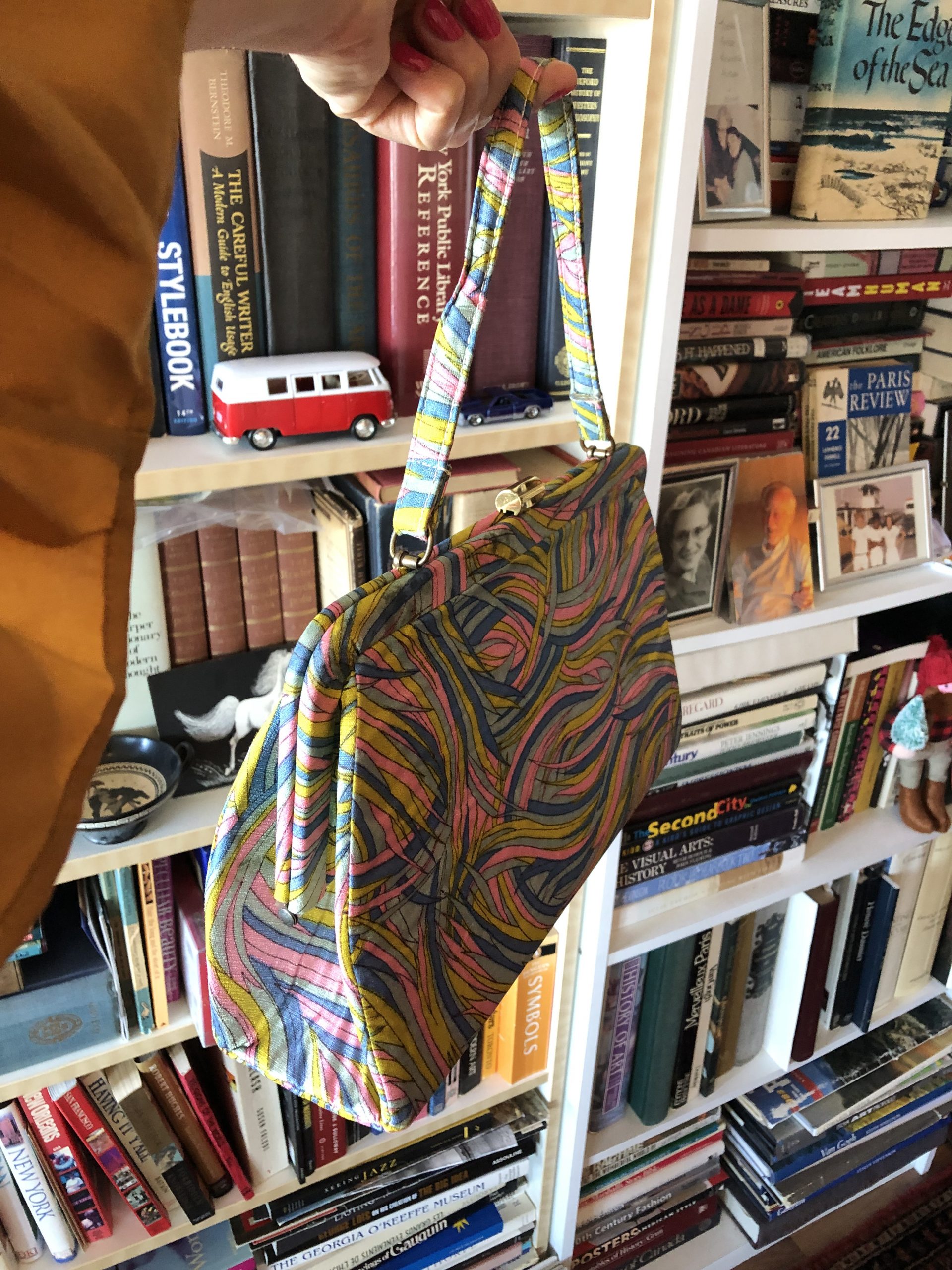
The second is a black evening clutch with the perfect gold bow clasp. It was made in Montreal by Paramount bags.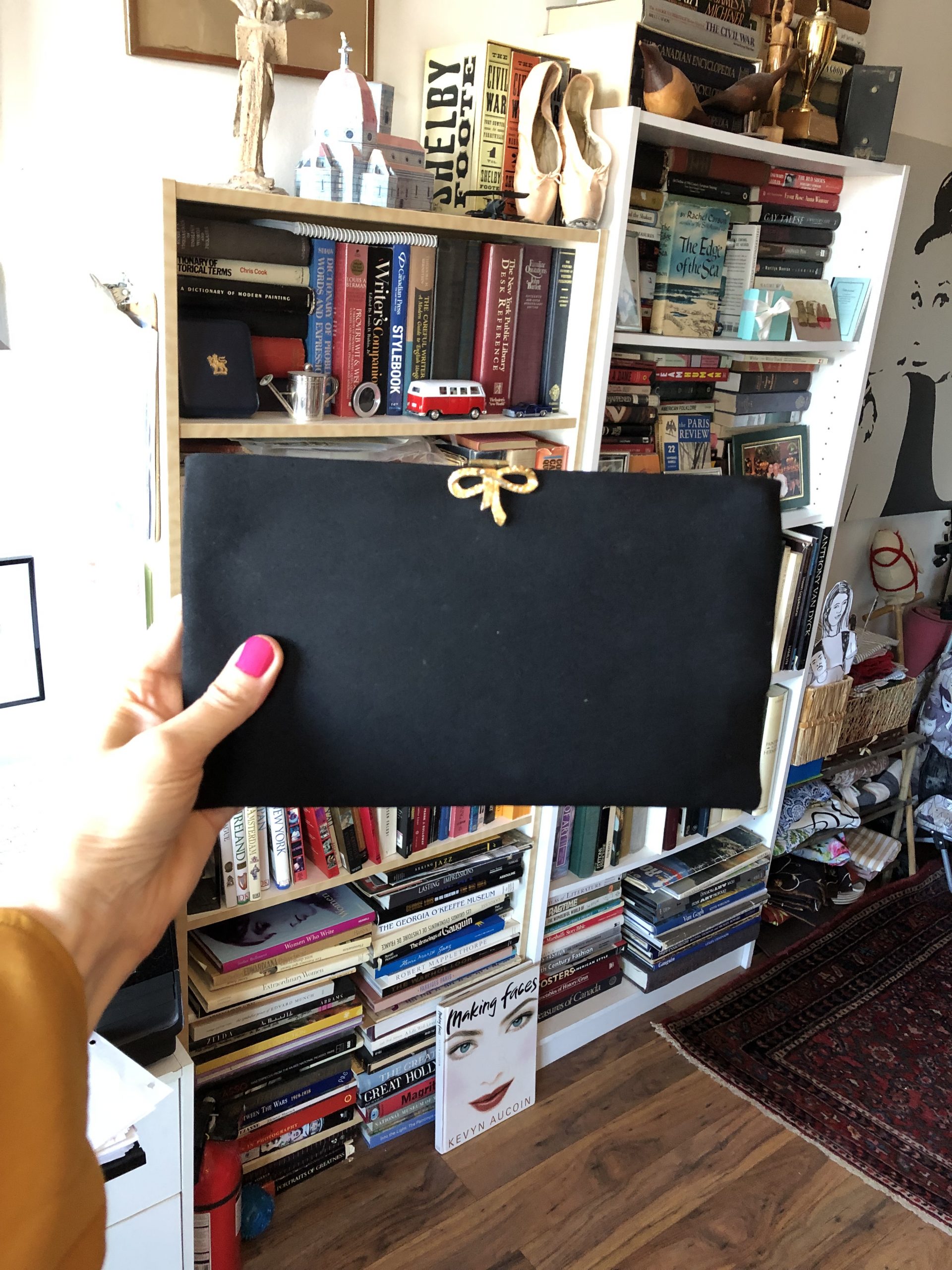
My God, its elegance is off the charts. And look! Inside there’s a gold satin change purse for those shiny pennies that the Canadian mint stopped making years ago. Back then, a few quarters went a long way. Beyond the change purse, there would have been a powder puff and a Kleenex square, and maybe a breath mint. I will fill this envelope with my iPhone, a credit card, the Kleenex square, and that universal tube of red lipstick that has been empowering us girls since forever.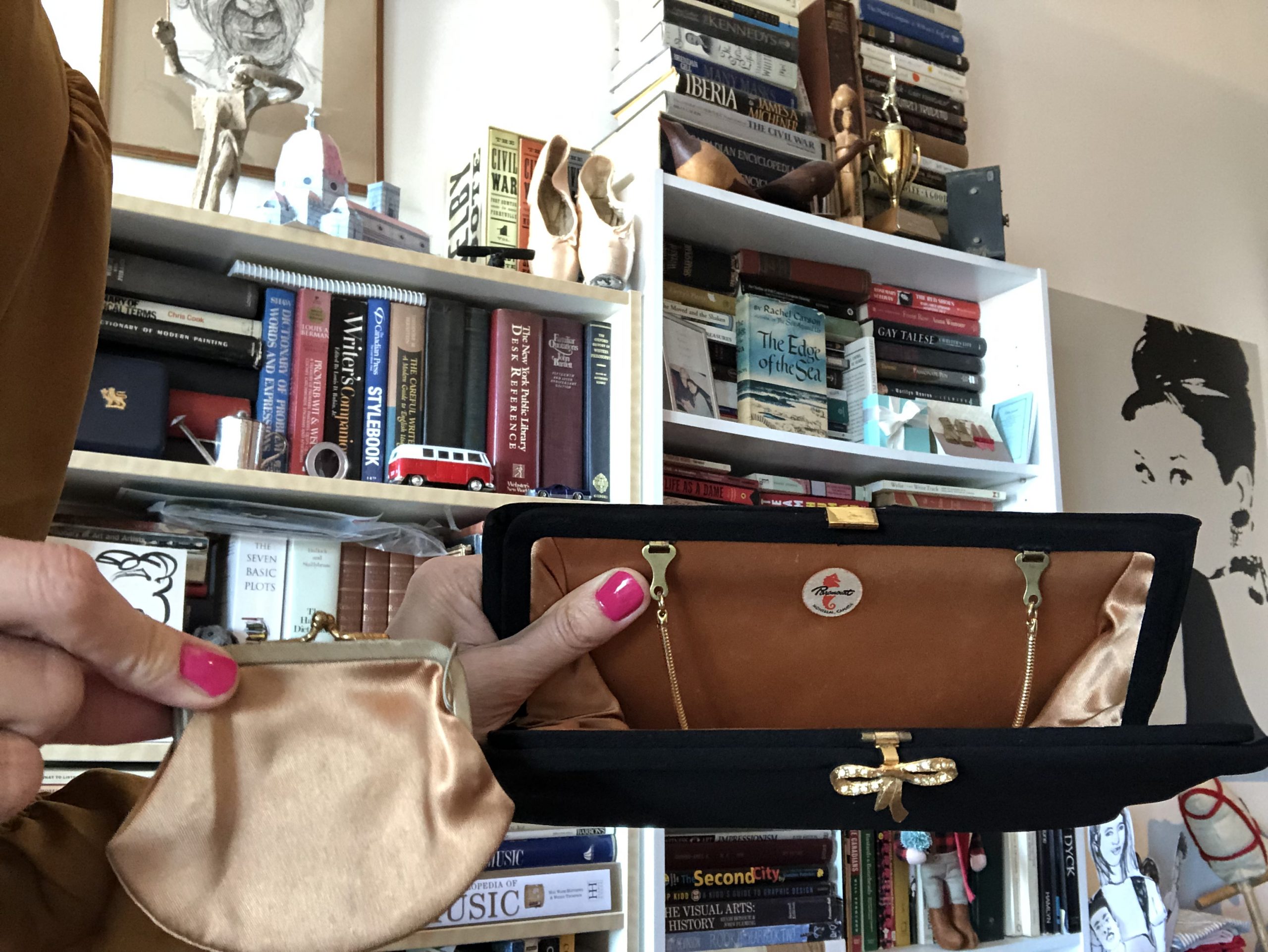
The third purse was purchased from the same show about 15 years ago. Note: As my hair gets threaded with more silver, I’ve kept my cougar accessories to a minimum. But this was a rare instance where I said, “Take my money!” Now hear me roar!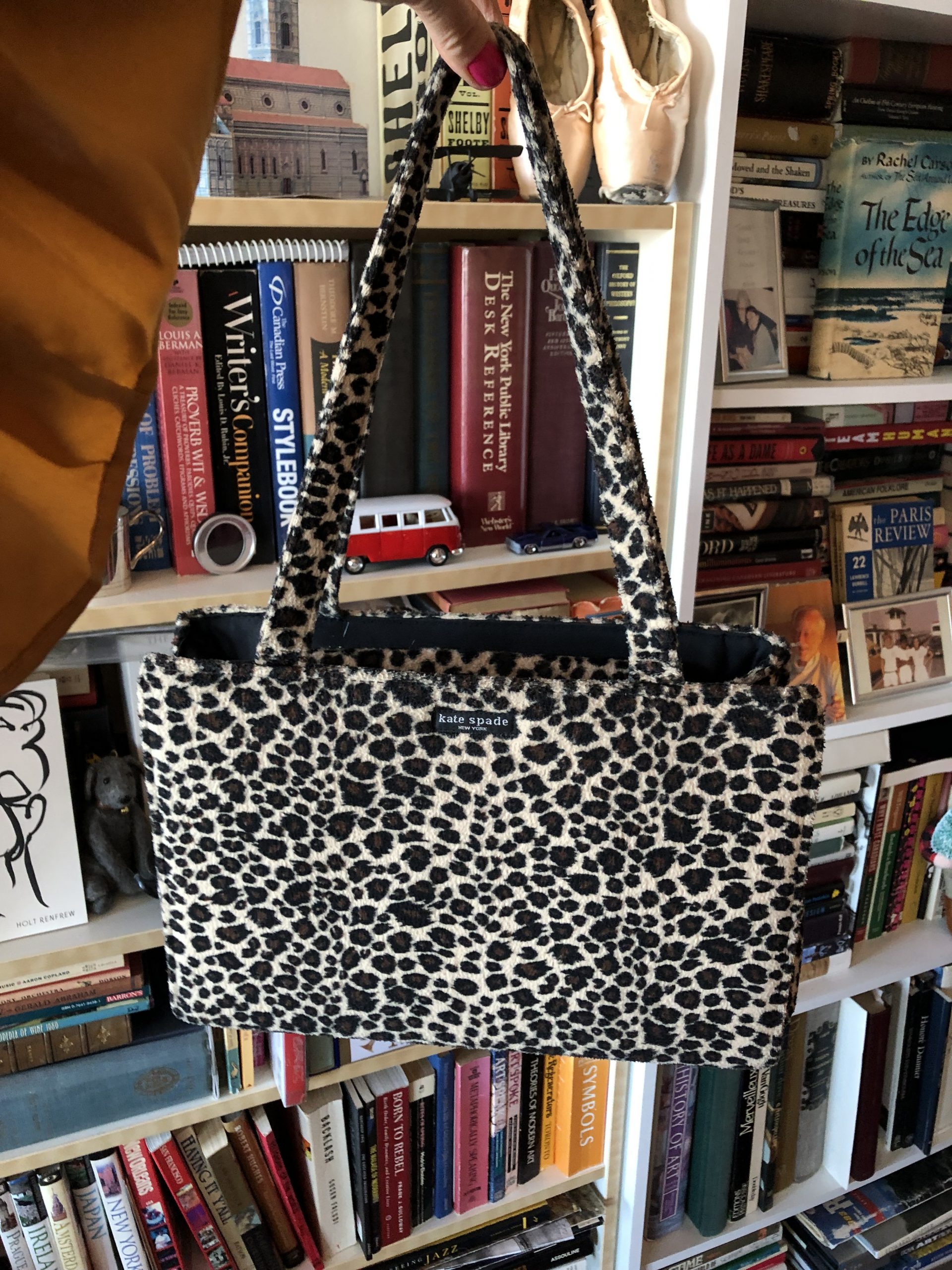
The swirly purse enjoyed date night last night. She sat on the bar top next to a glass of Barolo. As a final touch, I’m going to take her to my favourite cobbler and ask him to add feet to her flat base. I want her to rise above the messiness of life.
March 27, 2023
Yesterday I climbed the staircase that takes you up and over the steep, ancient shore cliff of Lake Iroquois with my eye set on reaching the turreted mansion on the summit.
I’ve lived in Toronto since 2000. But, for whatever reason, I had yet to check out Casa Loma, built in 1911. Maybe its vibe was too Medieval Times for my taste. Or maybe my preference for post-WWI history was stopping me. I now suspect I had to get through all five seasons Downton Abbey — which only happened last year — to open my mind to this showpiece from Toronto’s fluttering red, white and blue Empire-worshipping past.
 Photo: Trip Advisor
Henry Pellatt, its owner with his wife Mary, had the energy of Teddy Roosevelt, the wardrobe of Edward the VII (who knighted him in 1905), and the entrepreneurial thrust of Andrew Carnegie.
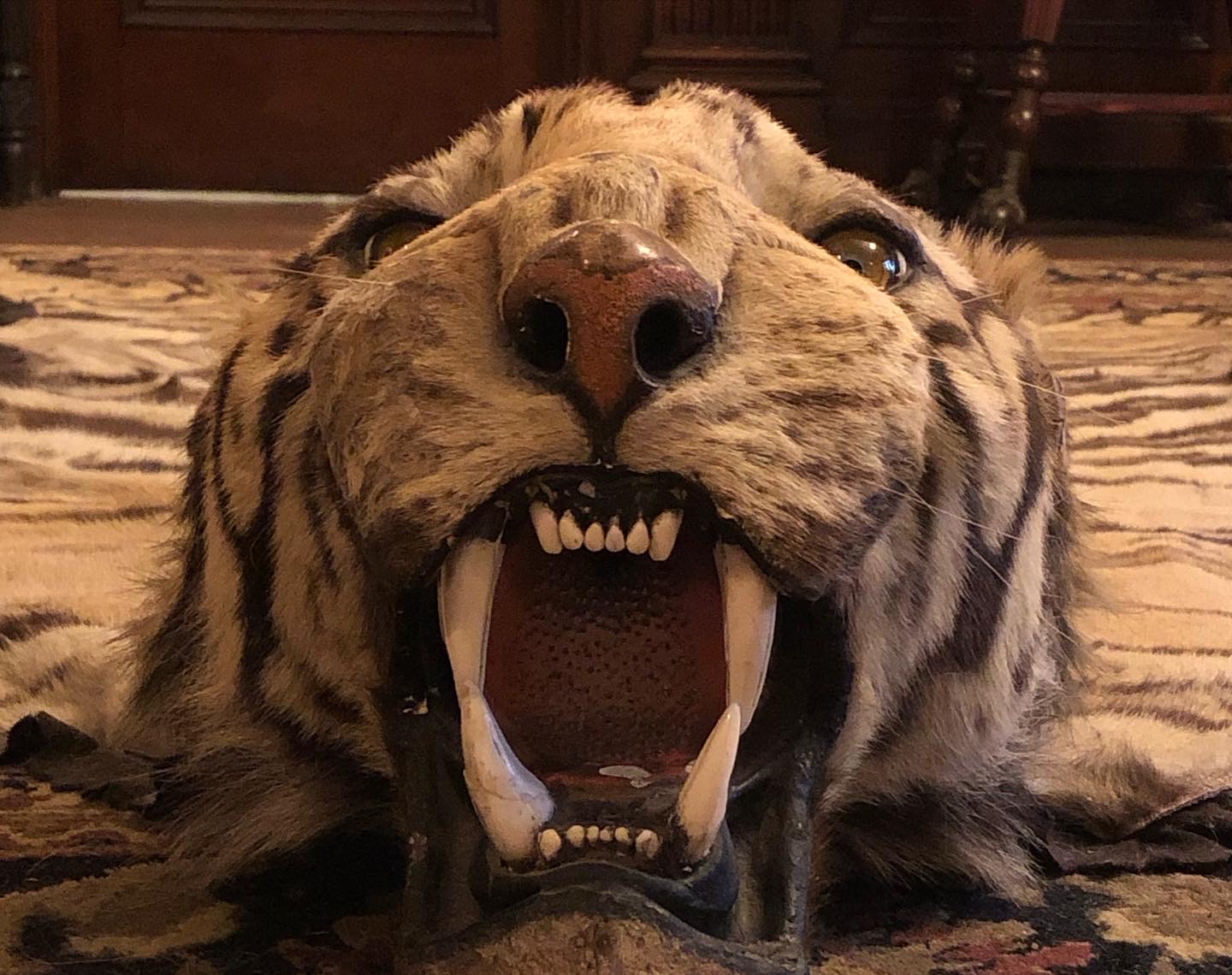 Henry Pellatt’s bedroom decor. Photo by Alison Garwood-Jones
How did Pellatt amass his fortune? “Sir Henry harnessed the power of Niagara Falls to electrify the streets of Toronto.” This appeared on the historical plaque at the bottom of the stairs. Good writing always makes me want to get up and move. And with that one sentence — and not my hours at the gym — I was inside the castle faster than I thought possible.
I spent most of my time in the library because that’s what I do when I’m visiting someone’s home (bathroom tours are also top of my list). Of the thousands of books still housed inside the glass cases of Pellatt’s chandeliered library, I happened upon the autobiography of Andrew Carnegie first …. followed several books over by Emmet’s Principles and Practice of Gynecology. As I write this, with only the fumes of my good instincts to lean on, I suspect that this tome was added to the shelf by Mary. By all accounts, Pellatt was a faithful husband and a kind and fair employer to the scullery maids and butlers in his charge, even with all that money. And he liked strong women.
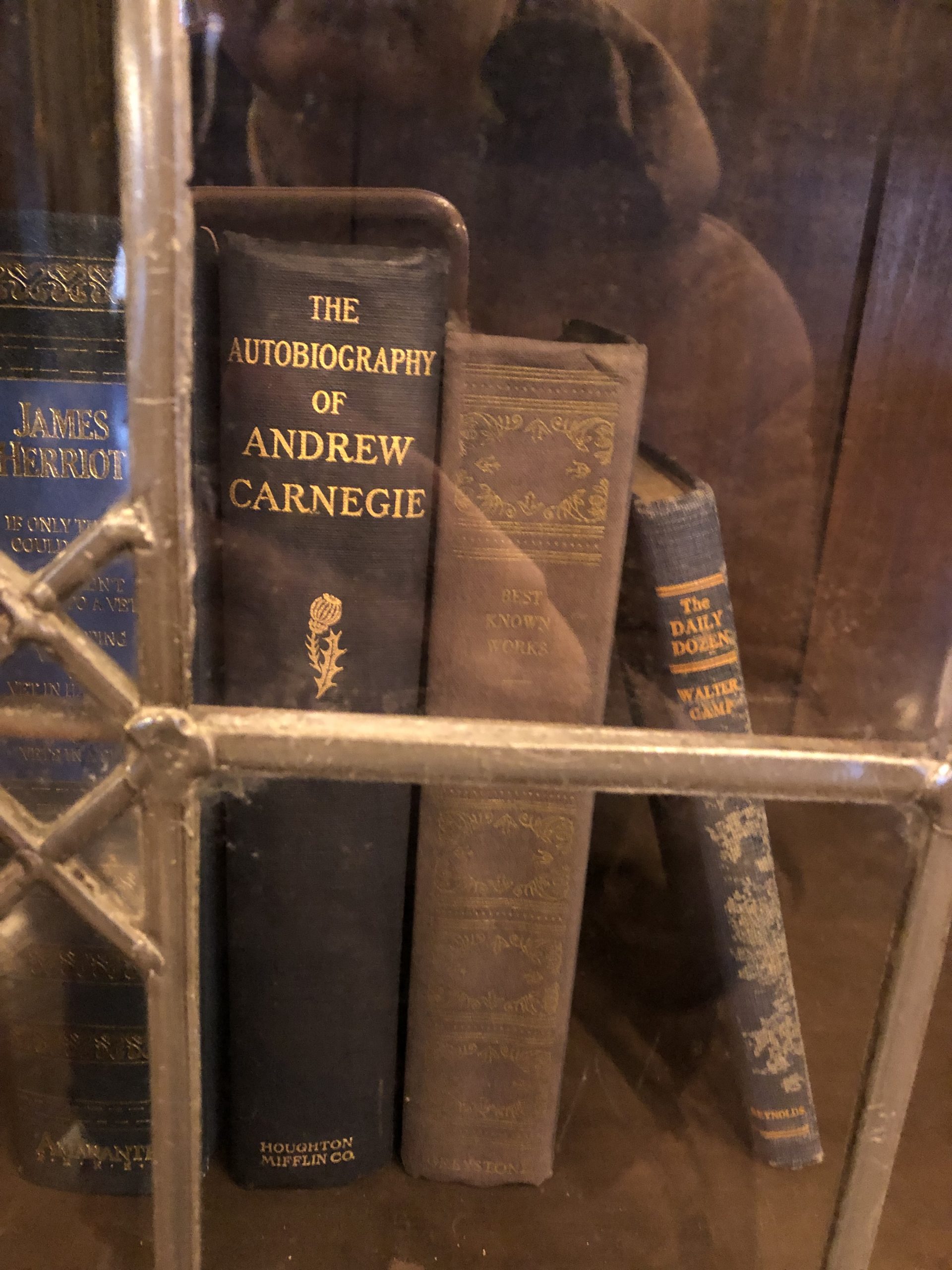 Casa Loma library shelves. By Alison Garwood-Jones
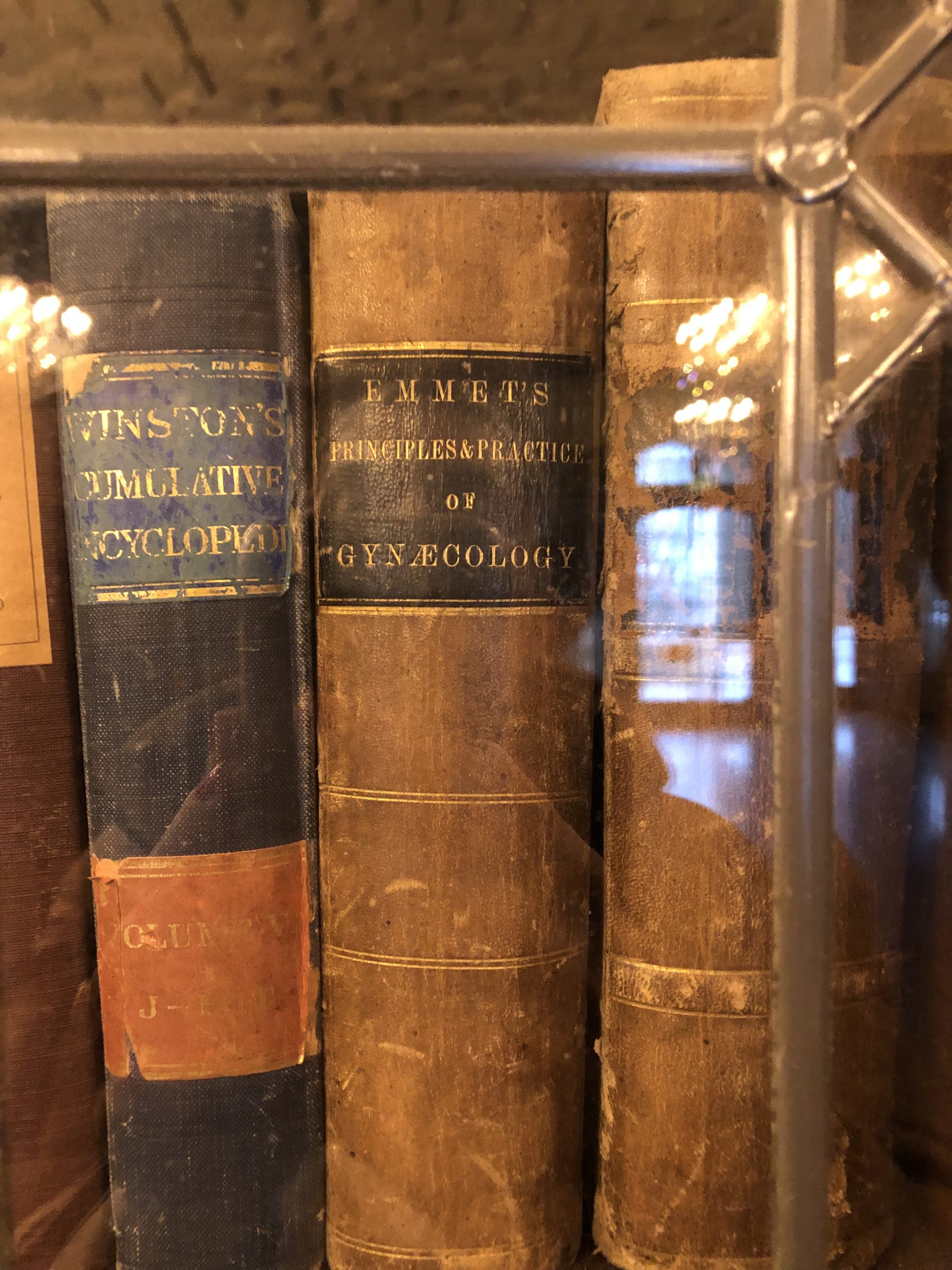 Casa Loma library shelves. By Alison Garwood-Jones
Mary was a tea-pouring, live-out-loud champion of women’s rights. She brought the Girl Guide movement to Canada, which empowered young girls to surpass the lady-like limitations placed on them and, instead, go for their fire, electrician, first-aid, and aeronautics badges. Meaning, she too electrified the city. With her ideas.
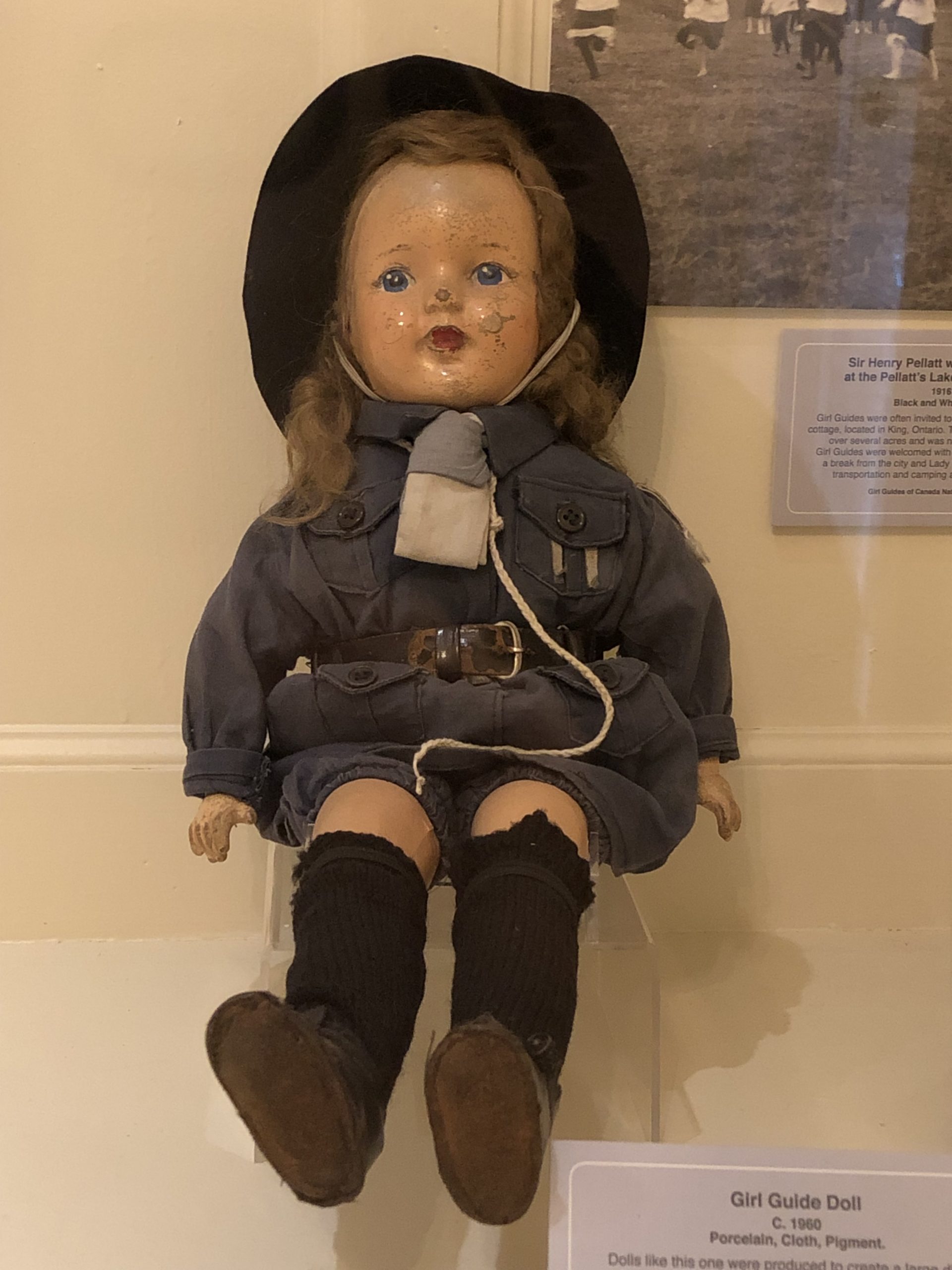 The Girl Guide display on the 2nd floor. By Alison Garwood-Jones
The thrill was short-lived. The Pellatts only lived in the castle for 8 party-throwing years. In a cascading series of events — including bad land deals, a bank collapse, rising property taxes, and Mary’s death — Henry, the Edwardian industrialist, lost everything and was forced out of his castle.
He bounced around for another 20 years, living in a series of progressively smaller residences. In his final years, Pellatt moved into the depression-era clapboard bungalow of Thomas Ridgway, his former chauffeur.
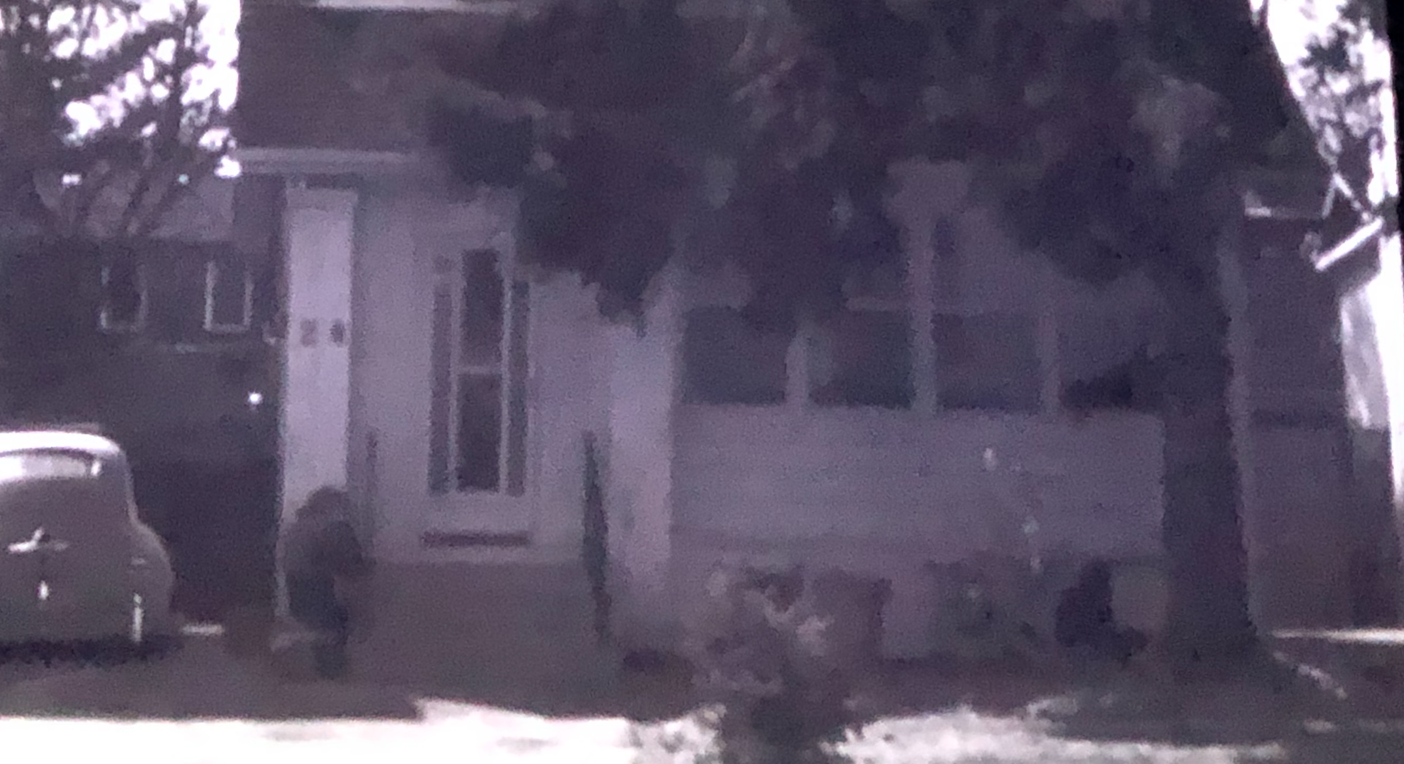
At his apex, Pellatt’s business ventures amounted to 25% of the Canadian economy. He managed it all from a desk he had copied from Napoleon.
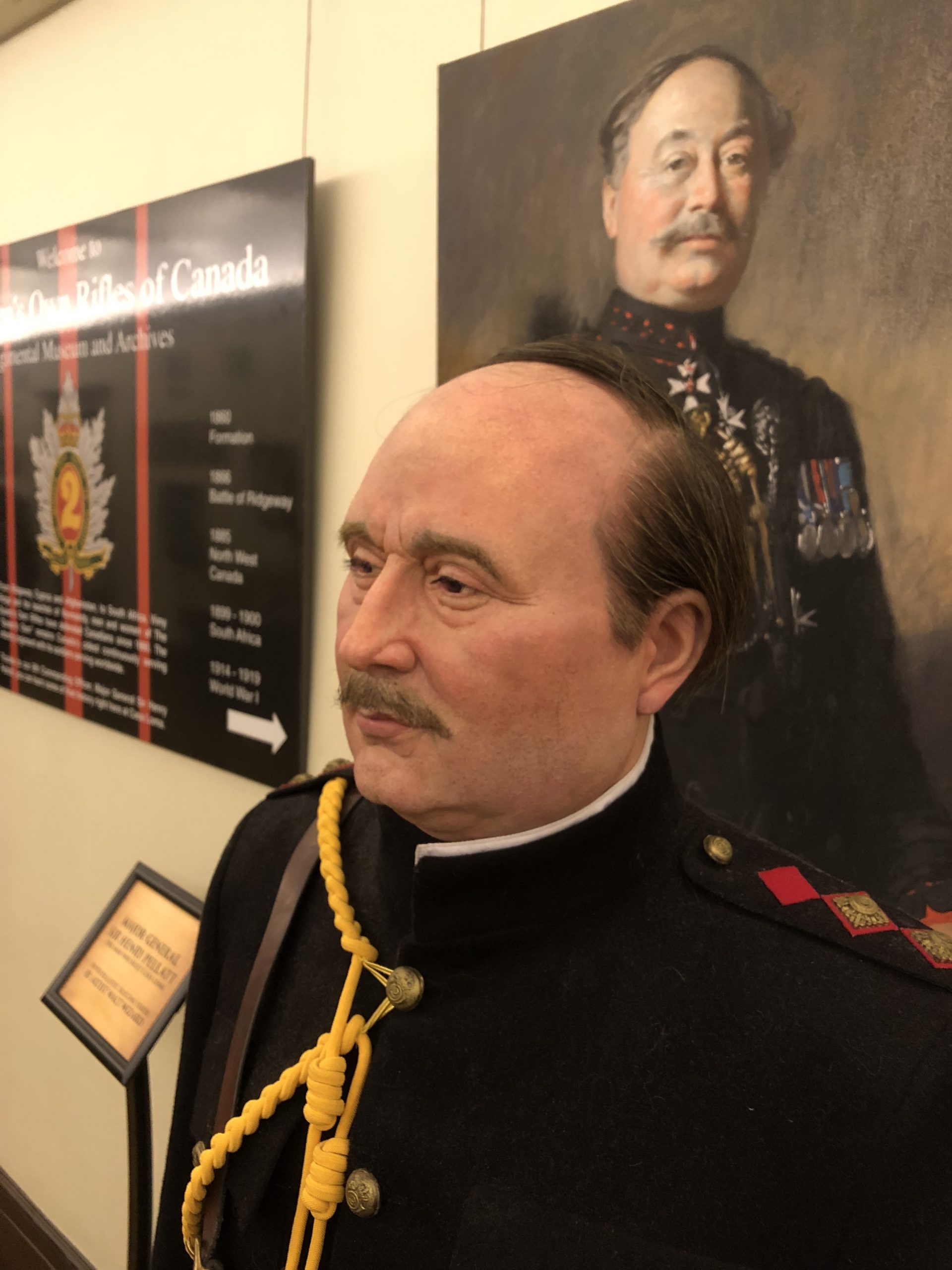 A lifelike model of Sir Henry on the third floor. A creation of Walt Wizard. Photo by Alison Garwood-Jones
I got the full story of his fall from a documentary looping in the basement of the castle. A small movie theatre has been set up at the bottom of a concrete swimming pool that was still in construction when Pellatt was forced to move out. It was like sitting inside a tomb.
But, like Teddy Roosevelt, Pellatt was somehow able to look past all he had lost and focus on all he had experienced — the love of Mary and the steady friendship of people like Ridgway, and meeting the King. When the Kiwanis Club of Toronto opened Casa Loma to the public in 1937, Pellatt stood in the sunshine at the podium of the ceremony and, without an ounce of self-pity, welcomed the good people of his city into his former home. I can only imagine the strength that took.
March 24, 2023
My insides dropped a thousand feet when I heard that Ian Falconer, the set designer and father of Olivia the pig, died on March 7. He was only 63.
Falconer created Olivia in his tiny West Village studio apartment back in the late 1990s. It was a tribute to his new niece with the little pug nose and the determined spirit.
A few years later, when a jittery Falconer presented his drawings to a children’s literary agent on Madison Avenue, she nodded and said, “I like them … but she’s not Eloise. She’s not Eloise” (twice in case he didn’t hear her the first time).
The agent proposed that Falconer turn his drawings over to a professional author who would pen a new story. Falconer was dismayed. He thanked her and left. By now, his nervous energy was off the charts. All I knew was that I couldn’t bear to give Olivia up, he said.
If any of you would like to hear a wonderful interview with Falconer, I consider this the definitive sit down: His May 8, 2014 conversation with Jessica Harris on NPR’s “From Scratch.”
Harris, without asking what Ian’s inspirations were (Worst. Question. Ever), managed to pull from him a full bouquet of inspirations. For example, I learned that he drew Olivia in charcoal (I’m not a fan of charcoal, but now I’m not so sure … I mean, look how sensitive it is!!). Then he smudged the charcoal with women’s makeup sponges and cotton swabs. In a final splash, he dressed Olivia in red gouache dresses and maillots, with the occasional fisherman’s stripe for some extra zing. He layered shadows on top of the gouache using more smudged charcoal. To protect his creation, he locked the lines in place with hair spray.
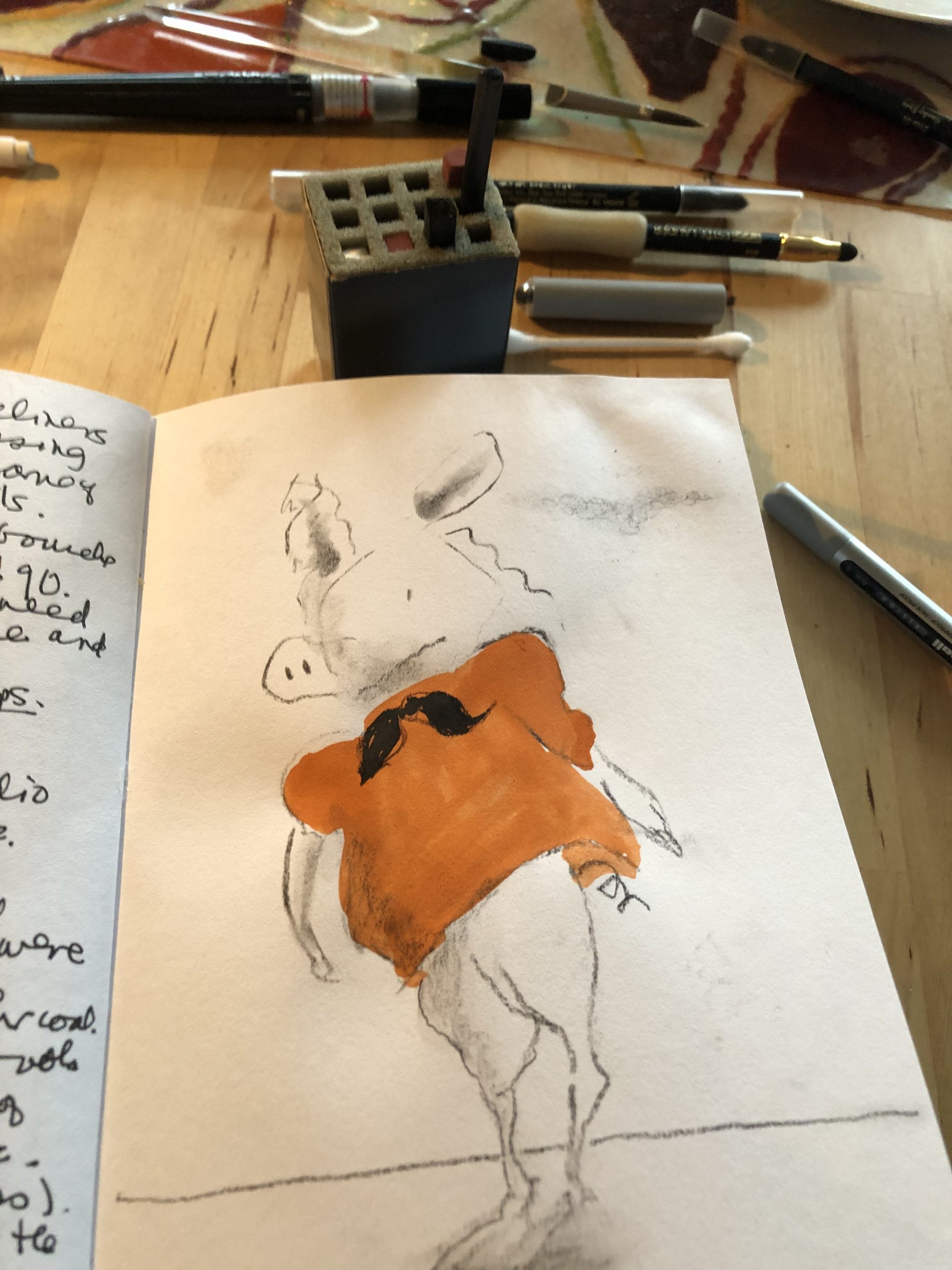
Ian has inspired me to try something different than my usual Uniball pen and watercolour. It turns out, I have all the art and beauty supplies on hand, right down to the eyeliner sponges. I never use these on my face. I’d rather smudge up a pig!
We’ll always remember you, Ian!
Love,
Alison
March 14, 2023
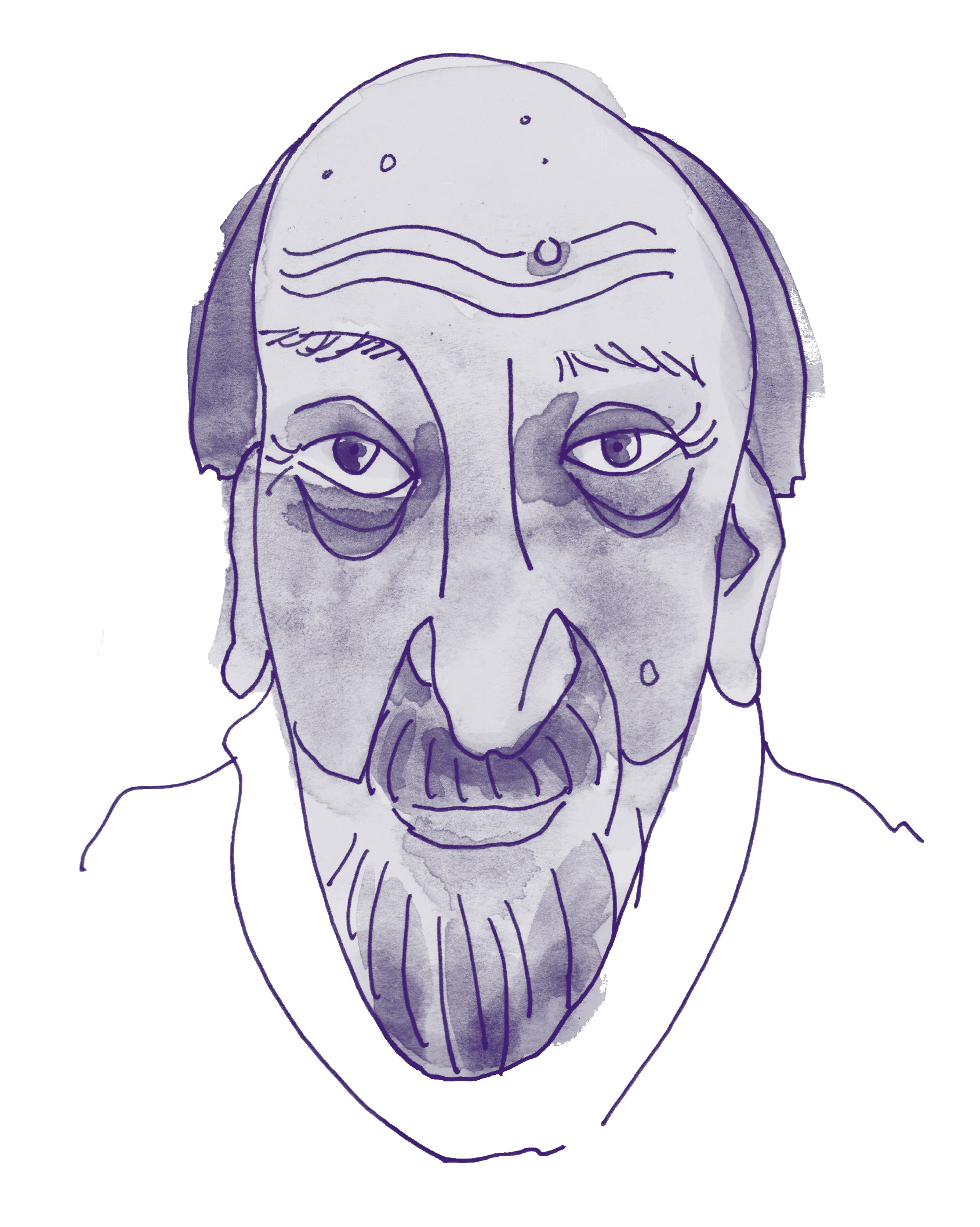
“Attentiveness is the great benefit of drawing.”
Milton Glaser said that. But becoming attentive to your life is a question for every human, not just artists.
To pay attention without preconceptions is massively challenging. As Milton explained it, too much belief spelled the end to observation and understanding.
Self-restraint, like listening, is an exercise in maturity, brute strength, and the softest of touches. Not many people present that combo.
And so we have our marching orders: connect the dots, observe what is, ask “Am I doing harm?” and hope that the iconic will rise from the force of your intuition.
Thank you, Milton.
March 6, 2023

Here’s the thing:
When you hand over the heavy lifting of writing to AI, you stop having to come up with the thrust of an argument. I’m finding that incorporating AI’s output into my own writing makes me feel further from my subject (and clients), not closer.
The nervous energy that fuels a writer’s search for the “So What” and the elation we feel upon discovering an argument or a story structure … well, that stuff has lit humans up since the beginning of time. It’s a feeling of ownership over a challenge and emerging the victor. Watching AI yank that away from us is like witnessing your family home burn down.
Artificial neural networks have no idea what I’m talking about. It couldn’t tell you what synergy feels like. It doesn’t even know what it feels like to be fast, efficient and under budget. It meets the smiles of CFOs with a blank stare.
Here’s what else AI doesn’t know: that we’re in a showdown with it. And, dammit, we can’t even lob a good heckle at it because there’s no one to point to and say, “Yeah, but that AI … he’s got awful taste in shoes. And small hands.”
Humans love Eureka moments. The moment we are born, we come teaming with wonder and competitive juices, hoping for that eureka moment in almost every situation we’re in — from discovering the mobile above our cribs, to solving a basic math problem, to crafting a persuasive B2B white paper. Eureka is our best hope of distraction from our own mortality.
But back to that point I was making about how dropping AI’s paragraphs into my own writing was making me feel further from my subject (and clients), not closer. The only thing I can liken it to is that AI has kicked me out of the driver’s seat. Now I’m the passenger. Not an original thought. So many people are saying that right now. But let me add: AI drives like Mario Andretti, which causes my head to spin and nausea to rise up. Too often it does multiple laps around the same track until it just stops. “Wow,” I say at the end of it all, and yet …
I was fine to hand over spellcheck and grammar to the bots. My spelling stinks. But storytelling by humans is informed by bad breakups, black ice, driving down country roads, losing your parents, and so much more. Great writing understands the needs and fears we humans have, and temporarily solves them in a way that says, Yup, I see you (I am you), here you go, and you’re welcome! That’s the secret handshake that humans share with other humans we are trying to reach. In the moment of that exchange, everyone feels motivated to do something.
Since AI’s big reveal last fall, the Metaverse might be dead on arrival (for now),” but Silicon Valley is still saying yes to “moving fast and breaking things.” And most writers I know aren’t Mario Andretti or Chuck Yeager. Eureka is always proceeded by a groaning stillness. Human writers tend to move at the speed of Uncle Morty and Aunt Helen driving to their 5pm buffet. But have you noticed they still get there in pretty good time? And Aunt Helen? Man, she is knowledgeable to the point of being psychic about your relationships. She’s always asking for updates on how it’s going with you and your target audience. She might as well have an honorary Ph.D. in human nature. And Morty? Eight of his ten jokes are groaners, but the other 2 are worth the wait. Helen and Morty’s take on life’s struggles and signature moments puts our entire existence into context and makes the journey more meaningful.
How do we put that into a PowerPoint for clients?
February 24, 2023

I’m suffering from mood swings … over AI.
I go from “Holy Wow, this is cool. Let me ask it this question” to “How dare the Tech Bros foist this upon us when we’re still climbing out of a pandemic.”
In my sleep-deprived moments, Generative AI feels like content marketing in a pill.
I know it won’t play out that way, but still …
February 23, 2023
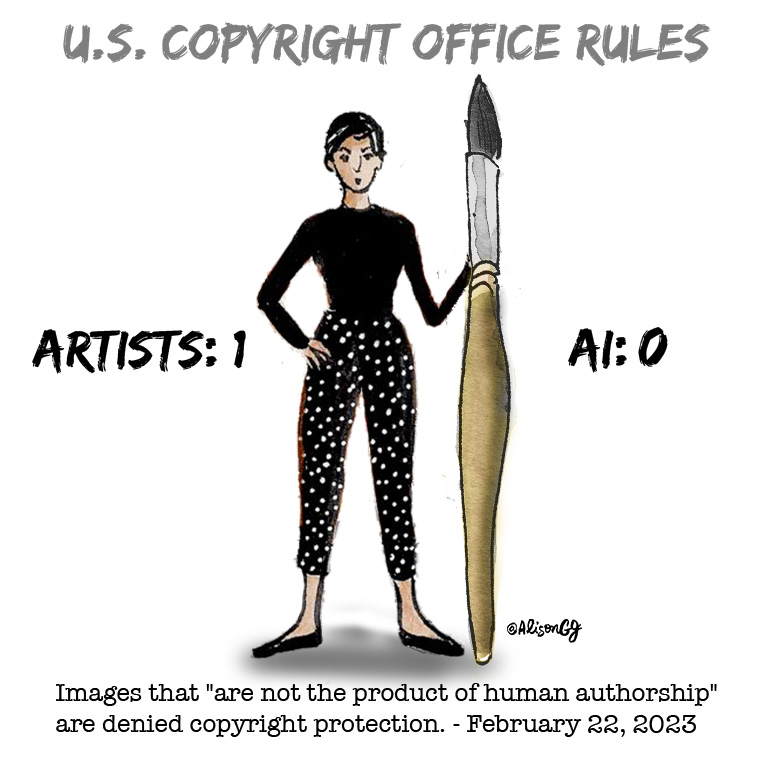
Big Tech has always ruled in its own best interest, while the government dithered.
Case in point: Social Media.
Yesterday, it only took the U.S. Copyright Office about 8 weeks to rule on the legality of AI-generated images.
This is a rare win for artists and creatives.
Read the full story.








 \
\