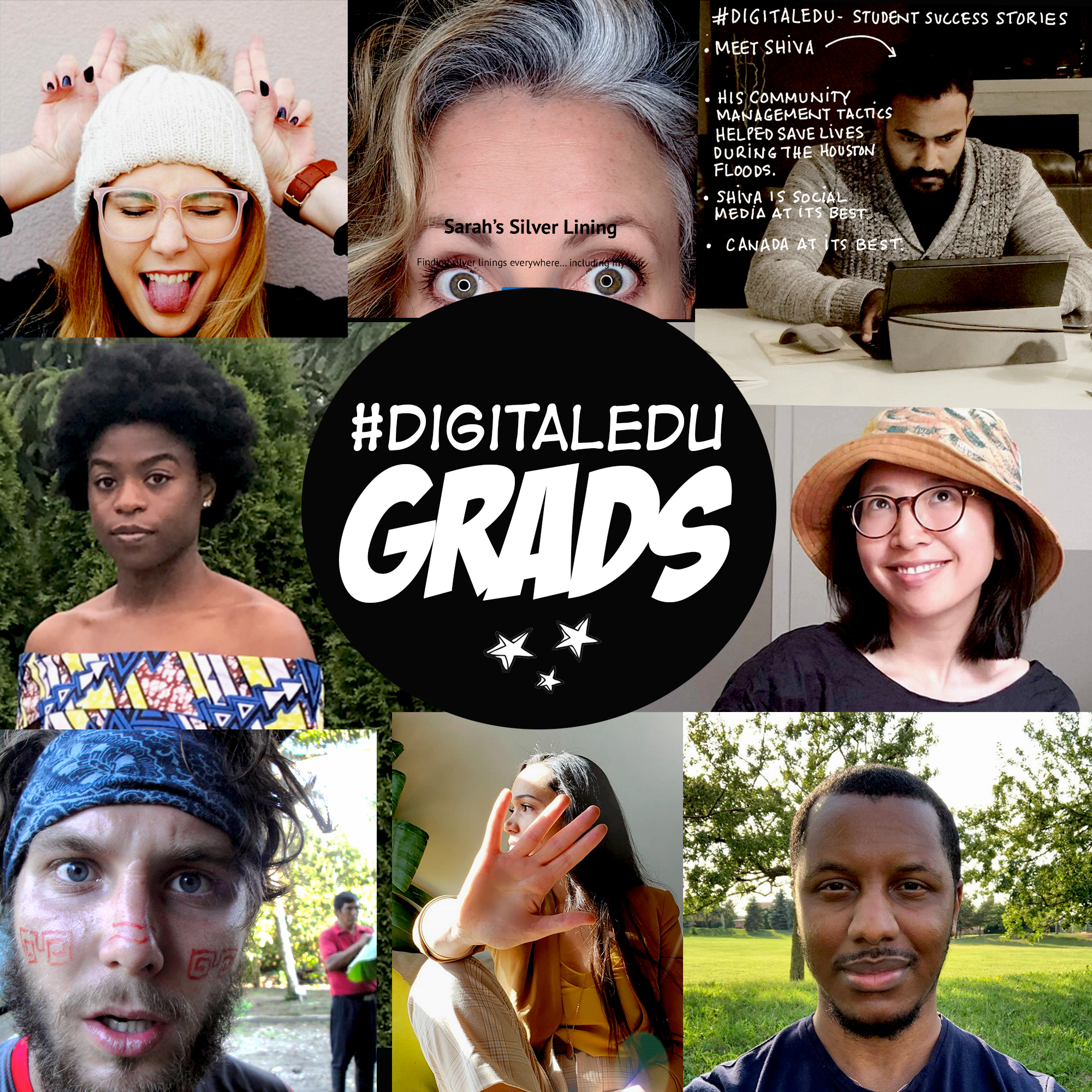
Just a few of the students who came to class with very sharp pencils.
If you are on this page because you’re thinking of enrolling in my University of Toronto Digital Strategy course, I can see you! But seriously, Hi, I’m glad you stopped by.
Whenever I take a course — I took Creating Comics and Graphic Novels (2489) last fall — I always Google the instructor. I want to know who they are, what they do in their day job, and if they have an original spark before I commit to spending several months with them.

Illustration by Alison Garwood-Jones
I’ve been teaching Digital Communications Strategy and Social Media since the fall of 2014.
In that time, Vine has died, TikTok has burst out of the gates, and Facebook’s true colours have been revealed — as an espionage tool, an enabler of ads that target conflict and lies, and an all-round toxic waste dump.
Whatever happens next — Facebook and Twitter toss the uncivil ad model and become subscription-only, perhaps? — my course has adapted with every twist and turn, providing up-to-the-minute strategies and tactics on how to build and market your blog, vlog or podcast.
As a journalist, illustrator, host of the web series Willful (now on hiatus), and a Shopify vendor selling my hand-drawn illustrations on household wares (also on hiatus as I search for more eco/ethical suppliers), I know a thing or two about combining creativity with an entrepreneurial spirit. Digital tools have been central to my work and skills being discoverable.

Illustration by Alison Garwood-Jones
Let me share a couple of success stories so you can see how some of my former students have leveraged the course learnings to start new projects, or to land some really cool gigs in content creation, digital marketing, journalism, PR and politics:
• Marcus: Marcus chose to blog about graffitti in Toronto for his class project in Foundations. His amazing story after he finished the Digital Strategy and Communications Managmemt Certificate was featured on U of T’s SCS blog in May 2019:
• Andy: Andreanne was already an established beauty blogger at A Certain Romance when she signed up for my class three summers ago. Her goal was clear: she wanted to increase her visibility and get her first paid gig as a blogger/influencer. By week 2 of the course, she had crafted a focused SMART goal (take the course and I’ll explain what that means). By week 12, she had organically increased her subscribers by 54% and her pageviews by 140%. Shortly after the course was over, Andy was offered an unpaid community management internship with a natural beauty company (which she declined). She also interviewed for a paid position as a community manager/content creator for a beauty distributor. She decided it wasn’t a right fit, so she kept looking. In the meantime, an offer to do her first sponsored post came in. Not long after, she hit the jackpot when she was picked to be the new Web and Social Media Editor at Canadian House and Home‘s French Edition, Maison & Demeure. And as of this Spring she became an Associate Editor at Chatelaine Magazine. Way to go, Andy!

Photo: Andreanne by Nick Reynolds
• Kamini: Kamini signed up for my class hoping to gain some new digital skills during her job search.

She created a WordPress blog about her cat Hewitt. OK, do we really need another cat or cupcake blog? Yes we do, if it’s funny and well-produced. Last spring, when Kamini was preparing for a job interview with Portable Intelligence, she used her blog as her portfolio, and reviewed all 12 class decks so she felt prepared. Things went well and she ended up showing her blog and some of her cat videos during her interview. Last June Kamini said yes to Portable Intelligence and became their Digital Marketing Specialist. It was her very first job in Canada since moving to Toronto from India. Go Kamini! PS: She has since retired her blog URL. Hewitt has moved on.

Hewitt by Kamini
• Julian: Julian was the first student I had who chose to use the course to set up a podcast. The idea of creating a series of fun and plain-speaking interviews for young gays who were new to big city living had been percolating in his mind for some time. In the fall of 2016, Julian debuted The Sassy Gay. Since then, he has kept a regular posting schedule and the show has become a recognized source of support in the LGBT community. Posts include: The Epidemic of Gay Loneliness and Coming out to your mom. He has also branched out and created a web series called Process where he interviews artists. Julian told me he was inspired by the class to challenge himself in the audio and video storytelling spaces. I’m proud of this guy.

• Shiva: Shiva Kumar Shunmugam took my online class in the Winter of 2016. He was one of the most active and engaged students in this class of 35. So much of what Shiva did and said was rooted in kindness and his strong desire to help other students who were adjusting to the demands of digital communications in their workplaces. When Hurricane Harvey hit metropolitan Houston a few years ago, Shiva, who manages the social media accounts for Beaumont, a town in northern Alberta, stepped in to help a family in Beaumont, Texas who emailed him accidentally. This Digital Strategy grad donned his superhero cape to help this family. Here is a teaser from CTV:
BEAUMONT, Alta. — Shiva Kumar Shunmugam was wrapping up a lazy summer afternoon tending to social media feeds for the Alberta town of Beaumont when a strange request came into the fire hall’s Facebook page.
“Terrell houses are flooding need help,” it said.
Beaumont, Alta., a town of about 18,000 just south of Edmonton, doesn’t have a Terrell neighbourhood and the area hadn’t seen a drop of rain in almost a week.
Shunmugam quickly realized he was dealing with someone in Beaumont, Texas, a community not far from Houston, that has a Terrell Avenue and was hit by Hurricane Harvey.
A woman near Dallas was seeking a rescue for her daughter’s family of four who had floodwater rushing into their Beaumont home.
In her frantic search for help, the mother mistakenly happened upon the page for the fire department in Beaumont, Alta., 3,800 kilometres away.
Shunmugam swung into action.
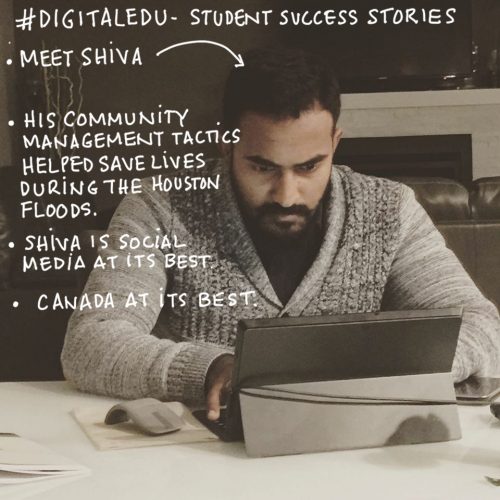
You can read the full story of Shiva’s life saving community management tactics here. Suffice it to say, we’re proud to know this guy.
• Jumol came to class as a PR & communications strategist and writer with bylines in IN Magazine, Notable Life, Xtra and Local Love. But he had yet to write for a publication that allowed him to have deeper conversations that would encourage readers, especially in the LGBTQ community, to shift their perceptions from fear to love.

So Jumol created, Deeper Conversations, a “dose of soul-stirring conversations that cut straight to the heart of the matter featuring thought leaders, spiritual teachers and inspirational influencers who are passionate about healing, wellness and wholehearted living.” I’m proud to update here that Jumol was hired by Xtra as a contributing writer. He was also the script for a recent Nike video campaign in Toronto featuring members of Canada’s Black #LGBTQ2 community.
• Anais came to my course while on mat leave.

A marketing pro who loves analyzing human behaviour and understanding why we buy things we regret, why we don’t save money, and why we love a brand we’ve never even tried, she created a blog that digs into our purchase decisions, using a snackable blog format packed with illustrations.
• Wendy created Acorn & Thimble, a gorgeous sage and blush site to showcase her sewing skills and pattern reviews.
This is her Sorrento Bucket Hat.

Could she be any more charming?

• Elsa: Wendy’s classmate, Elsa, is also a genius at the sewing machine. She came to class as a fashion entrepreneur hoping to create brand awareness for her designs, unisex African streetcar pieces called NanaBenz. Elsa explains the name for her company: “I wanted to pay homage to my matriarchs who were #BossLady of their times. ‘Les Nana Benz’ was a term used to describe wealthy West African female merchants who built their fortune from trading textiles.”

• Sarah: When Covid-19 hit, Sarah decided to go with a topic that felt really personal. Sarah’s Silver Linings is a lifestyle blog/vlog with tips and commentary about how to make the most of this life, all while growing out your silver hair.

About nine weeks into posting to her blog and Instagram. Sarah and her blog appeared on Global Morning Atlantic in a Top 10 roundup of people making the most of the lockdown .

Since I started teaching, I have witnessed many success stories. One more pops to mind. A lot of people who come to my class are fleeing dying industries. David was a copy editor at The Hamilton Spectator who felt confident enough with the new digital smarts he acquired in class to seek a job as a Communications Associate at the MaRS Centre for Impact Investing. “It was only a matter of time before the paper let me go,” he said. Like so many, David abandoned print media in favour of a communications job with more growth potential and stability.
Join me this term if you want to learn how to adapt to the new digital economy, or apply a strategic mindset to an idea you have for a written blog, web series or podcast. To learn more, check out this webpage from the University of Toronto’s School of Continuing Studies.
I hope to see you soon,
Alison
SaveSave
SaveSave
SaveSave
SaveSaveSaveSave















 I’m not a soccer nut. At all. But I love a good Davida and Goliath matchup.


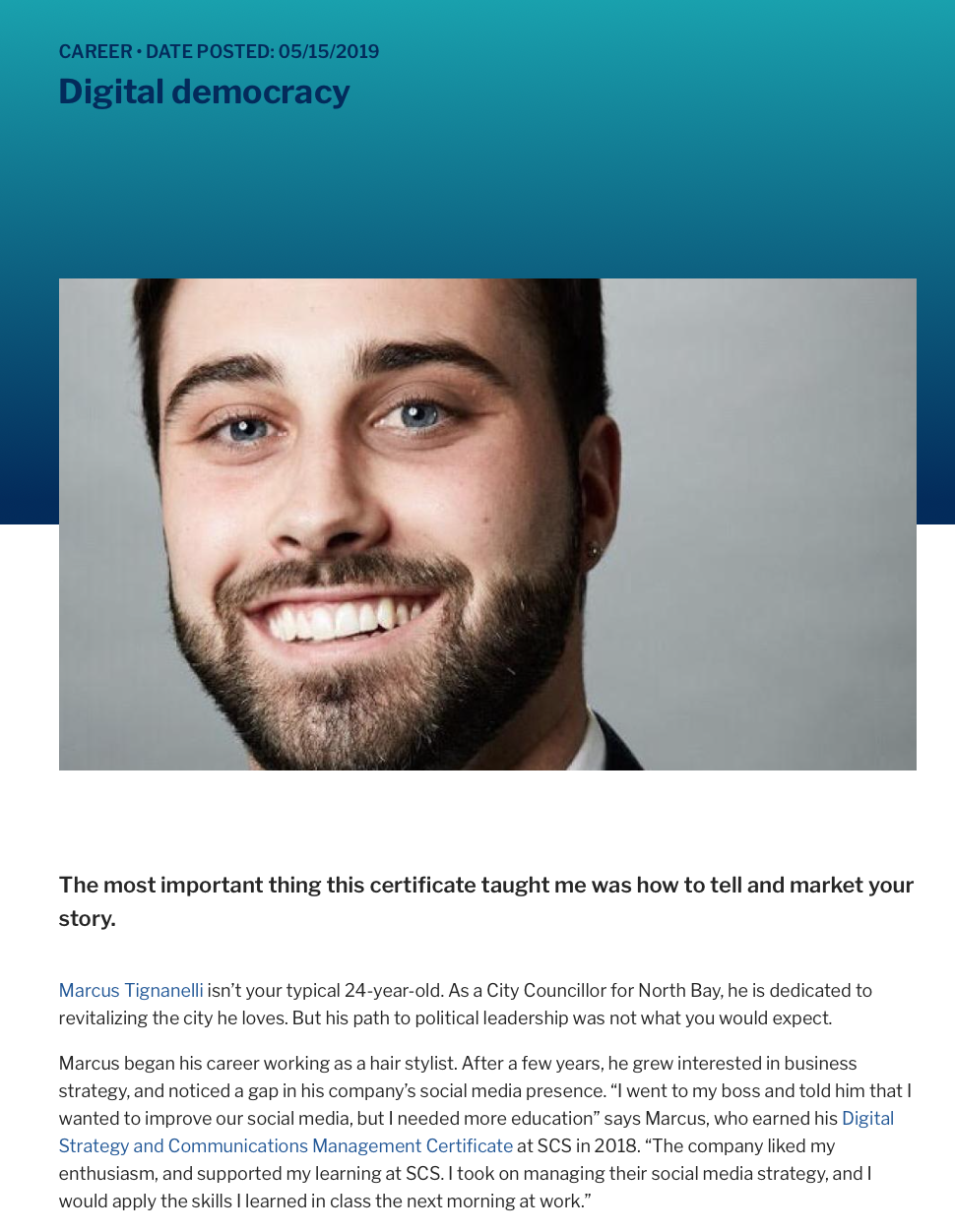



 Photo: Alison Garwood-Jones
 Here’s an early morning drawing I recently made because I put my phone in a drawer.