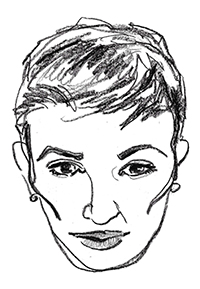
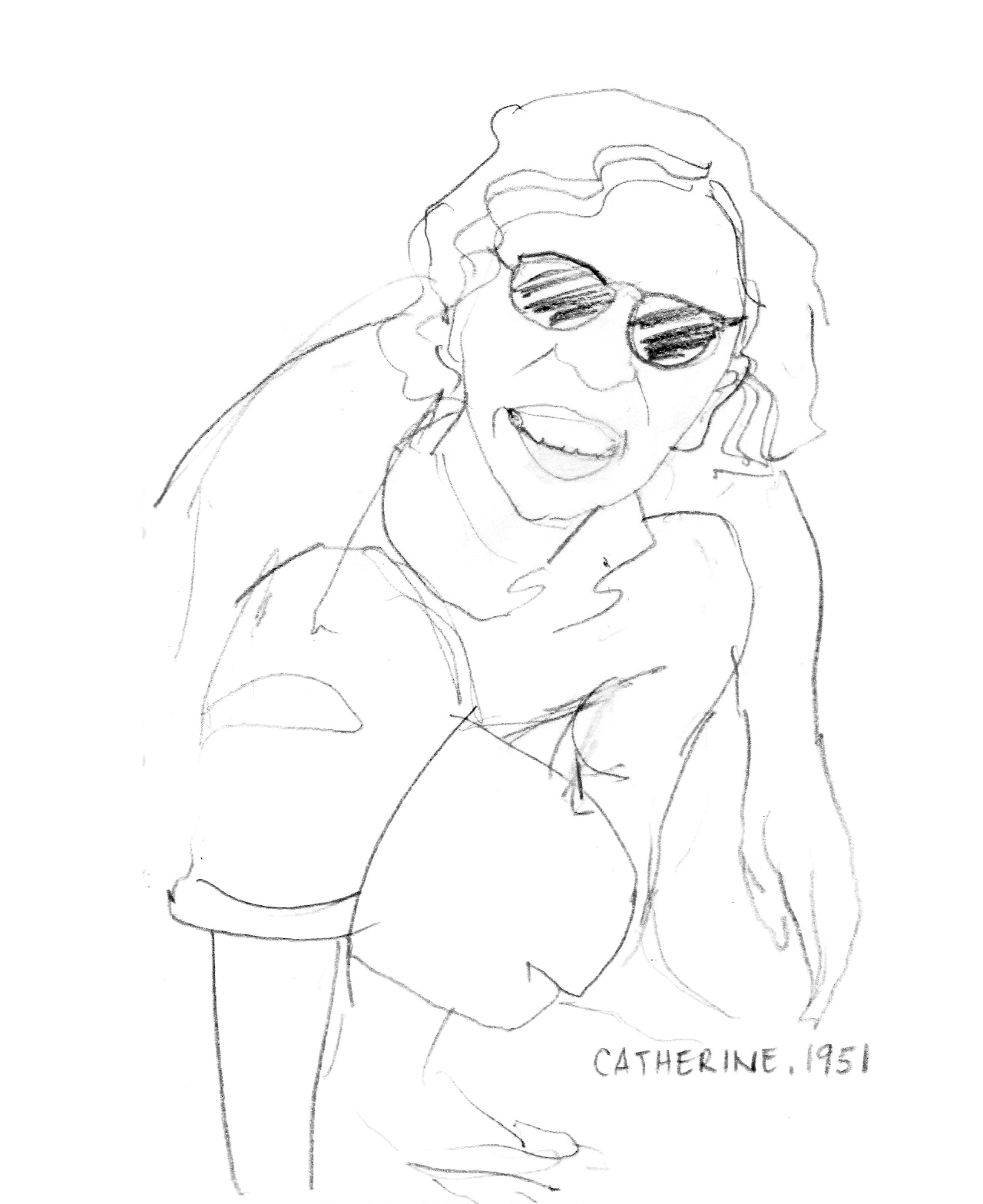
Shell hunting on the Isle of Guernsey, 1951.




December 31, 2018
Last summer, the initial delight I felt in seeing my sketchbook drawings on a digital pillow template inspired a new design business in 2018 called Pen Jar Productions.
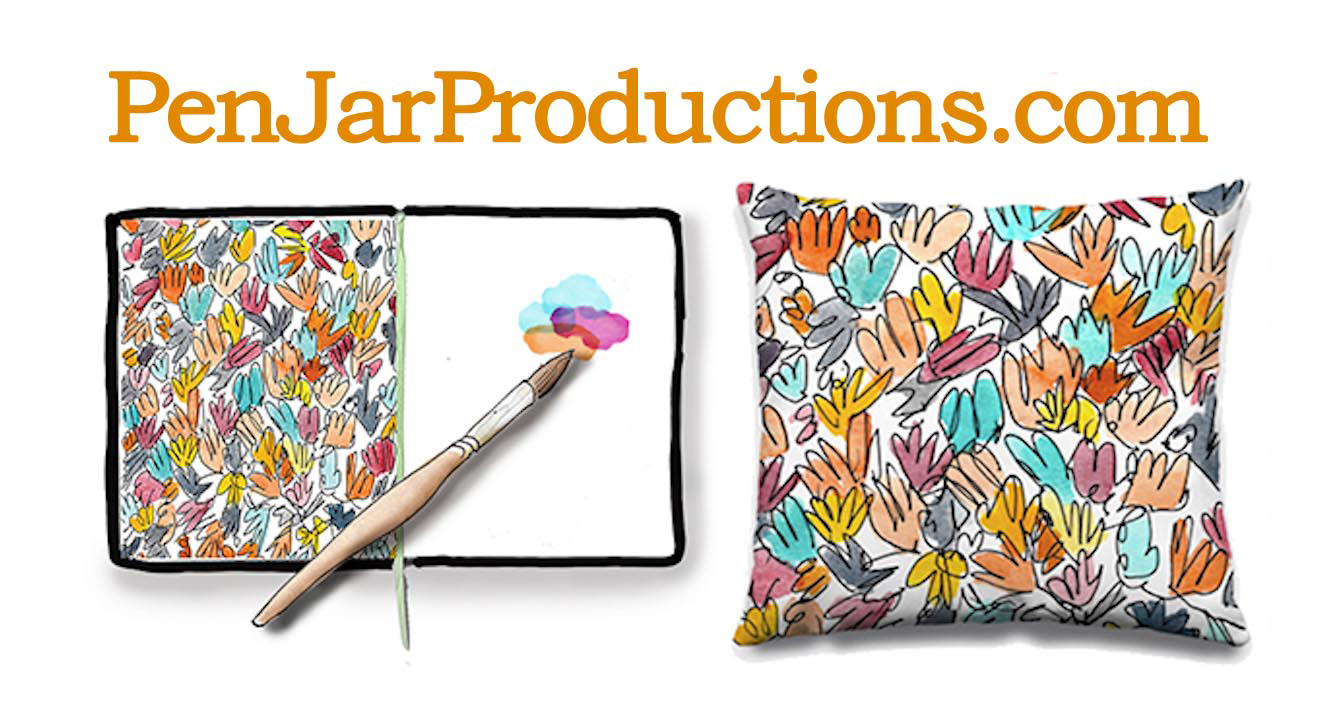
Now my quirky line drawings are on totes, tees, scarves, and, coming next month, enamel pins! (In these politically-charged times, more of us are wearing our values on our lapels).
Here’s a tour of my studio, where it all happens.
Print-on-demand technology that offers freelancers, like me, automatic fulfilment and shipping has been around for several years, but I only woke up to it in 2018.
ICYMI: here’s an Instagram Stories video I made explaining how my pillows go from a sketchbook drawing to a finished pillow:
As we move into 2019, the things that used to be background noise in my life — benchmarks, brand recognition and break-even points — have taken on a new urgency.
In search of answers to my marketing and accounting conundrums, my podcast lineup has expanded to include:
Shopify Masters
Good Company with Grace Bonney
Pivot Podcast with Jenny Blake
The Agency Leadership Podcast
In the end, though, customer feedback is the best way to learn. Here are the seven things my customers taught me in 2018:
Offer smaller tote bags
I’m tall. Six-foot-one tall. So when I decided to add totes to my mix, I sourced a bag that fit the length of my frame.
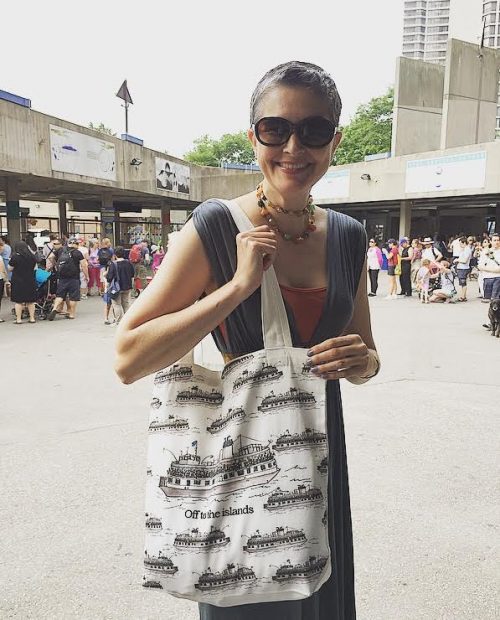
I forgot to think about how the bag length would work for a petite woman. Isn’t everyone 6’1″?
Then I met Amanda. She lived and worked on the Toronto Islands last summer.
I was wearing my merch one evening when she stopped me and asked if she could slip my ferry tote over her shoulder.
“I love it!” she said. “But it’s too big for me.” I hesitated. No matter. She pressed fifty bucks into my hand and the next time I saw her she modelled the workmanship of her city-side tailor, who lopped off two inches from the top of the bag and the handle. Et voilà!
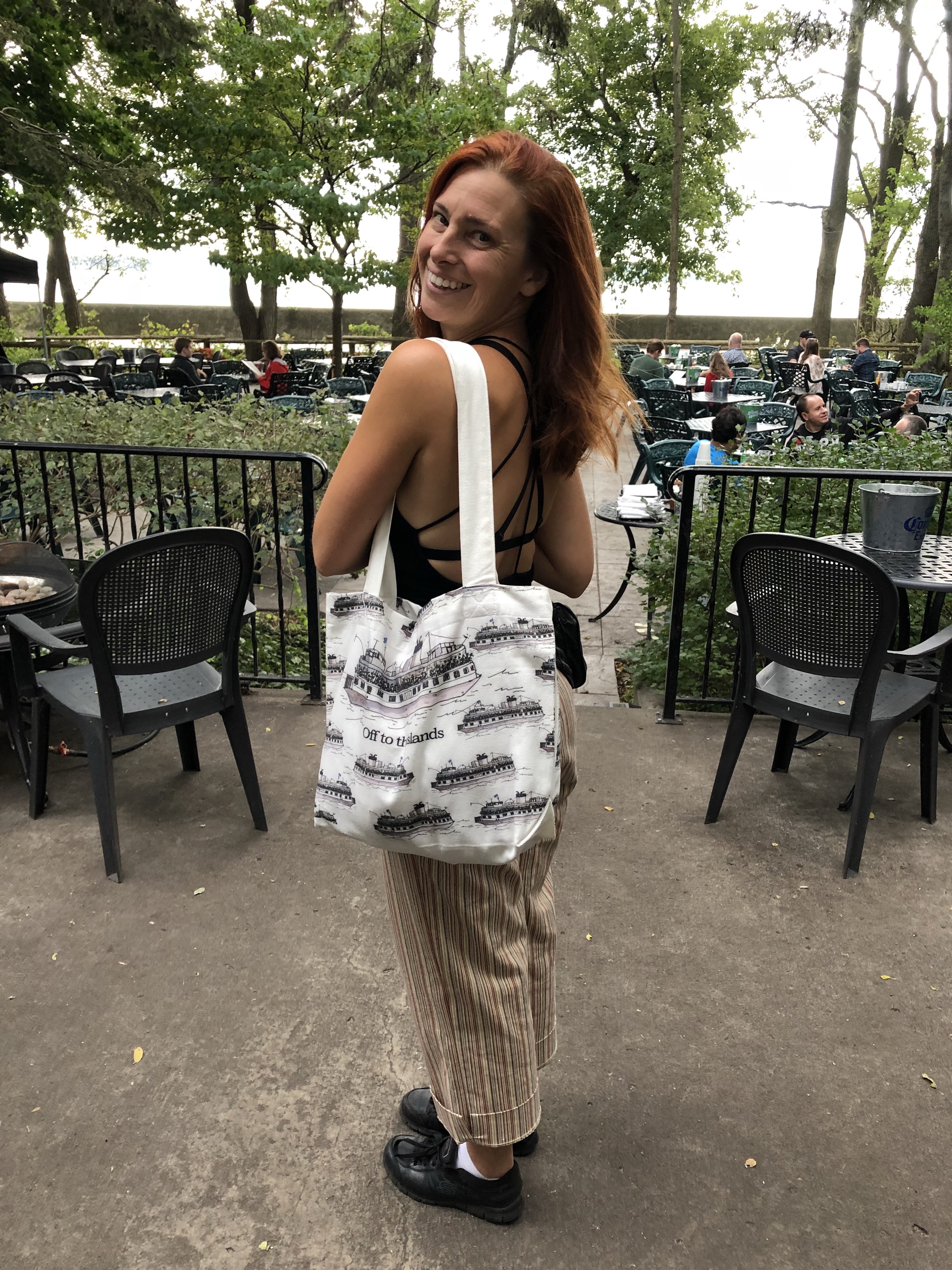
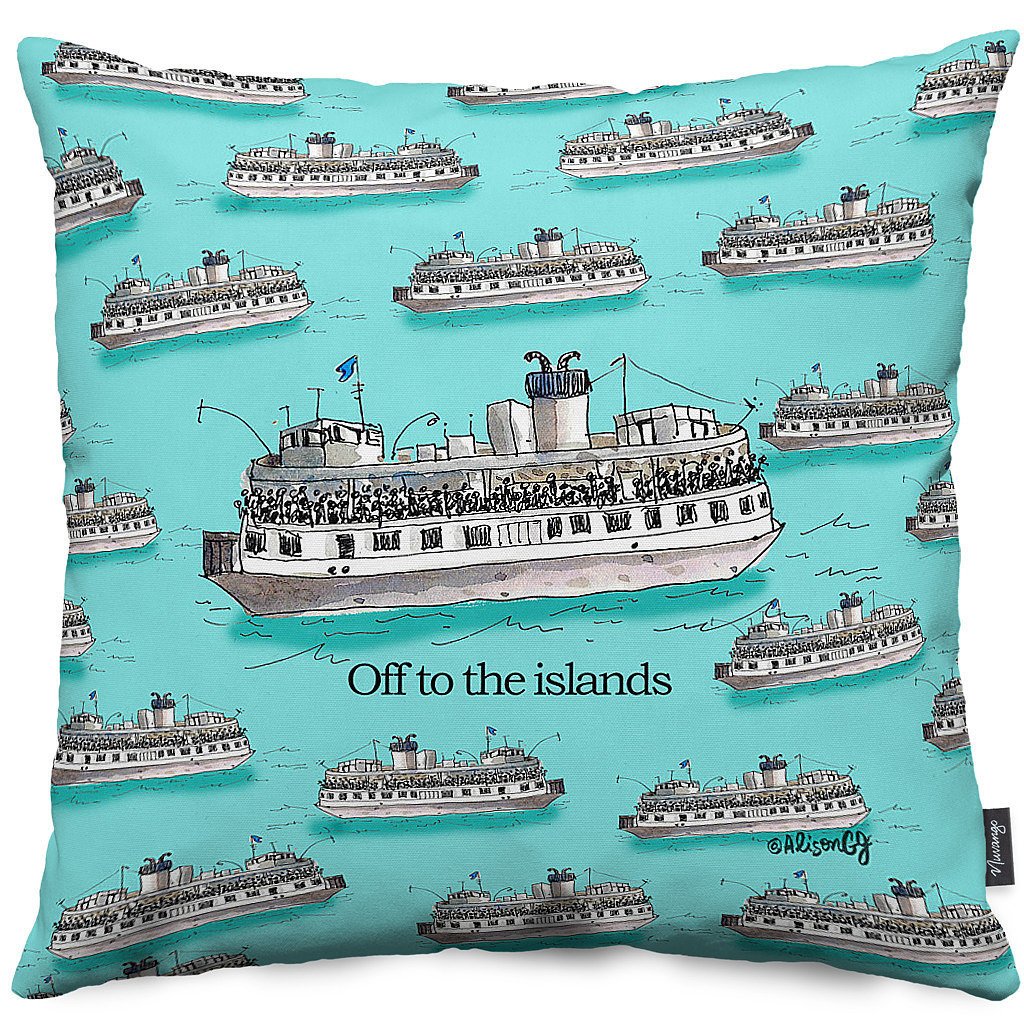
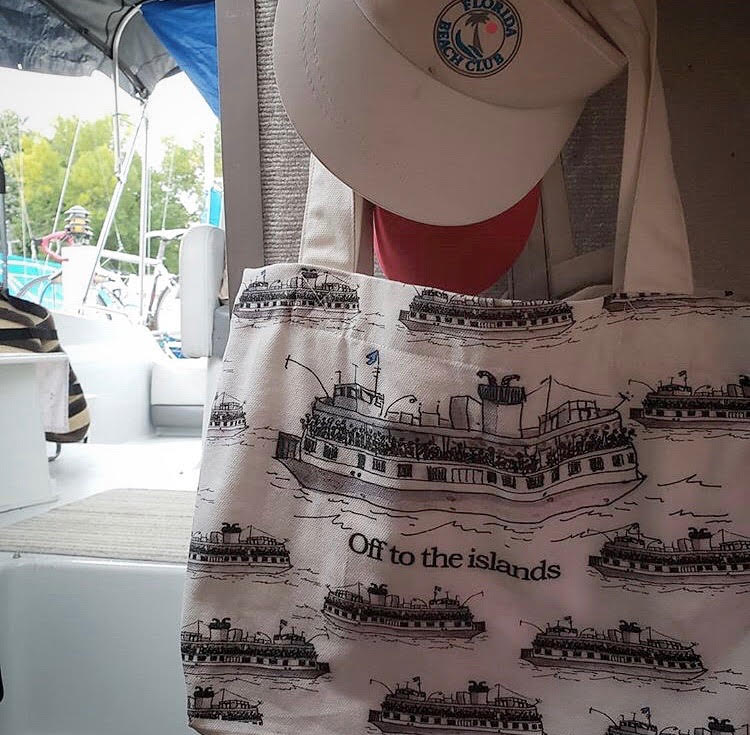 Amanda’s “Off To The Islands” tote bag hanging out in her sailboat. By PenJarProductions.com
Sign your work
I made some swift sales last month at the Algonquin Island Association Christmas Boutique.
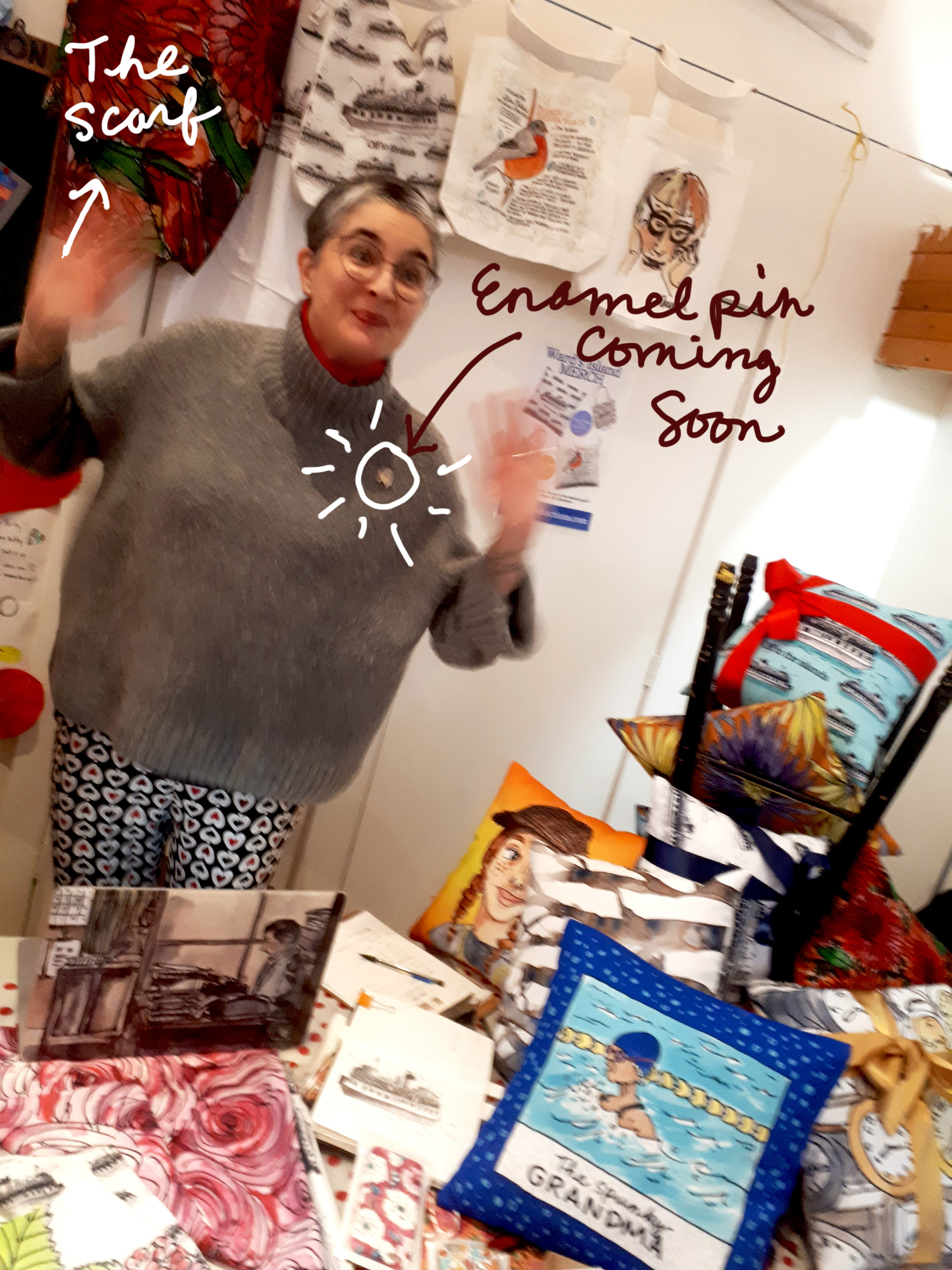 At the 2018 Algonquin Island Association Christmas Boutique. It’s blurry, but you get the point.
A woman named Rochelle came up to my table and gravitated to my chiffon scarf featuring scarlet chrysanthemums. “Can I try this on?” she asked. And off she ran to the ladies room to play with knots and flourishes.
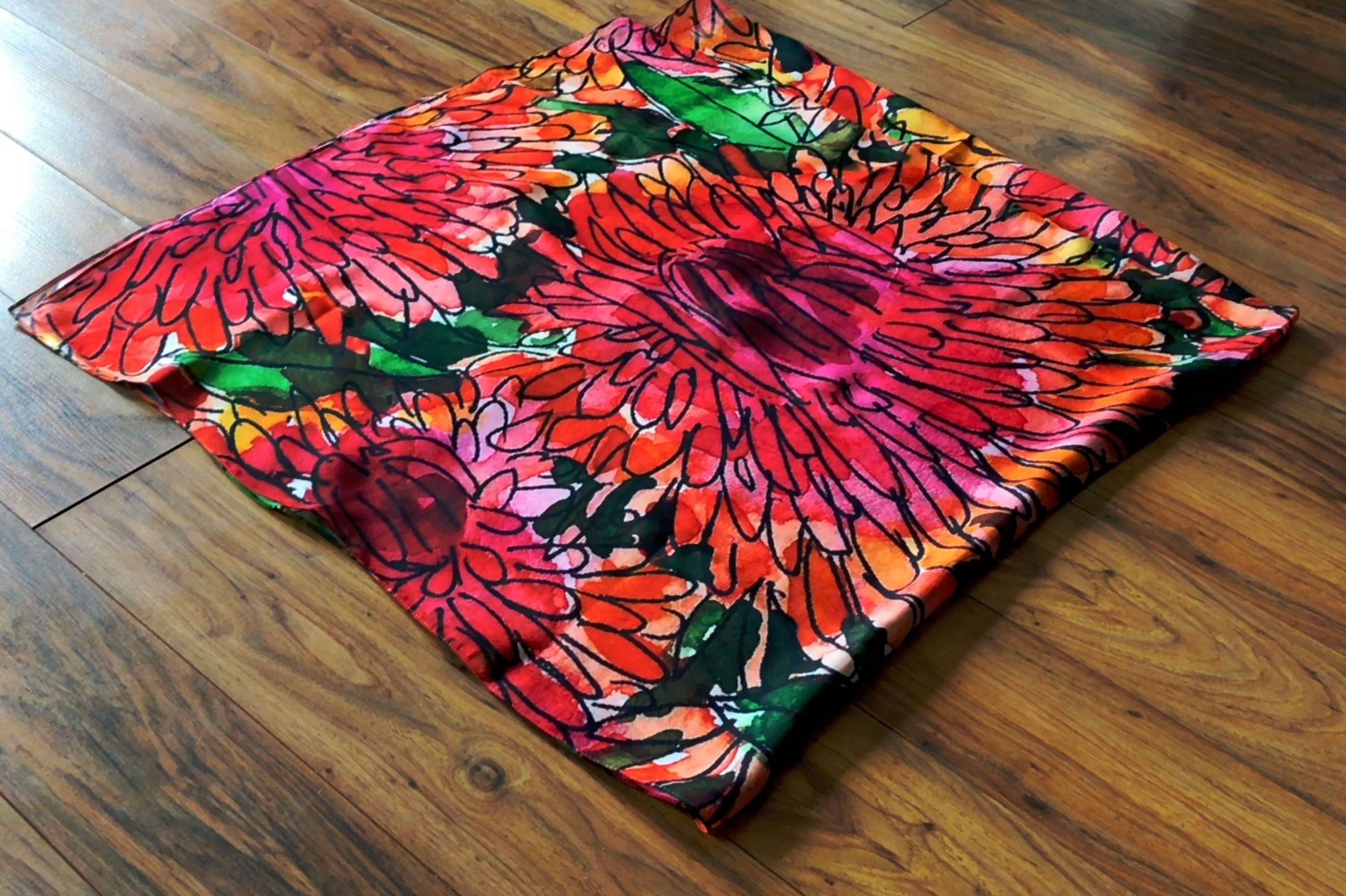 Crimson Mums Chiffon Scarf by PenJarProductions.com
Last week, Rochelle emailed me with some positive feedback and advice:
Hi Alison, Just wanted to let you know that I am enjoying your (my) scarf. You know, your name, signature, initials should be somewhere on your beautiful work. Everyone and anyone should know that it’s a Garwood- Jones artwork. (not that there is anything lacking in your business approach, I just think you’re being modest)
How can you not appreciate honesty like that?
On my 2019 To Do list — Fire up PhotoShop and start adding PenJarProductions.com to the corner of every design file on my Shopify site. That’s how you scale, baby!
When you’re a one-woman show handling design, marketing, and sales, it’s easy to overlook the obvious.
Put a face to your business
“People like to meet the maker,” Kyla Walker told me not long after I became an artist partner with Notion, the folks who print and ship my merch (see Kyla in the Instagram Stories video above).
Building an online presence for your business is key. And while Facebook and Instagram ads are still effective, they’re not enough.
I researched the craft fairs I could afford to take part in this year and became a craft lady retailer at two: The Ward’s Island Gala Weekend and the aforementioned Algonquin Island Craft Fair. We’ll see what 2019 holds.
Charge what you’re worth
When I earnestly explained that a custom portrait for $20 (my average artist markup) is not a sustainable business model, they all walked away, except for one.
These customers taught me that when you inquire about a custom anything (scarf, pillow, tee), you’re buying the original pen and watercolour art, not just the swatch of cotton that it comes on. Some get it, some don’t. You keep pushing forward.
Note to self: no freelancer can afford to operate like Fiverr.
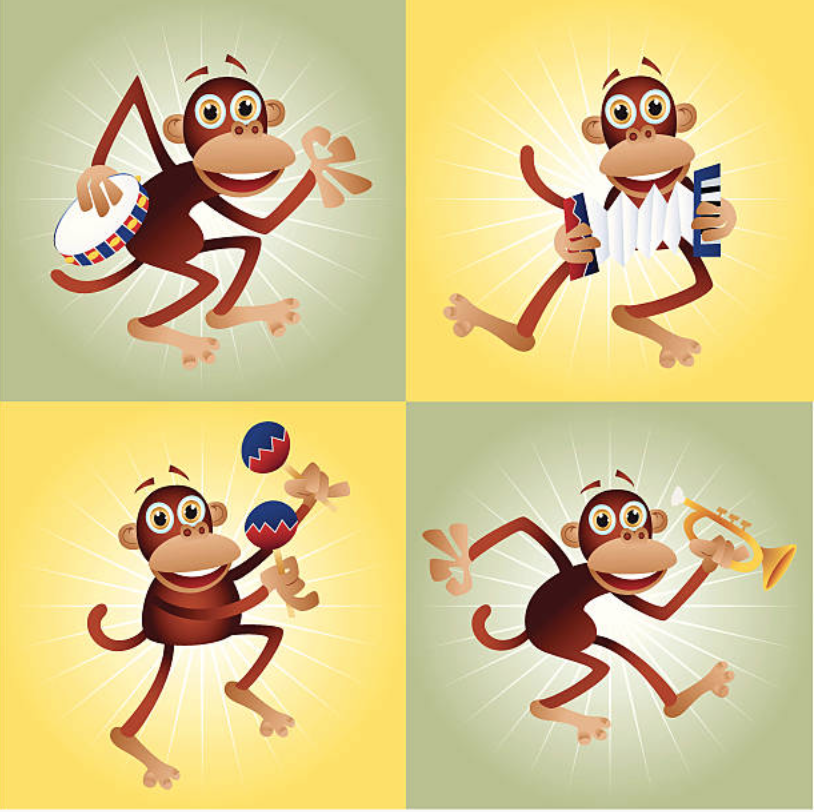 Sometimes the requests you get as an illustrator can make you feel like a dancing monkey with a tip cup. Source: Getty Images.
Technically, this wasn’t a customer tip. But I gasped in surprise when I found out that entrepreneurs I know have had, or still have, a business coach to guide their decision-making. You can do that? I’m so used to being DIY.
As your business grows, I’m finding that it’s really important to understand the ins and outs of accounting, especially when it comes to tax time. If you don’t understand it while you’re small, you’ll be in big trouble as you get bigger, if you get bigger.
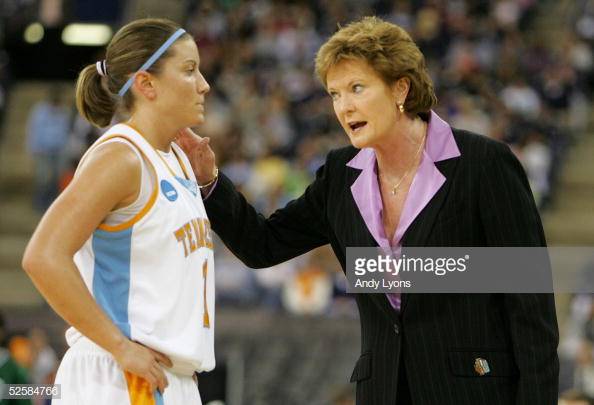
Head coach Pat Summitt talks to Shanna Zolman #1 of the Tennessee Lady Vols during a break in the action against the Michigan State Spartans in the Semifinal game of the Women’s NCAA Basketball Championship on April 3, 2005 at the RCA Dome in Indianapolis, Indiana. (Photo by Andy Lyons/Getty Images)
“My father was a ferry boat captain on the Sam McBride in the 1940s.”
That’s what one woman told me when she saw my Toronto Island Ferry Pillow at a craft fair.
Although she wasn’t a sale, she gave me something more valuable. My pillow, she said, brought back a fond memory. I miss my dad too.
I’m starting to gather a lot of these kinds of stories. Yesterday, Teresa, a customer who has one of my “Joe The Reporter” throw pillows perched against a wingback in her home, emailed me to explain why this illustration resonated with her,

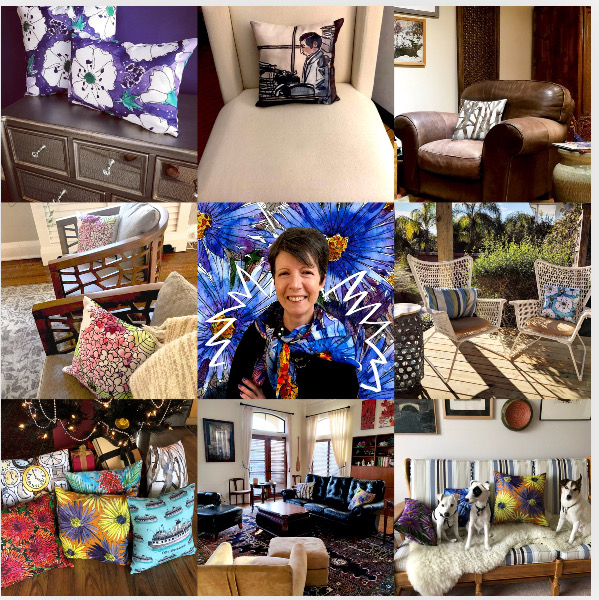
In the age of social media, customers are only too happy to share how your product looks in their home.
Again, trying to juggle all aspects of my business, I initially forgot to ask for the photographs.
Many customers sent pictures to me pretty much as soon as my packages landed. And, if they didn’t, I now knew to ask them for home decor shots.
To everyone who supported and cheered me on in 2018, my sincerest thanks for making this new adventure so worthwhile.
Happy New Year!
December 28, 2018
December 27, 2018
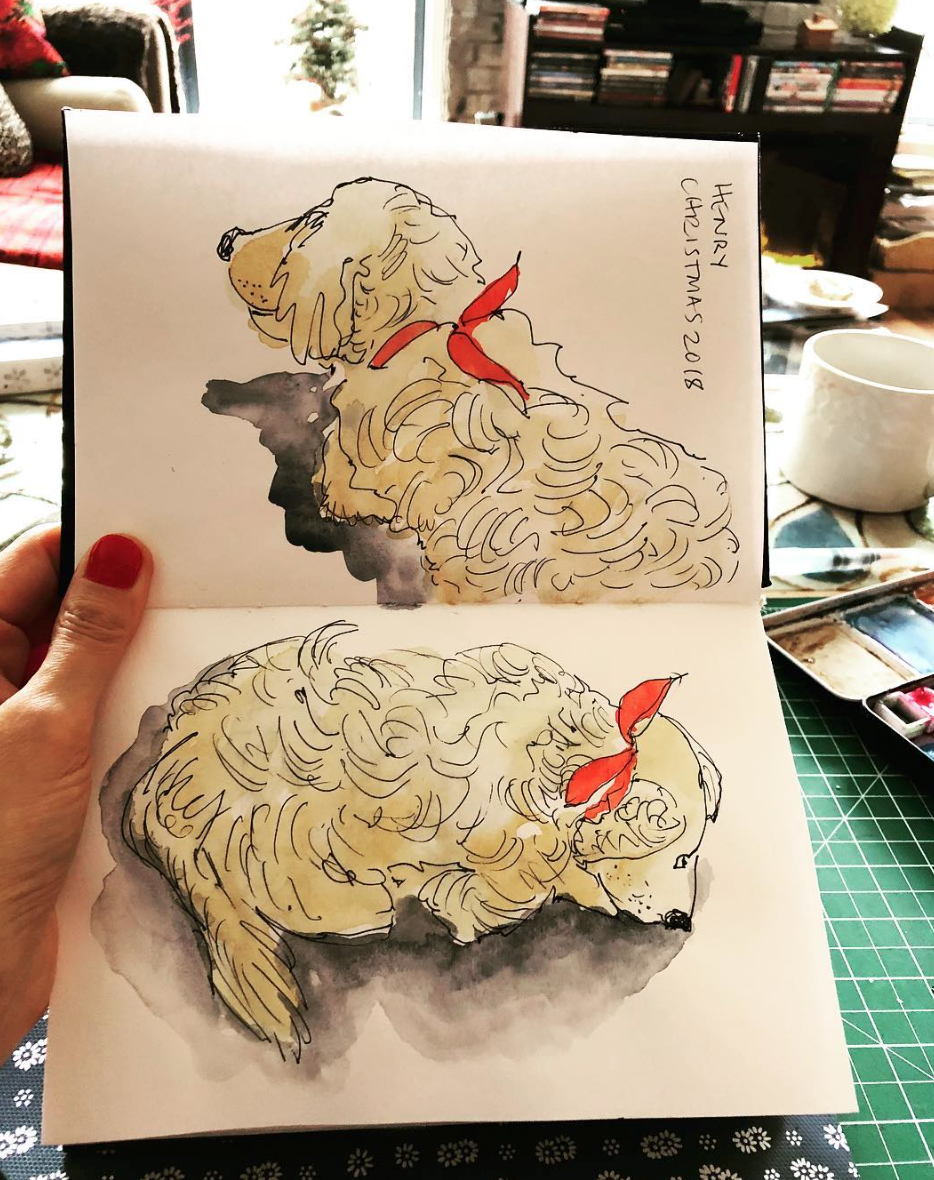
Our house guest this Christmas is a beast named Henry.
He does all the things that endear dogs to humans.
We love him.
November 15, 2018
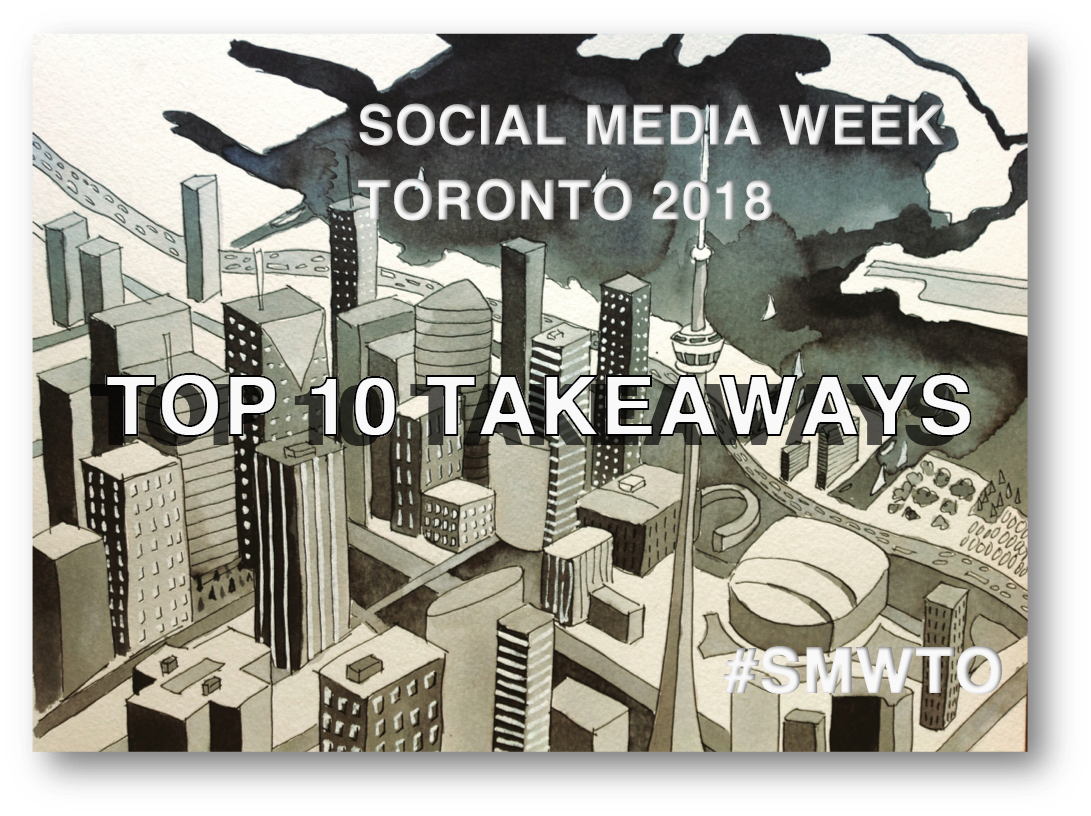 Illustration by Alison Garwood-Jones
If you are a social media user in 2018, do yourself and your friends a favour and be adaptable, patient, proactive, and hopeful. And share some of your professional failures on LinkedIn. In an Insta-perfect world, people are looking for ways to better connect with and learn from each other.
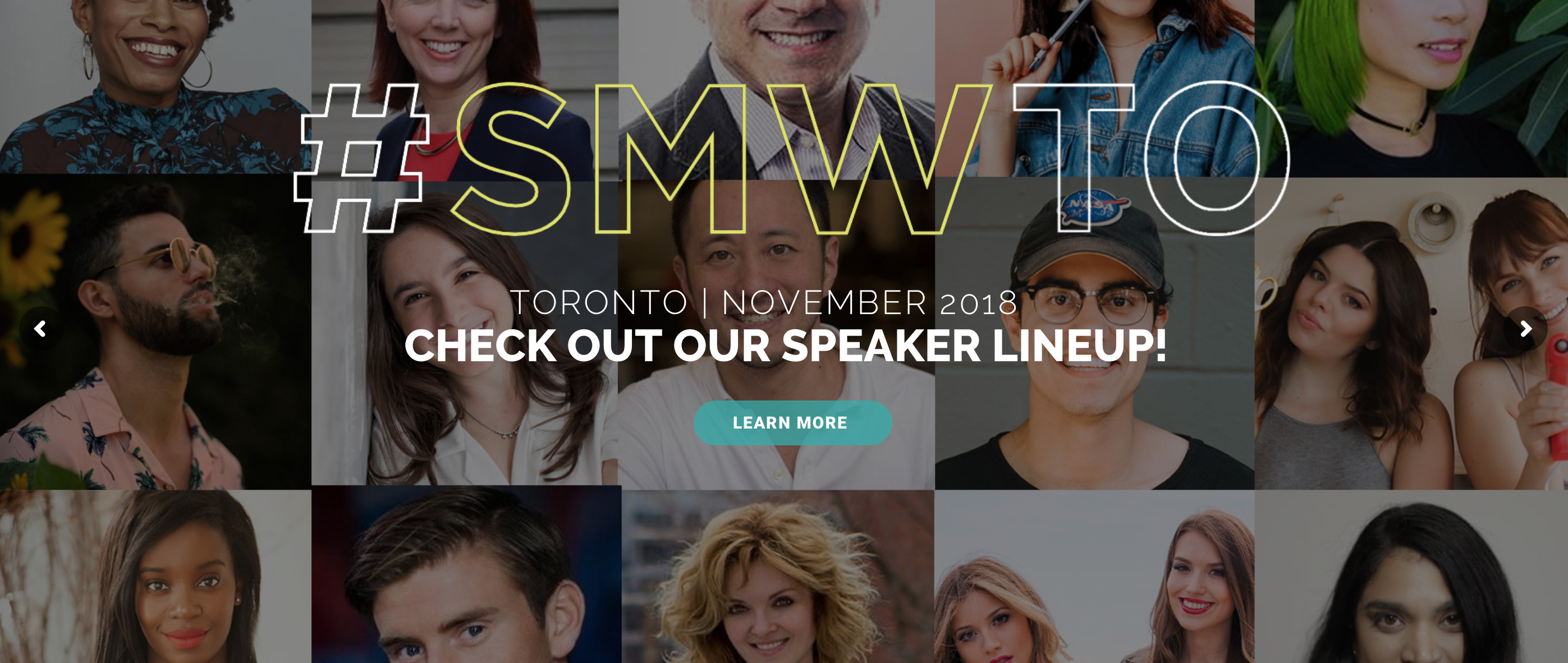
These were some of the overarching themes I took away from the first two days of Social Media Week Toronto, 2018.
Organizers Michelle Pinchev, Elle Bulger and their team at Pinch Social spent months lining up 50+ Canadian and international speakers and participants.
In turn, they gave a packed audience a “state of the nation” on digital marketing, including the ramifications from the fallout from data breaches and how algorithm changes on Facebook and Instagram are forcing us to rethink ways to better reach our target audiences (hint: Reddit and Pinterest are both experiencing a boost).
If you couldn’t make it, I hope this round-up helps you understand where we are taking technology, and where it is taking us:
10. B to B storytelling works best on LinkedIn Publishing (its baked-in blogging platform) and the LinkedIn newsfeed. Salesy B to C posts fall flat almost every time. ~ Goldie Chan, Top LinkedIn video creator.

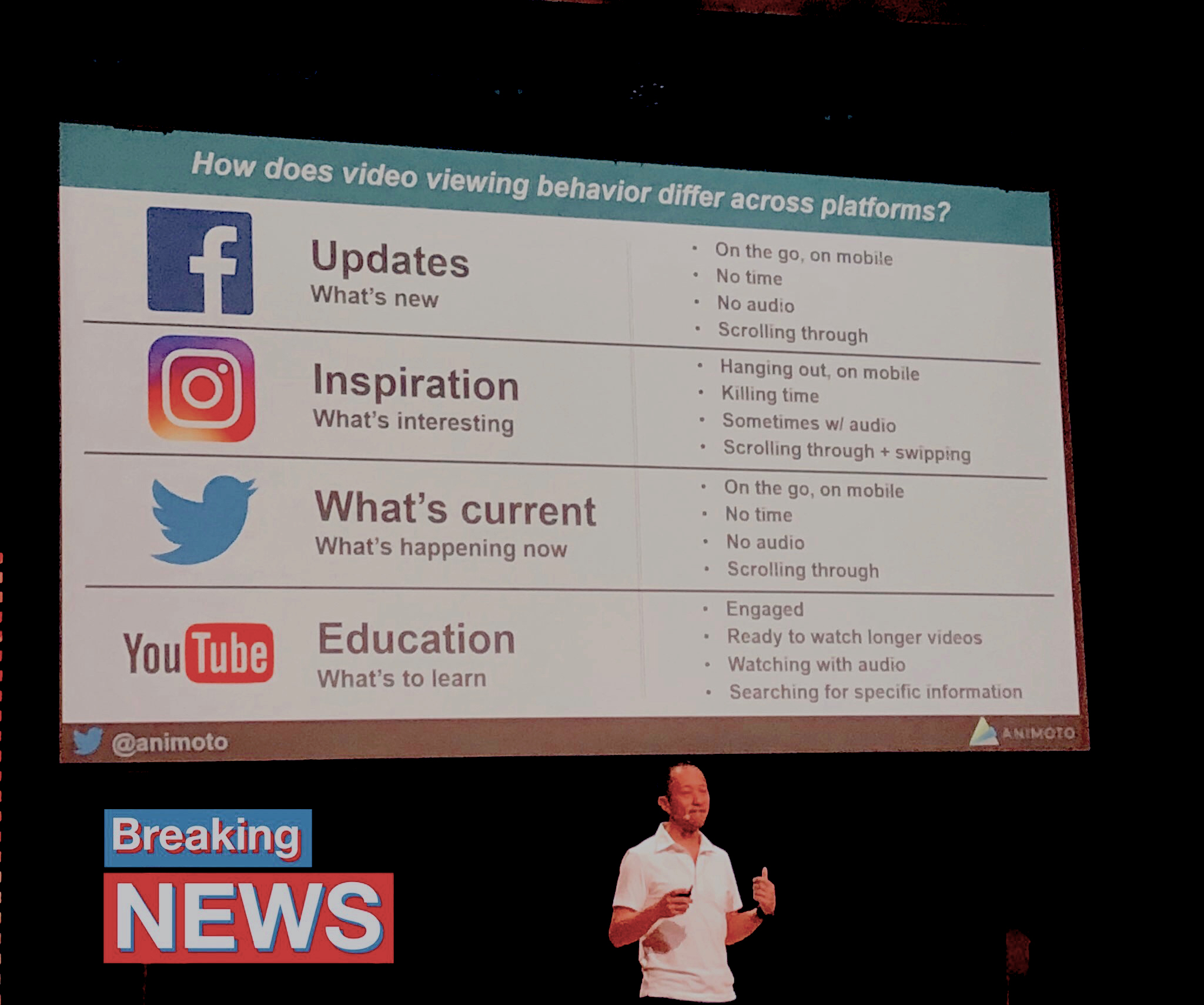
9. A play button is the most compelling CTA on the web. If “content is king,” then the king of content is video. “Today, video is the most effective way to communicate what’s important to you; it makes your audience feel much closer to you and your ideas than any written post ever could,” says Jason Hsiao co-founder of Animoto.
PS: just don’t shoot poorly-lit talking head videos at your desk. Get out in the field. Mix it up. LA native Goldie Chan (above) shoots her Influencer Tips videos at Disneyland. Often in costume. What’s your angle?

8. Pre-scheduling cut-and-paste content is out (sorry, Hootsuite and Buffer). Why? Because viewing behaviour differs across platforms. As Hsiao reminds us, we go to Facebook for updates, Instagram for inspiration, Twitter for what’s current, and YouTube for education. All of this requires different headers and CTAs.
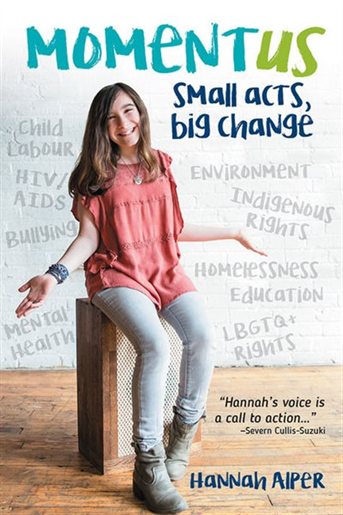
7. Not ready to be a social media activist? Fifteen-year old Hannah Alper, who calls herself a member of the “massacre generation” (as in mass school shootings) says, “one person, one action, and one moment can make a difference.” It’s never too late to use your voice. Let the good take back social.
6. Instagram has an organic reach of about 50% (versus less than 1% on Facebook). It is still the platform with the highest engagement. But with the recent departure of founders, Kevin Systrom and Mike Krieger, further rejigs, unfriendly to users, are only a matter of time. Get ready to adapt again.
5. If you are still waiting for people to find your website, stop it! Take your message to where the conversations are already happening on social.
4. Create for mobile: Square video is currently the most effective format for viewer engagement. The verdict is still out on the rising popularity of video shot in vertical/portrait mode (à la Instagram Stories and IGTV). Whatever aspect ratio you settle on, be sure to add captions because 30% of viewers are watching your video on their phones with the sound OFF.

3. Diversify your social media strategy. “Consider new options outside of Facebook and Instagram,” says Aletta Brandle, The Globe and Mail‘s Social Media Strategy Lead. Reddit has the highest time spent of all the social media platforms at an astonishing 11 minutes/day. But you need to understand how Reddit works before you wade in, says Brandle. Before you advertise, join some conversations. And don’t push your brand. “If your content survives on Reddit, it will survive anywhere,” says Brandle. If you want to find out how her first Reddit ad campaign played out, her blog is an excellent resource for her A/B testing.
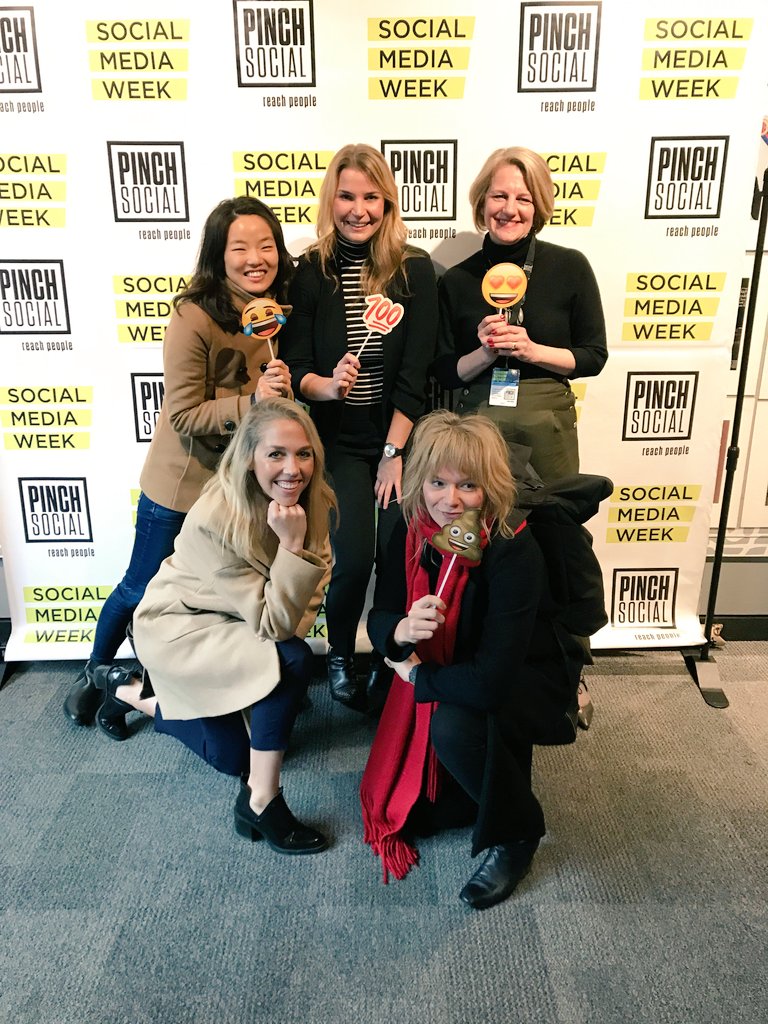 Photo: Social Media Week Toronto, 2018. Brandle is in the centre with the striped shirt.
2. Pinterest was built for people who want to discover a product. So why aren’t you there? “Users on Pintereset are further down the sales funnel than on any other social platform,” says Brandle. “50% purchase after seeing an ad.”
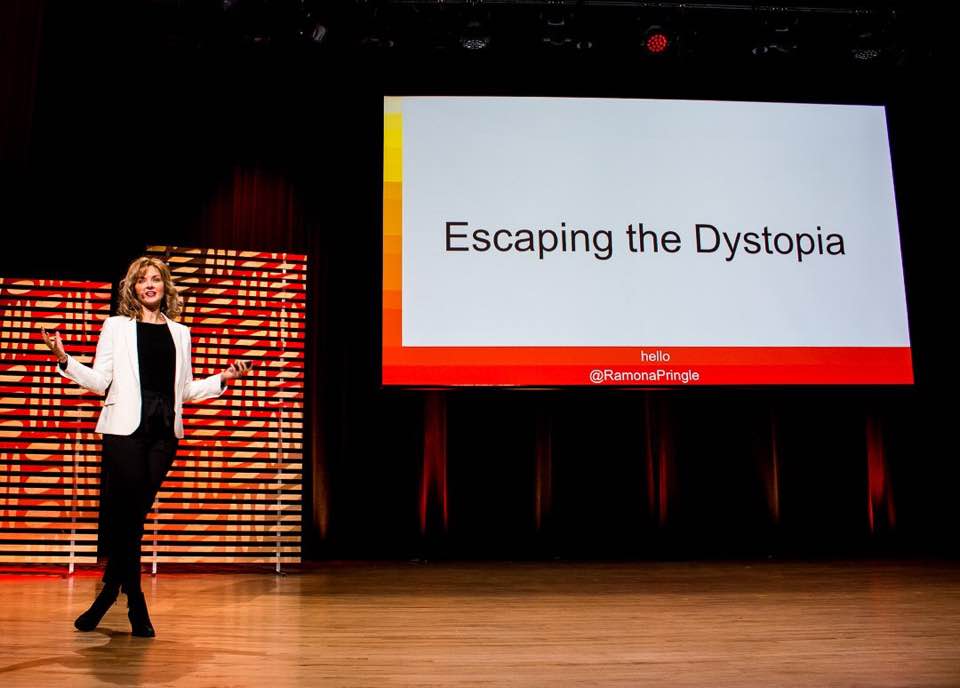
1. “We need to regain conrol of our data and our attention to fix our slide into a dystopian world.” ~ Ramona Pringle, CBC contributer, Associate Professor, RTA School of Media, Ryerson University.
November 14, 2018
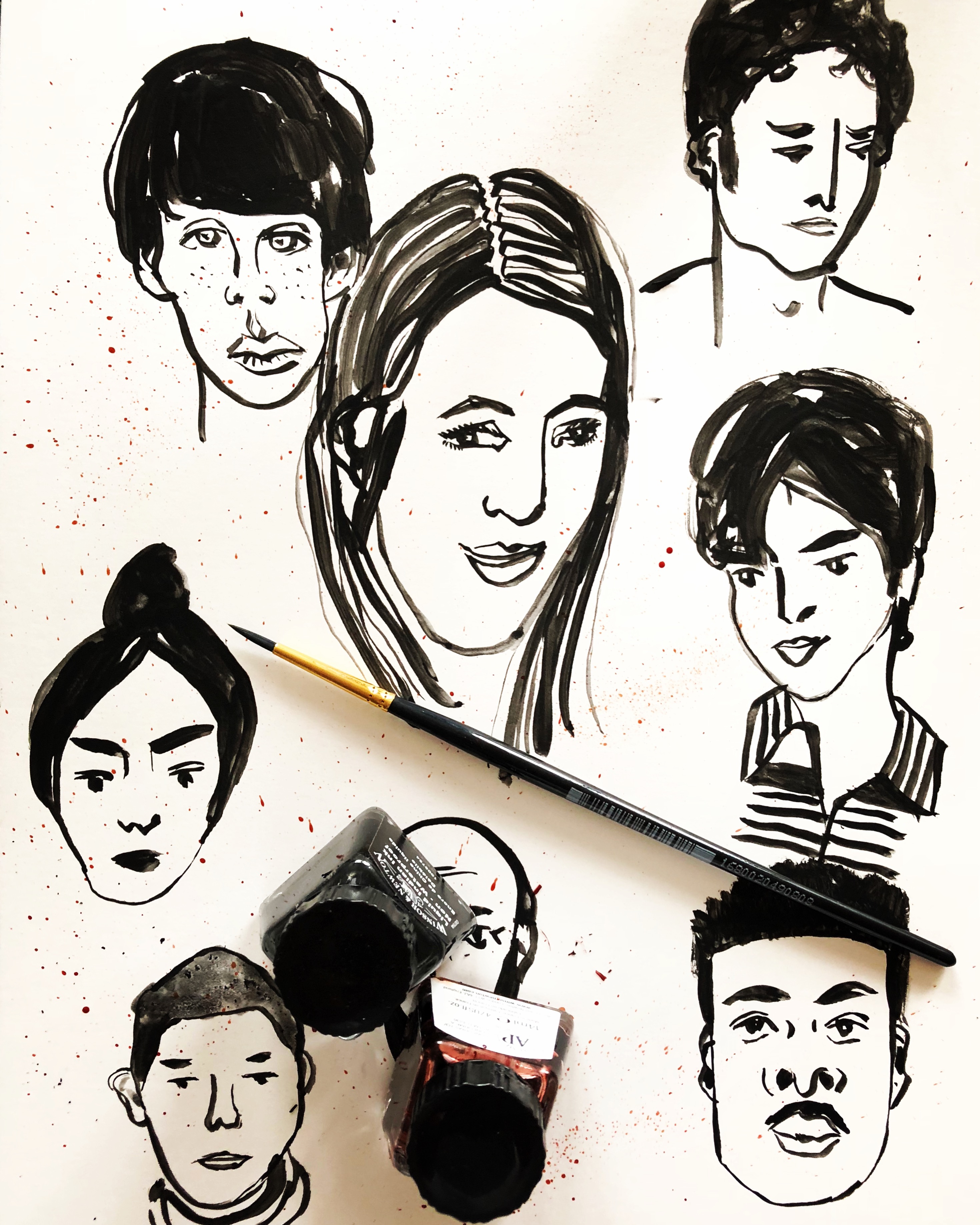
A while back, I made a bunch of ink and watercolour drawings with a film noir feel. I couldn’t decide if I was growing a cartoon strip, or just testing out a new sketchbook and pen? I still don’t know. This is as far as I got:

I couldn’t let go of what I had created. When I started placing my drawings on pillows and laptop skins, I thought my reporter (a guy I called “Joe”) was such good reminder of the march of time and technology.
I decided to make quick video about Joe.
Joe fits perfectly in an environment with a lot of books, paper, pens, and memories.
If you would like to give him as a gift to a friend or loved one, meet me over at my shop, Pen Jar Productions. Go to Pillows > “City Living,” or find Joe under “Tech Accessories.”
From my sketchbook to your home, Happy Holidays!
Alison
November 2, 2018
An email I sent my contact list on November 1st:
Top of the morning to my friends, family and work colleagues:
For those of you who haven’t heard from me since high school, here’s what’s new: I cut my hair, became an art historian, unbecame an art historian (too academic), pivoted to journalism, let my silver highlights show, wore all black, rediscovered colour, said goodbye to steady journalism work (thanks internet), and hello to content marketing (thanks internet). And when Steve Jobs unveiled the first iPad back in 2010, I rediscovered my childhood love of drawing —first through apps, and then with real paper and paint sets. Art stores are my candy aisle.
Instagram has been a great way to stay in touch with a lot of you through all of our iterations (several of you are getting in on marijuana and bitcoin). Thank you for your enthusiastic feedback on my various comment threads as I explore the possibilities of illustration. It’s because of you — Greg G, Terry L, Isabelle V, Ken H, Caitlin C, Sarah P, Eden S, Martin, W, Maureen J, Gini D, Valerie S, Donna P, and Rona M, to name just a few — that I’ve been able test the market for my ideas, and offer the kinds of illustrations and designs you’d want to live with in your homes. You are my very first customers and cheerleaders, and I am so appreciative.
I made this short video to show you what I’m up to in my sunny apartment. Five months ago, I opened an illustration studio called Pen Jar Productions (read: I added another Ikea desk]. From this simple post, I’ve been making designs for pillows, phone cases, laptop skins, tees, totes, and silky scarves. Hence, my tag line: From My Sketchbook to Your Home™️. I don’t print them myself. A cool POD manufacturer named Notion does the printing and shipping for me.
If you would like to get occasional updates from illustrator me, please feel free to sign up for my Pen Jar Newsletter. Here I will occasionally share new seasonal designs, highlight craft fair appearances, and offer special discount codes for subscribers. You have the option to unsubscribe whenever you want (I take no prisoners).
 Click on image to subscribe
Now that it’s November 1st, our minds are gearing up for the hunting and gathering of gifts. I know people scratch their heads to come up with original ideas for Christmas, Hanukkah, and the 14 other religious and pagan holidays celebrated in the month of December. And just when that’s over, there are birthdays and Valentine’s Day to think about. The longer you’ve been in a relationship, the harder it is to impress. I’d like to help in that department.
To the first 100 people who sign up for my Pen Jar Newsletter, I am offering 10% off your first purchase. A Discount Code to follow.
Happy Holidays, everyone!
Alison
October 30, 2018
Self-pity and entitlement lead us down more wrong paths than I can count.
Diversity is our natural state of being.
We should be celebrating.
September 24, 2018
I first published this post back in August when Gini Dietrich and her team asked me to be a guest contributor at SpinSucks.com. Spin Sucks (the website and the book) is a fantastic resource for up-to-date information and advice on current issues and trends surrounding marketing, communication, social media, entrepreneurship, search engine optimization, and advertising.
Not long ago, I took the first sip of an end-of-day glass of wine and thought to myself, “Sister, you are the Queen of Pivoting.”
In the last five years, I’ve gone from being a full-time magazine feature writer—one of those “tree media” enthusiasts with a blog—to a blogger, content marketer, and occasional magazine writer.
More recently, I’ve become an illustrator who writes and syndicates her stuff everywhere her target audience hangs out.
As more jobs and industries topple with the advance of artificial intelligence, we must diversify our income streams and establish multiple revenue sources.
You say you can’t draw?
Okay, but we all have skills we are not using to the fullest.
And I’m guessing that most of us in the Spin Sucks Community know artists, designers, or creative directors toying with the idea of going off on their own.
But most are successful in convincing themselves it’s too risky or not the right time to make such big changes.
Let’s face it, it’s never the right time to be creative (or pregnant, for that matter).
Much of that fear comes from not knowing how to communicate our particular value as a visual storyteller, especially when it comes to explaining how we work and what our worth is to clients.
I found it took time and experimentation with a few preliminary clients to hammer out the logistics of working solo before I could effectively communicate my terms and conditions with progressively bigger clients.
So I’ve pulled together some tips to help alleviate your fears.
And it starts with setting clear goals. But first, a bit of context.
We know the internet is progressively leaning toward visual storytelling, favoring video and pictures over long-form, and even short-form, written content.
But storytelling through hand-drawn illustrations or handwritten sayings has also been seeing way more than its 15-minutes of fame online.
Sharpie artboards at conferences, chalkboard art on restaurant Instagram feeds, and time-lapse videos of a brush painting a quote. These have all been “a thing” for a while now, and show few signs of slowing down.
In other words, the demand for this kind of brand storytelling is there. And that means no shortage of potential work for you and for me.
Fast Company even took note of the increasing importance of illustration to brands in a recent issue.
Artists and designers provide a fresh perspective and competitive advantage to businesses looking to clarify their marketing message and direction, wrote the author, Leah Lamb.
After all, “who better to lead [brands] through cultural shifts in real time than someone who is actually engaged in the production of culture?”
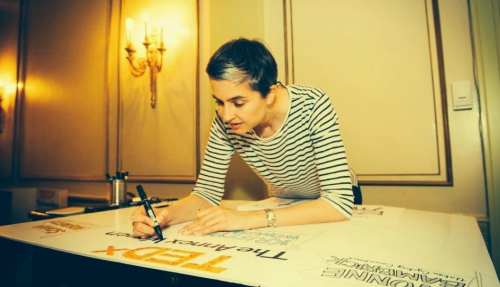
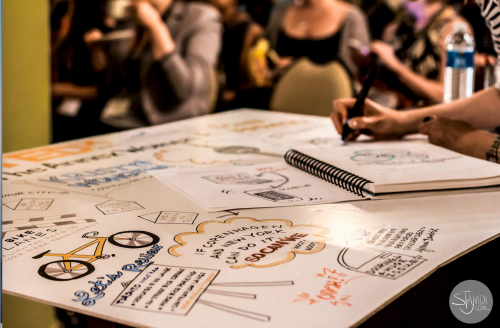
Alison Garwoood-Jones working as a graphic recorder at a TEDx conference in Toronto in 2016. It was her first professional foray into illustration. No pressure! Photos: Shaghaygh Tajvidi
Last June, I made the leap towards visual storytelling official when I set up a second Ikea desk in my apartment and founded the design studio, Pen Jar Productions.
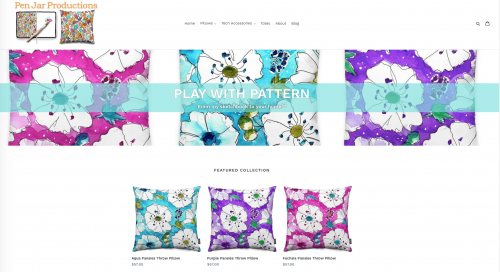
I decided it was time to tap into convenient advances in print-on-demand technology (no inventory and no shipping) and start selling my pen and watercolor illustrations on home décor items and tech accessories.
I am even in the process of trademarking the tagline, “From my sketchbook to your home.™”
There were many on my social feeds who’d enthusiastically insist, “If you put that flower pattern on a pillow, I’d buy it.”
I knew drawing more would be something I’d enjoy and be good at professionally, so I listened.
During the past few months, as this pivot goes from a dare to reality, I’ve had to tell the side of me that keeps insisting, “BUT, YOU’RE A WRITER,” to hush up and listen.

Where it all happens. Just go to Ikea, buy yourself a desk, and start experimenting. You never know where it will take you.
Here is what I have learned through trial and error so far.
Like many of you, I come to the Spin Sucks blog and community for professional guidance on a range of topics in social media, communications, entrepreneurship, content marketing, distribution, and SEO.
But unlike most of you, I’m not a PR practitioner (never have been), nor did I go to business or PR school to learn about measurable objectives, strategies, and tactics (there’s a difference?).
But I doubt I’m the only artsy one among us.
I realized how important understanding digital strategy was in getting my artistic talent and skills in front of the people who would want to pay for them.
So I signed up for the Modern Blogging Masterclass, followed by the Spin Sucks 30-Day Communications Challenge this past January.
I continue to post questions to the Spin Sucks 30-Day Challenge Slack Group, which remains open because of its enormous value to our professional development.
And no, Gini is not paying me to say any of this!
We all need a place to admit our cluelessness and share our marketing missteps.
That Slack group is mine.
A true colleague will gently course correct you and share what works for them.
These days crowd-sourcing solutions within professional groups serves to help us all adjust to the mind-boggling pace of change. And members can also help you spot opportunities.
It doesn’t matter if you are an accountant, a podcaster, an AI expert, or an illustrator. We’re all seeking more leads and conversions.
Achieving that means taking time to experience and move through the existential doubt that comes with defining, adjusting, and achieving a stated, measurable objective.
Learning how to execute a proper digital strategy starts with writing a SMART objective (specific, measurable, achievable, realistic, time-bound).
Follow this with a distribution plan integrating Paid, Earned, Shared and Owned tactics. This helps ensure your content gets in front of the right audience via multiple streams and options.
Learning all of this stuff from this community has added structure, direction, and accountability to my pivot towards visual storytelling.
True story: I didn’t start PenJarProductions.com with a SMART objective, even though I knew better.
And I even teach my students in Digital Communications Strategy at University of Toronto’s School of Continuing Studies to never practice “Pasta PR” (throw it at the wall and see what sticks—h/t Martin Waxman).
But businesses rarely evolve in a linear fashion.
So this is what really happened. I made about $500 in custom pillow sales before I even knew whether I would set up with Shopify or join the Etsy marketplace.
I was playing around late last spring, dropping my drawings on the Notion.ca pillow template, then showing my friends the results on Facebook to gauge interest.
That’s when the orders began coming in via the comments!
The internet was telling me something.
At that point, I decided to order the product with my designs and resell it to friends.
Later, once my Shopify store was up and running and integrated with Notion (my manufacturer), more sales came in.
But two months after this initial love fest over my career pivot, the crickets moved in.
That’s when I knew I needed to come up with a proper SMART objective.
What am I trying to achieve here? Where can I realistically take this business? How can my hand-drawn products serve niche communities?
My first measurable objective matched my initial sales out of the gate: five pillow sales a month.
When I ran out of friends who needed pillows (and I knew I would), I re-evaluated my SMART objective. I revised it to two sales per month, or enough to cover my monthly Shopify storefront charge.
Look at how miniscule my objective is, and how it keeps getting smaller and more realistic.
I am sharing this with you because we’re too conditioned to seeing stories on LinkedIn about creative entrepreneurs who are scaling this, killing at that, and hiring staff in record time (thanks, Gary V!).
These stories are as breathless and hyperbolic as 1990s blockbuster movie reviews.
Then there’s the rest of us, feeling our way in the dark.
By adjusting my measurable objective, I am turning my attention away from sales to attracting leads and building brand awareness.
Now, I’ve committed to spending $200 per month for the next three months for paid social in exchange for five leads a month and one sale—if I’m lucky.
I’m applying everything I’ve learned from Marcus Sheridan’s “They Ask, You Answer” philosophy of search content marketing. (He continues to do this so well.)
For example, “How do you get your drawings on pillows?” a question asked on Facebook.
I answered this via an Instagram TV video tour of my manufacturing process on site at Notion.
Another question I saw on Instagram, “Are your pillows safe for the outdoors?”
I answered this by using an illustration of a squirrel eating a pillow (the answer would be a “no”).
 You get the gist.
When I went to LinkedIn and told Marcus Sheridan how I was applying his Q&A philosophy to my new biz, I got a, “You go, girl! I love this.” from the master himself.
For a newbie retailer like me, that sort of public high five goes a lo-o-o-ong way. It fuels my energy to grow this thing.
As I build my print-on-demand illustration business, simultaneously I’ve been getting work as a graphic recorder at conferences.
(Translation: someone who does Sharpie art of speakers’ talks.)
I was able to get this work through effective Q&A content marketing, not by casting my net as wide as possible, but by going niche.
Using keywordtool.io and Google Ads Keyword Planner, I was able to find out the kind of questions people were asking about working with a graphic recorder.
(I also used the terms “graphic facilitator” and “graphic visualizer.”)
There, I found the question “Why hire a graphic visualizer?” and saw it had a very low search volume.
As I learned from the Modern Blogging Masterclass and the PESO model in general, this is a good thing!
I capitalized on the opportunity by applying Sheridan’s Q&A-style of search content marketing, making a video slideshow with my drawings that answer the question of why brands should hire graphic recorders.
And it worked!
I got three more gigs soon after.
When I asked each of those clients how they found me, they answered, “Through keyword searches on Google.”
For a while, this video was ranked number six on page one of Google. Not bad for someone with a domain authority of 25.
Using BuzzSumo also taught me the highest search volume for “graphic recorders” was on LinkedIn, and almost no one was searching this niche term on Twitter.
In other words, I knew where my target audience was hanging out.
I could meet them there with stories, pictures, and videos showing how I’d work with them to solve their challenges.
As an example, a TEDx conference opportunity came through LinkedIn.
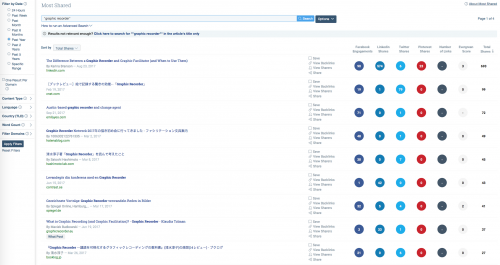
A keyword search for the term “graphic recorder.” BuzzSumo showed the most searches for this term happened on LinkedIn-574 vs. 93 on Facebook and six on Twitter. I focused my content marketing for that skill on LinkedIn Publisher, and got jobs as a result!
As for my new design company, through my targeting efforts in paid social, I’m learning not to go after huge communities of people.
Rather than going mass and trying to reach the huge community of #homedecor lovers, I’ve seen better results meeting the needs of super niche communities.
For example, this summer I created totes and pillows for 700 Toronto Islands residents who ride vintage 1930s ferries back and forth between the mainland and the islands.
These folks need bags to carry their groceries.
And tourists who ride the ferries want mementos of this beautiful provincial park six minutes from downtown.
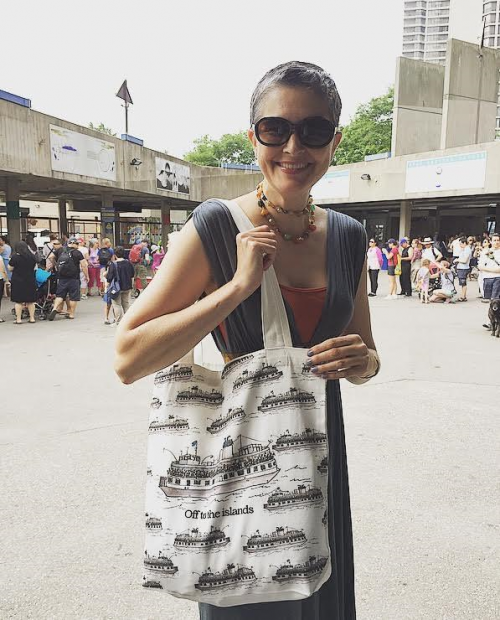
AGJ with her “Off to the islands” tote bag. The design was aimed at Toronto Island residents and tourists taking the vintage ferries. Notion.ca prints her art on totes, pillows, and tech accessories (phone covers and laptop skins).
So far, my plan is working.
My Shopify sales funnel is filling up again. (I made eight sales in four hours at a recent craft fair on Ward’s Island.)
These aren’t Ikea sales numbers because I’m offering one-of-a-kind items at a higher price point.
I’m also counting on the fact that not everyone wants a pillow design that 936 million shoppers have seen, manhandled or bought (actual IKEA stats on customers served in 2017).
Because there are so many niche groups and weirdos out there, I can cater to their obsessions through individual illustration campaigns: cats, writers, pug enthusiasts, etc.
This past winter, a design firm got in touch with me to do portrait illustrations for the lobby of a new boutique hotel opening in Toronto.
I asked my more experienced illustrator friends, and a magazine art director, for advice on writing my terms and conditions for the job.
It was time to craft my own set of standards.
They sent me examples of the standard rights artists must insist on, as well as, the working conditions they should accept and reject.
This video also helped.
Doing more than two revisions per illustration without being paid, for example, can be hard on you financially.
And nitpicky clients will take advantage of you if you don’t state your boundaries. “Sure I can draw that celebrity a third time with looser lines, but it’ll cost ya.”
By the way, said design firm found me through a Google image search.
They were looking for a drawing of Jane Jacobs, the urban activist, and came upon my Pinterest page.
Which leads me to my final piece of advice.
As you experiment and discover your style, set yourself up to be found.
As Austin Kleon would say, “Show your stuff!”
Use Instagram as your art gallery and sandbox, and use your blog as your archive.
Then tag and categorize each drawing so it reaches those potential niche audiences who would love your pug drawing (#PugsOfInstagram), or your sketch of Robert Downey Jr. (ahem, Gini).
Above all, don’t ignore your creative impulses. Start playing!
Afterword: Since I first wrote this post, I have gained even more valuable tips and insights on how to build a “portfolio career” (i.e. creating multiple revenue streams) from Dorie Clark’s book, Entrepreneurial You (2017: Harvard Business Review Press). I can’t recommend it enough.
September 4, 2018
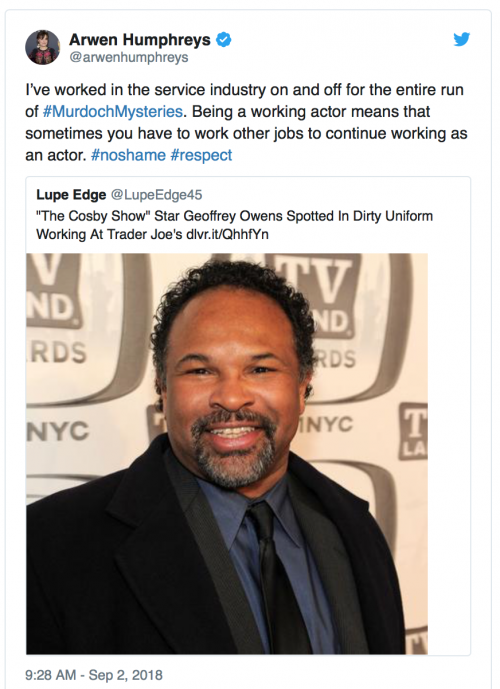 Geoffrey Owens, talented actor and Yale grad: you have my respect and admiration. This August, in between teaching, writing, starting my new design biz (Pen Jar Productions), I too worked in the service industry, running the door at The Rectory Cafe, a beautiful restaurant on Ward’s Island. Part of my job included sweeping the entire patio and filling water bottles before the first ferry load of guests arrived.
As always happens, I sat many of my former students (some from last term!), editors and work colleagues and even a few university classmates (“Alison, is that you?!” they gulped/winced).
I’ll do whatever it takes to be in charge of my work life and creative interests. I’m not in to putting things off, and for this the service industry is brilliant and flexible.
If status and fancy titles (that reflect your education) are important to you, then I don’t recommend playing your cards this way. As I said to one of my summer students who caught me leaning into my mop, “I may look fancy, but I don’t act fancy.”
I appreciated Owens’s response to the social media take on his fate:
“[This sheds light on] what it means to work and the dignity of it. There is no job that is better than another job. It might pay better, it might have better benefits, it might look better on a resume and on paper.” Owens, who wore his Trader Joe’s name badge during the interview, said. “But actually, it’s not better. Every job is worthwhile and valuable, and if we have a rethinking about that because of what has happened to me, that would be great.”