




 Gone sailing in my mind.
We Know What Jane Jacobs Would Do
June 9, 2015
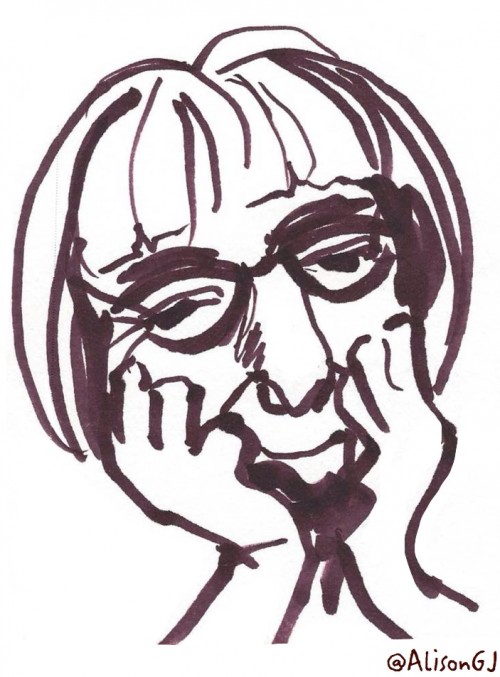
#GardinerEast: “It’s an awful handicap.” ~ Jane Jacobs
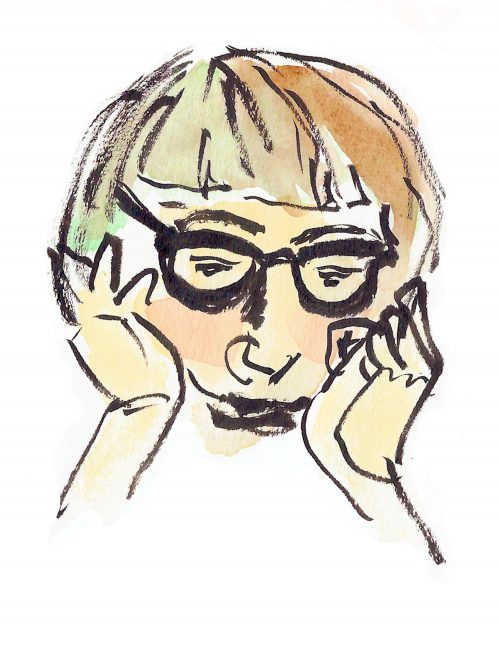
A watercolour and Pentel brush pen drawing of Jane Jacobs by Alison Garwood-Jones
TEDx
May 29, 2015
Being asked to participate in this year’s TEDxWomen 2015 was a testament to the power of LinkedIn’s algorithm, having a blog, doing what you love and showing your stuff! As a result I got to collaborate with a bunch of really smart, generous women. I always hoped this is what freelancing could be. Thank you, Helena Skrinjar and Vanessa Reid!
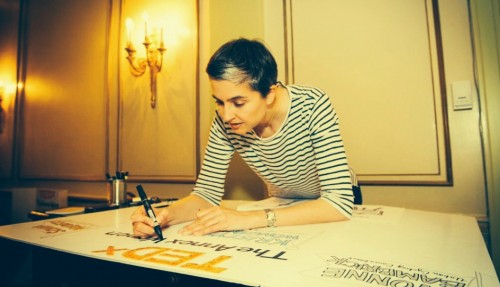
Graphic Visualizer at TEDx The Annex Women, Toronto, May 28, 2015. Photo: Shaghaygh Tajvidi
TEDxWomen 2015 was a one-day event showcasing women’s voices and perspectives from around the world. While TEDxTheAnnexWomen highlights local voices in Toronto, it is part of an intercontinental network of inspiring storytelling with the goal being to share ideas and insights on creating, sustaining and recovering momentum. Collectively, we discovered new perspectives on where — and why — change is happening today by exploring the innovations, ideas and individuals building momentum around the world.
In Toronto, we heard six speakers on range of topics from sustainability to building a bike culture to the importance of choice for a woman in marriage. Kristyn Wong-Tam, Carolyn Harris, Naz Gocek, Sonia Molodecky, Vanessa Reid & Yvonne Bambrick were the speakers. My job was to capture the essence of their talks in drawn form.
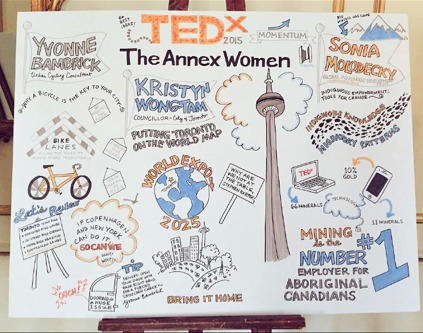
You talk, I’ll draw.
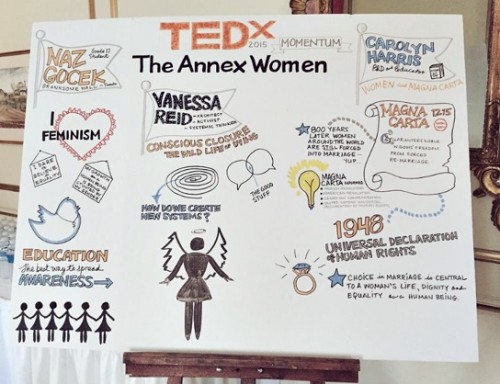
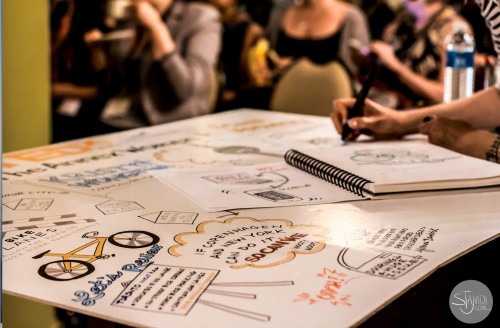
Photo by the talented Shaghayegh Tajvidi: stajvidi.com
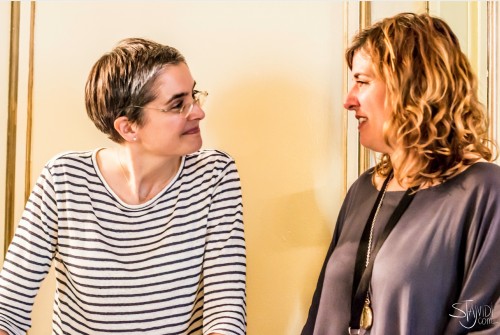
Getting to know TEDx presenter, Vanessa Reid.
Using my voice
May 21, 2015
This week I unwittingly joined the ranks of Robert Redford and Pierce Brosnan when I lent my voice to a PSA on monarch butterflies for the Natural Resources Defense Council (NRDC).
The NRDC is an American environmental organization, but Canadian farmers, especially corn and soybean growers, have permission to use the same glyphosate-containing chemical mentioned in the video that is wiping out butterfly caterpillars in the US. It’s a North America-wide problem.
While dandelions are on the rise in Ontario due to a province-wide cosmetic pesticide ban, butterflies are on the decline.
You may shrug, but this “butterfly effect” is serious.
Here’s why:
Mothers
May 10, 2015
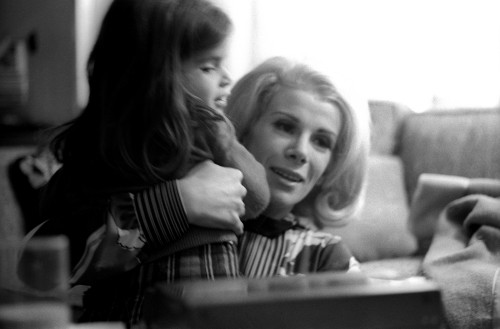 Photo from the Melissa Rivers Collection
Joan Rivers was by turns vicious, smart, snarky and deeply caring.
Back when when I watched more TV I occasionally landed on one of her fashion rants, but never stayed long. Most of the time, I don’t find that kind of aggression entertaining. But I felt her talent, so I paid attention to her comings and goings.
In more instances than I can recall, the social commentary I got from Joan Rivers and Robin Williams (about things other than fashion) was smarter and more to the point than any explanation laid out in the op-ed columns of the world’s best newspapers.
I especially paid attention to Joan after an interview she gave to a local radio station in Toronto seven or eight years ago. Rivers spent a lot of time in Mississauga, “Toronto’s Hoboken,” as she called it, pushing winking brooches from her Joan Rivers Classic Jewellery Collection to Shopping Channel viewers. She’d coax the phone lines to light up by placing two brooches on her pant suit jacket, right over her nipples. “This’ll draw attention.” Or else, she hammed it up by donning a mystical fortune teller’s puffy cap. “I know why you’re here, [to buy jewellery],” she intoned in her raspy Borscht Belt delivery. It was a direct rip off of Johnny Carson’s Carnac The Magnificent.
In that radio interview, Joan did as Joan did: alternating between jokes, acknowledging her husband’s suicide, the cancellation of her ’80s talk show, the temporary estrangement from her daughter, Melissa, and the countless patch-ups to her nose, eyes and lips. But here’s the kicker: I don’t remember exactly what it was that Joan said that made me go, Wow. I think it was something about perseverance. But I vividly remember how she made me feel. That’s when I added her to my list of beacons. From that chaotic mess of talent, ambition and missteps sprung this humility. It wasn’t plotted out ahead of time like the jokes she filed away on thousands of recipe cards. She didn’t even know it was coming. It was air-distilling, though.
Six months after her mother’s death, Melissa Rivers is struggling to adjust to life without Joan. This weekend, in an LA Times profile by Amy Kaufman, the younger Rivers noted that “when your first parent dies, it’s a comma; when your second is gone, it’s a period.” Stating that second part has been hard for Melissa, says Kaufman. “You can almost see her squaring her shoulders.”
If it helps, in my experience that sense of finality wanes. In a commencement speech she made in 1989, Joan told Melissa and her fellow graduates at the University of Pennsylvania that “as long as you’ve got a parent left, you can always be a child to someone. The light is in the window.”
I think, given time, that period will have turned back into a comma and she’ll feel the light again.
Printemps
May 5, 2015
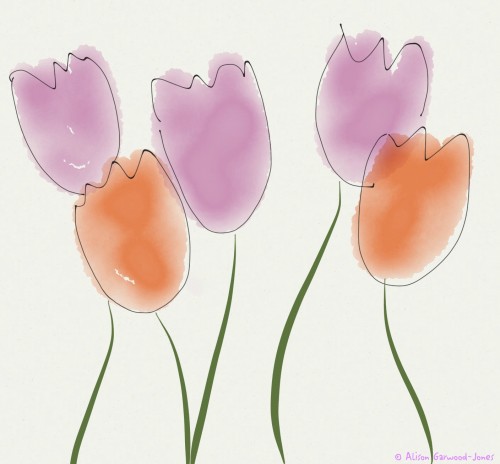
Orange tulips smell like oranges. In a loud way.
Purple tulips … you guessed it. They smell like grape! Not real grape, grape popsicles.
I have no idea why this is so.
But it’s marvellous.
A good read
May 2, 2015
I don’t want Auden chopped up
And sprinkled in my Twitter stream.
Or van Gogh’s letters reimagined by
A ginger mugging for YouTube.
Keep Khayyam on the pages of the World War I chapbooks,
Complete with my grandmother’s soft pencil annotations.
What presence!
And Yeats?
If you get that fucking gadget anywhere near him …
I’ll appoint Vermeer to go after you.
He’ll chase you through the market
And alongside the canals until
You fall into the water with all the other bloated rats.
Back home, in the quiet of my candlelit study,
I’ll commune with everyone’s pictures and words.
The book isn’t dead. Long live the book.
Out of the woods
April 25, 2015
 ildegard walked the forest in a squeaking body of armor. Her chest plate was bronze and had dings from all the arrows that had tried to pierce her heart, but never made it. Her waist was tiny and bound by a wide leather belt fringed with hard studs designed to keep hands off. Her long legs were sheathed in brown leather too tough to rip, and she kept her flowing hair — so black it shone blue — tucked under an iron helmet to avoid attracting too much attention.
Hildegard only wanted to be noticed for her quick reflexes and artistry with the sword. She had a habit of driving the instrument’s sharp point at potential lovers and enemies — she couldn’t tell the difference — and bellowing, “Stand back!” Some took her on and clanked swords, but eventually they realized they were no match for her looping blade and fancy footwork. Let’s face it, though, her premature victory cries — in French, no less — made even the staunchest romantics turn and flee into the forest never to be seen again.
One day, as Hildegard was walking her favourite trail — the one covered with the dancing wildflowers — she stumbled upon a cave at the base of an escarpment. “Hell-o-o,” she called, “Is anyone there?” She pulled out her sword and held it in front of her as she walked down into the darkness. There was some commotion and a flutter across her cheek as a nesting swallow tried to move out of her way. Dripping water from an underground stream pinged against her helmet and thick mud tried to stop her in her tracks the whole way through, but Hildegard was determined to lift her legs out of the muck and keep moving forward.
At the back of the cave she came upon a room illuminated by tallow candles and saw a figure lying motionless on a plinth. It was an ancient hag. Hildegard stood over the old woman, watching the slow rise and fall of her chest and taking in the details of her waning body. Her wiry hair flowed in dry waves over either side of the platform. Her deflated breasts were heading over the edge too. She had pointy hip bones, like an old cow, and feet as gnarled as tree roots. Hildegard’s eyes were moving on to the colourful assortment of stuff happening to the hag’s hands, when the old woman opened one eye, then two, causing Hildegard to jump back.
“Why are you trying to outsmart love?” asked the woman.
“Because it’s not worth the pain,” said Hildegard.
“And how does it feel living a pain-free life?”
“It hurts.”
“So then take off that ridiculous chest plate and free those legs from their leather casings. And, while you’re at it, toss the helmet too.”
Hildegard unbuckled the shield encasing her soft chest and leaned it against the stone wall. She removed her helmet and her conditioned hair fell in a tumble down her back. The leather pants were the last to go. As she stood there in her camisole and thong, the old hag pointed a knotted finger to the storage space under the platform. Hildegard felt around in the darkness and dragged out a treasure chest into the middle of the floor.
“Open it,” instructed the old hag. The lid creaked like it had never been touched before. Hildegard held up a cream satin slip dress with the price tag still dangling from it, then fished out a pair of matching flats. She even found a Hawaiian lay of fresh flowers. “I dreamed of wearing those,” said the old hag, “but I kept putting it off.”
Hildegard dropped the dress over her head, slipped on the shoes and was adjusting the lay when the old hag said, “Now, go back out there.” As Hildegard turned to leave, she didn’t give a second thought to the expensive sword she was leaving on the floor next to all of her other top-of-the-line equipment. The light pulled her along. When she reached the entrance to the cave, the noonday sun warmed her face and the wind lifted her long hair.
A week later, the old hag arranged for Hildegard’s equipment to be returned to her by courier, with the note: “Keep the dress.” Hildegard took it one better: she kept the dress, the equipment (for regional tournaments), and said yes to coffee with the courier.
Decorative “H” courtesy of the talented Jessica Hische.
The gambler
April 19, 2015
Back in the fall of 1999, this quote by Richard Ford in The Globe and Mail seemed important enough to scribble down. Translation: it rocked my little whitebread world which, true to form, consisted of Enya, getting lost in Kenny G’s mane, Mac matte lipstick and a shiny black Nissan Pathfinder.
“My view of writers I admire is not that they are sturdy professionals with a specific set of skills and how-tos, clear steps for career advancement and a saving ethical code; but, rather, that they are gamblers who practice a sort of fervidly demanding amateurism, whereby one completed headlong endeavour consumes almost entirely its own resources and generally leaves its author emptied, dazed and bewildered with ringing in [their] ears.”
I stopped driving that Pathfinder after I tried writing for real. I was too dazed and confused to focus on the road. Kenny has since been remaindered in a yard sale or two.
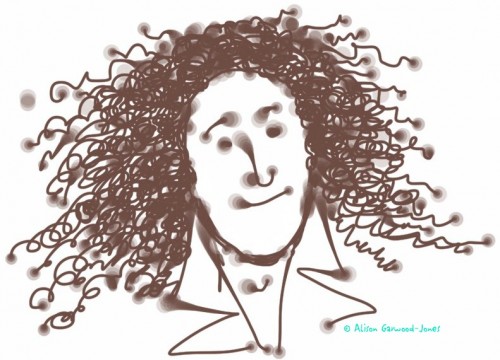
Kenny, words fail me.
He wants YOU
April 15, 2015
When winter leaves, Canadians, for the first time in months, can take their hands out of our pockets, straighten their shoulders and look up. No need to act like battering rams against the cold.
The dog park is one of the first places I go to celebrate the glowing effects of the earth’s new position. But Spring is best experienced without Mark Zuckerberg. It requires all your senses. I don’t know about you, but my phone robs me of my sight and hearing. I also hold my breath when I’m scrolling through emails or looking for red dots to open on my Facebook dash. I actually deny myself oxygen.
Here is a replay of a vignette I posted two years ago about the here and now of friendship.
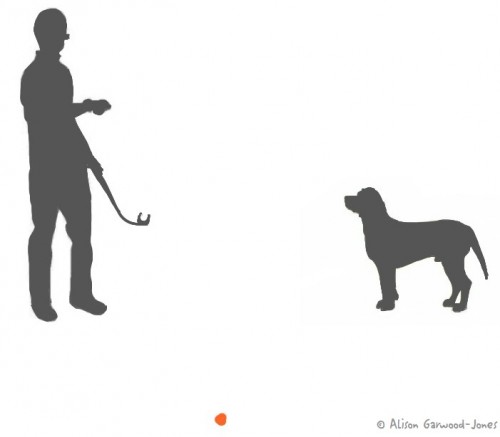
It’s Spring. A man opens the gate to a dog park and Rover runs in, ears flying. The man raises his “Chuck It” Launcher and hurls an orange ball across the dirt pitch. Rover drops his leg and runs like a maniac to retrieve it, then runs back just as fast and skids to a halt at his master’s feet as a cloud of red dust rises around them.
The man repeats this four times. At this point, Rover’s eyes are sparkling with engagement, his tongue is out and hanging heavily from the side of his mouth while his tail keeps time like a feathered metronome.
On the fifth throw, the man’s smart phone sends him a text chime and he lowers the launcher to see who it is. Rover stands motionless panting and anticipating the next round of fetch. When the wait goes on a bit too long, Rover barks to get the man’s attention. The man looks up, flings the ball, then resumes scrolling on his phone.
The ball lands with a thud across the park, but Rover is still standing motionless in front of his master. Not long after, his tail switches off. The game is over as far as he’s concerned. Why? Because dogs don’t care about chasing balls. They care about engaging with you. Children and spouses are remarkably similar. And equally needy.