




My biggest challenge right now isn’t dust bunnies. It’s green pepper seeds. My floor just loves them.
August 19, 2012
My biggest challenge right now isn’t dust bunnies. It’s green pepper seeds. My floor just loves them.
August 15, 2012
July 22, 2012
July 20, 2012
I’ve noticed a food trend. It’s not sexy like figs with warm honey, or technically brilliant and tasteless like foam. It’s definitely not healthy. And it’s more a style of eating than any new culinary concoction.
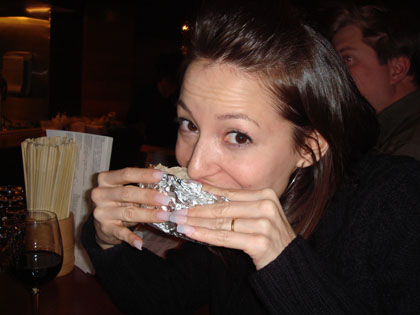
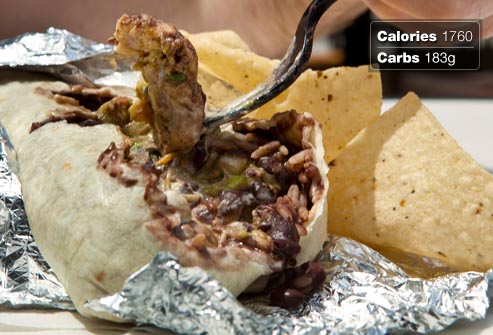
It involves doing a face plant in clouds of takeout wrapping paper. Anyone watching you eat like this has no idea what you’re working on — we can’t see through all the paper and foil. Usually it involves a burrito, but not always. All your audience knows is that you’re going in, coming up to chew, then going back in, and that you’re breathing heavily through your nose while your cheeks gather skid marks of sauce and vegetable detritus. I give it zero out of five stars for style.
The first time I witnessed it I couldn’t help thinking, ‘You’re ramming that food down one hole until it comes out another.’ It’s that crass to watch.
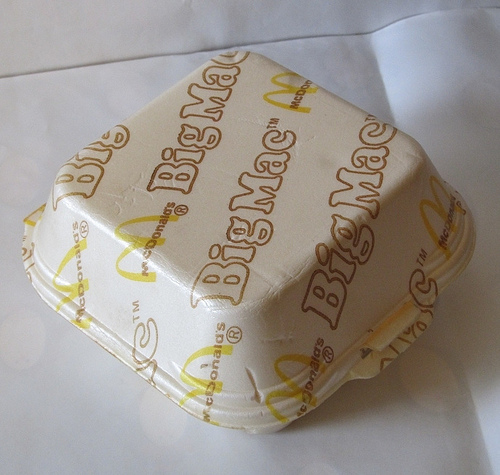
Has anyone else noticed that people have stopped directly touching their food? Fear of germs and the rise of hand sanitizing gels have probably contributed to this. So did the necessary changes to environmental packaging standards, from Styrofoam boxes back to waxed paper. Remember this olde delivery systeme that gave you no choice but to directly pick up the contents?
McDonald’s Styrofoam Big Mac container, circa 1990
Back in the day when I ordered a McDonald’s cheeseburger (sans box, but with paper), I’d completely remove the damp sandwich from its yellow wrapper and chomp my way through, occasionally losing a plop or three of ketchup. Most times, though, it was too dry and too old to drip. Still, mess is the biggest reason why folks today don’t remove the wrapping on big production numbers like burritos. It would be like slicing open an intestine.
The Breakfast Burrito. There’s that cloud of paper!
But the trend is spreading. I’ve seen people refuse to touch “clean food” like granola bars (the dry ones, not the sticky honey or chocolate-coated ones). They eat them like toothpaste, by pushing the product up from the bottom of the wrapper until it’s safely in their mouth. And when it comes to burgers, they’re only half-unwrapping them, even at the table. They slowly push or peel the paper back until they’ve consumed the whole thing. Not once do they pick it up, feel the weight of it, engage with it. NEWSFLASH: ten minutes after posting this, I got a message from my friend, Carolyn. She had a Whopper at Burger King last night and said it’s now being served in a half wrapper inside the box. “I only touched the burger when it became absolutely necessary,” she said.
This is not a diss against junk food. It’s just that I’m all in favour of getting intimate with every hamburger I encounter. I like rolling up my sleeves in advance of the condiment stream down my arm.
Our relationship to food is sacred, or it should be. I’d just like to see us honouring this special occasion where our senses converge.
July 17, 2012
[I] coined this saying in my twenties, and believed it through that entire decade of my life. Back then, men my age reacted to me in two ways: sexual heat or professional competitiveness, but usually they offered the package deal. Keeping an eye firmly planted on me (and my rotating outfits), they monitored the pace of my success and roared ahead if they saw the needle on my speedometer twitch ahead of theirs. None of them presented themselves as the sort who, when really tested, would sacrifice their own schedules or ambition to support the dreams of a woman they were interested in. I probably would have thought they were putzes if they did. There’s the rub. Antagonistic is how things felt back then.
Still, I forged ahead, hellbent on self-actualization while my mum and dad whooooped uproariously from the sidelines. I couldn’t help thinking that a smart, ambitious young woman could count on her deepest support coming from the people who had no intention of sleeping with her. And so, standing in the box next to my parents were a gaggle of gay guys, wagging their index fingers and screaming, “You Go, Girl!”
In the interest of balance I searched for exceptions to this rule. But they’re hard to find because almost no one reveals the truth behind two-career marriages while they’re in progress, other than celebrities and politicians. Bill and Hillary Clinton’s publicized compromises and indignities have been felt by more than some. Women watch Hillary — wondering what she’ll do — not because they’re shocked by what’s gone down, but because they can relate.
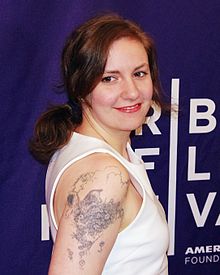
Billary in the hairy 1970s.Not long ago, the thrice-wed Nora Ephron had some relationship advice for Lena Dunham, the 26-year-old writer and creator of the hit TV series, Girls. As Dunham recalls it,
I was sheepishly describing a male companion’s lack of support for my professional endeavors. Nora nodded in a very “don’t be stupid” way, as if I already knew what I had to do: “You can’t possibly meet someone right now. When I met Nick [her third husband, and a charm], I was already totally notorious”—note: Nora was the only person who could make that word sound neither braggy nor sinister—“and he understood exactly what he was getting into. You can’t meet someone until you’ve become what you’re becoming.” Panicked, I asked, “How long will that take?” (read the full article here).
Lena DunhamThere are some who would argue that men’s monomaniacal focus on their own progress is actually meant for the women and children (or future women and children) in their lives. It’s part of their need to provide for us while we focus on raising those babies. It’s why they don’t notice their underwear on the floor. And it’s why we write dialogue in movies like this, between a working mother and her husband,
“But I want you to want to take out the garbage.”
Men zone in and out based on their interests and attention spans and some of that is probably baked into their being. Extreme effort at work is followed by extreme laziness at home. For women, the need to maintain a stylish, orderly and safe environment at home (free of underwear heaps and raised toilet seats that babies or cats might slip on or drown in) is also built into our makeup. But so too is our need to need to achieve beyond housekeeping and biology.
We are all creatures of biology — men deliver sperm, women deliver babies. But the consequences of those native functions continue to fall too heavily on women. Biology either buries a woman’s individuality or thoroughly exhausts her as she scrambles to keep it alive.
[pullquote]While a guy may take out the trash or mow the lawn at night or coach Little League on the weekend, those are not activities that can stunt your career progress. – Kunal Modi[/pullquote]
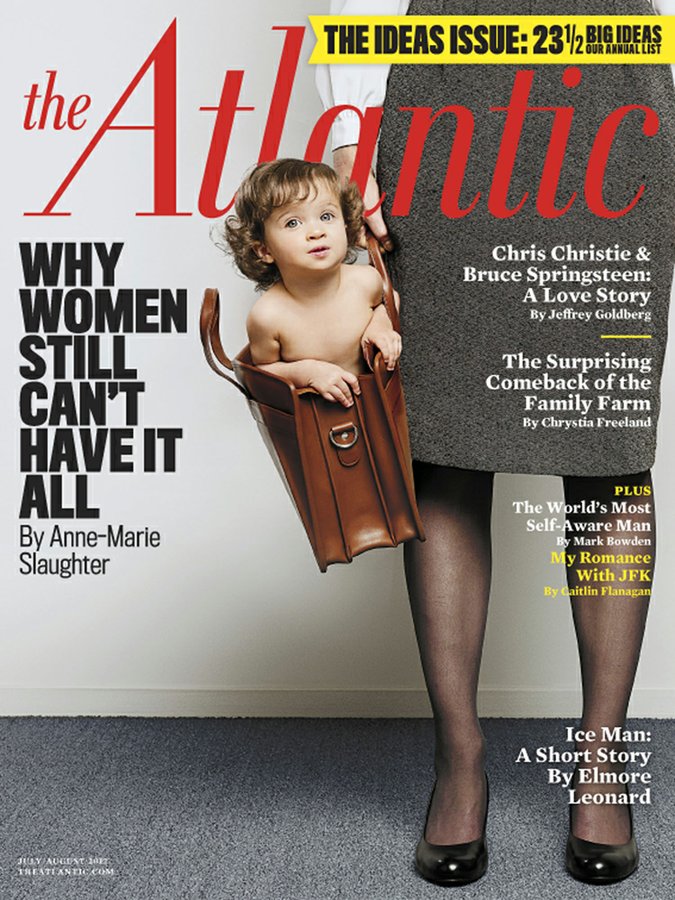
Right now I’ve got my fingers crossed because it looks like we’ve reached a very public tipping point in male-female labour relations. Anne-Marie Slaughter’s stunningly confessional account of her struggle to balance work and family, called “Why Women Still Can’t Have It All,” published this month in The Atlantic, will go down as the most important feminist tract since Betty Friedan’s book, The Feminine Mystique (1963).
Slaughter is a Princeton professor, mom to two teenage boys, and the former Director of Policy Planning for the U.S. State Department where she worked under Hillary Clinton. Both Slaughter and Friedan’s accounts, though 50 years apart, describe why women, then and now, are more dissatisfied than men about how their lives have unfolded. While the women in Friedan’s survey were bored and antsy about being stuck at home in 1963, the women Slaughter describes, including herself, are frazzled and stressed by decades of trying to fit themselves and their children into the inflexible timetable and structure of a working world designed by and for men (with wives).
Feminism harshly judges women who give up too soon, but Slaughter was willing to be the first to say in 12,674 words, ENOUGH! More importantly, she’s called on the workplace and society to accomodate women’s needs because we aren’t going back into the home full time. Men on their own don’t earn enough to support their families any more. In fact, a study released last week by Prudential Financial found in a survey of over 1400 American women that a majority (53%) were now the breadwinners in their family. And, yet, children are still let out of school at 3:30 pm, as if moms are at home waiting to greet them.
[pullquote]Raising children and running a household are not ‘women’s roles’ and treating them as such is counterproductive to your own family’s economic well-being. – Kunal Modi[/pullquote]
Extending school hours is one of many changes Slaughter and others have called for. That and more freedom to work from home. Let Skype handle face time. And c’mon, email conveniently replaced actually talking to your fellow desk jockeys years ago. It shouldn’t be a problem.
Social media instantly picked up on Slaughter’s story and her cri de coeur ricocheted around the globe. Every time this happens I feel like change might actually be possible. Many a dinosaur has been felled by Twitter: Hosni Mubarak and, one can only hope, Rob Ford. But wouldn’t it be something if the pressure of our tweets could force family-friendly changes on the 20th-century workplace we’re still tethered to?
[pullquote]Have we finally reached a tipping point in male-female labour relations?[/pullquote]
At this point, I’m really encouraged by the way men are reacting to Slaughter’s story, guys like Kunal Modi, a thoughtful writer and public policy expert. The questions and points he delivers in his blog show that men are realizing they have no choice now but to make changes in their own lives to accommodate the new economic normal that includes women on a grand scale. He also knows that women have done all of the twisting and turning over the last 50 years to balance work and family life, while men across the generations have been consistent in their sameness. Here’s a round up of Modi’s observations from his most recent Huffington Post blog:
• “Our office parks and corporate organizational charts still resemble the Mad Men era. Men, just as equally as women, must take ownership of family issues, which are core to economic competitiveness.” So men, learn the facts:
• Women earn 57% of undergraduate degrees and account for nearly 60% of all graduate school enrollment. But they comprise only 17% of Congress, 16% of Corporate C-Suites and are underrepresented or misrepresented in media and popular culture. [Yay Kunal! He throws a link to the must-watch doc, Miss Representation]. Also, despite earning the majority of undergraduate and graduate degrees, women hold only 16% of Fortune 500 corporate officer positions and board seats, according to the latest Catalyst Census.”
• “In a study of men and women in professions most likely to run for political office, women take sole responsibility for household tasks 43% of the time compared to 7% of men. Also, women take primary responsibility for childcare in 60% of cases compared to only 6% of men.” Is it any wonder that political representation in the U.S. stands currently at: 83% male in Congress, 88% male in state governorships and 92% male in mayoral offices in the country’s 100 largest cities. Men are still crafting the majority of workplace policies, and thinking largely from their own perspective, not a woman’s.
[pullquote]If you think we’re living in a post-gendered world, you’re sorely mistaken. – Kunal Modi[/pullquote]
Modi calls on men to “do your job at home.” Tag-team with the woman in your life after work and pull your weight during the so-called “second shift.” But before that happens these behavioural patterns (and stats) will have to change:
• On the average workday, employed husbands typically found 30 more minutes for sports and leisure time. [I know this to be true. I work part-time at a bar and I watch working fathers arrive at 5:00 pm for two or three hours of drinking time with their buddies. Meanwhile, their working wives are holding down the fort at home. “Yeah, yeah. I’m coming,” they grunt into their smart phones as their friends do a collective eye roll in support of their choice and right to kick back. Somehow these guys are still confused and disappointed when they come home to a tired and frustrated spouse].
• In addition to helping out during the second shift, “men must also increasingly take ownership over the morning school carpool, the mid-day doctor appointments, parent-teacher conferences, meal preparation and waiting for the cable guy. Working women don’t clock out as ‘Mom’ between 9 and 5 and you cannot expect to clock out as ‘Dad’ either.”
[pullquote]For the prosperity of our economy and the vitality of our democracy, we each must do our part to ensure that the organizational structures of our institutions reflect the demographic realities of our times.— Kunal Modi[/pullquote]
Modi concludes, “For the sake of corporate performance and shareholder returns [and, I might add, happier relationships], men must play an active role in ensuring that the most talented young workers (often women) are being encouraged to advocate for their career advancement. In a 21st century economy, talent is king, and companies cannot afford to lose the next Sheryl Sandberg [or Anne-Marie Slaughter] to archaic organization charts and male-centric policies. Flexible work arrangements and high-quality, on-site child care should become staples of corporate work structures to attract and retain millennial workers .
“Let’s get involved right now,” says Modi to all the guys out there, “and not in a patronizing manner that marginalizes this as some altruistic act on behalf of our mothers, wives and daughters — but on behalf of ourselves, our companies, and the future of our country.”
The good news is: women really love men who pull their weight instead of checking out. The rewards should be worth it, guys, so take heart.
July 3, 2012
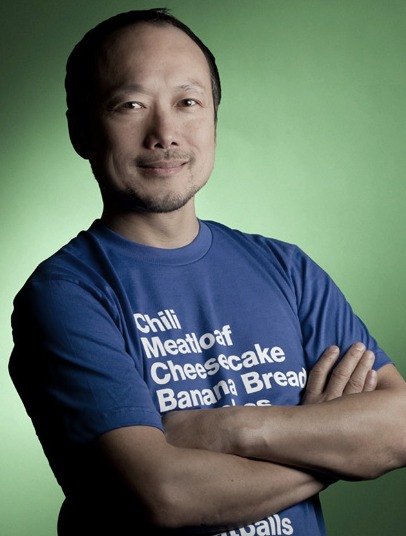
I recently sat down with Robert Wong, the co-founder and Executive Creative Director of the Google Creative Lab. You may not know about the lab, but its products are unforgettable. Take “Parisian Love,” a 52-second video the lab produced that’s all about “search” and the serendipity of finding true love through the internet. This video instantly went viral on YouTube and was up for three months when it was submitted at the eleventh hour as a commercial during the 2010 Superbowl. That decision forever reversed the company’s stance on brand advertising, what the founders had once called, “the last bastion of unaccountable spending in corporate America.” Since then, the lab has released a handful of commercials. None are obvious product pleas in the bacon-flavoured dog food mold, but all catch our eye and our hearts with familiar desktop demonstrations of web tools we’re all using that are drawing us progressively deeper into more meaningful interactions with others.
Robert Wong was born in Hong Kong and moved to The Netherlands with his family before they all finally settled in Scarborough, Ontario. Well, they settled but Robert didn’t. At first he tried to play the “good son,” sporting an ill-fitting accountant’s suit in downtown Toronto. It wasn’t long before he threw his hands up in the air and moved to New York with his sketch pad and an incoherent sense of more.
Today Robert lives in New York City with his wife and daughters and travels back and forth between Google’s Manhattan office in the Meatpacking District and the company’s HQ in Mountain View, California. Now when Robert walks into the offices of his colleagues, Sergey Brin, Larry Page and Eric Schmidt, he’s still throwing his hands up in the air — but out of excitement, not frustration. Here is an edited and condensed version of our chat:
AGJ: So you went to Sir John A. MacDonald Collegiate in Scarborough …
RW: Yup, right after Mike Myers and Eric McCormack.
AGJ: After high school you enrolled in accounting at the University of Waterloo. Why? That sounds so painful.
RW: Well, that’s how type-A geeky I was. Not that I chose that. It was a co-op program where you work for 12 months and go to school for 12 months. I was trying to make my parents proud. We didn’t come to North America until I was ten and I was the first in my family — of any generation — to go beyond high school. There was a lot of pressure on me, my brother and sister to be a doctor, lawyer, accountant.
AGJ: What changed that?
RW: I had to put toothpicks in my eyes to stay awake in accounting class. I realized after my first year that life is short and I didn’t want my work box and my life box to be separate. But before I could say anything, my co-op director sent me to work in a top accounting firm in downtown Toronto. I went down there with my little briefcase and suit. It was on the 25th floor of one of the “black towers.” [the TD Tower]. Within three months I knew I was kidding myself. I’d been studying accounting for all the wrong reasons: the money, the security, the career, for my family. It didn’t help that I was getting scholarship offers to enroll in MBA programs. I had to break it to my parents that I just couldn’t go through with accounting, not even an undergrad. I didn’t tell them I was dropping out. I asked them, and they were totally supportive.
AGJ: After the toothpicks snapped, what did you do next?
RW: In between all of those accounting and math classes, I drew. But for the longest time, I’d been telling myself that I couldn’t seriously pursue drawing because that was for people who didn’t get good grades. Thankfully, I got over that. After I dropped out of Waterloo, I moved to New York to enrol in graphic design at Parsons. [Yes, he got good grades, earning the “President’s Award” at graduation]. At the time, I thought I was going to be a fashion designer.
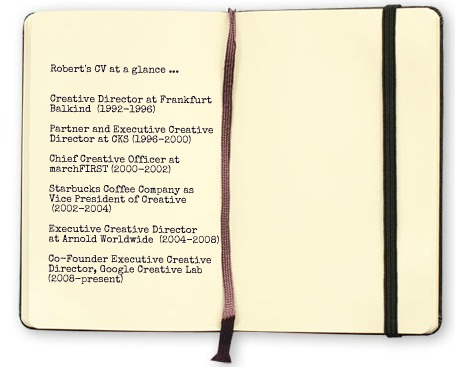
AGJ: Instead, you got into advertising. [Here is Robert’s résumé on Madison Avenue]:
AGJ: Was becoming an ad man always a goal of yours?
RW: No. I hated most advertising. But the very best stuff made me feel so amazing. I thought a good ad campaign shaped culture in a way that design couldn’t because the megaphone is so big in advertising.
AGJ: Some would say now we’ve invented an even bigger megaphone with the internet.
RW: Right. And when things are open and there are no walled gardens innovation and the shaping of culture happens faster and more people benefit. It’s about the democratization of everything. Information should not be in ivory towers. The Google home page isn’t done as a big sexy Flash site, it’s optimized so everyone with a connection — even dial up — can access it. We believe in freedom of expression where you don’t take sides.
AGJ: Google doesn’t strike me as having to advertise itself offline through traditional means like billboards, print, TV spots or even on a JumboTron. The product is free. But every so often the company releases a spot on TV. Why?
RW: The Creative Lab [which Wong co-founded] and the commercials we create exist to remind the world what it is they love about Google. That phrase actually came out of Eric Schmidt’s mouth one day and we all jotted it down quickly. I think everyone who works here has a mission: to do good things that matter. The computer scientists, designers, writers and creative coders are all about, ‘How can I impact the world as positively as I possibly can with the skills I have?’ That’s in the DNA of the culture at Google. It’s certainly what the Google Chrome campaign of TV ads has been about, starting with “Parisian Love,” then “Dear Sophie” and followed up with the “It Gets Better” campaign with Dan Savage.
AGJ: Tell me about “Dear Sophie.”
RW: That came about when Daniel Lee, one of the engineers at Google, set up a Gmail account before his first child was born. He wanted to write to his daughter while his wife was pregnant, before she was born and as she was growing up. One day he’ll present her with the whole thing: the emails, the family photographs, home videos and maps he created of where they lived. I thought it was brilliant hack! And the point of the ad was that old browsers were made for viewing and browsing web pages, but nothing more. The Chrome browser features applications and plug-ins like Gmail, YouTube, Picasa and MOV files as well as Google Docs and Maps … so it’s so much richer and stronger. The ad also celebrates all the people in and outside of Google who are using the tools to do amazing stuff.
AGJ: I liked it the Chrome ad for “It Gets Better.” I thought it fit in with your belief that the internet can build a better world and inspire a life with better results.
RW: That’s what we we wake up to do. If you want to make a difference, it starts with doing things for others. Sure, we pump out technology but it’s never about the technology itself, it’s about the genius of what people do with the stuff. We followed that up with a two more Chrome ads with Lady Gaga and Johnny Cash. But those ads and the search piece on love at the Superbowl are the only ads we’ve done.
AGJ: What other initiatives has the Lab turned out?
RW: Last month we launched the World Wonders Projects which takes users on tours of castles, parks and archaeological sites around the world, things like the Palace of Versailles. In the same way we went into museums with our Street View cameras, we’ve filmed the Wonders of the World. It fits in with our theme of making good stuff accessible to more people. Another one of our goals is to make heroes out of people who make and use art. We launched the YouTube Symphony Orchestra, which is made up of 101 musicians from 33 countries all chosen on YouTube. We also launched YouTube Play to give video artists a chance to showcase their stuff with the Guggenheim Museums. Anyone from around the world can submit a creative video for the chance to become part of the Guggenheim’s permanent collection. It’s a biannual thing. Let’s see, what else have we done? Oh! How can I forget? We spearheaded Life In a Day, an online movie that collects 4500 videos taken by people in 192 countries around the world and it documents the happenings from one day on earth: July 24, 2010. Ridley Scott produced it.
AGJ: When you were on Madison Avenue working as an ad man, you said once, “There needs to be more listening, less talking, more feeling, less thinking, more doing, less promising, more inventing, less polishing.”
RW: [Laughs] I still feel that way. I’m always trying to find the shortest distance between an idea and the magic and inspiration a person in the real world will be able to feel and see and touch. To do that you have to skip a lot of unnecessary steps. For example — and I don’t know if you’ve ever done any consulting — but one of the things you have to do, and we skip, is building multiple page decks to justify your fees. No one has the patience for that stuff here and no one would ever read it. Our founders certainly don’t have the patience for it. They always say, ‘Just show me.’ When we present our ideas to them, we do everything in either the form of a poster or a video where all you have to do is press “Play.” It has to be a prototype you can interact with. That’s it! That’s where the rubber meets the road. There’s no one giving commentary in real life. It has to be brilliant and move and touch people with all the thinking built-in. It you have to explain it, it probably isn’t very good.
AGJ: What old-school habits as a graphic designer have you carried forward to working at Google?
RW: Certain things should never change. I keep coming back to qualities like empathy: think of the user and leave your body so you can really experience it from the other side. And storytelling. Everything is a story, not just words on a page or moving images with sound, but we all learned and got motivated by stories, stories of someone’s life or the story behind a certain product and how it went on to change the world. Everything in life is a narrative with a protagonist and a goal and motivation. Having all the work come from that place is important, and also very, very hard to do. And one more thing, less of anything wins. So stripping an idea down to its pure essential. That’s a big one.
AGJ: Does graphic designer even feel like the right description for you now?
RW: You know what? I still put it as my profession on my business card and passport. I like the idea of trade schools, of learning how to make stuff as opposed to doing lots of abstract thinking. Making is the cool thing now. Other than graphic designer, I don’t know what else to call myself? I have an engineer friend who before he worked here at Google he was in a job that tried to promote him to “Chief Innovation Officer.” That’s when he knew he had to quit, meaning that if innovation wasn’t carried through the core business everywhere, that was a big problem!
“In Conversation” is a popular Q&A Segment on “Society Pages” that features interviews with creative risk takers. Other people I’ve profiled include Bruce Mau, an industrial designer turned global thinker, Maureen Judge, a Genie Award-winning filmmaker whose real life docs focus on family dynamics, mezzo-soprano Erin Cooper Gay, and Evan Jones, a pioneer in Alternate Reality Games. Evan’s computer feats have forever changed our relationship to our phones, TVs and computers and have won him not one, but two Emmy Awards.
June 28, 2012
WASHINGTON, D.C., JUNE 28, 2012 — The U.S. Supreme Court ignores the principles of America’s founding fathers — to limit government and stoke a free-market economy wherever and whenever possible — by passing health care reform. Now all citizens will have some measure of protection when they get sick.
First comes gay marriage (and Obama’s verbal support), then comes health care. This calls for a song.
June 26, 2012
To look as brown as possible … unless, of course, you’re actually brown.
More perversity for you. Apparently we’re full of it.