I’ll be fine. Really.
As the magazine turns …
November 16, 2011
I don’t belong to book clubs because reading — and what I’m reading — feels incredibly private to me. I don’t want to share. I want to think. And problem solve. Alone.
The same goes for music. I feel invaded when someone scrolls through my playlist without asking.
For the moment, books and magazine reading can still offer a private experience. That’s because they’re still being printed on paper, which defies multitasking (except for vacuuming and snack fixing).
When (not if) we move the whole operation to screens and shut down the presses, our sense of privacy will be forever altered. When that day arrives, we will have removed an important psychic boundary that is essential to processing all life throws at us, especially at our most stressful moments.
I think about this all the time. Yesterday I read this quote by a magazine exec on D.B. Scott’s magazine website: “We’re not getting out of the magazine business. We’re getting out of the paper business,” said CEO Steve Weitzner on the decision to take his company, Ziff David Enterprise, 100% paperless starting in January. “The ability to look at what others are tweeting, share on your social networks, and pull in related content are things that print can never do,” he said.
Then Hugh MacLeod posted this cartoon on his website today:
They’re both right. And naturally I’ll keep moving with the times ’cause I’m a plucky adapter, albeit one who squints at the halting social skills of gamers and despairs at the first date couples who pull out their smart phones during awkward silences. I see it all the time. I work at a bar.
Still, here’s a challenge for our future selves: Let’s get back to infusing silence with meaning generated from within, not without.
I doubt it will work because so many people prefer running from themselves. And technology offers the perfect accomplice.
Don’t forget to remember
November 11, 2011
I wrote this piece last fall after a trip to Amsterdam, but it seems appropriate today. I wish Canadian soldiers had been able to walk Anne Frank out of Bergen-Belsen.

Coming out of the last exhibition room at the Anne Frank House in Amsterdam, I was pressing Kleenex into my puffy eyes when a guide standing at the exit touched my arm and asked if I’d fill out out a survey about my experience at the museum. “Absolutely,” I said as she led me to the computer station in the café.
I sat at the computer for several minutes, staring out the window. I was still replaying in my mind one of Anne’s Dear Diary quotes: “Already I know what I want to do, don’t you? I want to be a journalist or something in the world.” That line, posted on the wall at the end of the show, is barely visible under the exceptionally dim lights.
Lost potential always makes me cry.
Here, then, are a few details about Anne which make me laugh, then cry some more. They’re quotes from her best friend Hanneli Pick-Goslar, and are the sort of facts trained historians routinely overlook (I’ve edited them for clarity). I found them in a book of interviews compiled by Willy Lindwer, the Dutch documentary filmmaker (I bought his book, The Last Seven Months of Anne Frank, and a pile of others at the gift shop). By the way, Hanneli’s still alive. She lives in Israel and has 10 grandchildren.
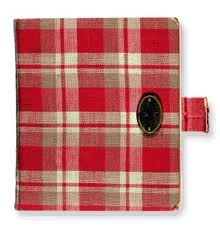
*The bullet points are miniatures of Anne’s first diary, given to her by her parents on her thirteenth birthday.
“In contrast to my parents, the Franks weren’t religious at all. I had to study Hebrew. Anne didn’t. She followed in her father’s footsteps. I never went to school on Saturdays. Orthodox Jews don’t go to school on Saturday — the Sabbath. Anne did. Then every Sunday she would come to my house, or I would go to hers, to do our homework.”
“Often on Sundays we would go with [Anne’s] father to his large office on the Prinsengracht — now the Anne Frank House. There was a telephone in every room and this gave us a chance to play telephone. We [also] played a lot of street games. We’d throw water out the window on people walking by.”
“Anne loved autograph books in which everyone had to write a verse. She had a lot of friends. I think she had more boys as friends than girls, especially when she was in the sixth grade and then the first year at the [Jewish] Lyceum. Boys really liked her and she liked it a lot when they all paid attention to her. Anne was always the center of attention. She liked being important — and that isn’t a bad quality. I remember that my mother, who liked her very much, used to say, ‘God knows everything, but Anne knows everything better.'”
“She was always fiddling with her hair. She had long hair and it kept her busy all the time.”
“Anne had a special funny trick that I had never seen before. Whenever she wanted to, she could move her shoulder out of its socket. She thought that it was great fun to have the other children watch and burst out laughing.”
“She was always writing in her diary, shielding it with her hand, even at school during the break. Everybody could see that she was writing. But no one was allowed to see what she had written. And I thought that she was writing entire books. I was always very curious to know what was in the diary, but she never showed it to anyone.”
“Anne was a sickly girl. I don’t know what the problem was because she almost never had a high fever, but she often stayed home in bed. That would last a couple of days. She probably had rheumatic fever. I would always visit her and bring her homework assignments. She was always very cheerful.”
“At the Jewish Lyceum Anne and I always sat together. We copied each other’s work, and I remember that we were once given extra work as a punishment for that. One day, a teacher grabbed Anne by the collar and put her in another class because he wanted to keep us apart. We had been talking too much. I don’t know how it happened, but half an hour later, there I was sitting next to her in the other class, and then the teachers just let us sit together.”
“Anne was the first girlfriend I lost. When I went back to school after the summer [her family went into hiding], fewer children came to class every day. It became more and more dangerous. I shall never forget how our history teacher, Mr. Presser, gave us a lecture about the Renaissance, but in the middle of the lesson he began to cry and ran out of class. ‘Last night they took away my wife.’ It was terrible. I still get chills when I think about it.”
And for the sounds of the bells the Frank family listened to to mark the hours while they were in hiding, click here. I recorded this on my iPhone.

By the way, when the Anne Frank Museum survey asked me where I was from, I couldn’t answer the question. Canada wasn’t one of the choices in their long lineup of countries. The closest answer was: North American (Other). That really pissed me off. Who liberated Holland, pushing out the Germans? Canada. Who offered the Dutch Royal Family a safe haven for four years during WWII? Canada. Ottawa’s acres of tulips are almost all tokens of gratitude from the Dutch. I think the guide at the museum must have seen me shaking my head because she came over and asked if I was having technical problems with the site. “No,” I said, saucer-eyed. “But where’s Canada? You need to add Canada.” I didn’t give her the history of our two nations. Miss Bossy Boots (one of my many charming personae) was strangely silent that day. I guess I figured that if Canada couldn’t have saved Anne (who died in Germany), what was the point?
Back at the hotel, feeling utterly spent, I picked up a copy of Glamsterdam, a glossy publication covering Holland’s arts, culture and sports scene. I came across a profile of Marcel Kars, a Dutch/Canadian hockey player with fabulous abs. The piece, by Sabine Wendel, cited Kars’ hometown in bold as “Toronto, USA”. Sheesh. What’s up with the Google Generation of Netherlanders? Did they skip history class the day Canada’s heroics were covered? I hope my kvetching lands as a Google Alert in the inboxes of both the museum and the magazine. Time to reinvest in a fact checking department, folks. I look forward to their comments. Truly.
Show me the money!
November 7, 2011
People sometimes ask me, “Do you make money from your blog?”
“Indirectly,” I say.
I have no advertisers flashing in the sidebars. And in the two years I’ve been blogging no one has offered. While the houses of Chanel and Dior flock to beauty blogs, there are no obvious products you can throw at a forum on human nature. Worry beads, maybe. Or stress balls, pet rocks and marker sets (I could use some new markers …).
Here’s how it works: I make money when editors e-mail me, offer me assignments and add in their sign off, “I’ve been reading your blog!” They end up assigning me things that suit my voice and my interests — just like screenwriters write scripts with certain actors in mind — and that saves me a lot of time and expense pulling together pitches that might never fly.

As Penelope Trunk, one of my favourite bloggers, writes,
“Don’t get sidetracked by snake oil salesmen telling you that you should make money from your blog.” Rather, learn how to blog so you can write your way towards the career you want. “And learn how to blog to get the life you want. So you can go to art museums in the middle of the day and so you can think about things that are more fun to think about than how to stay employed.”
People are drawn to good conversationalists and interesting thinkers, so become one! And post what you want to be known for.
November 4, 2011
“Specialization is the enemy of innovation.”
Rei Inamoto
Afterword: Sure, it may bring you more success and attention (think: Harold the Jewellery Buyer, or Hurt-in-a-Car, Call William Mattar, 444-4444), but it typecasts you for life. Once you start making good money from your specialty, there’s no escaping it. You’re trapped.
Think about it …
Street talk
October 31, 2011
I’ve often wondered the origin of street names in Toronto, especially when I have work to do. If you’re looking for a distraction too, here’s some trivia:
Queen Street: Named after HRH Queen Victoria. Formerly called Lot Street.
King Street: Another royal road, King Street was named after King George III, but has also at one time or another been called Palace Street and Duke Street. And, yes, that’s Mad King George or the same King George who lost America.
Roncesvalles Ave: Now pot-hole free and bike-friendly, Roncey was named after a battle in Spain (1813) by Colonel Walter O’Hara, who also boasts a west end street in his name. Sorauren Avenue stands for another battle in Spain (1815). Nothing about either street feels Iberian.
Brock Ave: named after James Brock, cousin of Sir Isaac Brock, the administrator of Upper Canada killed at the Battle of Queenston Heights.
Jameson Ave: Named after Robert Sympson Jameson, lawyer, politician, judge, blah, blah, blah, and not half as interesting as his estranged wife, Anna Brownwell Jameson, noted author of Winter Studies and Summer Rambles in Canada and Characteristics of Women. When Robert was named Chief Justice of the province of Upper Canada, Anna was summoned from England to Canada. The marriage, already in trouble, spiraled further when hubby forgot to meet Anna in New York for the trip up to Canada. She bushwacked her way north to Toronto alone through the snow, no doubt writing entire books in her head during the struggle. The marriage ended, but her love of writing and hiking only grew. Today, Anna’s a rock star in literary circles, championed by the likes of Margaret Atwood and Charlotte Gray. The street might as well be named after her.
Landsdowne Ave: Named after Henry Charles Keith Petty-Fitzmaurice, 5th Marquis of Landsdowne and GG of Canada from 1845-1927. Incidentally, he looked like a Russian Bolshevik with his fur hat and giant, black mustache.
Source: Parkdale in Pictures, Toronto Public Library Board, 1991.
Just so you know
October 29, 2011
“There is no fiction and non-fiction as we commonly understand the distinction; there is only narrative.” — E.L Doctorow
RIP Homemakers
October 27, 2011
One of my employers died last night.
Homemakers Magazine was 45 years old, but her time had come. A combination of factors did her in: the economy, the rise of digital media, questions about her relevance in the face of competition (Canadian Living, Chatelaine, Good Housekeeping). D.B. Scott’s obit is worth the read.
Despite her pre-Friedanian name, Homemakers was a trailblazer in women’s rights. Her content was always relevant and never frivolous. Former editor Sally Armstrong travelled the globe filing stories on the state of women’s lives in the developing world, often compromising her own safety to do so.
Truth be told, it’s not a fun time to be a staff journalist. I doubt the average citizen knows that. Many assume the romance of journalism continues based on the Woodward/Bernstein plucky model. But too many printed magazines and newspaper are hanging on by their cuticles right now. Budgets are down, work is up and shareholders and publishers are pounding fists on desks demanding results. At the back of the office, digital departments are wailing, “Throw more money our way. Can’t you see the future is now?” Too many people in power, though, continue to be invested in the old way of doing things, hoping this is just a blip in the profit margins because print still feels sexier, more prestigious.
Meanwhile, the landscape continues to explode and burn like the oil wells in the first Gulf War. Talented staffers are being spit out on the street. But after the drama of trying to hang on, and sacrificing so much in their personal lives and health to make it happen, the silence is welcome in many cases.
This was my final article for Homemakers. (* P.S. fellow writers: I only agreed to sign a “one-off” contract with Transcontinental provided they pay me considerably more money for the rights they took back. For those of you who feel timid asking for more, I recommend joining Derek Finkle’s agency).
And here’s a reprint of related post about living the dream (and frying out in the process) written last spring. If you’re under 27, this won’t make any sense. Go back to blogging for free. :)
Working at a magazine or a newspaper lets you write about life, but really experiencing it is another matter.
In your twenties, that’s fine. You’re happy to let your job define you. You’re also totally thrilled to be giving yourself over to the romance of print media. Your friends who work at the bank couldn’t be more jealous.
In your thirties, the life you’ve chosen can start to take its toll. But you never admit that (your friends still want to be you). Dashing around town collecting swag bags begins to feel empty.
By your forties, the pace can become unacceptable, even if the act of writing is still meaningful.
Getting fired is sometimes the only way to escape this life of relentless deadlines.
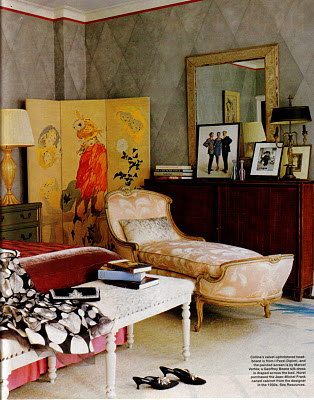
This is what happened to Dominique Browning (pictured above at her home in Rhode Island). Browning is the former editor in chief of the now defunct House & Garden, and she writes with searing honesty about her life before and after Condé Nast in last Sunday’s New York Times Magazine.
Here’s a taste:
The thing about running a magazine is that there is always too much to do. I liked not being in control of my time — I was always busy. I didn’t want time to think things over, things like feeling guilty about spending more time with my office mates than with my children; feeling sad that those children were leaving home; or feeling disappointed in love or frightened by terrible illness. Everything else, in other words. The demands of my job kept me distracted.
A lot of actors say they get into film and TV because they don’t want to play themselves.
I wonder how many editors can relate?