




ChatGPT Won’t Be Writing To My Valentine
January 16, 2023
If you haven’t read Ann Handley’s newsletter this week, here it is.
She wrote it herself.
Actually, she brought her full self, past and present, to this rumination on AI’s breakout moment.
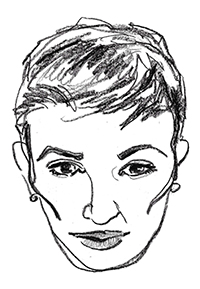
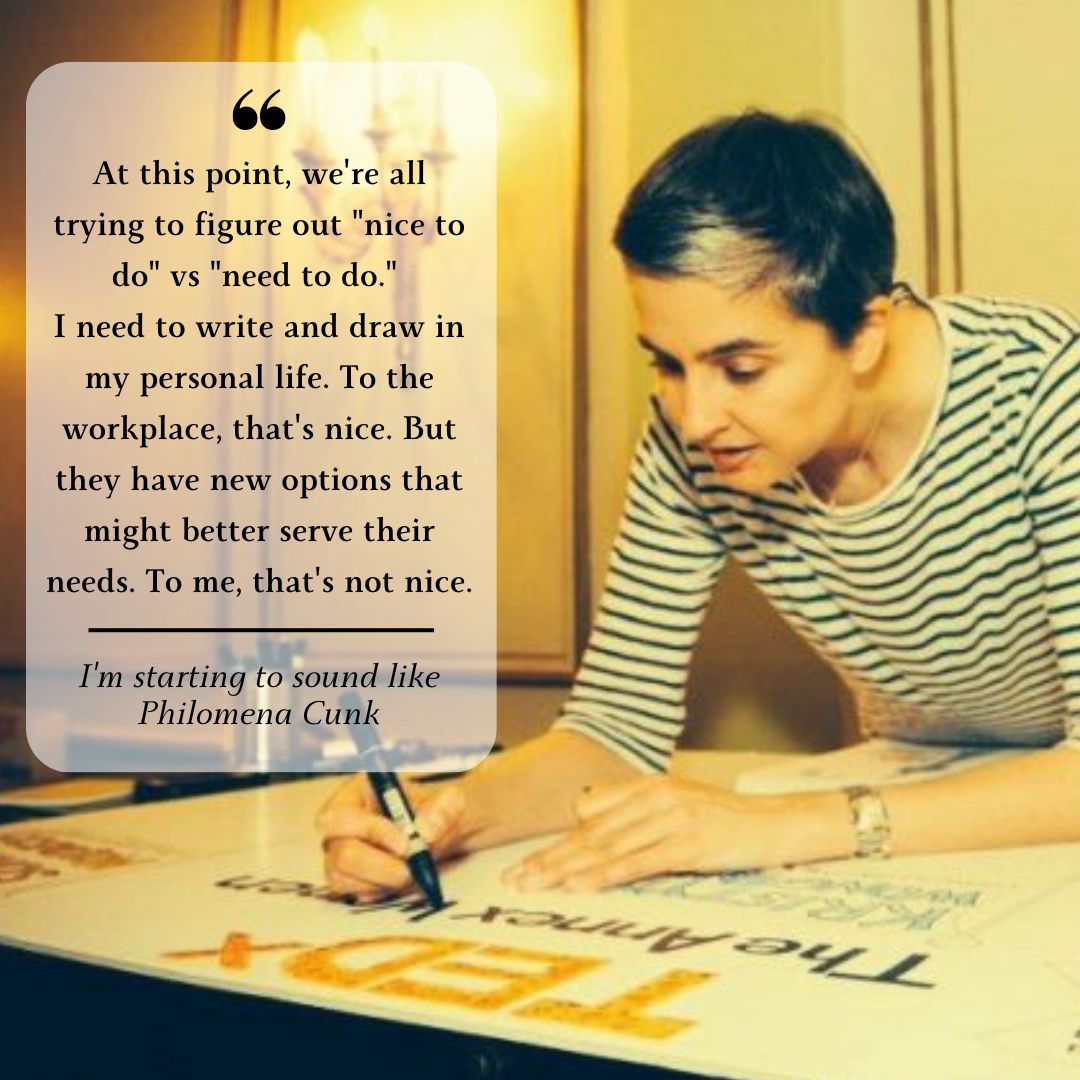
Ann probably had to tie her hair back while she was writing — now that she has grown out her pixie. And maybe she had to stop herself from chewing on the end of her pencil? Do you even use pencils and erasers anymore, Ann?
For those who don’t know Ann Handley, she’s the ridiculously tech-savvy and adaptive Chief Content Officer for Marketing Profs, an online training company for marketers based in Boston. The key to her success isn’t loud suits with zippy patterns or inflated promises, it’s heart.

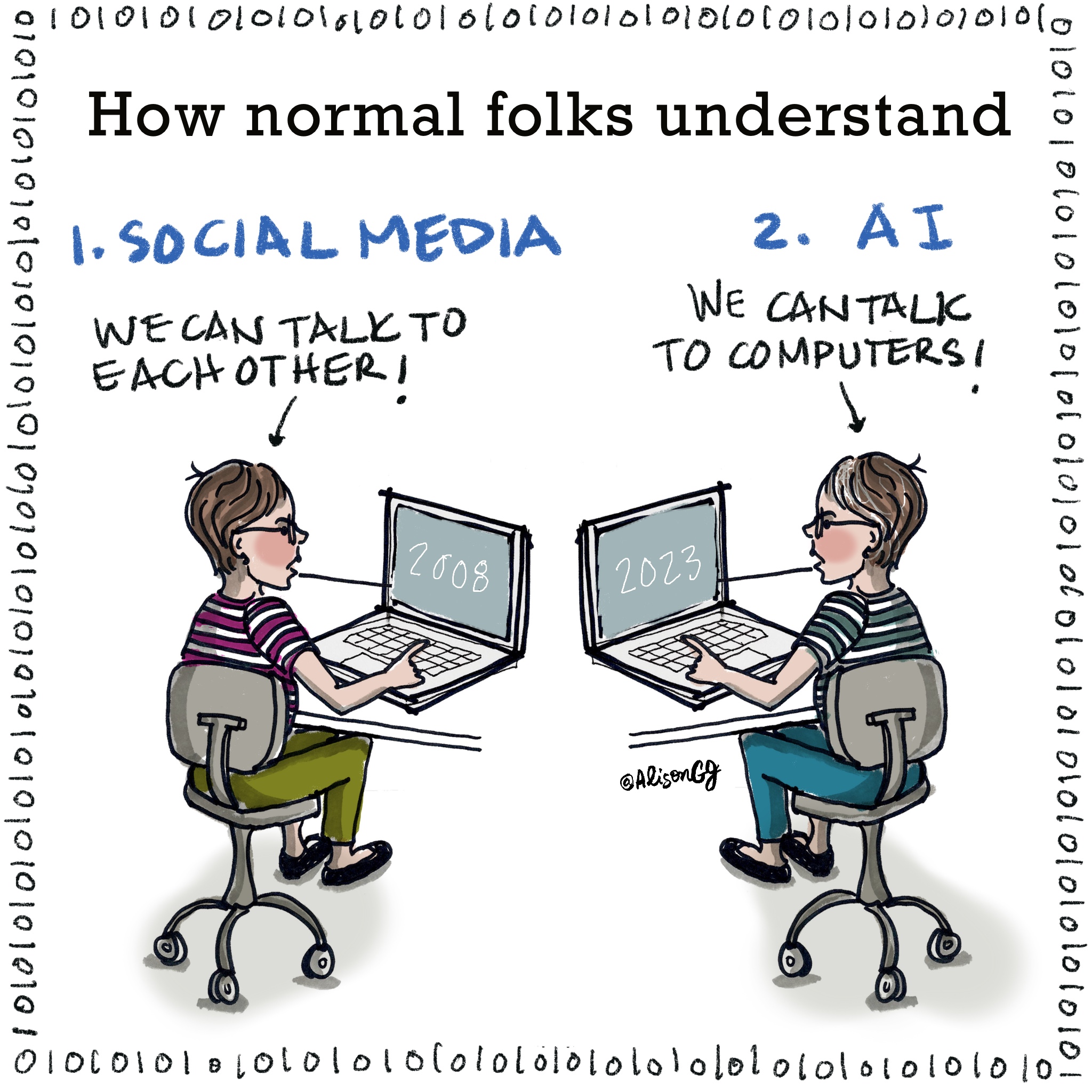
Ann expresses her heart best through writing, a skill in existential crisis ever since the blockbuster debut of ChatGPT, an app that writes almost anything at your command: ads, short stories, blog posts, screenplays, jokes, and listicles galore.
I’m glad I won’t have to write another listicle (AI’s brainstorming power is mind-blowing). And I’m grateful I have Excel (AI too) to format my spreadsheets and do all the calculations. Meanwhile, Bing is scanning this post as I write it, checking for unintended plagiarism picked up during my research. I like that it has my back.
But Ann steps up to argue that the promise of “ease” of AI Writing is false. She calls it “a trap.” I don’t think she says this because she’s trying to save her job or stand in front of progress with outstretched arms and legs. Whatever happens next, Ann will figure it out, and she won’t be blocking fast-moving traffic to make her point.
She believes that to be effective and memorable at writing — the kind that transforms both the reader and the writer — you have to exercise your full humanity with all the vigour (or “vigah” as they say in Boston) of an athlete.
“Writing is a full-body contact sport,” she says. “You need to participate fully. Your brain. Your hands. Your personality. Your voice. All of it.”
And,
“We writers can’t passively sit back and let AI write *for us*. The way to use AI is as a gymnast using a spotter and a coach—a way to help you create with more confidence. Even fearlessly. Yet it’s your talent that drives AI. You are the gymnast!”
You can feel her words dancing to “Let’s Get Physical.”
I remember a decade ago Alice Munro telling an interviewer that she knew that Dear Life would be her last book because she no longer had the physical stamina to keep writing.
For decades, our culture has marvelled at Munro’s ability to illuminate the mundane — doorknobs, shrubs, weeds, linoleum and, one can even imagine, widgets — into something incandescent and universal.
It should be no different for B2B marketers whose job involves describing how inherently boring things exist in the world, like tongue depressors (the example Ann gives in the 2nd edition of her splendid book, Everybody Writes). How do you tell that particular true story well? she asks.
As humans, some of us will never stop striving to be incandescent in our professional writing. Nor will we stop worshipping and obsessively studying those whose work has made us feel a sense of everlasting radiance: Alice Munro in books, Wes Anderson in films, George Lois in ads (yes, ads), Luiz Bonfa on guitar, Billie Eilish at the mic, and Ann Handley in marketing.
When we rely too much on AI to do the work for us — or even dazzle us, as it may do soon — we’ve stopped caring, caring about the value of tackling things with heart and with someone specific in mind.
Many years ago I was working the door at a restaurant when a delivery guy walked in with a big bouquet of red roses.
DELIVERY GUY
I have a delivery for Alison
ME
[slight intake of breath] And the last name?
DELIVERY GUY
Garwood-Jones
ME
[barely contained squeal, outward nonchalance]
Oh, that’s me …
I put the flowers and the heartfelt card in a non-trafficked corner of the restaurant and planned to lift them up, cradle them in my arms and accompany them home at the end of my shift.
Halfway through the night, I noticed my bouquet was gone. What the …? I circled the room, periscope up, determined to solve who had moved my flowers. Then I spotted a guy heading for the exit holding my bouquet upside-down by the stems, the petals practically sweeping the floor. I made a beeline for him.
ME
“Excuse me, may I have my flowers back?” I asked, locking him in a stare.
This is when being 6’3” in heels is delicious.
He looked up and gave me a weak smile, then handed them back.
ME
What were you going to do with them?
GUY
Give them to my girlfriend.
I hope she dumped his lazy ass.
Mary Richards had a similar experience in Episode 1, Season 1 of the Mary Tyler Moore Show. Just as she was settling into her fabulous new apartment in Minneapolis, her ex-fiancé (a doctor) knocked on the door hoping to win her back with a speech and flowers he swiped from a patient’s death bed. Mary was underwhelmed by his pitch. Needless to say, he wasn’t The One. During the show’s seven year run, his name was never mentioned again.
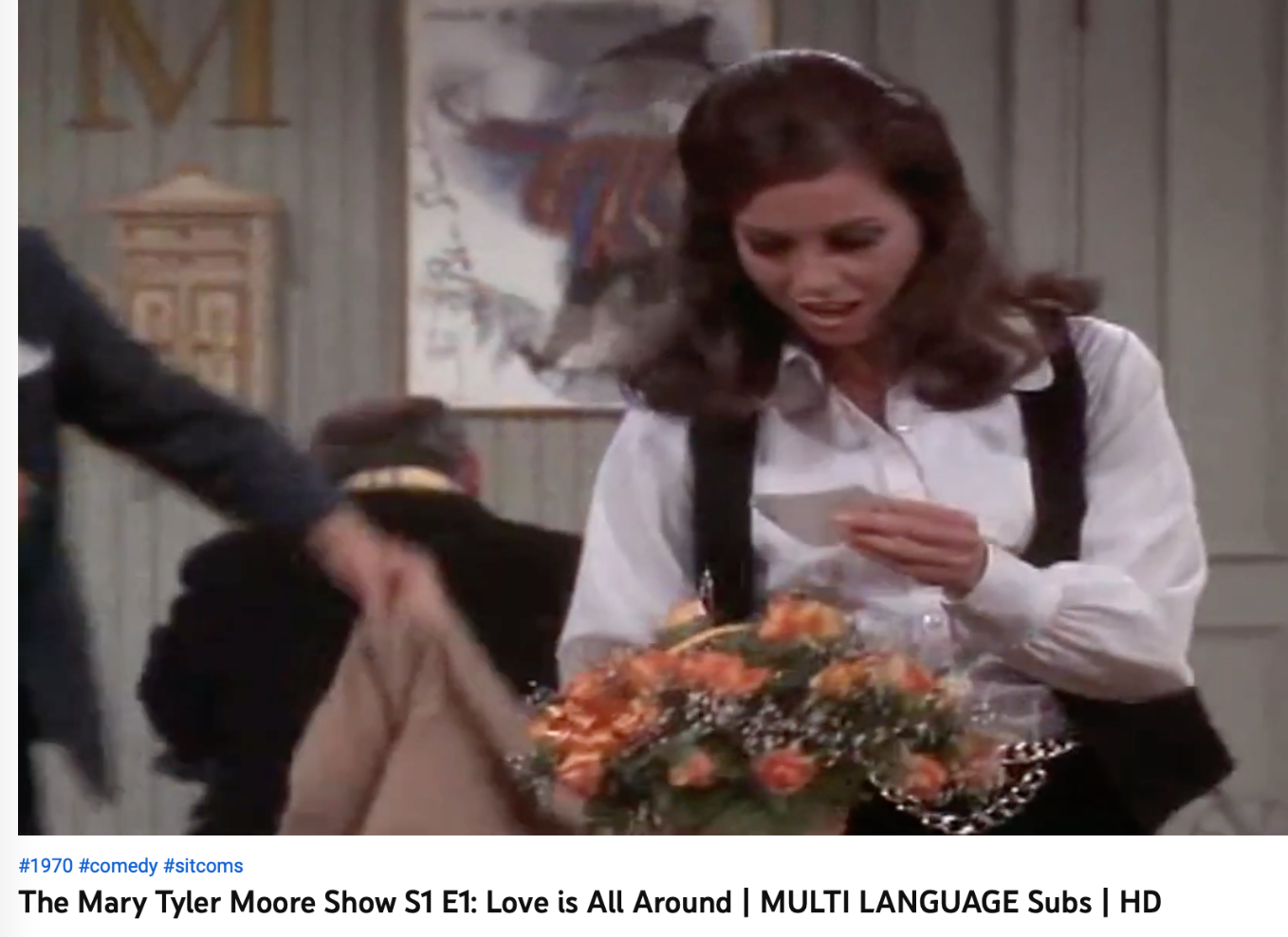
Image originally owned by MTM Enterprises (now defunct)
When you give up trying, or you outsource the work it takes to truly understand or connect with another human being, life loses so much meaning. Can you imagine asking ChatGPT to write your Valentine’s Day message this year? Oh god, maybe you can …
Let’s say you use it. Your lover will probably feel the hollowness. Or, maybe they won’t because, even though it was awkward, it was from the heart and it did sort of sound like you (warts and all). But it wasn’t you. And it wasn’t from the heart. A machine did your homework, and now you are the one feeling hollow because you cut corners. How long can you keep that up?
Don’t deny yourself the growth opportunity of making your words match the human race’s dazzling emotional range, whether it’s in life or in marketing.
It’s one of the hardest things you’ll ever do, and one of the most rewarding.
Social Media: Chapter One is Over
January 5, 2023
I’ve often said that teaching digital communications is not like guiding a class through the 17 French verb conjugations.
Those won’t change.
Digital comms … not so much. Think: cinematic storm clouds and thunderclaps, and maybe an arena full of bucking broncos!
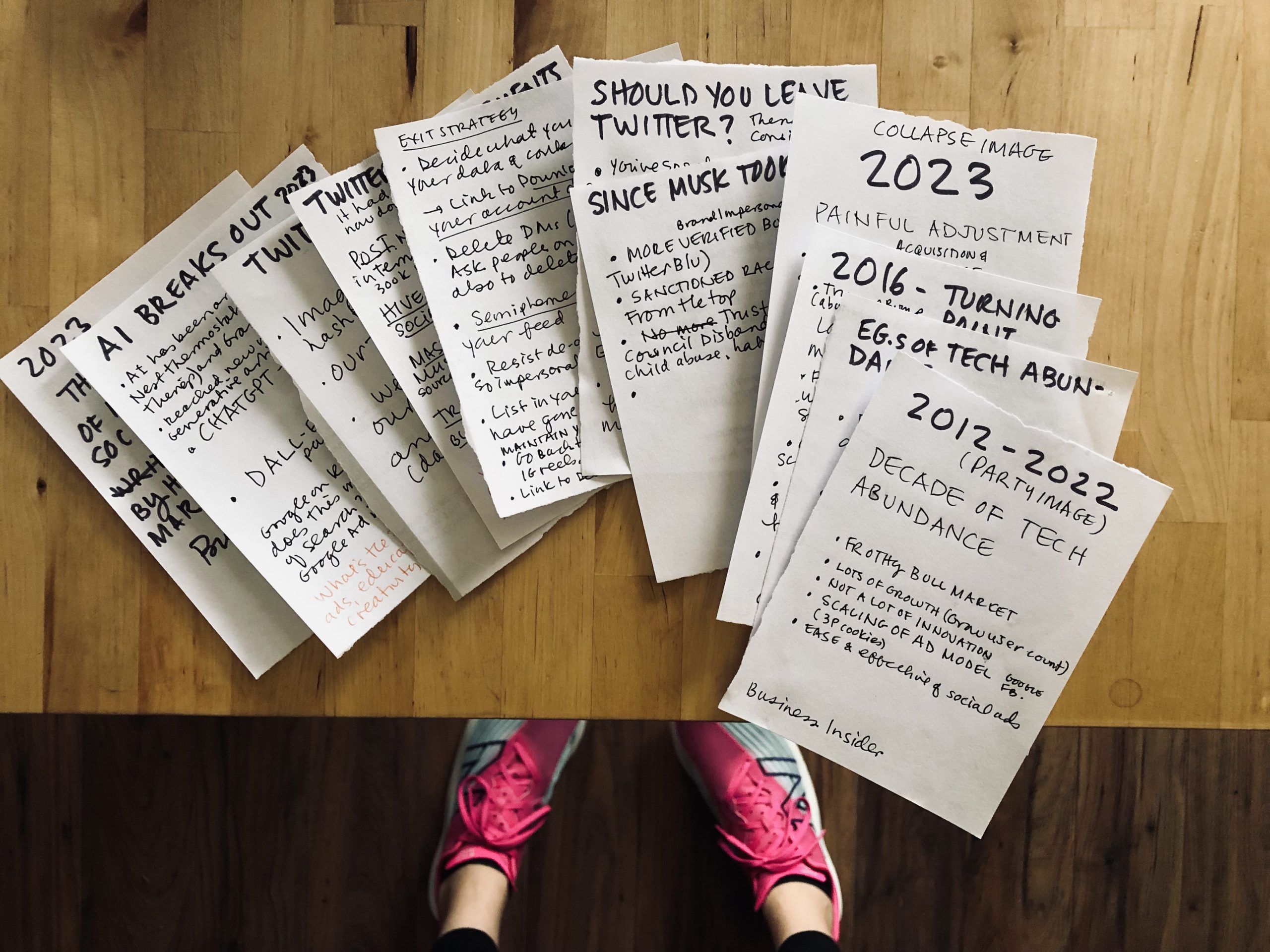
So here I am again writing down ideas on tiny torn-up sheets of paper on how to update my decks to reflect the last year and month online.
You gotta be nimble and stay on your toes: hence the pink trainers.
My University of Toronto School of Continuing Studies courses are 3681 – Writing Digital Content and 2875 – Foundations of Digital Comms Strategy and Social Media. I also teach 2 micro-course versions of 2875 (2875A and 2875B) if you want a more bite-sized learning experience.
See you in class!
Alison
P.S. If you’re keen to read some success stories about former students, I wrote this.
My Stylish Youth
December 12, 2022
In hindsight, it’s fun and unnerving to discover that the everyday objects from your childhood are now pedestalled and spotlighted in a show on Canadian Modern design (see ROM.on.ca for details).
Today’s highlights from the show:
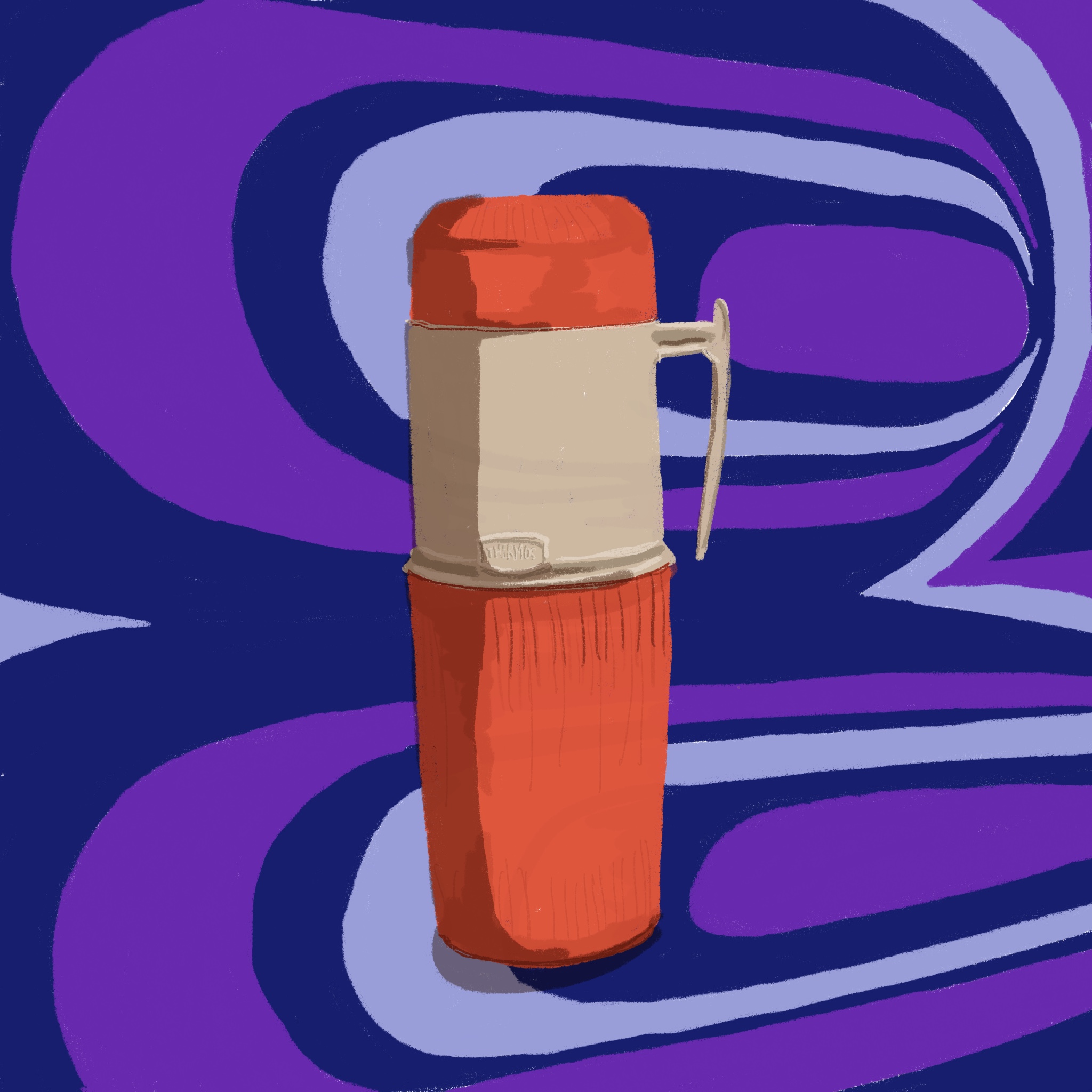
• Thermos Model 6402 | 1962
A smaller version of this orange canister fit inside my Snoopy lunchbox.
Designed by Julian Rowan (Dudas Kuypers Rowan Design)
b. Edmonton, Alberta, 1925
Canadian Thermos Products, Toronto, Ontario
• Onion Curtain [furnishing textile] c. 1975
I’m going to challenge that circa and guess that this “supergraphic” pattern dates closer to 1972 or ’73. Until this show, I hadn’t realized that the “swirly curtains” (as I used to call them) extending across the entire south wall of our kids’ bedrooms were the Pop Art-inspired textiles of Esa Niemi, a Finish-born designer who had a studio just down the highway from us in Etobicoke, Ontario. At the time, the suburbs of Toronto were humming with Danish modern inspiration. Both of my parents showed an intuitive understanding of the day-to-day social effects of good design.
P.S. My “swirly curtains” were sunflower yellow, olive green and burnt orange. The boys’ were red and maroon and black. I can still see them.
Designed by Esa Niemi, b. Finland, c. 1945-2000
Esa Niemi Design, Etobicoke, Ontario
If you need to take refuge from the holiday rush this week, stop by the show and discover all the designs that you never knew were singular to Canada.
Margot and Richie
November 18, 2022
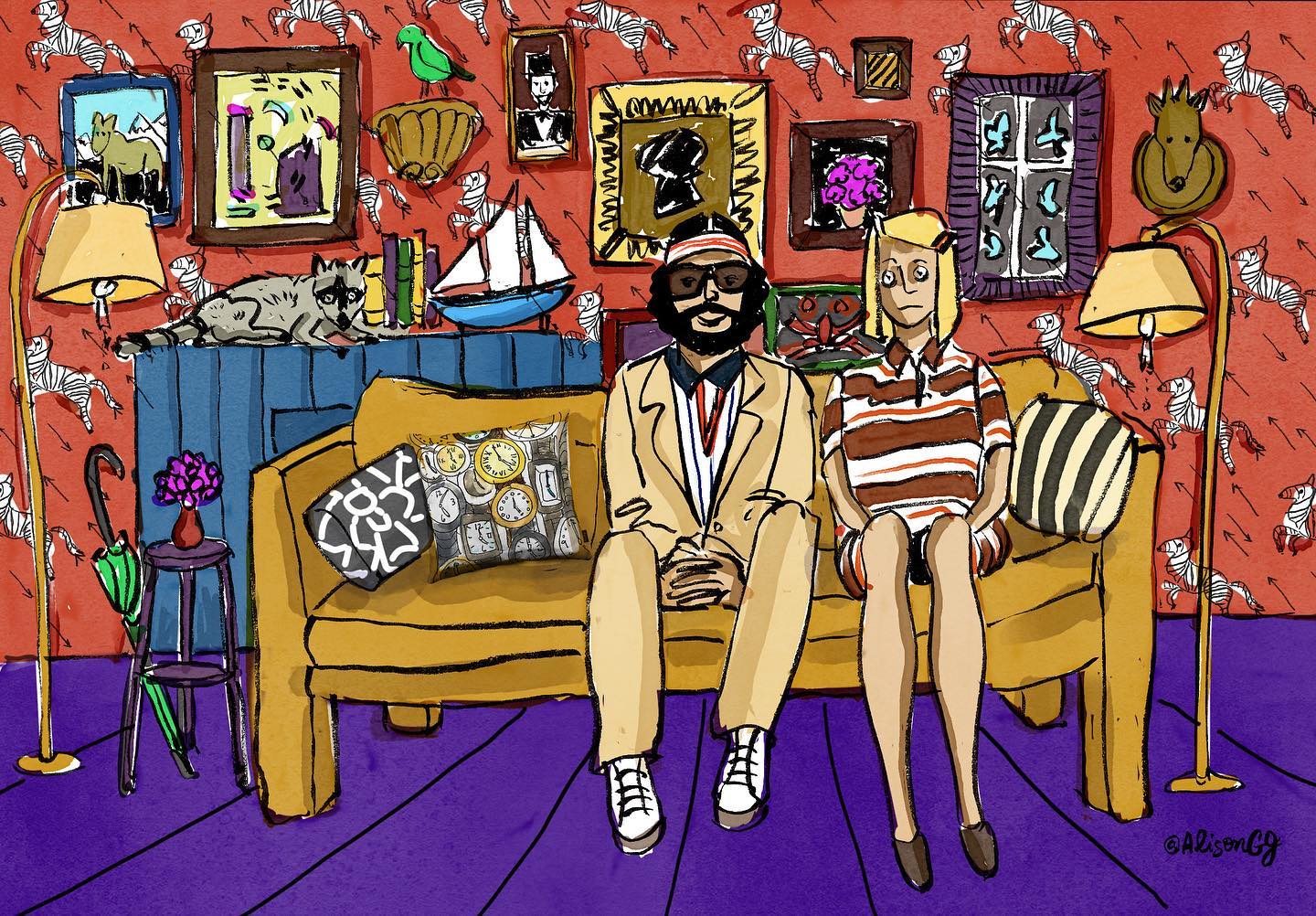
What comes after the prodigy phase?
Margot and Richie posing in front of the infamous zebra wallpaper.
#ProcreateDrawing
Archetypes
November 3, 2022
Lois played the zany-kooky card because that’s what women in showbiz (who looked like her) did in the early 1960s.
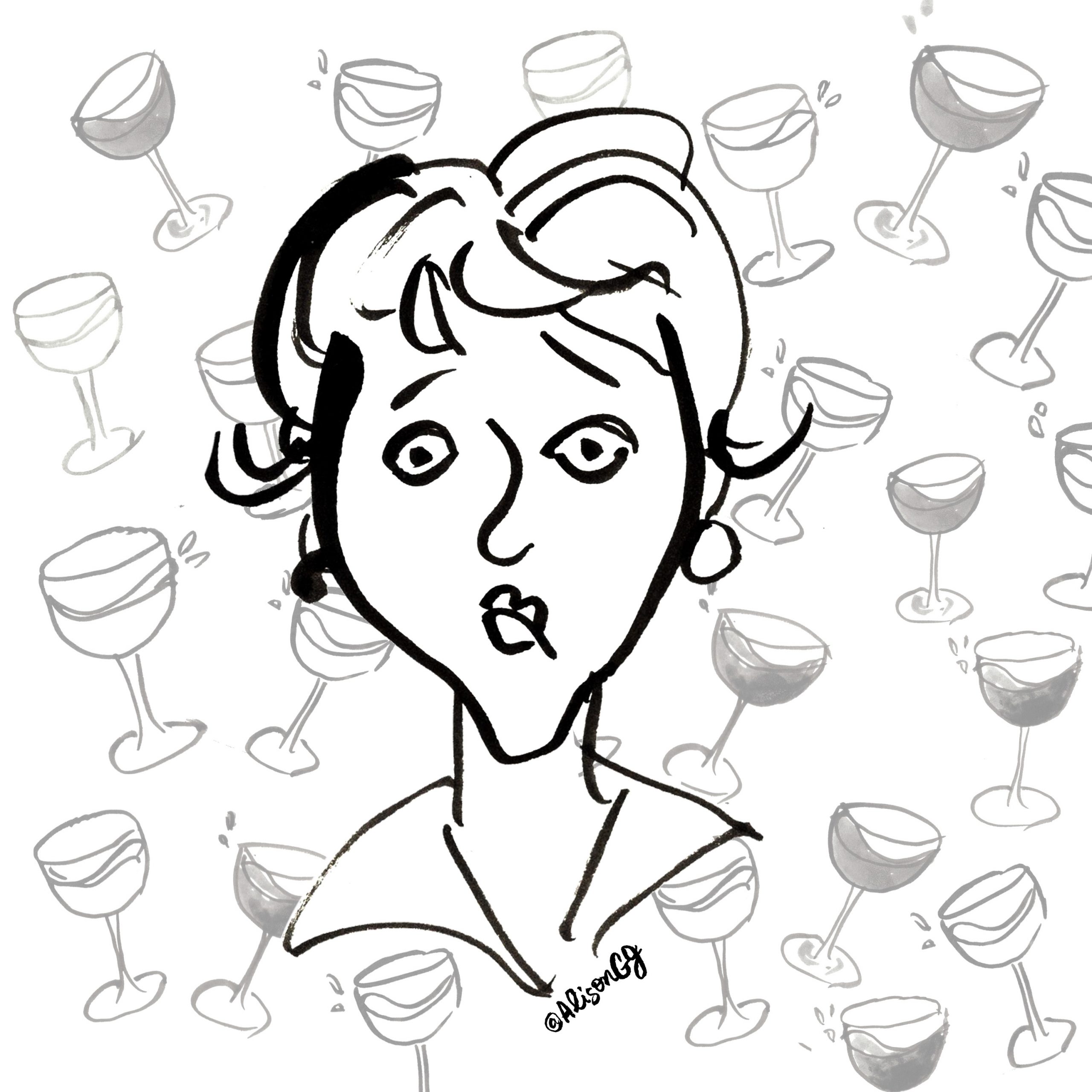
Men called her a “character,” but never a “creature.” Only femme fatales were creatures.
These were the two choices for women who put themselves out there.
The lack of range felt inside both camps was numbed by alcohol and pills.
PROCESS
First I draw, then I find the story based on the style, energy and emotions that rise up from the page. If someone handed me a brief that said: “Okay, Alison, draw a mid-century woman suffering under society’s archetypes,” my spontaneity and freedom would turtle. My drawing style would tighten up. It has. Because I know this about myself, I’ve learned to diversify my income sources.
Practice Makes Better
November 2, 2022
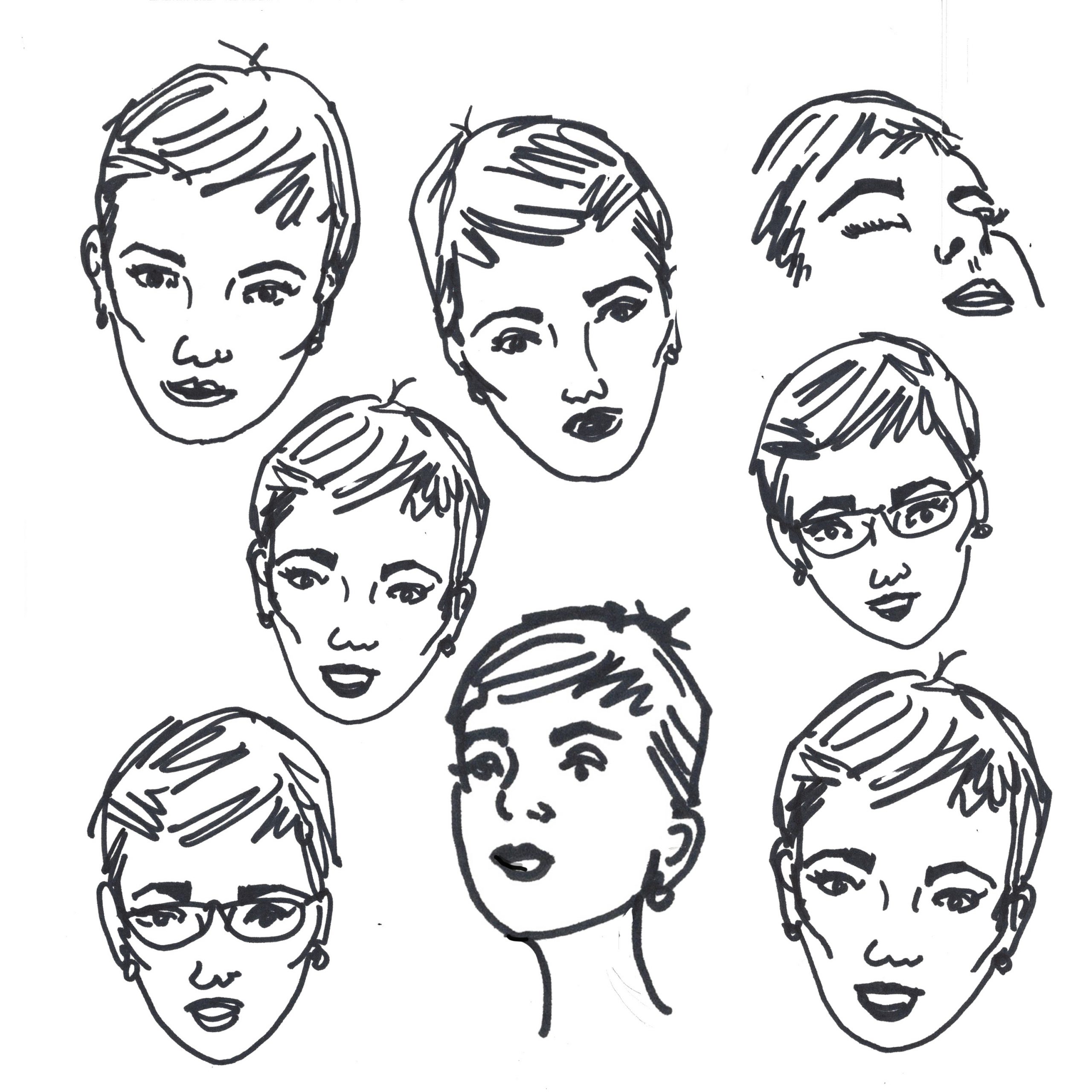
I almost never capture someone’s likeness on the first try.
I only nail a portrait after a lot of calisthenics (unrelated mark making).
Drawing, like any art form, involves a ton of unseen labour and practice.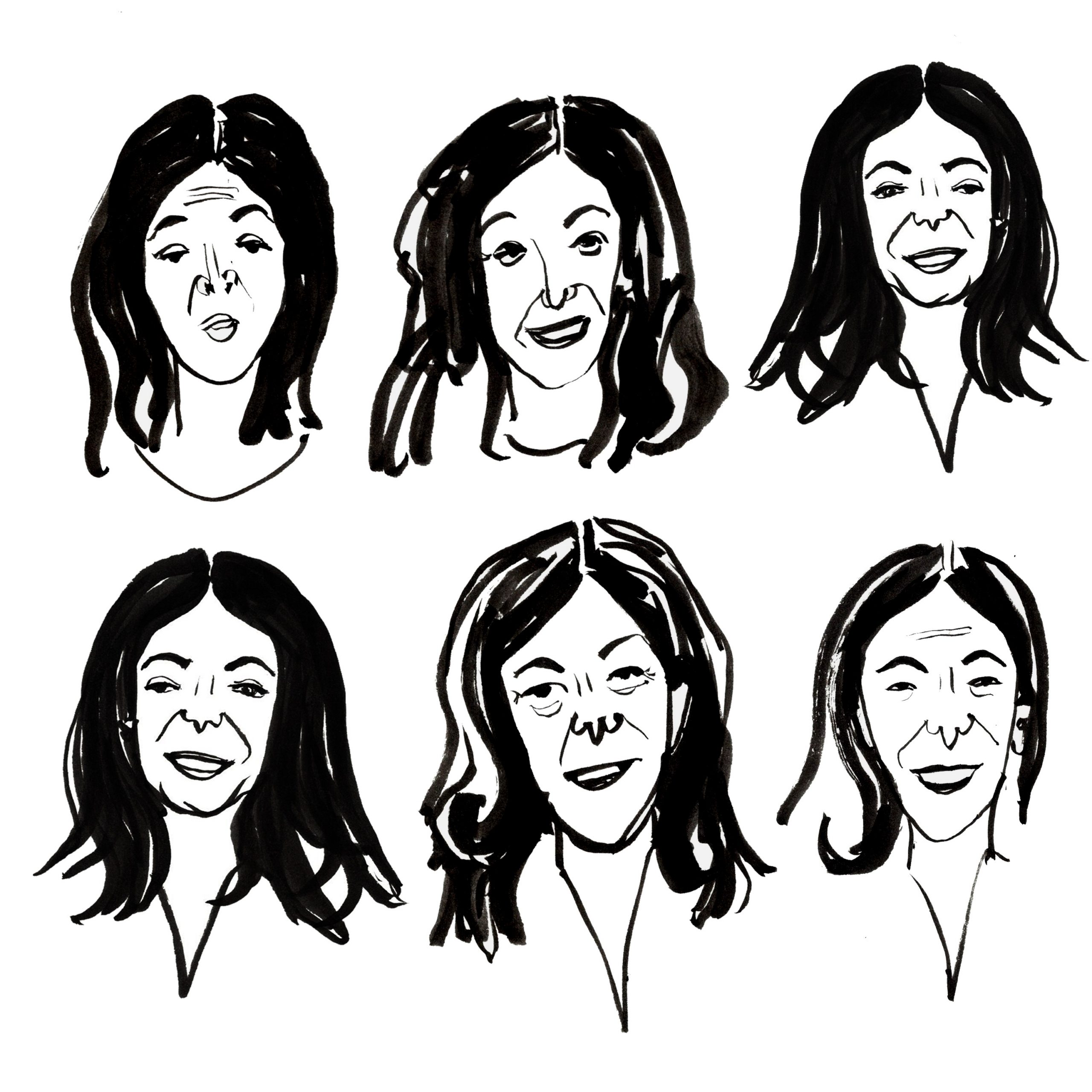
#BrushPenArt #SharpieArt #Caricatures
Growing Up Atwood
October 27, 2022
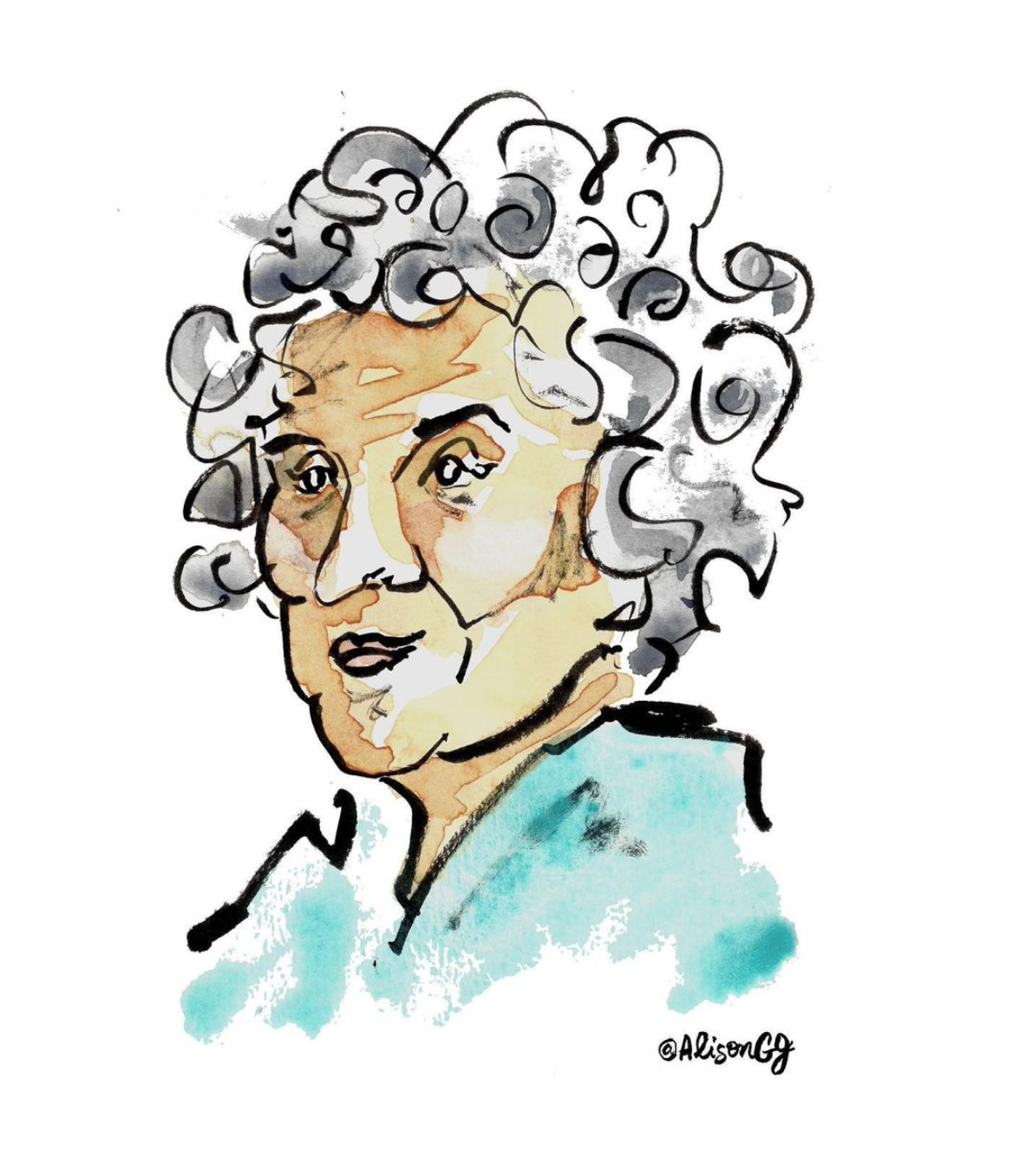
Growing up Atwood:
“[In my family,] squeamishness and whining were not encouraged; girls were not expected to do more of it than boys; crying was not viewed with indulgence. Rational debate was smiled upon, as was curiosity about almost everything. But deep down I was not a rationalist. I was the youngest and weepiest of the family, frequently sent for naps due to fatigue, and thought to be sensitive and even a bit sickly; perhaps this was because I showed an undue interest in sissy stuff like knitting and dresses and stuffed bunnies. My own view of myself was that I was small and innocuous, a marshmallow compared to the others. I was a poor shot with a 22, for instance, and not very good with an ax. It took me a long time to figure out that the youngest in a family of dragons is still a dragon from the point of view of those who find dragons alarming.”
Margaret – still soft-hearted and breathing fire. Her poems and essays are road maps.
Excerpt from Negotiating With The Dead (Cambridge University Press, 2002)
The Audacity of Hope – Remember That?
October 21, 2022
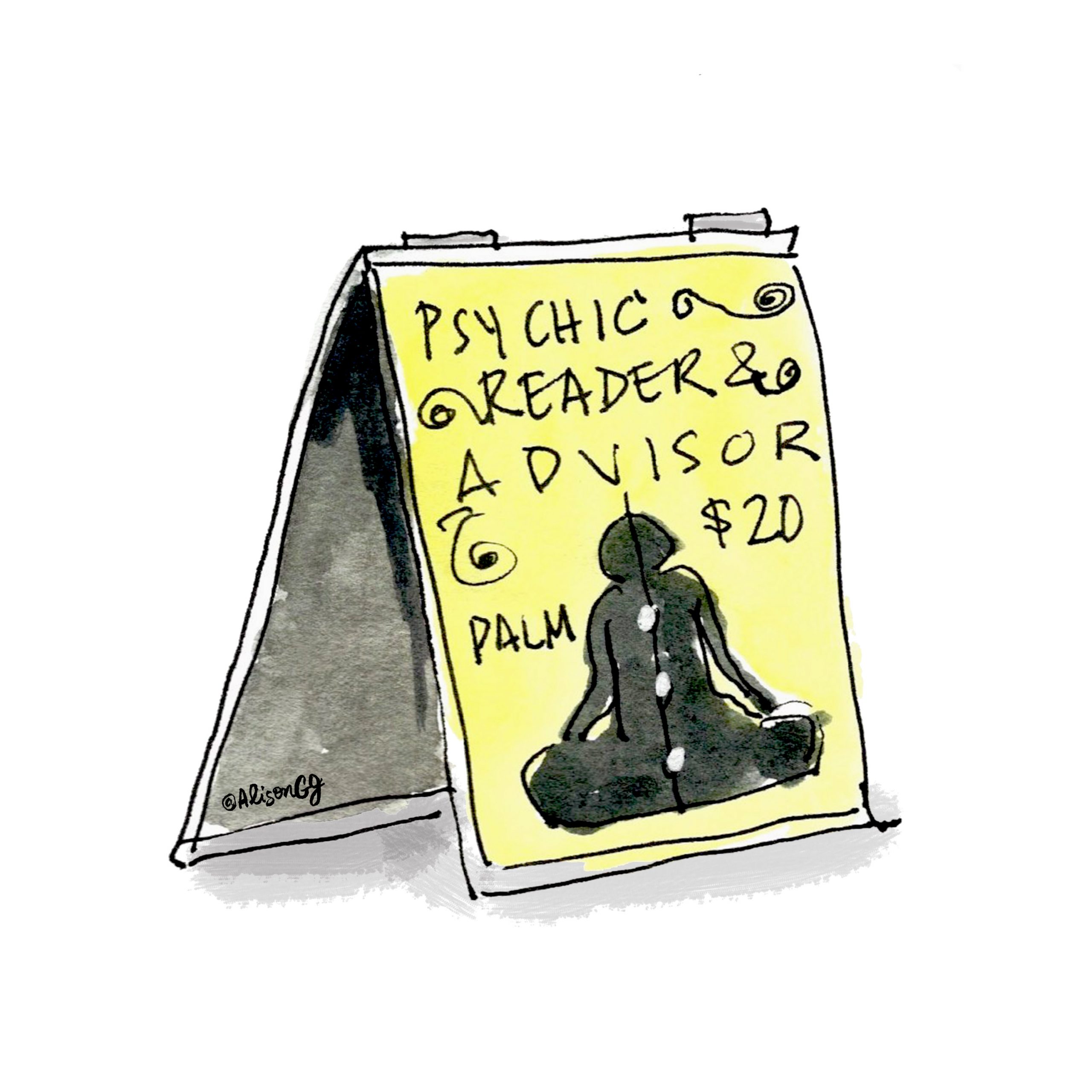 The audacity of hope: remember that?
Right now hope is in a tense standoff with societal collapse.
Our conflicts are daunting, our problems are real.
Seeing an opening, grifters and mobsters have grabbed the reins.
That elevated sense of the world as it should be has been hijacked by cynics.
You’re an optimist. So, how do you regain your footing when cynics keep picking at your foolish dreams?
How do you avoid being outsmarted when you don’t think like a criminal?
You start by refusing to be intimidated.
You do the work: You ask the hard questions, you look for the patterns, you connect the dots, and you endure the blowback with lots of tea and salt baths.
Then you share your findings far and wide, endure more blowback, and maybe (just maybe) you stem the triumph of evil.
Begin by linking arms with other women and men of integrity.
Feed each other meals and ideas.
Pool your modest resources.
Babysit each other’s kids.
But, above all, keep trying.