Alison Garwood Jones

Hot off the press

July 20, 2011

If there’s one thing that revs my engine, it’s talking to talented people. I’ve said it before, but I chose to become a journalist so I could engage with the best and brightest on a weekly basis. Talented people are what put the spring in my step and ignite my imagination until my own ideas multiply like popcorn.

Last week I hung out with art director Vanessa Eckstein and writer Marta Cutler, the two principals at Blok Design. Working in advertising they both know the importance of selling stuff. But what they really understand is the importance of selling stuff with meaning, and the more meaning the better.

Of course, when you’re starting out in your career, sometimes you don’t have much choice in the matter. You earn your cheques by going along for the ride.

But most of us reach a point in our lives when meaning, thoughts of our fundamental humanity and the need to figure out how we can attend to the greater good become our main preoccupations in life. Having children will do that to you. So will losing a parent. If you’re lucky, you find a way to adjust your career in line with your values.

Hugh MacLeod has done that. He’s one of my favourite cartoonists. He writes and draws about meaning and how to balance it with capitalism. Hugh participated in the Ted Conference in Edinburgh last week and mused about meaning as it relates to business in one of his email missives from Scotland.

“With many big brands, they don’t really think about the ‘why’ factor. The way it works is that they hire terribly clever folk to come up with tag lines, and then throw lots of money at media. These days, most people see it for what it is.”

Thanks, Hugh, for letting me post your drawing here. I plucked this one from a whole gallery of cool drawings Hugh has done on the back of business cards, many of which have been published in Seth Godin‘s books. Check Hugh out, or better yet, sign up for his daily cartoon here.

But back to Marta and Vanessa, my other two crusaders for meaning. I wrote about them for Applied Arts magazine’s blog this week.

Here’s the post:

Scanning Marta Cutler’s LinkedIn profile is a bit like trying to decide what kind of Christmas present to buy someone who has everything. Sharp of mind and warm of heart, this virtuoso copywriter and twenty-five year veteran of the advertising world has been the creative director at DDB Canada, MacLaren McCann and Cossette Communications. But she waved goodbye to the big agency life last fall— the only life she had known since she was headhunted straight out of the Communication and Design program at OCA (now OCAD) back in the early eighties — and walked into her future with Vanessa Eckstein, the idealistic and intuitive founder of Blok Design, an award-winning boutique agency in Toronto whose ranks have never swelled beyond four staff members.

Cutler and Eckstein met a decade ago when both women worked together as consultants on a film project. Back then, Cutler knew Blok as the agency that had created the simple aesthetic for Caban, the home accessories store that folded in 2006 after Ralph Lauren pulled the plug on it. “I loved the simplicity, elegance and thoughtfulness behind Vanessa’s work,” recalls Cutler. But it wasn’t long after their first meeting that Eckstein moved Blok from Toronto to Mexico City to be closer to her husband, Mexican film director Fernando Arrioja. “In the back of my mind,” says Cutler, “I thought if we collaborated so well once before, a creative partnership might really work some day.”

But it wasn’t until Eckstein moved her family and her studio back to Toronto earlier this year that the two women decided to revisit their creative chemistry. In one of their many conversations over green tea and chocolate, Eckstein talked about the legacy she wanted to leave her six-year-old son and four-year-old daughter. “When she said the word ‘legacy’ it forced me to really think about what I would be leaving my four-year-old daughter,” says Cutler. “I saw the opportunity at Blok as a chance to build something more permanent and more profound.”

Cutler knew that Eckstein was already on that path with long-term projects like Mexico Ciudad Futura, a picture book with punchy graphics that documents the studio’s ten-year collaboration with a team of architects, engineers and environmentalists to rescue the dry lakebed of Lake Texcoco, some 10 km outside Mexico City. The book outlines a plan to reclaim the lake and integrate the ecology with smarter urban planning that scientists predict will reduce airborne pollution around Mexico City by a whopping 30 per cent. Eckstein believes that the addition of Cutler’s directorial experience, broad connections and way with words will help move Blok towards more idea-driven projects and fewer corporate brand identities, which is how she always envisioned her practice as a budding designer.

Cutler agrees. “One of the reasons I was so ready to make the leap from the world I had known and loved for so many years,” says Cutler, “was because in a normal agency life the projects you work on are 80 per cent marketing and consumer-driven, where you’re helping people decide what they’re going to buy, and maybe 10 per cent of your work is developing campaigns that are all about affecting change. Like Vanessa, I really needed to tip the scale. I needed to make it so that 100 per cent of the projects I was working on were very personally meaningful to me.”

And it’s happening. Through Cutler’s connections, Blok recently teamed up with Public to win the business of Partners for Mental Health. “We are in the process of becoming their creative arm along with Public,” she says. Not only is Blok helping to create their brand identity, but Eckstein and Cutler also want to mobilize Canadians to rethink our fear and silence on issues surrounding mental illness. “This is something Vanessa and I both personally care about,” says Cutler. “Right now my daughter is four, but I imagine a time when she’s 10 and mental health is no longer stigmatized in our everyday lives. Then I can sit down with her and say, ‘I had a hand in that.’ That’s the kind of legacy I want to leave her.”

Not surprisingly, female-centred projects also energize this dynamic duo. As the world wakes up to the value of women, and their untapped potential in third world communities, Blok has joined forces with activist Elizabeth Scharpf to create the brand identity for SHE 28, a campaign dubbed “The Menstruation Project.” Through her travels and research in Rwanda, Scharpf discovered that the lack of access to affordable, eco-friendly sanitary products meant that girls and women were missing about five days a month of school and work.


To alleviate the embarrassment and stigma of their monthly flow, Scharpf worked with engineers at MIT and the University of North Caroline to develop a biodegradable sanity pad made from banana leaf fibres, a more comfortable option than the rags, bark and mud they were using before. Blok is doing the branding for the initiative they’re calling “The Launch Pad,” including the design of the packaging.

“Women are the key to improving Africa’s most impoverished communities,” says Cutler, and with her involvement in Blok’s new direction, the studio’s efforts to make change for the greater good will continue to grow.


Comment on this post »

Garden of delights

July 16, 2011

Photo: Edward Pond

We’re coming up to the tipping point in summer when the lushness of early and mid-July slowly starts to wane and the spareness of fall sets in.

But while there’s still of riot of leaves and flowers, here’s a garden profile I wrote after a visit to the home of the art director of Food & Drink Magazine, that magnificent publication distributed by the LCBO.

Happy weeding!

And here’s the full article from Canadian Gardening magazine (click on “Summer Garden” below):

Summer Garden

Comment on this post »

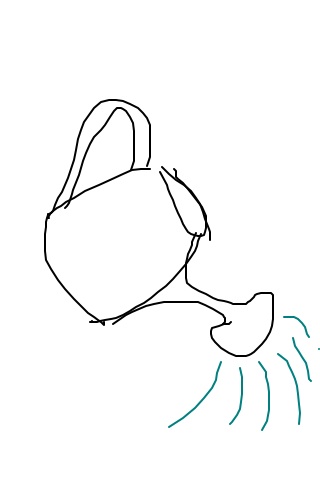
It ain’t gonna rain no more

July 14, 2011

©AGJ (using the “Sketches” app)


Comment on this post »

Last day

June 19, 2011

Because I find writing about my dad more fun than crying.

Happy Father’s Day, Papa Jones
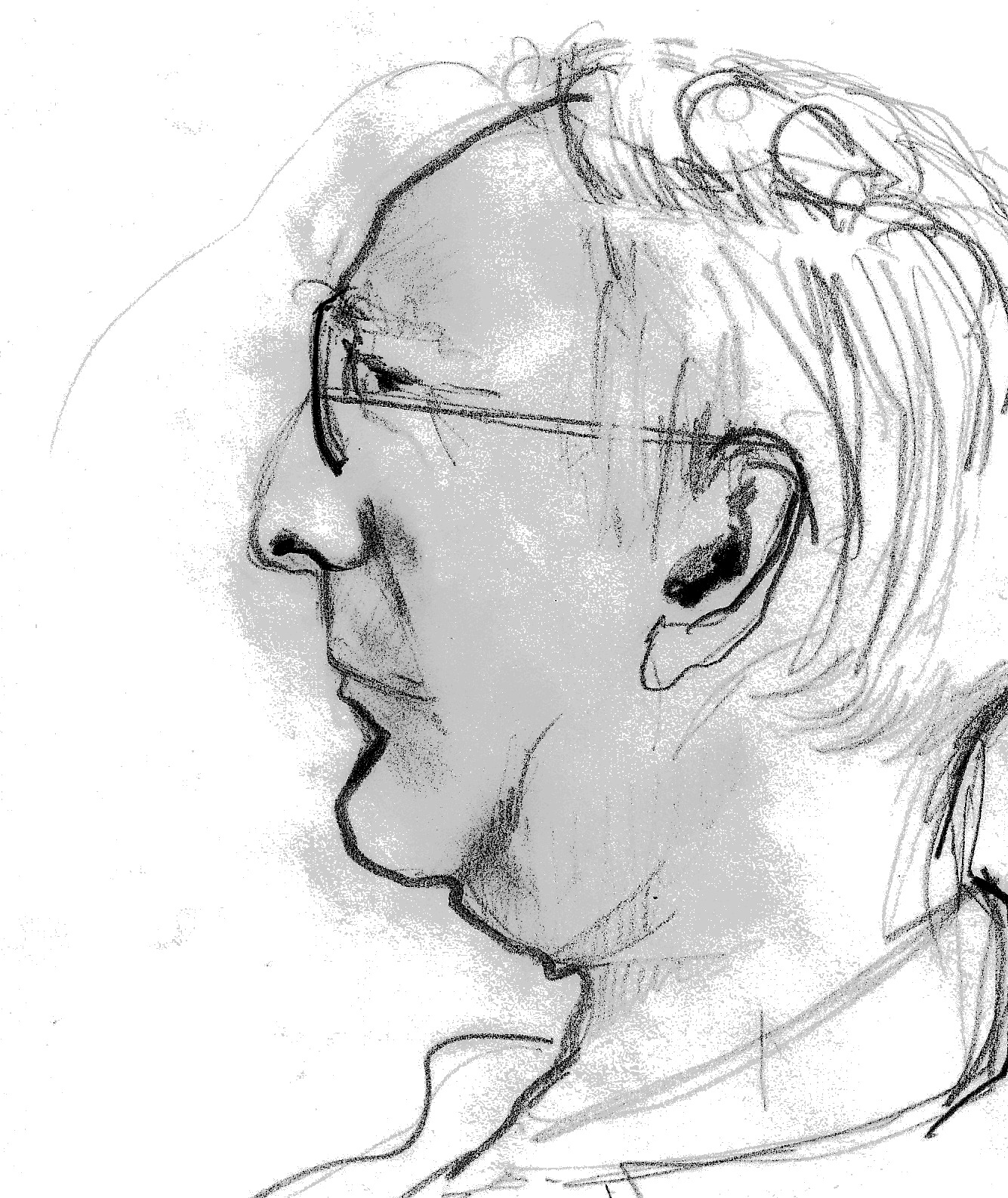


Our Mt. Rushmore, TGJ (©AGJ)

My dad was still hanging in the air inside his home a few hours after he died (it’s now been 12 weeks).

I took note of his presence before the march of relatives and time swept away the details.

In keeping with his British roots, he had a soft-boiled egg for breakfast. I found a fragment of brown shell on the kitchen table put there by the first tap of his spoon, then saw the egg cup filled with water sitting in the sink next to a gummy teaspoon.

But the egg was just a starter. His main course was always a giant bowl of gravelly cereal topped with fresh blueberries, strawberries and flax seeds (because a pretty health nut once told him “They’re good for you!”) “Actually, Dad, the oil is better. Your body won’t break down the seeds.”

He still kept pouring them over everything.

His bowl was in the sink next to the egg cup and, now, two spoons. Nearby, a dirty juice glass filled with water had developed a thin skin of floating pulp specimens. Dad used to drink a morning tea that my mum brought to his bedside for most of their 50-plus years of married life. But after he lost her he switched to juice. There was no mug in the sink.

It was a cool and sunny Saturday in March, his very last day, and two months before the official start of golf season. Dad was looking forward to opening day at the golf club, to unzipping his duffel bag and switching his tennis shoes for his two-toned golf shoes. But the fairways were still off limits, too soft from the melting snow and too prone to tears to unleash the cleated foursomes. So he spent that morning at the kitchen table reading The Guardian from cover to cover. Then Maclean’s.

Dad had recently become a fan of the new-and-improved Maclean’s, buying a subscription after Time (Canada) folded. ”I can’t keep up with all of this,” he used to say when my brothers and I visited. He relished the effect of news on paper. Despite having an iPhone and all the news and sports apps I guy could want, he still believed nothing beat paper. “With this layout, you read stories you never knew you wanted to read,” he said. The magazines were spread out all over the kitchen table, just as he’d left them, by the time we got to his place. His iPhone — a gift from my brother, Pete — was plugged into the wall, recharging.

You don’t have to have been with him that morning to know that Penny, Dad’s black lab, spent breakfast as a dead weight draped across his slippered feet. Years earlier he had stopped feeding her under the table. She got fat. For a while, Dad solved Penny’s expanding BMI by letting her run off leash all over the property. But she kept running away past the driveway, beyond the apple trees and across a four-lane highway to a nearby Tim Horton’s. The first time Penny skidded to halt at the rear of the donut shop, staff on their smoke breaks started feeding her Timbits and serving her water in large coffee cups. And just like that, she was one of the gang, a regular out back by the dumpster.

My brothers were quick to put a stop this. On one level, Dad was relieved. He didn’t want Penny to be a smear on the highway, nor did he want to have get in the car and collect her every time he let her out. On another level, something about their veto bugged him. “All dogs should be free. Men too,” he chafed one time when he was attaching Penny to a long lead the boys had placed next to his walking shoes. I was standing at the door waiting for him when he said that. Dad hated being told what to do, especially by the people he loved. Still, off they went down the driveway every morning, a man and his dog connected by a retractable cord, each of them, for the most part, staying in line.

The country road Dad and Penny walked along had been adjacent to a cornfield back in the seventies when we were kids. Every spring you could smell the manure going down. It made us all squeal, “Peeeee U!” We loved to over dramatize our disgust by twisting our faces in different directions. Come fall, we were running between rows of corn stalks that towered over us by more than a foot. From afar, you could see we were in there by the jostle in the crop. It was like the ripple behind a boat.

Sitting down on the soil between the rows was better than being in a treehouse, more private and quiet. The sour smell of the green husks filled our noses, replacing the manure later in the season. We’d tear open multiple cobs, like Christmas crackers, and part the silky blonde hair to see what they revealed. No two were alike. Tight, perfect rows of niblets in shades of blood red and golden yellow lured small fingers down their length. Children of the corn we were, only less scary.
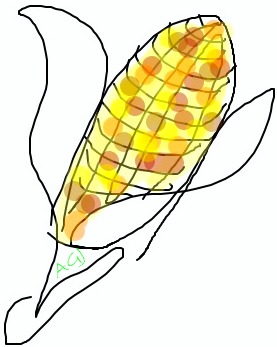
“It’s Indian corn,” Dad explained back home when we presented our parents with a bouquet of husks. “It’s for cows, not kids.” We wanted to eat them with our hamburger patties. Instead, we settled for the Green Giant’s creamed corn. We used to play in junior tennis tournaments with the boy who did the voice for the Little Green Sprout. We asked mum to stock up on the stuff, thinking our friend had approved the contents of each can.

Today the corn field is long gone. And so is the farmer on the red tractor we never did meet. For years, we waved to him from the road as he came to the end of one row and turned around to plough his way up the next. Now when Dad and Penny made their way down the road and turned to look at where the cornfield used to be, instead they saw people getting out of their cars and marching into the neighbouring Wal-Mart. It was one of five big box stores that had popped up beside his property in a few short years. When Penny wasn’t at Tim Horton’s, she was in that giant parking lot inhaling every scent coming off the pavement.

After Dad died Penny retreated to the corner of the family room. My brother, Richard, was the first to notice she had stopped sitting at the front window at the end of the day waiting for Dad to come home from work. Moving through the family room, I bent down to stroke Penny and took note of Dad’s last movements in this room: the bookmark on page 174 of Lawrence Hill’s Book of Negroes laying beside his Lazy-Boy recliner, the advance of chess pieces in a game he was playing by himself, the half eaten box of chocolates in a drawer across the room (I ate one … strawberry cream), and, on his side table, a tiny tin of aspirin he popped open every time he felt an unfamiliar flutter in his chest. Moving over to his home office, I lifted the lid on his leather briefcase and took out his Tic Tacs and gave them a shake. The latest issue of Maclean’s was sitting on top of a bunch of files of design projects on the go.

Dad went to bed that night with a belly full of chicken curry and rice (that he cooked himself) and a warm dog by his side.

A few hours later he was gone.

Afterword: The final episode of the series “Six Feet Under” had a huge effect on me when I saw it several years ago. For those of you who haven’t see it, rent it. It fast forwards to the moment of death for each of the main characters, and it does so in a way that is so extraordinary in its ordinariness. Nothing is overdramatized and there are no heroics. Everyone simply expires. It’s like witnessing the timer go off on a cake that has risen as high as it can go before the elements that sustained it and made it grow, suddenly switch over and capsize it.


 

Comment on this post »

My favourite

June 17, 2011

Colour combos


©AGJ with Paintbook app


Comment on this post »

My business model

June 16, 2011

Create good karma.

Comment on this post »

Cool change

June 15, 2011

©AGJ

Lime rocks

Orange quenches

Cherry … meh

Banana is just plain gross


Comment on this post »

And I don’t even like cats

June 9, 2011

New hashtag: #loAWEcats

Hat tip: @KatTancock‘s cool blog, Magazines Online

Comment on this post »

May 31, 2011

“Just because you can publish so easily doesn’t always mean you should.”

Boonsri Dickinson, an internet ninja who understands the value of good content

Comment on this post »

Culture moments

May 30, 2011

16th century


18th century


21st century

©AGJ

Comment on this post »

error: Content is protected !!