Alison Garwood Jones

Last day

June 19, 2011

Because I find writing about my dad more fun than crying.

Happy Father’s Day, Papa Jones
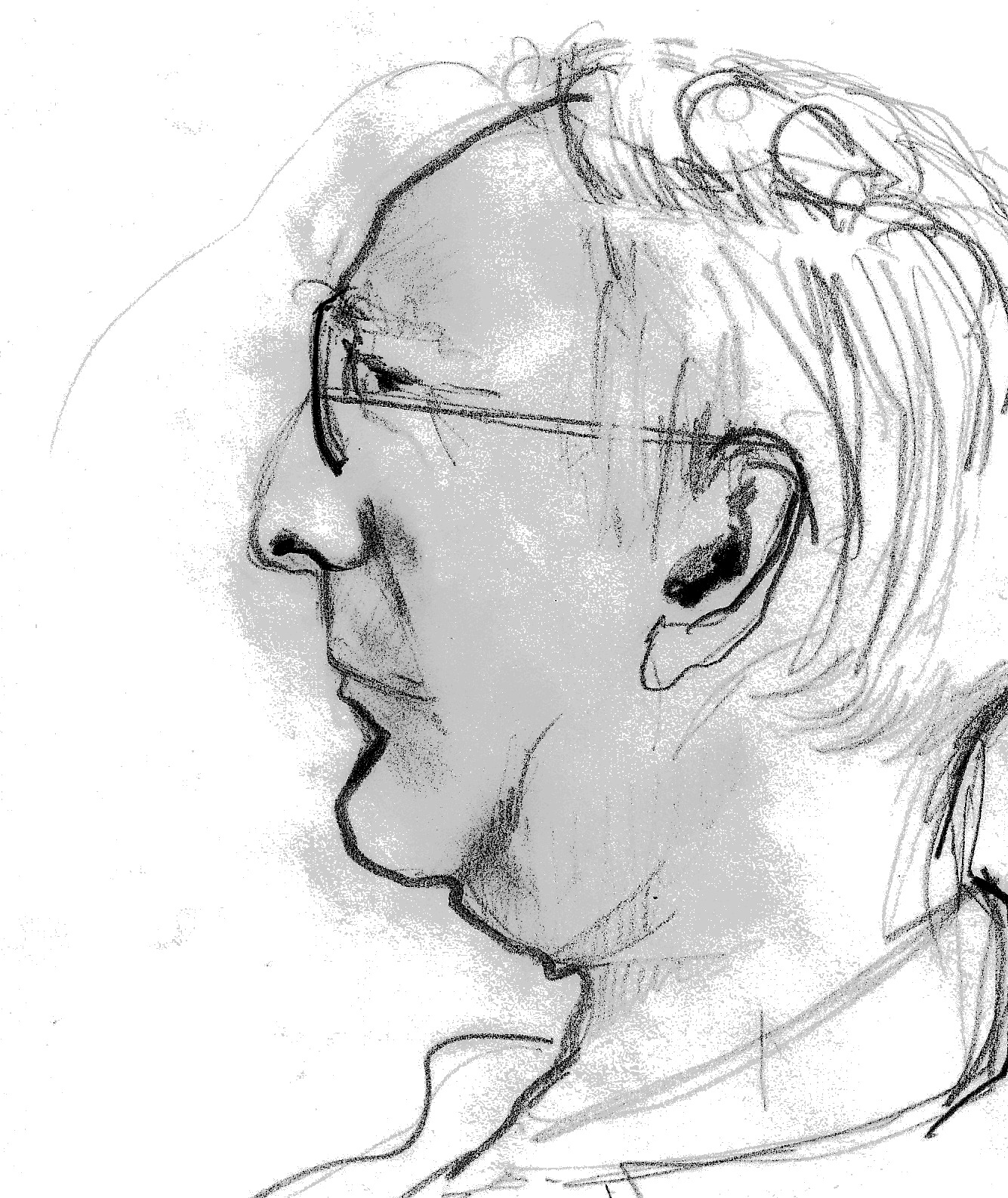


Our Mt. Rushmore, TGJ (©AGJ)

My dad was still hanging in the air inside his home a few hours after he died (it’s now been 12 weeks).

I took note of his presence before the march of relatives and time swept away the details.

In keeping with his British roots, he had a soft-boiled egg for breakfast. I found a fragment of brown shell on the kitchen table put there by the first tap of his spoon, then saw the egg cup filled with water sitting in the sink next to a gummy teaspoon.

But the egg was just a starter. His main course was always a giant bowl of gravelly cereal topped with fresh blueberries, strawberries and flax seeds (because a pretty health nut once told him “They’re good for you!”) “Actually, Dad, the oil is better. Your body won’t break down the seeds.”

He still kept pouring them over everything.

His bowl was in the sink next to the egg cup and, now, two spoons. Nearby, a dirty juice glass filled with water had developed a thin skin of floating pulp specimens. Dad used to drink a morning tea that my mum brought to his bedside for most of their 50-plus years of married life. But after he lost her he switched to juice. There was no mug in the sink.

It was a cool and sunny Saturday in March, his very last day, and two months before the official start of golf season. Dad was looking forward to opening day at the golf club, to unzipping his duffel bag and switching his tennis shoes for his two-toned golf shoes. But the fairways were still off limits, too soft from the melting snow and too prone to tears to unleash the cleated foursomes. So he spent that morning at the kitchen table reading The Guardian from cover to cover. Then Maclean’s.

Dad had recently become a fan of the new-and-improved Maclean’s, buying a subscription after Time (Canada) folded. ”I can’t keep up with all of this,” he used to say when my brothers and I visited. He relished the effect of news on paper. Despite having an iPhone and all the news and sports apps I guy could want, he still believed nothing beat paper. “With this layout, you read stories you never knew you wanted to read,” he said. The magazines were spread out all over the kitchen table, just as he’d left them, by the time we got to his place. His iPhone — a gift from my brother, Pete — was plugged into the wall, recharging.

You don’t have to have been with him that morning to know that Penny, Dad’s black lab, spent breakfast as a dead weight draped across his slippered feet. Years earlier he had stopped feeding her under the table. She got fat. For a while, Dad solved Penny’s expanding BMI by letting her run off leash all over the property. But she kept running away past the driveway, beyond the apple trees and across a four-lane highway to a nearby Tim Horton’s. The first time Penny skidded to halt at the rear of the donut shop, staff on their smoke breaks started feeding her Timbits and serving her water in large coffee cups. And just like that, she was one of the gang, a regular out back by the dumpster.

My brothers were quick to put a stop this. On one level, Dad was relieved. He didn’t want Penny to be a smear on the highway, nor did he want to have get in the car and collect her every time he let her out. On another level, something about their veto bugged him. “All dogs should be free. Men too,” he chafed one time when he was attaching Penny to a long lead the boys had placed next to his walking shoes. I was standing at the door waiting for him when he said that. Dad hated being told what to do, especially by the people he loved. Still, off they went down the driveway every morning, a man and his dog connected by a retractable cord, each of them, for the most part, staying in line.

The country road Dad and Penny walked along had been adjacent to a cornfield back in the seventies when we were kids. Every spring you could smell the manure going down. It made us all squeal, “Peeeee U!” We loved to over dramatize our disgust by twisting our faces in different directions. Come fall, we were running between rows of corn stalks that towered over us by more than a foot. From afar, you could see we were in there by the jostle in the crop. It was like the ripple behind a boat.

Sitting down on the soil between the rows was better than being in a treehouse, more private and quiet. The sour smell of the green husks filled our noses, replacing the manure later in the season. We’d tear open multiple cobs, like Christmas crackers, and part the silky blonde hair to see what they revealed. No two were alike. Tight, perfect rows of niblets in shades of blood red and golden yellow lured small fingers down their length. Children of the corn we were, only less scary.
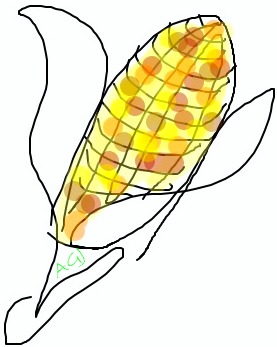
“It’s Indian corn,” Dad explained back home when we presented our parents with a bouquet of husks. “It’s for cows, not kids.” We wanted to eat them with our hamburger patties. Instead, we settled for the Green Giant’s creamed corn. We used to play in junior tennis tournaments with the boy who did the voice for the Little Green Sprout. We asked mum to stock up on the stuff, thinking our friend had approved the contents of each can.

Today the corn field is long gone. And so is the farmer on the red tractor we never did meet. For years, we waved to him from the road as he came to the end of one row and turned around to plough his way up the next. Now when Dad and Penny made their way down the road and turned to look at where the cornfield used to be, instead they saw people getting out of their cars and marching into the neighbouring Wal-Mart. It was one of five big box stores that had popped up beside his property in a few short years. When Penny wasn’t at Tim Horton’s, she was in that giant parking lot inhaling every scent coming off the pavement.

After Dad died Penny retreated to the corner of the family room. My brother, Richard, was the first to notice she had stopped sitting at the front window at the end of the day waiting for Dad to come home from work. Moving through the family room, I bent down to stroke Penny and took note of Dad’s last movements in this room: the bookmark on page 174 of Lawrence Hill’s Book of Negroes laying beside his Lazy-Boy recliner, the advance of chess pieces in a game he was playing by himself, the half eaten box of chocolates in a drawer across the room (I ate one … strawberry cream), and, on his side table, a tiny tin of aspirin he popped open every time he felt an unfamiliar flutter in his chest. Moving over to his home office, I lifted the lid on his leather briefcase and took out his Tic Tacs and gave them a shake. The latest issue of Maclean’s was sitting on top of a bunch of files of design projects on the go.

Dad went to bed that night with a belly full of chicken curry and rice (that he cooked himself) and a warm dog by his side.

A few hours later he was gone.

Afterword: The final episode of the series “Six Feet Under” had a huge effect on me when I saw it several years ago. For those of you who haven’t see it, rent it. It fast forwards to the moment of death for each of the main characters, and it does so in a way that is so extraordinary in its ordinariness. Nothing is overdramatized and there are no heroics. Everyone simply expires. It’s like witnessing the timer go off on a cake that has risen as high as it can go before the elements that sustained it and made it grow, suddenly switch over and capsize it.


 

Comment on this post »

My favourite

June 17, 2011

Colour combos


©AGJ with Paintbook app


Comment on this post »

My business model

June 16, 2011

Create good karma.

Comment on this post »

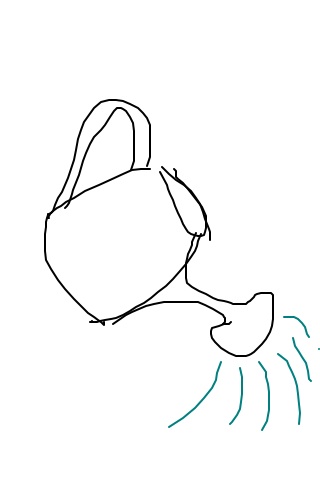
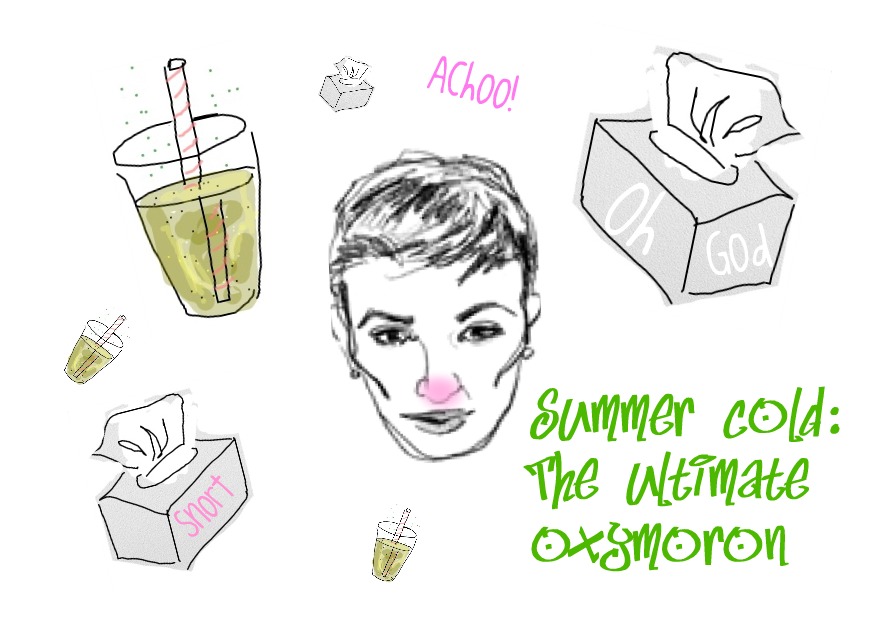
Cool change

June 15, 2011

©AGJ

Lime rocks

Orange quenches

Cherry … meh

Banana is just plain gross


Comment on this post »

And I don’t even like cats

June 9, 2011

New hashtag: #loAWEcats

Hat tip: @KatTancock‘s cool blog, Magazines Online

Comment on this post »

May 31, 2011

“Just because you can publish so easily doesn’t always mean you should.”

Boonsri Dickinson, an internet ninja who understands the value of good content

Comment on this post »

Culture moments

May 30, 2011

16th century


18th century


21st century

©AGJ

Comment on this post »

Oprah’s parting words

May 27, 2011

Live from the heart of yourself. Yeah, I know you have to make a living, but, still, do it.

Each of us has our own platform. Climb up on it and do something with it.

Show people who you are.

Use your life to serve the world.

Every rock, every flower, every person on earth is energy; make it good energy.

No one completes you (Jerry Maguire, the movie, was wrong). You are responsible for your own life.

I hope my show dropped the veil on all the pretence in the world (about perfect families and perfect lives).

Too many people block their talents and blessings simply because they don’t feel worthy enough to own their own lives. Being alive makes worthiness your birthright.

Everybody wants to be heard. There’s no better feeling than when you know you’ve been heard completely.

Go out and validate someone.

Stay in touch. Here’s my personal email: oprah@oprah.com


Comment on this post »

The big reveal

May 25, 2011

How would you feel if genome analysis revealed you were predisposed to “early sudden death” from vascular disease? Less hungry for chips? Determined to blow all your savings in Vegas and have as much sex as the day is long? And what if a message in your inbox from a lab in sunny California coldly stated that you had a 98.2 % chance of developing Alzheimer’s since, yup, there it is, you’ve got the “E4 variant” of the APOE gene? Would you be grateful for the knowledge — isn’t all knowledge power in the Information Age? — or annihilated by existential dread, and asking, Now what?

No, I better not. Well, maybe just one. Och.

If you’re like me, adopted and clueless about the diseases in my family tree, wary of palm readers glaring at my lifeline and the daughter of an adoptive mother in the final stages of Alzheimer’s and a dad dead and gone from heart failure, the arrival of consumer genomics is both unnerving and intriguing. In my case, genetic testing could potentially fill in some blanks in my life story I can’t get the old-fashioned way: by observing family members, then watching my body gradually sink into my mother’s genes.

A three-year search for my birth mother by the Children’s Aid Society yielded zero information about my medical history and only a sprinkling of anecdotes about my birth parents. She was 5’6” with brown hair, blue eyes and a “lively face. She loved to draw and was an “avid reader.” In fact, she went to art school in London, England during the city’s finest hour, the mid-sixties (read: the Stones, the Beatles, Mary Quant minis, velvet suits and jumbled teeth). She met my biological father during a stint in Canada as a nanny. Records describe him as “very tall and striking” and from “a prominent family.” So I was a scandal. She was 19 and he was 20 when my budding existence became undeniable.

I found this out in 2004. Back then the provincial government in Ontario was still keeping a lock on adoption records. But since the summer of 2009 adoption records have been opened and adoptees are now free to find out more information about their medical history and the names on their birth certificates. Actually, I already know my original name: it’s Tagart. “Hmm, like Dagny Taggart in The Fountainhead and Atlas Shrugged,” said my friend, Ian, an Ayn Rand fanatic. I’m put off by objectivism and haven’t read Rand’s novels, but according to Ian, Ms. Taggart is a beautiful and powerful railway executive who’ll stop at nothing to get what she wants. I feel sweeter than that.

In the meantime, I’ve applied to learn more about my medical history, but getting an answer could take months, even years. And, in the end, I may be no further ahead if my biological parents decide to exercise their right to disclosure vetoes.

Having my DNA sequenced, by comparison, could take 6-8 weeks, yielding genomic data that, among other things, could tell me if I carry inheritable markers for over 20 diseases, like breast cancer and Alzheimer’s, and whether I’m at risk for almost 80 different disorders, such as type 2 diabetes, Parkinson’s and brain aneurysms. It could also predict how I’d react to certain medications, including hormone replacement therapy, which is temping as the decades mount. So should I do it?

The spit test from 23andMe.com

An editor started me on this journey last year when she called to ask if I’d take on a story about Do-It-Yourself genome sequencing kits. “I want you to go out and find out how the test results from these kits are customizing care,” she said. “How are they changing the face of healthcare by individualizing our treatment options?”

Whether she knew it or not, my editor was echoing Bill Clinton’s Rose Garden speech in the summer of 2000, made not long after scientists wrapped up the Human Genome Project. Back then the president stood at the lectern and predicted:

Human kind is on the verge of gaining immense, new power to heal. Genomics will revolutionize the diagnosis, prevention and treatment of most, if not all human diseases.

And it probably will, but just not now. My story fizzled.

Here’s the deal (and what I told my editor after combing the landscape for hopeful advances). Genome sequencing hasn’t changed primary health care, yet. Experts are unanimous in saying its current impact is very limited. We’re still on the verge of that revolution. Like the dot.com boom a decade ago, it’s another example of us putting too much faith in untested ideas and expecting instant payoff from our technological brilliance.

A good example of that happened last May. The US Food and Drug Administration (FDA) had to acknowledge that the genetic revolution had roared ahead of the health care realities when it abruptly blocked the selling personal genetics testing kits at Walgreens drugstores, just 48 hours before they were due to hit the shelves. The official reason: the boxes were missing an FDA clearance and approval number. The National Society of Genetic Counselors then stepped forward next to identify the real concern: “[R]eceiving genetic information directly from a manufacturer or supplier without input from a qualified health care provider increases the chance for misunderstanding or misinterpretation of results,” they said in an official statement. Also, people need to be “prepar[ed] for what they might learn,” added NSGC president Elizabeth Kearney in the same statement. So we’re back to being on the verge of a genetic revolution.

What we do know for sure is that having the gene for Huntington’s Disease is the only example where, if you’ve got the gene, you’ll get the disease. 100% without a doubt. Genetic testing can also predict if you’re a carrier for cystic fibrosis and Tay Sachs. But we’ve known that and have been testing for those diseases for over 30 years. When it comes to cancer, Alzheimer’s, Parkinson’s and heart disease, there’s no telling if you’ll get any one of these deadly disorders even if the markers on your genes light up like a Christmas tree. Genome sequencing is not a diagnostic tool or, as Steven Pinker says, it’s not like taking a pregnancy test that tells you yes or no if you’re carrying a child.

What’s better ten years after Clinton’s speech are the tools. The genome-sequencing rate is faster; what used to take years can be done in a day. And just as significant is the drop in the price of sequencing, from millions to thousands to just a couple of hundred bucks in a few short years. In a recession, though, it’s a hard sell, especially in the US where these testing companies are based.

When the experts say genomics is having a “limited” impact on medicine, this is what they mean:

• even though the full genome has been sequenced, at this point only 1.5% of all human genes code for the proteins that make up our cells and tissues. Scientists haven’t identified what the rest are doing. As science writer, Brandon Keim, put it in a Wired feature in the spring of 2010 “Even after the publication of hundreds of genome-wide association studies — the gold standard of disease gene hunting, in which thousands of genomes are scanned and compared — scientists can explain only a fraction of the heritability that clearly exists in common diseases and conditions. … But they hope ongoing projects will fill massive gaps that remain in current genetic explanations for most common diseases.”

[pullquote]Huge amounts of data will lead to predictions based on patterns. Only then can therapeutic applications be developed.[/pullquote]

• Last summer, Francis Collins, the director of the National Institutes of Health in Bethesda, MD and director of the National Human Genome Research Institute from 1993-2008, gave an update on genomics in Nature magazine’s April issue. He said “Primary care providers aren’t even close to practicing genetic medicine.” He added, “The most profound consequence of the genetic revolution in the long run will be the development of targeted therapeutics based on a detailed molecular understanding of pathogenesis.” But, again, it hasn’t happened.

Still, reporters continue to buzz around genomics.

Journalists love revolutions, be they in Egypt or in a test tube. Check out Joseph Hall’s “I am Joe’s DNA” in last weekend’s Sunday Star. So far the majority of volunteers who have sent off their spit to be sequenced are Nobel laureates, clinical researchers and journalists. The general public still isn’t interested, even though the price for the kits runs as little as $300 USD through internet-based companies like 23andMe. This Mountain View, California-based biotech company was started by Anne Wojciki, a biologist, biotech analyst and wife of Google co-founder, Sergey Brin. Google is heavily invested in the company. Brin is looking to genomics for a cure for Parkinson’s. His mother has the disease and so may he one day.

23and Me wants to “empower individuals to take bold and informed steps toward self knowledge” and “accelerate research” through the combined potential of the internet and genetics. Once you receive your genetic report card, 23andMe “keeps you up-to-date with the latest biomedical literature so you can understand firsthand how breaking scientific news relates directly to you.”

But the low turnout from the average North American suggests the Genomics Age and the general public haven’t found one another yet — despite efforts to make sequencing understandable, even sexy (23andMe even threw swishy “spit parties”). As of last spring 23andMe has laid off almost half its staff (from 70 to 40). It is also now declining media interviews as it ponders its future. In 2010 Navigenics, another genetic  testing company, went through 3 executive officers in a year and deCODE Genetics just “passed through bankruptcy.” All three testing companies are now more focused on selling to doctors, not consumers, says The New York Times.

In 2011, we are in the collecting and analyzing phase of the impending revolution. More data is needed, so more people need to sign on for a spit test. One thing is clear: affordable genetic testing kits are a great example of the crowd sourcing trend started by Wikipedia and Google Analytics — only the data is human DNA. It’s medicine 2.0, as it were. Huge amounts of data will lead to predictions based on patterns. Only then can therapeutic applications be developed.

[pullquote]Genetic testing kits are a great example of the crowd sourcing trend started by Wikipedia and Google Analytics.[/pullquote]

So where does this leave me? No further ahead, really, than when I first started researching genomics and my biological origins.

Right then, back to life.

Comment on this post »

May 21, 2011

“There is  a Talmudic saying: ‘No one is the owner of his instincts, but controlling them, that is civilization.'”

Elie Wiesel speaking about his friend, Dominique Strauss-Kahn.

I dedicate this quote to all the guys out there who “can’t help but help themselves to the help.”

Comment on this post »

error: Content is protected !!