Ready … Set … Go!

Zzzzzzzzzzzz







September 19, 2011
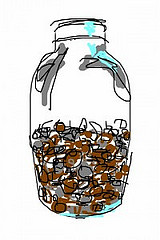
When times are tough, the change jar buys dinner.
I bet rich people throw out their pennies.
I eat mine in the form of butter fish, rice and slivers of unagi and pickled ginger.
If God is in the details, being cash-strapped sure helps you worship of the small stuff.
Starving artists are on to something …
August 30, 2011

From health articles to design profiles. Freelancing is fun. Here’s my latest article, Lofty Ambitions, from the über-cool design rag, Design Lines.
August 28, 2011
The days when a university diploma doubled as a ticket to your first full-time job had about a forty year run. The equation school=good job worked not because higher education was the only answer to career advancement, but because the economy could support the yearly influx of eager, young grads streaming into the work force.
Now if you want to go to university you better know why, say experts, especially if you’re paying for it yourself because you’ll be staring down your debt in the aftermath with a string of part-time contract positions and fiercely competitive unpaid internships. And that could go on for years.
When the economy sucks we’re told that real life experience counts for a lot more than a formal education. People who are degree-ed to the max, or who are in the process of becoming that way, are actually looked at like genuine curiosities. That’s when self-edification (not at the library, but the kind you get charged for) becomes a frippery, like buying good wine or contemporary art.
As we shed old economies and old business models, new heroes are popping up. But I’m not interested in the sort who wear masks and flowing capes, even though they thrive on movie screens during recessions and depressions. I like the kind who squint at the sun and kick the dust. I have about a thousand books crawling up the walls of my apartment, and somewhere in there there’s a copy of Louis L’Amour’s Education of a Wandering Man, but its spine is eluding me (I found the dust jacket, but not the book. I think it’s blue with silver lettering …).
This marvelous volume is about a man who chose to make the world his classroom and it should be required reading at this point in time, when there are no patterns to follow and, certainly, no guarantees.

It’s important to remember that creative solutions don’t spring out of order. Nope, they’re the children of chaos. L’Amour knew that. He had a raw enthusiasm for life and a résumé that was disjointed, rambling and anything but slick. I don’t know if his parents were proud of him. He spent the 1930s — the decade Federal Reserve chairman Ben Bernanke is scouring for lessons and answers to the current economic crisis — as a seaman, a ranch hand, a mine guard and trainspotting hobo, to name a few of his gigs. Everywhere he went he lugged along a rucksack full of books by Shakespeare, Edwin Arlington Robinson and Nietzsche and, essentially, earned a bachelor of arts in life. The time and energy he spent on his self-education is a problem for people who thrive on order and certainty and who like to hang framed diplomas above their desk.
Wide ranging curiosity and continuous learning are vital to thriving in the modern economy, says today’s biz section of The New York Times. It’s a gig economy, said Daily Beast editor Tina Brown in 2009. It still is.
So consider yourself lucky to be living in a time when making your path unique is not a selfish option, but a financial necessity.
Now get out and explore!

Afterword: Penelope Trunk still always says it best. In a recent blog post she summarizes her argument about why grad school is unnessary in one of her comments —
“Bottom line: No grad school in creative fields.”
August 21, 2011
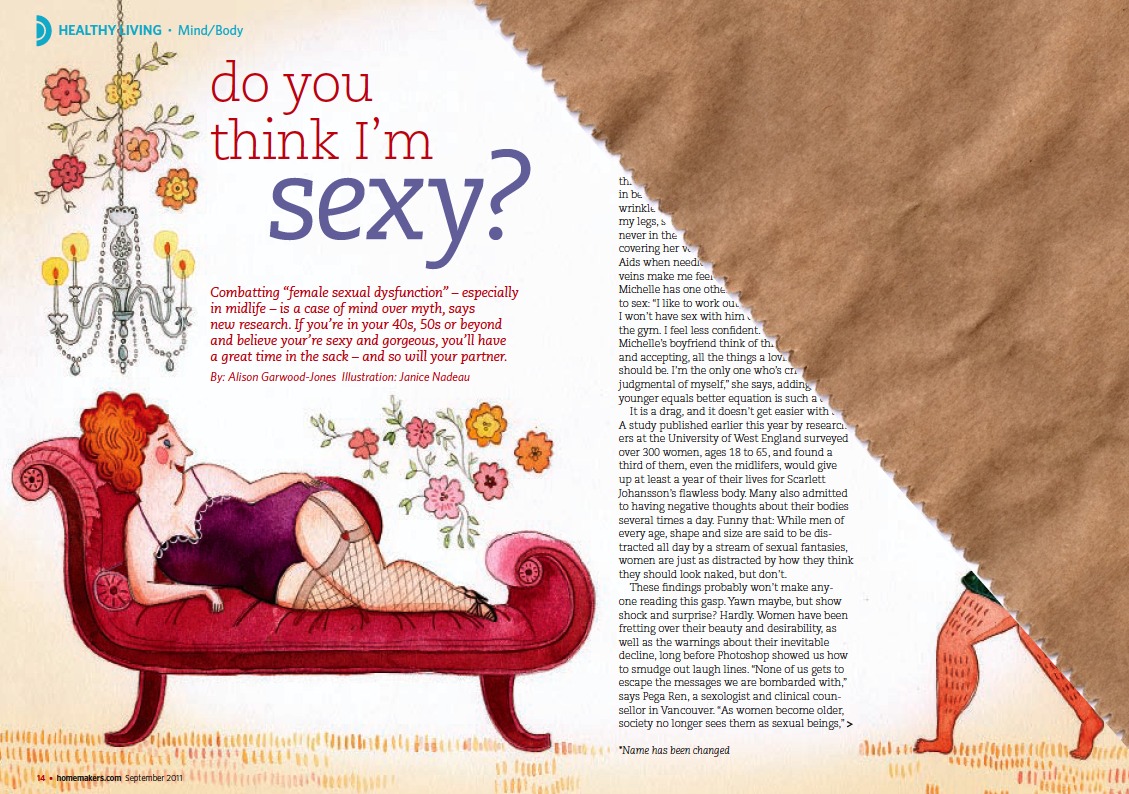
Below is the “blogified” version of an article of mine that just hit the newstands. If you want to read the original piece (pictured above),
Go “clickety click” right here.
But first, I’d like to add a preamble … if you don’t mind.
The world is sick.
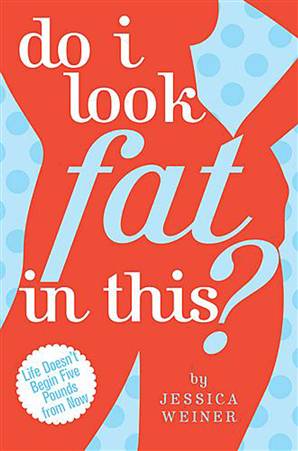
I mean, why do we insist on pushing people’s buttons and triggering self-loathing behavior with messages like this …

Hah hah, good one, we chuckle. Well, it’s not so funny when it worms its way down to this …

There are men and women who spread messages like this because thinking isn’t something they practice much.
Some do it for the same reasons others are racist. Human beings are essentially competitive and status-driven. Getting to the top can drive the vulnerable or mean-spirited among us to push themselves and others to do unhealthy things to the body and soul. Men and women are equally vulnerable to and affected by this.
For so many adult women, rebuilding a healthy core and a spirit of self-acceptance involves undoing a lifetime of the sort of programming and constant messaging that revolves around our bodies, looks and age.
Men are also criticized and joked about in popular culture, but mostly for their ideas and actions — like how drunk they got last night and other boneheaded antics. They’re lucky because guys are just as sensitive about their bodies as women are but, somehow, our human instincts (to protect their pride?) have spared them the microscope women have been pushed under. What’s that Margaret Atwood quote? Oh yeah: “Men are afraid of being laughed at. Women are afraid of being killed.”
Geez louise, it’s tiring deflecting all the bullshit thrown at women on T-shirts, on coffee mugs, in magazines and movies, and, more seriously, on political campaigns and in war. Will our bodies ever stop being the political football tossed around by Pro Lifers, religious militia groups and the fashion mafioso?
So to all the entrepreneurs out there (T-shirt moguls and magazine publishers included) who happen to be guys, your new girlfriends might not be ignoring you in the bedroom, but a lot of average Joes — who don’t think expensive jewelry is the answer to stoking the fires — are having a heck of a time getting close to the women they love, and have loved for years. That’s why you might want to rethink the slogans you’re mass producing, including this one:

There are times when you’ve got plenty to cry about because what you’re putting out there about women — on T-shirts or wherever — is affecting you directly. Going for a laugh and a buck, you ended up getting the cold shoulder from the very people you so desperately want to impress — women.
In the words of Aretha Franklin, Think.
Here’s my magazine piece from the September issue of Homemakers Magazine.

(’cause I sure don’t)
By society’s standards, Joanna Trainer, 34, is slim and drop-dead gorgeous. Her golden bob, graceful gestures and outwardly enthusiastic attitude capsize most of the men who meet her. You’d think her openly confident ways would naturally extend to the bedroom. Not true, she says. “For some women it’s wrinkles or jiggly thighs,” she says, “but I have bad veins in my legs,” and they’re getting worse as she ages. That’s why Joanna insists on having sex in dim lighting and she never gets spontaneous with her boyfriend during the day. She’s even gone as far as covering her veins with body makeup and band-aids when needles and lasers didn’t work. “My veins make me feel ashamed and repulsive.” So what does Joanna’s boyfriend think of her sensitivity about her legs? “He’s caring and accepting of me, all the things a loving partner should be. I’m the only one who’s overly critical and judgmental,” she says, adding wistfully, “This younger=better equation is such a drag.”
The pressure on women to look young is a drag and the wisdom that comes with age and experience doesn’t always tame this beast. The latest study of women and body image, published last March by researchers at the University of West England, surveyed over 300 women between the ages of 18 and 65 and found one third of them, even the mid-lifers, would give up a year of their life for Scarlett Johansson’s flawless body. This same group also admitted to having negative thoughts about their bodies several times a day, and said it was taking a toll on their relationships.  Funny that: while men of every age, shape and size are said to be distracted on the job by a stream of sexual fantasies, women are just as distracted by how they should look naked, but don’t.
These findings probably won’t make anyone reading this gasp (yawn, maybe). Women have been fretting over their beauty, desirability and the warnings about their inevitable decline long before advertising art directors started smudging out their laugh lines in PhotoShop. “None of us gets to escape the messages we are bombarded with,” says Pega Ren, a sexologist and clinical counselor in Vancouver. “As women become older, society no longer sees them as sexual beings,” she says. Call it human nature, but there’s a cultural avoidance of a whole range of issues facing midlife women. “Unattractive, uninteresting and basically useless is the message society sends women after we hit 50,” says Julia Moulden, 55, a Toronto-based author and Huffington Post columnist. “It makes me crazy having to battle it all the time because I don’t feel it myself.” As a result, women in their forties, fifties and older have been excluded from the public discussion of what a sexual woman looks like and is doing in the bedroom. Ren thinks many women internalize this message. Assuming that they are no longer desirable, they shut the door on sex.
 Have these women not heard of Helen Mirren? Positively radiant at 66.
[pullquote]Women’s waning interest in sex as they age is more directly associated with how attractive they perceive themselves to be, not with declining hormone levels.[/pullquote]
That’s why when new research on female sexuality starts emerging that challenges and reverses old chestnuts about middle age “frigidity” and invisibility, women and men hold their breath with hope and caution. A consistent pattern in studies over the past two decades shows that women’s waning interest in sex as they age — and no one is disputing that — is more directly associated with how attractive they perceive themselves to be, and not with declining hormone levels. From this physical evidence, psychologists have developed a new approach to therapy that better understands the pressure put upon women’s psyches from a cultural context. It’s helping women better understand and address their body image concerns and strengthening their relationships both in and out of the bedroom.
It’s not a physical fact that as a woman leaves her fertile years behind, her desire for sex will automatically drop off, then disappear for good. “We’ve seen too many exceptions to that,” says Lori Brotto, a Port Moody, B.C.-based psychologist whose research on the mind’s relationship to the body has gained international attention. When you follow women over their lifespan, she says, health challenges, depression, smoking, alcoholism and simply being in a long-term relationship can make desire go down. But what happens when a healthy woman pursues a new relationship at 65? “Her desire’s up again?” As Patricia Barthalow Koch and her team of researchers at Penn State found then published in the Journal of Sex Research in 2005, a mid-life woman’s quality of life and the quality of her relationship with her partner — i.e. how they communicate, their emotional intimacy and level of respect and true companionship with one another — are the best predictors of her sexual satisfaction.
[pullquote]If women’s bodies don’t give up on sex — and that’s an important new message, so spread it — why are so many women still putting up walls to romance?[/pullquote]
 The Samantha Joneses of the world, then, need not fret about life after their last period. “How you feel about yourself and your partner accounts for much more in the changes in desire than the bottoming out of estrogen that happens with menopause,” says Brotto. So if women’s bodies don’t give up on sex — and that’s an important new message, so spread it — why are so many women still putting up walls to romance?
A dozen years ago researchers at Vivus Inc., inventors of Alista (the precursor to Viagra), cheered like NASA engineers when they got the, ahem, “vertical indicators” they were hoping for from the men in their clinical trials. We met our goal, announced Vivus founder, Virgil Place, MD, we “put life back into dead penises.” A few years later, these same researchers slumped in their chairs when they got nothing from test groups of women taking the medication. Sure, the women experienced increased blood flow to their vaginas, but no orgasm. Even so, at last count 13 drug companies are still trying to find ways to make their pills work on women. But the medicalization of female desire by drug companies hasn’t been good for women’s spontaneity or confidence in the bedroom.

For example, the pharmaceutical companies were, successful in creating widespread acceptance of the labels “dysfunctional” and “diseased” for the sexually neutral and unresponsive women in their trials. Actually, the term they used was FDS for “Female Sexual Dysfunction,” and it came about because company researchers — many of them without MDs or PhDs — couldn’t, and still can’t, answer what’s clinically wrong with these gals who just don’t want to have sex.
[pullquote]The medicalization of female desire by drug companies hasn’t been good for women’s spontaneity or confidence in the bedroom.[/pullquote]
It was the drug companies (with products to sell) who also started bombarding the media with statistics about how many women were FDS. Oprah even ran with the numbers, back when her style was more “tabloid.” “It’s a secret epidemic,” she intoned in one show as the camera moved in close, “that 43% of American women experience some kind of sexual dysfunction.” “That 43% is still being bandied about,” says Brotto. Actually, it’s as high as 83%, weighs in Stuart Meloy, an anesthesiologist and pain specialist in Winston-Salem, North Carolina who got media attention when he introduced his “Orgasmatron,” a so-far unsuccessful gizmo that threads electrodes up a woman’s spinal cord to try and induce orgasm, only to set off some pretty wild leg twitches.
Studying women’s sexuality from the perspective of men is part of a long-standing tradition in medicine and psychiatry. “When you look at anatomy text books from a century ago,” says Brotto, “the section on women’s anatomy is just a few sentences long and it says, ‘We assume the same processes taking place in men hold for women.’” Brotto believes what the failure of the female Viagra (and we might add, all the follow-up gizmos) have really done for women’s research is “to put the spotlight on the need for more tailored and appropriate approaches into women’s sexual difficulties.” So while the boys are tinkering with our parts, trying to make them come alive, a contingent of mostly female clinicians, researchers, academics and scientists (and so many of them, Canadian) are studying the mind — things like our inner critic and the effects of ageism, sexism and politics on body image — to better understand women’s sexual expression across our lifetimes.
Sex relaxes us. The research on how it heals us emotionally is endless. It’s also physically important. “Women who don’t have regular orgasms [with a partner or themselves] have more incontinence and more vaginal prolapses [when the vagina, uterus, rectum and small intestine fall, creating pelvic pressure and discomfort],” says Ren. As women age and society dismisses them, however, some gals have taken their invisibility as an opportunity to define themselves on their own terms, including sexually.
[pullquote]While the boys tinker with our parts, a contingent of female researchers are studying the mind, things like our inner critic and the effects of ageism, sexism and politics on body image on sexual expression.[/pullquote]
Moulden, author of We are the New Radicals and, her latest book, Ripe: Rich, Rewarding Work After 50, is one of them. She has noticed that where she used to go into a room and heads would turn, “that doesn’t happen anymore.” Even so, she has stopped referencing her younger self and giving in to society’s expectations. “I’m just experiencing this ‘new me’ that’s emerging since I turned 50, which has an inner strength that gets translated physically and sexually.” “New me,” she says, emerged partly from necessity (post divorce, “How am I going to survive?”) and partly out of desire. “I reconnected to a drive I hadn’t felt since my early 30s when I realized I was now in a position in terms of knowledge, skills and resources to do what I once only dreamed of.” Moulden worked hard, risked everything and discovered new capabilities and burnished strengths. “I’m so much stronger on every level and I like myself more than ever before.” It all “feeds this loop,” mentally and sexually.
Studies like those by Elizabeth Banister, a University of Victoria psychologist and RN, that focus on women’s midlife experiences of their changing bodies confirm that learning to accept the outward signs of aging is key to keeping sexual feelings alive. In other words, women who say to their partners, “Not now, I need to lose ten pounds,” generally show a more restricted range of sexual activities than those who accept, even like, their bodies.
[pullquote]Learning to accept the outward signs of aging is key to keeping sexual feelings alive.[/pullquote]
Pega Ren believes poor body image is one way women avoid engaging in their own sexuality. “I think many women are surprised when they let themselves have good sex. The thought of being a ‘Slut’ — still a perjorative term — can make some women hold back from allowing the enjoyment of sex to permeate their lives.” And again, research like the Penn State study and others confirm a direct correlation between women’s poor body image and “fewer satisfactory sexual responses as well as more problems with sexual desire, excitement and resolution.”
What doesn’t appear to be scientifically documented, but is certainly anecdotally confirmed, is that when it comes to sex, men are just glad when a woman shows up. At 43, David Angler∗ (not his real name) says he’s attracted to personality and connection. “I love and appreciate a woman who takes care of herself, “he says, citing soft skin as his particular weakness, “but it’s immaterial how large her breasts are or how big her butt is because if I’m with her, I’ve already accepted her for who she is.” In fact, ask most guys and they’ll tell you they don’t notice your veins or even a new haircut when you’ve made it clear you wants to be sexual with them. In their happiness — Gasp, you’re in something from Victoria’s Secret! — men skip over the details women care so much about. Now therapists are saying, let this work in your favour.
If men don’t notice the details, but women do, how do we silence the inner critic? This is Brotto’s specialty. She practices “Mindfulness Theory,” which isn’t about doing away with negative thoughts but, rather, noticing our tendency to have them and changing our connection with them. Through a series of exercises, she introduces women to the idea of watching themselves throughout the day, and even gets them thinking about thinking. “This way, when a judgment comes up, rather than saying, ‘Oh I look fat,’ and having a cascade of negative thoughts, what you do when that initial thought comes up is say, ‘Oh, well, that was a judgmental thought.’ You watch yourself think. You describe the kind of thought that you’re having and you do that without jumping into the thought itself.”

J.E.H. MacDonald, Stream in Algoma, 1918, National Gallery of Canada
Brotto uses the metaphor of sitting on the bank of your stream of thoughts. “You watch your thoughts go by without taking a step into the water. If you maintain that distance between you and your thought, you can learn to recognize them as thoughts not a statement of reality.” The hope is that some of the suffering, rumination and negativity will start to fade. But how?
Dr. Brotto’s counseling methods on mindfulness are based on a Buddhist psychological model that claims suffering takes place when we over-identify with our thoughts. “When we have thoughts, particularly negative ones, we take them as the absolute truth,” she says. “Because we have these thoughts, we automatically assume they are true. In mindfulness, you treat thoughts as just ‘mental events,’ something the brain produces in the same way that the liver produces bile.” Brotto says once we see thoughts as just thoughts, the emotional pull of them goes down and we ruminate less. “It is not the thoughts themselves that are destructive, it’s our emotional reactions to them and the behaviors that ensue.”
Women may obsess about their bodies, but they have this fundamental disconnect between the mind and the body when it comes to sex, says Brotto. And it can’t be broached by simply adding Kegel exercises to your workout routine. “Socially and culturally, women tend to multi-task more than men do,” she says. “We take on multiple roles as mother, caretaker and wife, full-time worker, friend and sister and that means gliding through different aspects of life without really being fully in the present in any of them.” To encourage her clients to get accustomed to being fully in the present, Brotto has them to examine something as tiny as a raisin. “Eating meditations are long and drawn out,” she smiles. They’re all about embracing and being inside an experience — like how the raisin feels between your fingers, then on your tongue and what the burst of sweetness tastes like when you bite into it. Hmm, could that explain why Julia Child, who, at 6’2” towered over her husband, had so much good sex through her 40s, 50s and 60s? Really what mindfulness is all about is getting used to noticing details about otherwise meaningless things, and savouring the memories of them.

Ren says she often encourages the women she counsels for sexual difficulties to recall an amazing sexual experience they’ve had. “I ask them to remember what they were thinking or feeling during that encounter and what they were doing and, rarely, do I hear, ‘Well, I was holding in my stomach really well and my hair was doing this.’ No way! They remember how good they felt.” Ren reminds them of that and then asks them to remind themselves how they felt the next time their inner critic threatens to take over their thoughts.
Conquering negative body image is something women have to achieve on their own. While their partners can support and listen to them — David says that being extra attentive and satisfying his partner sexually helps her to forget about her flaws — but, in the end, it’s a personal decision that women need to make about what their priorities are, says Ren. Similarly, Brotto believes there’s a lot that women can be doing by themselves, which is why she gives her clients mindful exercises to practice at home that don’t involve their mates (those come much later). Brotto’s mindfulness group sessions with the raisin are also “female only,” in part, because the husbands of her clients are happy with the way their wives look and are eager to have sex with them.
The big question women need to ask themselves is, do you want to look good or feel good? “I don’t know if you can do both of those things simultaneously without making some decisions about what’s important to you?” says Ren. “All I know is that this is the only body we’ll ever have, it’s the one shot we’ve got at having as much fun and doing as much good as possible with that body, so saying, ‘I’m going to wait until I lose 10 pounds before I grow a garden, love my grandchild, have great sex, write that book …’” is just crazy.
As Diane Lane, 46, that great natural beauty, once put it, “If you want to live you have to age,” so start living and loving.

August 15, 2011
As we open another trading week, most of us are hoping calm heads will prevail. I thought this was a good time to reprint a post from last year that dissected the 2008 crash.
If you think Harper and Obama have control over our national finances, think again. Leaders aren’t in control, the stock jockeys are.
Originally published March 19, 2010
It’s been 18 months since the economy tanked, and the average investor who hung on during the worst stretch of stock market bucking and kicking has already regained most of what they lost. For many, then, it’s business as usual.
But if market corrections were inevitable, social ones are still pending, but possible, according to one of journalism’s best financial reporters.
 I’m talking about Michael Lewis of Vanity Fair. He continues to doggedly turn over the rubble of 2008, assessing every detail with a coroner’s gimlet eye so he can come back and tell us exactly how traders back then were measuring risk and following abstruse formulas cooked up by their bosses to increase profits.
Still, after reading Lewis’ most recent VF features I couldn’t summarize his technical explanation of the machinations of subprime-mortgage bonds if my life depended on it (I’m referring to his articles,”Greed Never Left” and “Betting on the Blind Side,” both in the April issue). But that’s not because Lewis’s prose style isn’t clear or engaging. I have troubles remembering blow-by-blow descriptions of how people cheat (maybe because my instincts run counter to this). But I pounce on explanations that take a stab at why they do.
 Lewis, a former Wall Street broker turned chronicler, is part of a growing contingent of journalists (Nicholas Kristof of The New York Times is another) whose strict objectivity has taken a back seat to their impassioned analysis of human nature. “You have to be careful how you incentivize people,” Lewis told Steve Kroft last Sunday on 60 Minutes in a discussion about traders and money managers. “If you pay someone not to see the truth, they won’t see it.”
Both Lewis and Kristof are gathering their data and making their astute observations from the epicenter of the best behavioral test labs imaginable: extreme greed in Manhattan and extreme poverty in the developing world. Kristoff , for example, cites studies that have found when “women hold assets or gain incomes [in the developing world], family money is more likely to be spent on nutrition, medicine and housing, and consequently children are healthier.” But when men hold the money, and this is “the dirty little secret of global poverty,” he says, more often they spend it “on a combination of alcohol, prostitution, candy, sugary drinks and lavish feasts,” not on their families.
Filmmaker Oliver Stone, the son of an honest Wall Street broker, is another surprise addition to this group of creatives pushing to see human nature’s better side come to the fore. Despite what most people think, the notoriously difficult Stone never intended to make Gordon Gekko, Michael Douglas’s character in his 1987 blockbuster Wall Street, a hero, but that’s exactly what he became in the minds of so many guys working in finance, he tells Lewis in VF’s April issue. Douglas still gets Wall Street hot shots coming up to him and saying, “’Man, I want to tell you, you are the single biggest reason I got into the business. I watched Wall Street, and I wanted to be Gordon Gekko.’”
 Stone shakes his head at this. So does screenwriter Stanley Weiser. Both feel like their cautionary tale was hijacked by a misinterpretation that helped create the culture that led to 2008. Now Stone wants to use the sequel, Wall Street: Money Never Sleeps, which hits theatres in September, to correct that initial misreading. By bringing back Douglas as Gordon Gekko and setting the sequel in 2008, Stone wants to show, in his words, ”the collapse of capitalism and the collapse of our society.”“Our way of life is going to change,” he tells Lewis. I couldn’t tell if that was his hope or a prediction.
Change only happens, though, when new points of view are folded into the mix. And while women aren’t new, hearing their voices in the halls of power is still unique. No one knew this better than First Lady Abigail Adams. In 1776, just as legislators were gathering in Philadelphia to design a new independent American government, Adams, in her flowing cursive, famously instructed her husband, U.S. President John Adams, to “Remember the ladies.” Well, they forgot. But Abigail kept pushing anyway. “Don’t put such unlimited power in the hands of the husbands,” she continued. “Remember all men would be tyrants if they could.”
 The more Abigail wrote, the more philosophical she became. “[John], you tell me of degrees of perfection to which Humane Nature is capable of arriving, and I believe it, but at the same time, lament that our admiration should arise from the scarcity of the instances.” You’d think she was referring to a room full of slick-haired stock jockeys high-fiving each other over a run of questionable gains (they were in powdered wigs — same difference).
Due to unfinished business, the ghost of Abigail Adams is still with us, touching down all over the globe and pushing for change. I’m convinced her spirit crashed the World Economic Forum in Davos Switzerland last winter. All of a sudden, and quite out of character, the participants (most of them, almost dead white men, except for the sprightly Rev. Desmond Tutu) began asking, “Would this economic crisis have happened if Lehman Brothers had been Lehman Sisters?”
Journalists like Michael Lewis, Nicholas Kristof and Charlie Rose (proud feminists, all), gloved that spectacular sound bite and refused to drop it, posing the question not once but again and again and again until what started as a clever quip turned into an outright challenge from the media aimed at a corrupt financial system.
The financial culture …is a pool of sharks, and women just despise [it],” Kristin Petursdottir told Lewis in his 2009 VF feature on the collapse of Iceland’s economy. In 2005 Petursdottir was Iceland’s lone woman in a senior banking position (she was deputy CEO for Kaupthing in London). But she has since quit and now runs a financial services business staffed entirely by women. “People thought I was crazy [to quit],” she says, but Petursdottir was determined to bring “more feminine values to the world of finance.” Science agrees, saying our financial wellbeing depends on it.
To my male readers, I say at this juncture, stay with me on this. We all want a better world. And if that doesn’t grab you because you secretly like the way things are, then I’m guessing you lost money in the crisis, so listen up!
The latest data from Vanguard, the American mutual fund company, reports that during the financial crisis of 2008/09, more men than women sold their shares at stock market lows. “There’s been a lot of academic research suggesting that men think they know what they’re doing, even when they really don’t,” said John Ameriks, head of Vanguard Investment Counseling and Research, in a New York Times article published last Sunday. The article by Jeff Sommer, called “How Men’s Overconfidence Hurts Them as Investors,” also said, “Gender differences appear to extend to other financial behavior. For example, women who are C.E.O.’s and company directors tend to pay lower premiums in corporate takeovers, saving their shareholders a bundle.”
It makes me wonder what would happen if we reversed the male/female ratio on the floor of the stock exchanges? In 2008, for example, the London Stock Exchange consisted of 260 male traders and 4 females. After a period of, say, five years, what patterns would emerge in the economy if this were reversed?
What’s more, a growing number of researchers in the last two years have been combining neuroscience and economics (neuroeconomics) to understand the roles testosterone and cortisone play in financial risk taking. In the spring of 2008, a research team at the University of Cambridge studied the spit of a group of London traders over 8 days and confirmed what most of us have always suspected: that testosterone rises in an economic bubble and these raised levels lead to irrational choices.
 The researchers said that the relationship between market events and the male endocrine system was like a relay race. “When traders experienced acutely raised testosterone [levels] … they made higher profits, perhaps because testosterone has been found, in both animal and human studies, to increase search persistence, appetite for risk and fearlessness in the face of novelty.”
 Like the “winner effect” in professional athletes, testosterone rises in the winning athlete (Tiger), but falls in the losing one. “This androgenic priming of the winner,” say researchers, “can increase confidence and risk-taking and improve chances of winning yet again, leading to a positive feedback loop.”
But, the Cambridge team also found that “if testosterone continued to rise or became chronically elevated, it could begin to have the opposite effect on profit and loss, exaggerating the market’s upward movement.” Similarly, in volatile times, a rise in cortisol levels in these guys — often by as much as 500 % by day’s end — exaggerated a downward swing (resulting in massive sell-offs). “These steroid feedback loops may help explain why [male traders] caught up in bubbles and crashes often find it difficult to make rational choices.”
The question remains, what can female investors, golf wives and rational male investors do to diffuse the extreme male behavior of a select group that, clearly, is capable of running us all into the ground?
Do you put each trader in a single enclosed office space away from his buddies? I say that because researchers at the University of California published a study in March 2008 that found that men in group situations, like trading floors, are more likely to engage in risky decision making because they get caught up in issues of relative social status and dominance.
Or, do you pay female traders big bucks (big bucks because most hate working in hyper-competitive environments) to infiltrate this boys club and diffuse the cloud of testosterone hanging over the floor? A study from 2000 published in The Journal of Economic Theory found there was “a strong consensus that diverse groups perform better at problem solving,” than homogeneous ones. And, anecdotally, we all know that the presence of women is often the only way to diffuse extreme male behaviour.
Then again, putting more women on the trading floor would probably just spike testosterone levels even higher.
 So here’s my solution: Spray estrogen in the air at regular intervals on the trading floor, play classical music, and enlist the mothers. Have the moms make daily desk-side visits with their boys so they can stroke their hair and feed them homemade lunches. “Now, Dear, stop drinking that Red Bull and eat this casserole. And why are you sniffing so much? Do you have a cold?”
We have to do something to calm them down and protect our assets.
August 10, 2011
“One young bystander said the violence [in the U.K.] was because young people felt they had no voice. ‘Things are really hard at the moment; there is a lot of frustration and tension. This is our way of making a point in as direct as way as possible. People don’t believe the government anymore since the Iraq war. Now, because of the internet, they are able to think for themselves [my emphasis]. This is a response to their frustration.'”
The Guardian, August 10, 2011

Photo: The Guardian