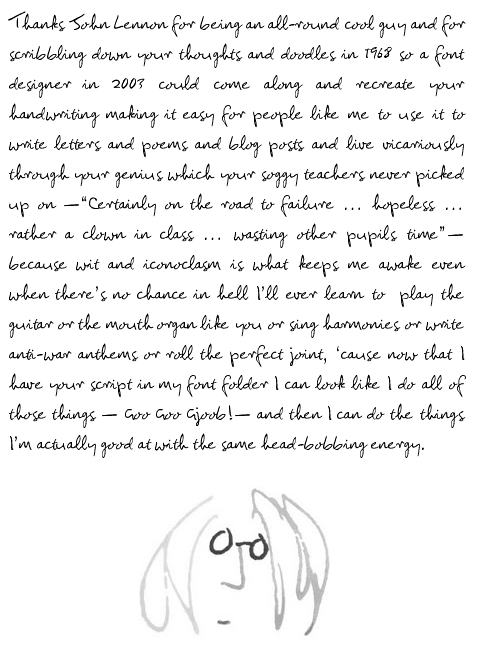
Learn more about the “Goo Goo Gjoob” font at myfonts.com.






December 7, 2010
November 24, 2010
Few things amaze me more than the range women’s lives have taken on in the last 100 years. It’s a real A to Z trajectory. When you think that only a century ago women were confined to corsets, shut out of universities and streamlined up the aisle. Now we’re police chiefs and bus drivers and engineers and film makers and bartenders and mothers, with or without a ring on our finger.
Few things amaze me more than the lack of range men’s lives have shown over the last 100 years. To quote Dorothy Parker, it’s a real A to B trajectory. Sorry guys, you know I’m rooting for you, but, let’s face it, you’ve been flat-lining it for centuries. Inertia is to the male nature what change is to the female.
While women were coming together and exploding social norms, you were remarkably consistent and insistent about what you expected and wanted out of life. And you got it, for a very long time. But now as more and more women go at it alone, you’re still hoping your dinner will appear in front of you at the appointed hour. And it does, only now it’s placed there by your server, not your wife.
Today the pressure is on because the gig is up. It’s your turn to upend your expectations. I know you can feel it. There are millions of female eyes boring into you. (It’s the only time we take charge of “the gaze”). “Well?” we blink? A sign of another first: for the first time in history women are defining the terms and conditions for entering into relationships. Paychecks will do that. Meanwhile, the demographics tilt even further towards singledom.
If women are unhappy about this, it’s because we’re tired. Life calls for a lot of heavy lifting, emotionally and physically. Doing it alone is hard. If men are unhappy about this, it’s because they want and need women far more than they want or know how to express it.
Few writers have described this moment in time in the male/female dance better than Brendan Tapley. His crunchy insights explain what it really means to “man up.”
Here’s an excerpt from his most recent article in the Dec/Jan issue of Bust, my favourite women’s magazine.
The most dispiriting thing I’ve observed about modern male/female relationships is the profound lack of faith women have in our ability to love them, lighten their loads, and be true partners. What’s worse: I understand why.
As women have become breadwinners, started families solo, and grown to expect their best connections to come from other women, modern masculinity has responded by narrowing itself. We men now more extremely and crudely embody masculinity’s negative traits as a way to distinguish ourselves as men. Macho overcompensation can be seen everywhere, including in our economy (self-interest on steroids), our politics (talk radio) and our sexuality (American men spend more on pornography every year than they do on movie tickets and the performing arts combined). As for being husbands and fathers, which should be noble callings, sitcoms have made buffoonery and cluelessness their hallmarks. Indeed, judging by the many (many) surveys in women’s magazines, today’s men come across as medieval. Which is why we should return to those times for a modern lesson.
Chivalry may no longer be a word that folks of our era, male and female, use. That it has become a loaded term, tarnished as chauvinistic and demeaning, is tragic. Not merely because women often lament the ways men no longer show them courtesy but because chivalry was never about women needing assistance from men; it was about men needing the awareness chivalry demands.
Chivalry emerged in medieval times because the period was coarse and the first knights were rapacious thugs. Originally a code meant to guide men on spiritual matters, one of which detailed how to honor women, chivalry aimed to change male behavior by inspiring fraternity around a higher calling, the central principle being service. Chivalry’s authors knew that the virtue of service plays a nifty trick on men: raised to believe our fulfillment is front and center, service tempers our egocentrism by actually fulfilling it. A man committing to a cause greater than himself elevates the cause and the man. (this is true whether you’re a Big Brother volunteer or Nelson Mandela).
So, my fellow men, I ask you: what better cause is there for us than women? While holding a door or standing up when being introduced may not make for epic poetry, as symbols these gestures are manifestations of a solicitude men are accused of no longer possessing. Because it is a system based on serving others, what chivalry would return to men is a discipline of conscientiousness.
Tapley is currently immersed in writing a book about masculinity. I can’t wait to read it!
November 8, 2010
*9:00 am: This post is dedicated to my friend, Monica Scrivener. She died on Saturday. I found out ten minutes ago on Facebook. In high school, Mon and I used to sit beside each other in art class and make smartass comments. I’m heartbroken.
When I’m dead and all physical reminders of the life I built have disappeared under the pile-up of stuff from future generations, I’ll live on, for a while, in the minds of my family, friends and ex-boyfriends. But they’ll die too and take their memories of my voice, my bent and signature scent with them. The biggest cache of information will go down with my parents and my brothers. Then where will I be?
I suppose my name will linger on for a little while longer inside my high school, on the gym walls that show I played for this team and won that award. And, of course, I’ll live on in cyberspace, endorsing a lip balm (good grief), interviewing an expert, cheering on a friend and calling out to my lost mother.
My blog will just stop. But it will never suffer the fate of print, curling at the edges or turning yellow with age. Like a fresh sheet of paper, it will be as crisp and clean as the day I launched it.
At first, people will think I’m too busy to post and my page views will drop to zero. The odd person might check back in to see if I’ve cobbled together a new entry. And if they’re really committed to this site (or me), they’ll do a Google search of my name, stumble upon my obit and go … “Oh.”
Elsewhere in cyberspace, my face and name will pop up in the “People You May Know” columns in LinkedIn and Facebook. Requests will go out, but my silence will hurt my future job and social prospects. Meanwhile, the lineup of guys in my eHarmony account will be several miles long and administrators will shut down my page for “lack of activity.” The question, “Who does she think she is?” will shoot through at least one male heart because I didn’t even try to strike up a conversation with him.
But, half a moment! I still have some more time to make hay in my personal and professional lives. So, IF I’m lucky enough to reach old lady status, here’s what I hope my legacy will be after I collapse in a heap for the last time.
She lived an unconventional life for someone with some pretty traditional values.
She was afraid of dying which made her unafraid of living.
She hated interruptions when she was in The Zone.
Loud noises irked her too.
She had the courage to say “No” to marriage until, one day, she had the courage to say “Yes.”
But, even then, she still lived through herself.
She let her hair show its first lashings of grey and opened to the idea of becoming a Silver Belle
Keeping in mind, Nature always prevailed.
At 80, she was at her most liberal (and, no, it wasn’t too late)
She spent the money she saved on dye jobs and bought books, presents, fresh flowers, and paid her property taxes.
She found plenty of ways to mother young people without ever seeing her feet disappear behind her belly.
She cried when her friends described their losses and left behind Kleenex balls for them to pick up.
She lived a highly engaged life and negotiated the “me time” it took to achieve that with mixed results.
She negotiated her “us time” with equally mixed results.
She was a sponge for love, and she’ll miss you.
A lot.
This post is part of a blog series on BrazenCareerist.com being sponsored by Entrustet. Ryan Paugh sent out emails to Brazen members asking us to answer the question, What do you want your legacy to be?
October 27, 2010
Art depicts all we fear, all we love and all that we are. But this wasn’t always true.
Back when I was an art history major, and sitting through hundreds of slide presentations, I came to the conclusion that European painting and sculpture only really came alive, emotionally speaking, after the Church stopped being the primary patron of the arts.
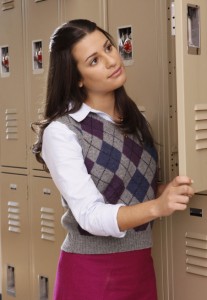
This is Lea Michele playing me in the 1980s
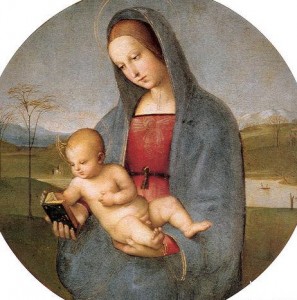
“Good,” I thought, as we moved from the Medieval and Renaissance periods into the Dutch Golden Age, “We’re finally done with the ‘Madonners.’” That’s what my friends and I called that endless stream of portraits showing Mary of the Tilted Head and Jesus of the Never Poops or Squawks (look down: there they are). She smiles beatifically as he points with his wee index finger to a Biblical passage we best review. Incidentally, we rolled our eyes that the only women deemed worthy of painting in those days were all virgins: virgin mothers, virgin queens … Outside of class, my friend, Kelly, invented a silly walk — knees bolted together — that made light of all this.
Obviously we understood that in earlier centuries devotional objects acted as social cues to the illiterate masses. The same was true of those writhing figures in the “Last Judgment” reliefs placed strategically above the exits of so many Catholic churches. They served as a final reminder to parishioners to go home with their own wives, not their neighbour’s. But religious art felt abstract and lifeless, somehow. That’s because part of the job of religion is to heavily edit human nature.
When patronage and publishing were opened up to the merchant classes in the seventeenth century (or thereabouts) this was, in my opinion, an even bigger deal than the Renaissance rediscovery of three dimensions, when, physically speaking, we sprung to life on walls and canvases across Europe. (Trompe l’oeil on palace ceilings blows me away every time I see it. “That’s flat? No way!” I saw a lot of it in Austria this summer. But I digress… )
When clerics lost control over the definition of the meaning of life (because the rest of us could finally afford to write and paint and process our experiences), human nature, in all its beauty and lavish weirdness, got its first public airing. The Church couldn’t and wouldn’t explore this territory; it’s job was to direct human actions, not explore and explain them.
Take the Ten Commandments, the Bible’s Top 10 list of worsts in human nature. It’s a “Don’t List,” not a run down of all the whys and hows we cheat, murder, dishonour our relatives, swear like sailors and shop on Sundays. We need artists to examine our methods and motivations. Sometimes they do it better than modern-day psychologists.
[pullquote]The Ten Commandments are the Bible’s Top 10 list of worsts in human nature.[/pullquote]
Leave it to Rembrandt, for example, to describe mortality; Neruda and Rodin to capture love; J.D. Salinger to get us talking about suicide and Alice Sebold to touch rape. And while we’re at it, hats off to Harper Lee for getting us talking and thinking hard about bigotry and to Elvis for opening up society to the rhythms of sex, a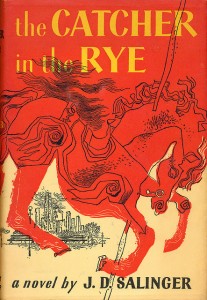 nd Chaucer for covering it all! (see below) In almost every one of these cases, the Church pushed back against the truths being unearthed (Burn that book! Get him off the television!).
Is it any wonder, then, that the church would become the very last bastion of unexamined truths in our society? For decades the Catholic Church harbored secrets of widespread sexual abuse — sadly, an entrenched part of human nature — which have only truly come to light in the last two years. As an institution, it will be forever changed by this.
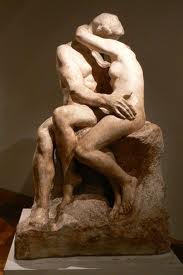
"The Kiss," (1889) by Auguste Rodin
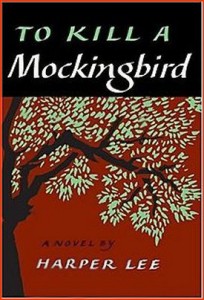 It’s taken us centuries to unpack all of our truths. In 2010, I’d say we’re almost fully unpacked now that sex, inequality, bigotry, suicide, incest and homosexuality are all on the table. I can’t think of any taboo we haven’t smoked out of its hole and examined up close through art, books, music, movies, TV and the Internet? Can you?
[pullquote]”The God I believe in would not be the God of the priests.” — Coco Chanel[/pullquote]
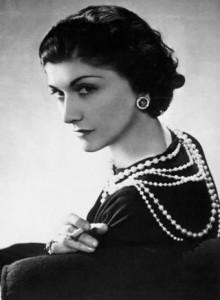
Writer Paul Morand called Coco Chanel "the exterminating angel of 19th century style."
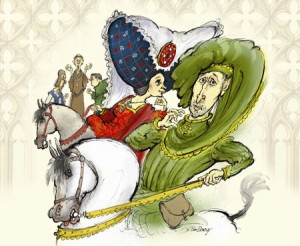
Chaucer's Canterbury Tales is bawdy and naturalistic, a seething mass of human nature told in riding rhymes. It was written during the Great Schism when the Catholic Church was distracted by its own corruption.
October 21, 2010
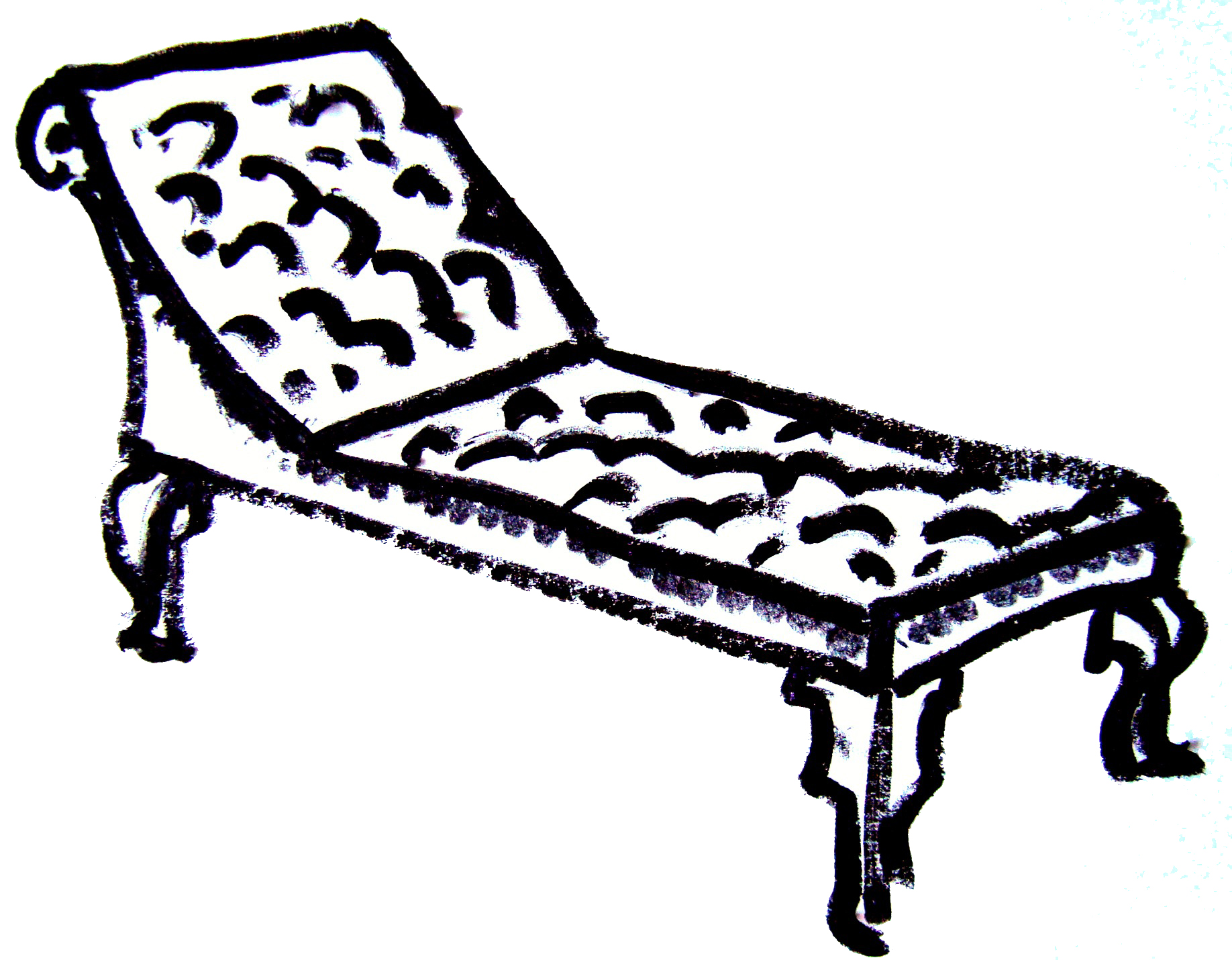 As a field, economics doesn’t need an XY graph to support it, it needs a couch.
When times are flush, most of us are drawn to the double-page analytics spreads in investor reports. They’re designed to boil down and reinforce our belief in the science behind it all — you know, the rainbow pie charts, the vectors rising to points ever higher and bluer, and the reassuring Chiclet smiles of those “I know what I’m doing, I travelled to the gold mine myself” mutual fund managers in the photographs. Often their looks owe more to science than their knowledge of the next best thing.
We’re living in denial if we think the direction of our money or the future of our jobs are built on some sort of precise and predictable application of facts and principles (which is essentially how we define science). 2008. Need I say more?
Human nature — that highly unpredictable constant in all our lives — plays a far more significant role in our economic fates than any of us care to admit. Or so says David Segal in his article, “The X Factor of Economics” in last Sunday’s New York Times. It’s also a theme I explored in this blog post and this one.
What prevents economics from yielding answers the way that physics, chemistry and biology do, muses Segal, is that it will forever have to contend with the biggest X factor of all: people. Economists, he says, are prone to argue amongst themselves — a lot. He quotes George Bernard Shaw who once said, “If all economists were laid end to end they would not reach a conclusion.”
[pullquote]If all economists were laid end to end they would not reach a conclusion.[/pullquote]
Economics, then, isn’t science, it’s psychological guesswork: “You feed people poison, and they will die [that’s a scientific fact]. But feed them a subsidy and there is no telling what will happen,” writes Segal. “Some will use it wisely, others perversely and some a mix of both.”
Emotion changes people’s behavior and that’s outside the standard model of economics, Dan Ariely, an economics prof at Duke, tells Segal. What’s more, he says, pride is not in the model. Revenge is not in the model. Nor is depression. “The model doesn’t account for how devastating [getting fired or laid off ] can be and what that sense of devastation will mean for the economy,” continues Areily.
So if the American economy isn’t rebounding as fast as Obama had hoped, and if job numbers are down not up, maybe it’s not because people are looking and not finding work. Maybe it’s because they haven’t even pulled themselves up off the couch to try, they’re that depressed.
Art Corner: If you’ve never drawn with an eyeliner or a lipstick bullet, I highly recommend it. I drew the featured chaise longue with M.A.C’s Greasepaint Stick, a black gel liner. My idea of playing with makeup doesn’t always involve putting it on.
October 18, 2010
I draw in this space — a lot. I do it because it’s fun. I like the way technology unexpectedly resurrected an abandoned interest of mine.
Drawing is also a way of uncorking my imagination. Ideas fall like coins from a winning slot machine when my finger skates across my iPhone, or when I peel back the string on my black grease pencil (it’s actually a lithographer’s pencil co-opted by butchers). All of the drawings on my homepage were done with that pencil.
Mid-sketch, I almost always end up grabbing a piece of scrap paper and writing down something completely unrelated to what I’m doing. Maybe I should keep a pile of cocktail napkins on hand as backup to my drawing app (Sketches is my favourite. I’ve tried them all and simple is better). I should mention: most of these ideas end up being duds, but that’s not the point.
Ever since my Crayola Caddy days I’ve associated drawing with play. Writing … well, it’s occasionally fun but more often than not it feels like pushing boulders (uphill). Not drawing. If I screw up, I just shake my phone and start again, pulling red around in circles, adding spidery black accents, smiling, humming, cranking up my music, throwing my creation over to iPhoto for a trim or a colour spike, then sharing.
Clive Thompson writes about visual thinking in his latest column for Wired magazine. He argues that some problems defy words and call for visual problem solving. This is because when the answer isn’t clear (or when you don’t even know what the question is) the last thing you want to do is to try jamming a bunch of disparate thoughts into a linear narrative structure. But a lot of people don’t draw because they think it’s childish (God, we’re an anal bunch). And when we write we feel too much pressure to be eloquent. When in doubt, doodle. When we draw — during class, at the conference table or on the phone — a casual scribble here and a smart-ass scrawl there can lead to patterns and maybe a few arrows linking ideas.
What emerges could be the next road map for the future.
October 4, 2010
September 27, 2010
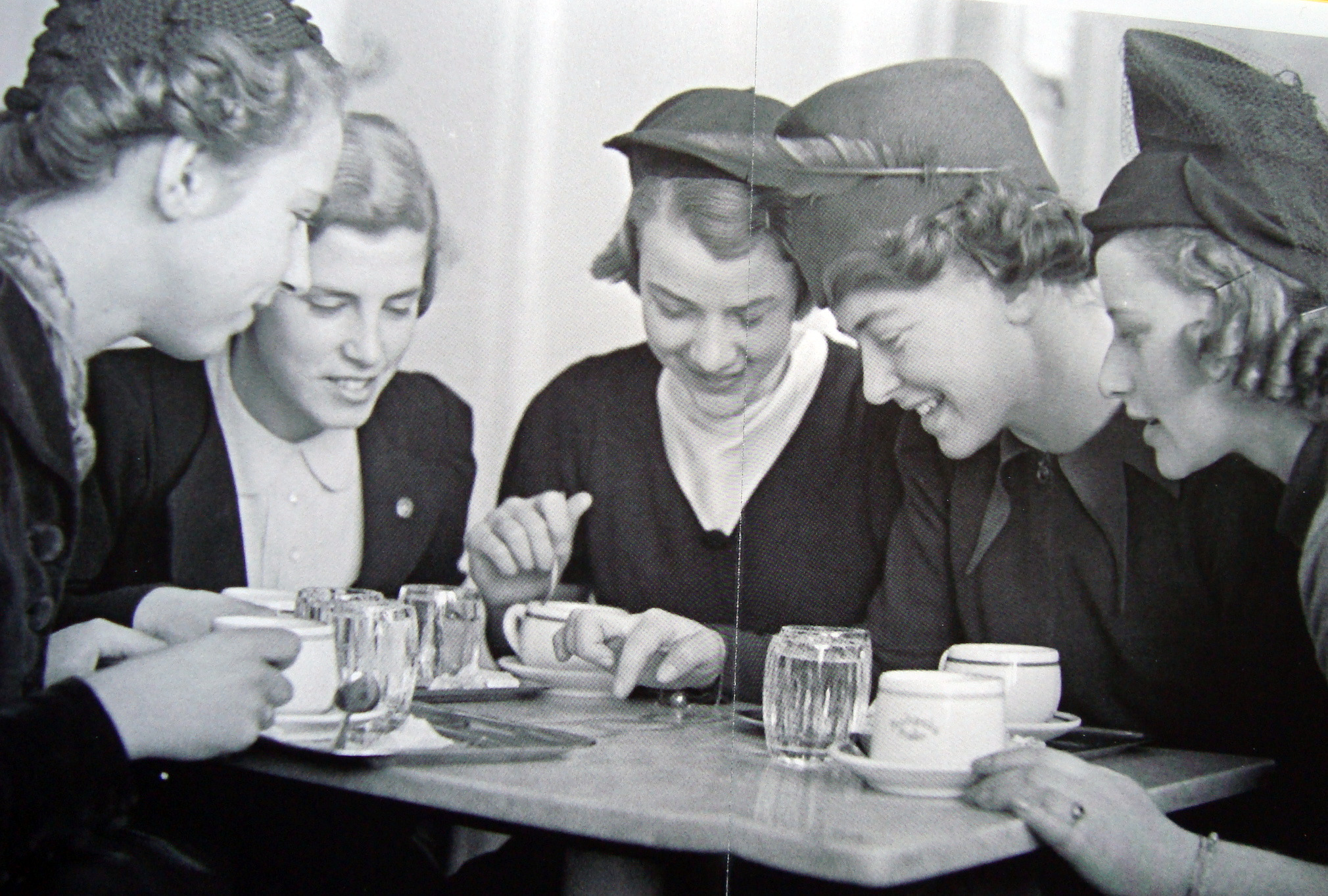
The coffee culture in Toronto just got a whole lot richer. Vienna, Paris and Istanbul, take notice. Last week, a new house called Full of Beans opened in Little Portugal. To this latte-loving laptop lugger (yes, there’s free WiFi), this was like the arrival of a new indy bookstore. So hop on your bike or jump on the 505 streetcar going west and get off at 1348 Dundas St. (647-347-4161).
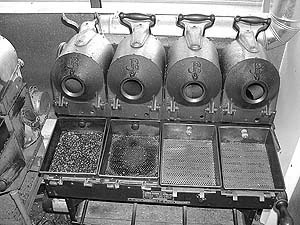
The first thing you’ll notice, apart from the beaming smile of Lori, the owner and my friend, is her artisan Jabez Burns roaster set up in the window (it looks like the one pictured above). Lori sourced her roaster online a few years ago when having her own coffee house was just a dream.
Lori prepares the beans every morning, pulling in early risers and joggers with the aroma (the scent lured me in this morning). Ask her and she’ll demonstrate how it works, firing up the gas flames and pouring the beans into the rotating drums. Because the roaster was manufactured during the last century in a plant, long gone, at the corner of 43rd and Eleventh Ave. in New York City, there are no timers to say when the beans are done (imagine, Edith Wharton and O. Henry got their coffee this way!) But Lori’s nose knows when the beans are roasted to perfection. “Coffee is my passion,” she says, pointing to a range of single varietals and blends on sale. She pours the beans out of sleek, glass canisters set up along the house’s exposed brick walls. Take a bag of beans home and they’ll still be warm by the time you pour them into your grinder, or…
better yet, stay for a cup or two paired with …
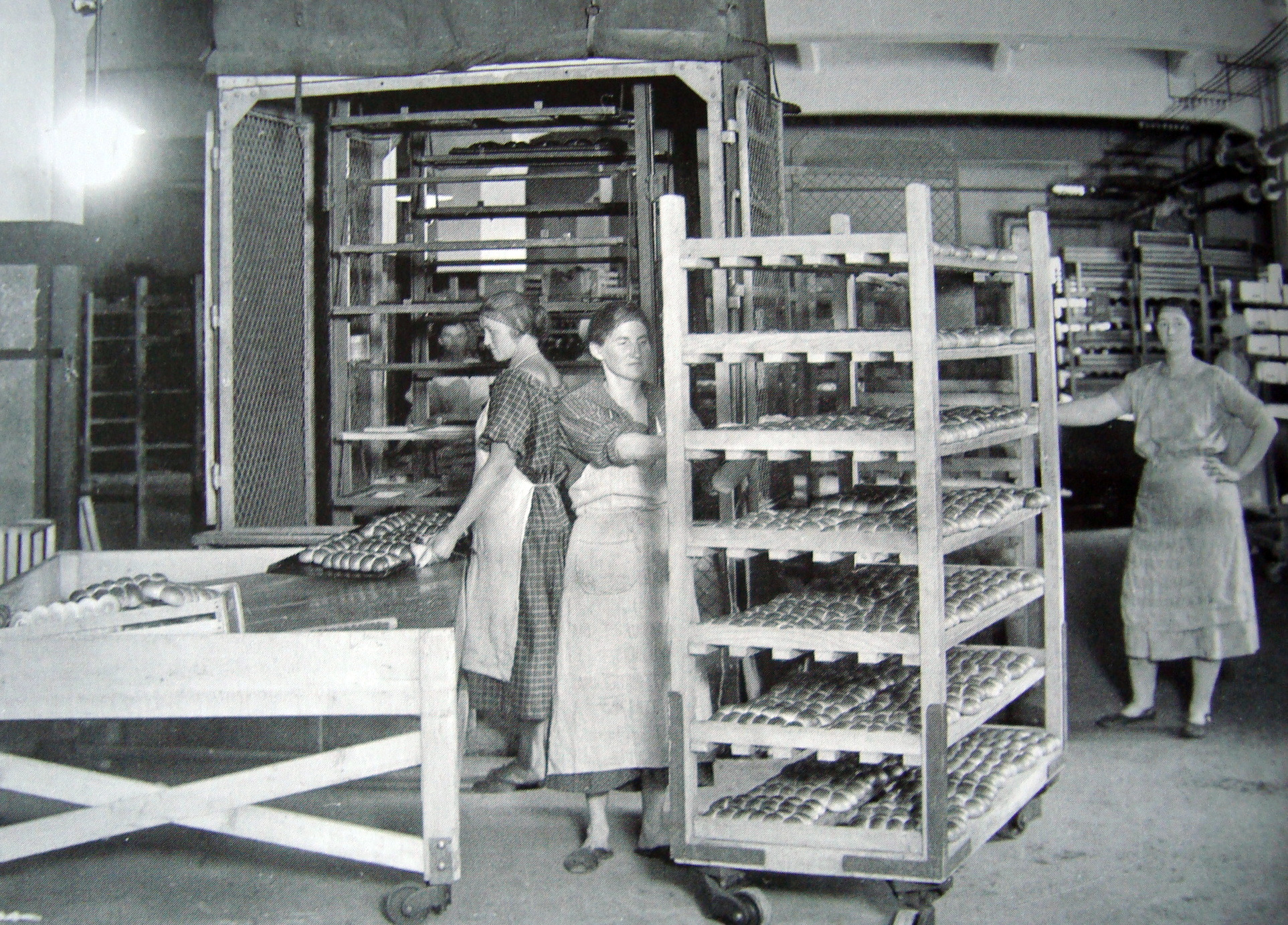
… a delectable baked treat made daily by Lori’s mother-in-law.
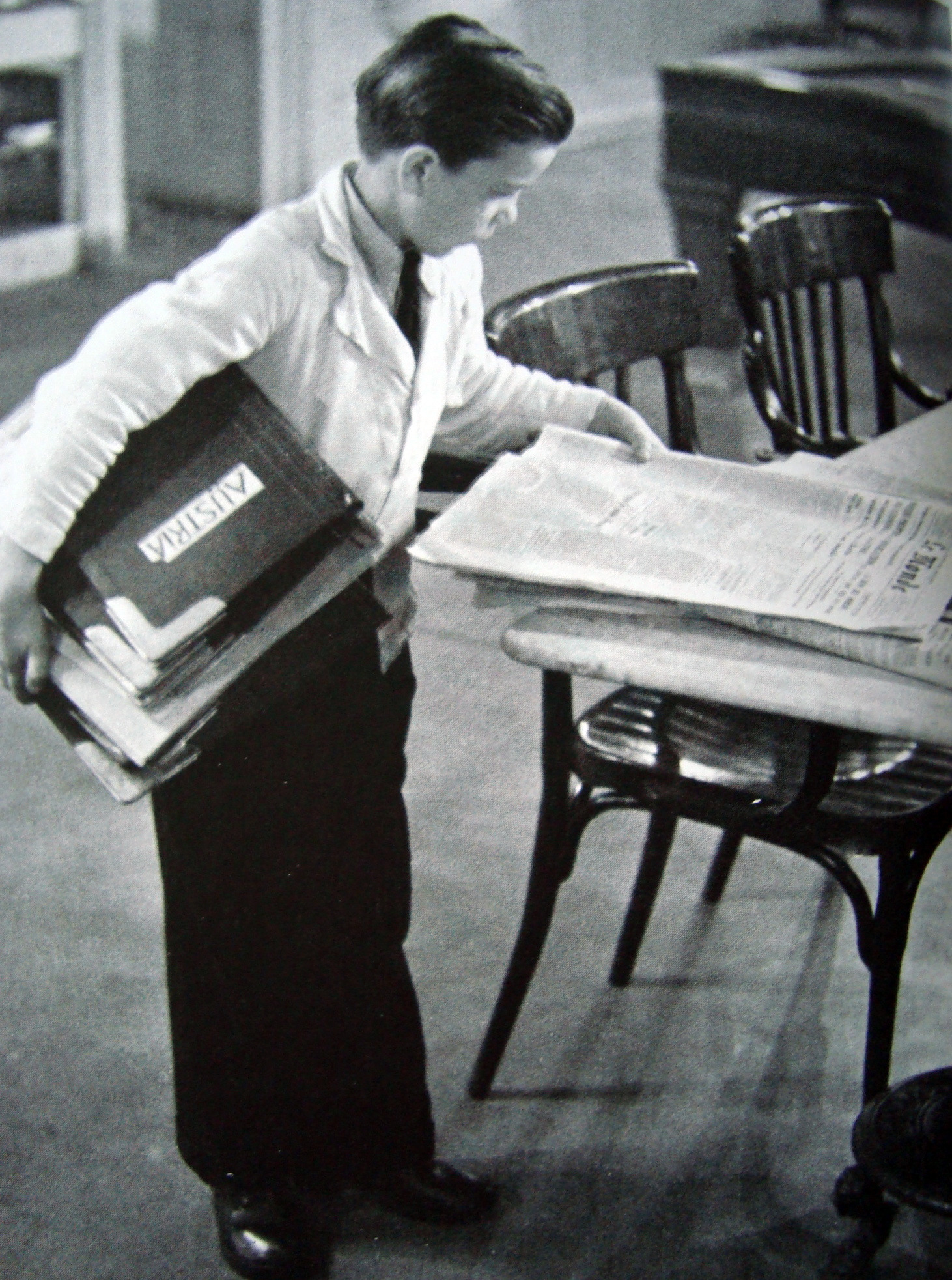 Bring your paper or grab a book from the house’s packed bookshelves (I spotted a first edition of Barney’s Version and a good selection of travel and art books). Lori encourages book swaps.
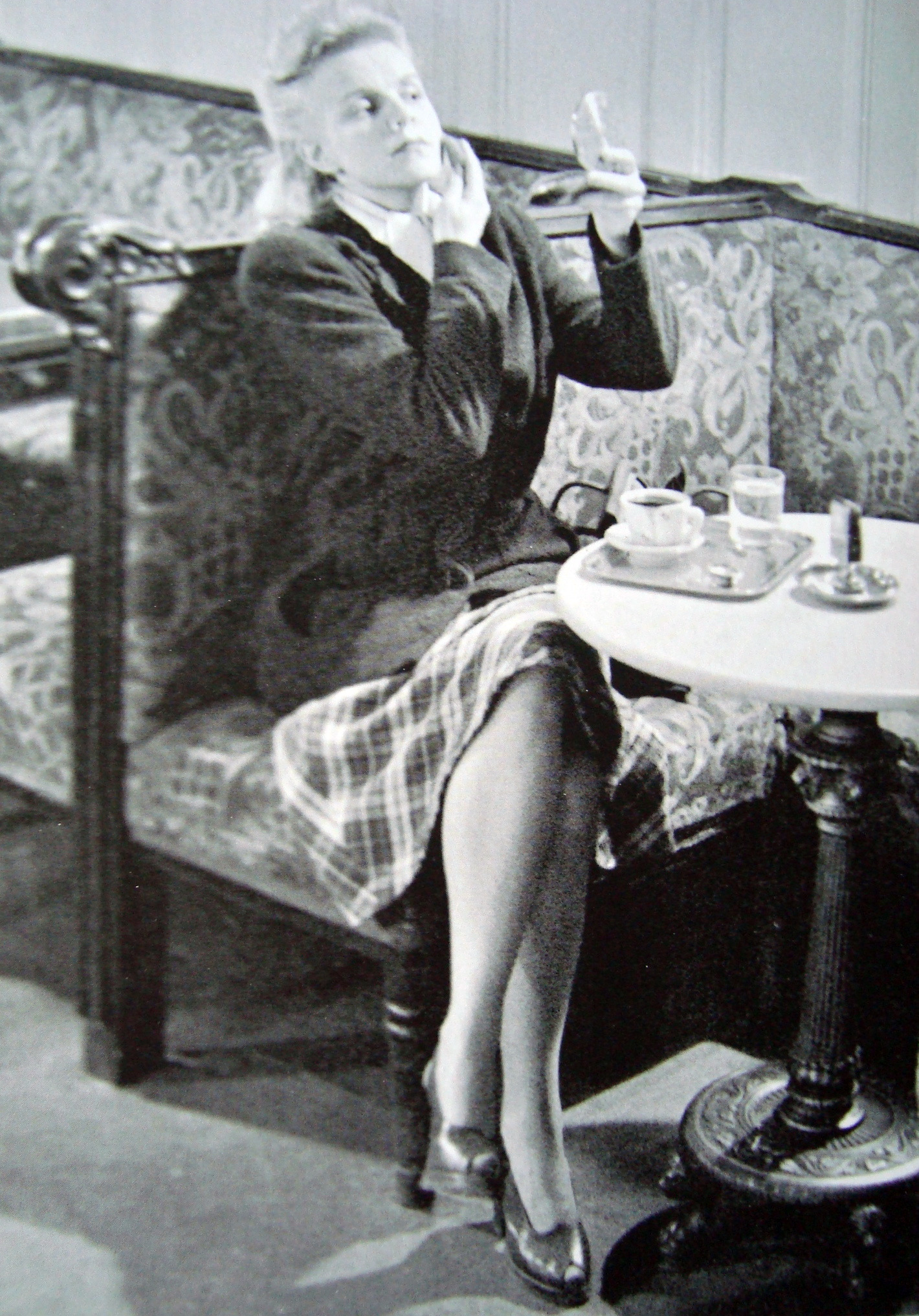
Or just go to sip and to get noticed.
And be sure to check out blogTO‘s review of Full of Beans.