




October 4, 2010

September 27, 2010

The coffee culture in Toronto just got a whole lot richer. Vienna, Paris and Istanbul, take notice. Last week, a new house called Full of Beans opened in Little Portugal. To this latte-loving laptop lugger (yes, there’s free WiFi), this was like the arrival of a new indy bookstore. So hop on your bike or jump on the 505 streetcar going west and get off at 1348 Dundas St. (647-347-4161).

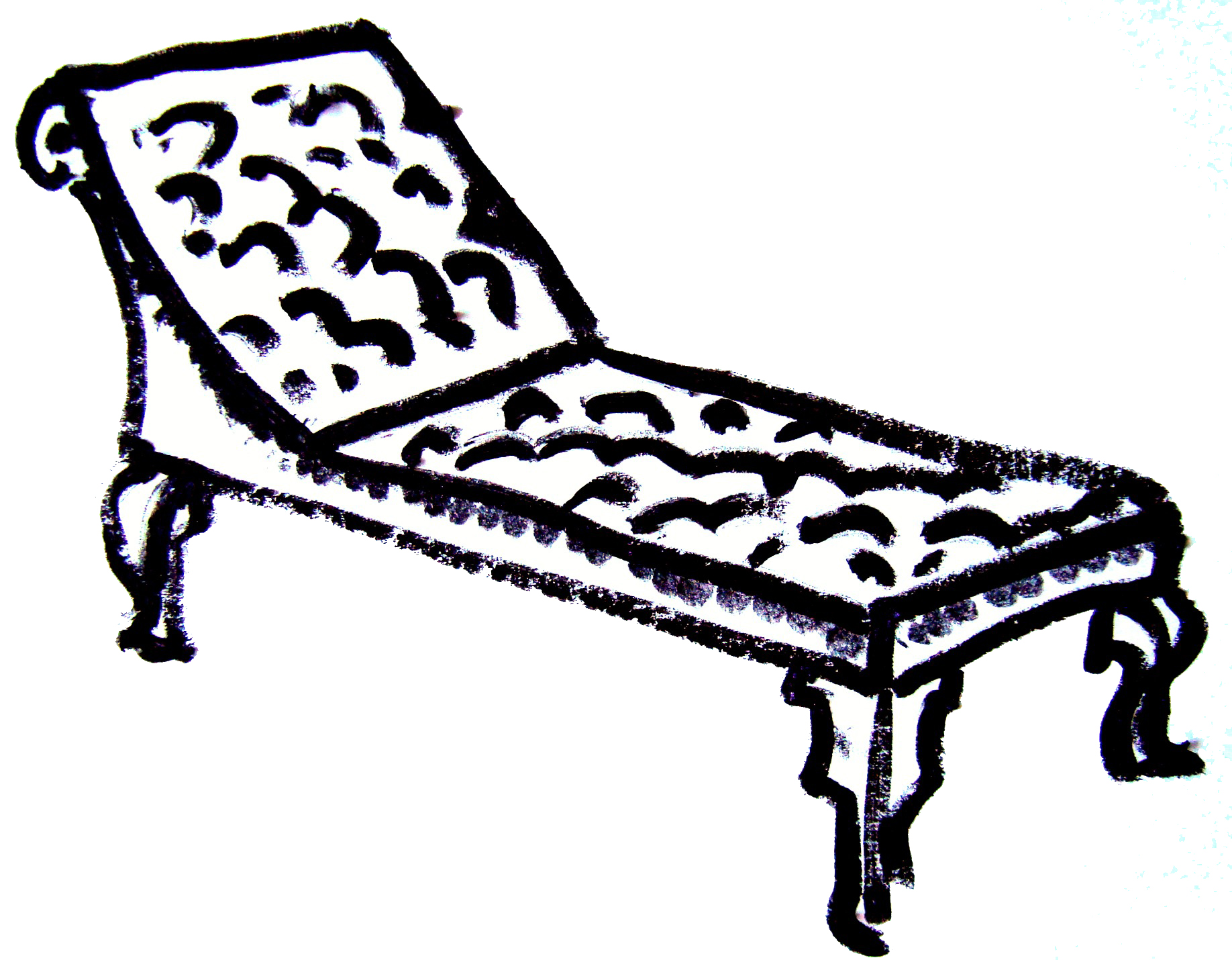
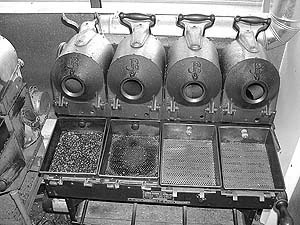
The first thing you’ll notice, apart from the beaming smile of Lori, the owner and my friend, is her artisan Jabez Burns roaster set up in the window (it looks like the one pictured above). Lori sourced her roaster online a few years ago when having her own coffee house was just a dream.
Lori prepares the beans every morning, pulling in early risers and joggers with the aroma (the scent lured me in this morning). Ask her and she’ll demonstrate how it works, firing up the gas flames and pouring the beans into the rotating drums. Because the roaster was manufactured during the last century in a plant, long gone, at the corner of 43rd and Eleventh Ave. in New York City, there are no timers to say when the beans are done (imagine, Edith Wharton and O. Henry got their coffee this way!) But Lori’s nose knows when the beans are roasted to perfection. “Coffee is my passion,” she says, pointing to a range of single varietals and blends on sale. She pours the beans out of sleek, glass canisters set up along the house’s exposed brick walls. Take a bag of beans home and they’ll still be warm by the time you pour them into your grinder, or…
better yet, stay for a cup or two paired with …

… a delectable baked treat made daily by Lori’s mother-in-law.
Bring your paper or grab a book from the house’s packed bookshelves (I spotted a first edition of Barney’s Version and a good selection of travel and art books). Lori encourages book swaps.
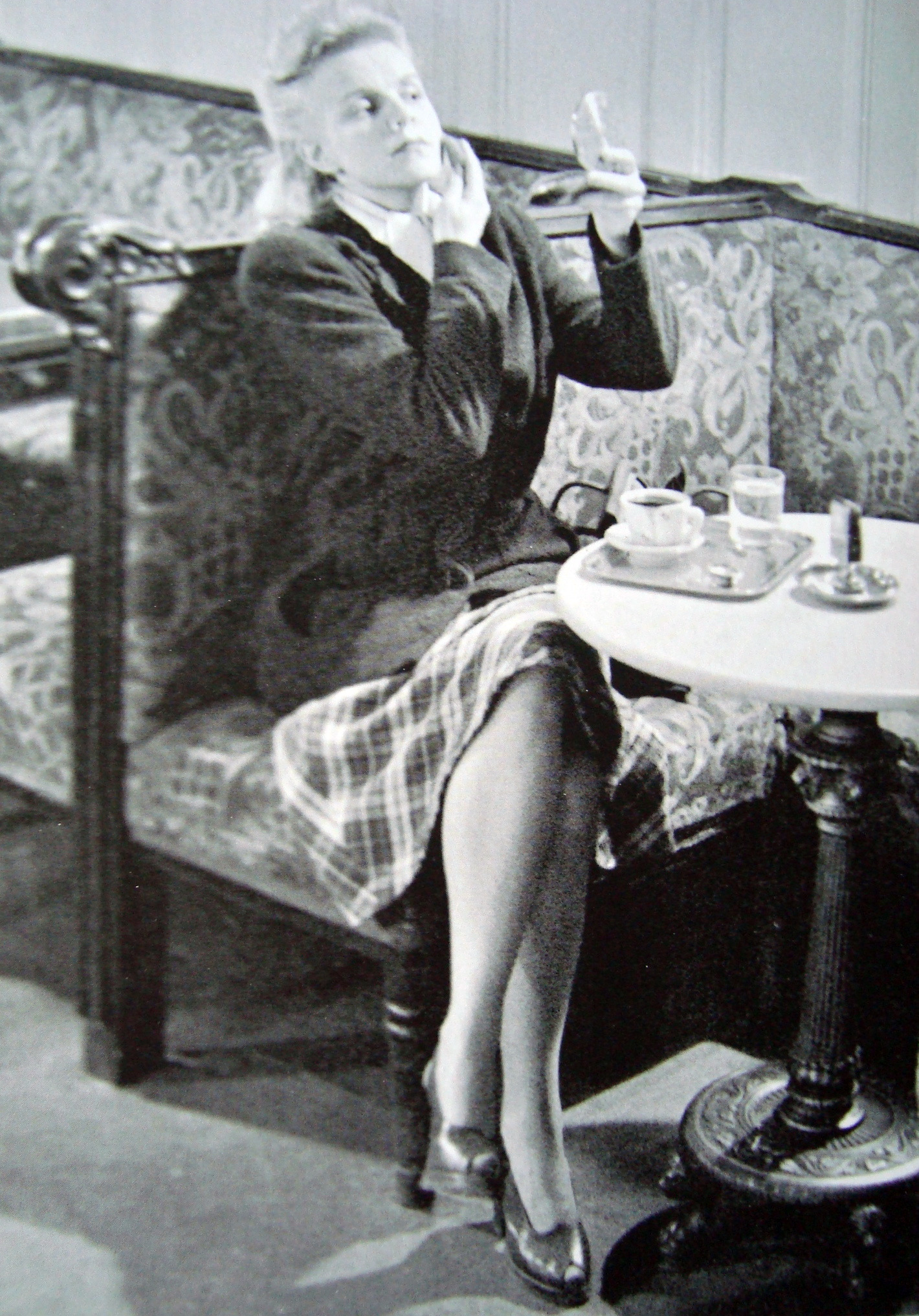


Or just go to sip and to get noticed.
And be sure to check out blogTO‘s review of Full of Beans.
September 21, 2010
September 20, 2010
I contributed some profiles to Fashion Television’s 25th anniversary magazine.
If you’d like to read them, click here.
September 14, 2010
Here are just a few of the writers who amaze me.
Gay Talese
“New York is a city of things unnoticed. It is a city with cats sleeping under parked cars, two stone armadillos crawling up St. Patrick’s Cathedral, and thousands of ants creeping on top of the Empire State Building. The ants probably were carried up there by wind or birds, but nobody is sure; nobody in New York knows any more about the ants than they do about the panhandler who takes taxis to the Bowery, or the dapper man who picks trash out of Sixth Avenue trash cans; or the medium in the West Seventies who claims, ‘I’m clairvoyant, clairaudient, and clairsensuous.’ New York is a city for eccentrics and a center for odd bits of information. New Yorkers blink twenty-eight times a minute, but forty when tense. Most popcorn chewers at Yankee Stadium stop chewing momentarily just before the pitch. Gum chewers at Macy’s escalators stop chewing momentarily just before they get off — to concentrate on the last step. Coins, paper clips, ballpoint pens, and little girls’ pocketbooks are found by workmen when they clean the sea lions’ pool at the Bronx Zoo.”
Rachel Carson
“The edge of the sea is a strange and beautiful place. All through the long history of Earth it has been an area of unrest where waves have broken heavily against the land, where the tides have pressed forward over the continents, receded, and then returned. For no two successive days is the shore line precisely the same. Not only do the tides advance and retreat in their eternal rhythms, but the level of the sea itself is never at rest. It rises or falls as the glaciers melt or grow, as the floor of the deep ocean basins shifts under its increasing load of sediments, or as the earth’s crust along the continental margins warps up or down in adjustment to strain and tension. Today a little more land may belong to the sea, tomorrow a little less. Always the edge of the sea remains an elusive and indefinable boundary.”
Russell Baker
“At the age of eighty my mother had her last bad fall, and after that her mind wandered free through time. Some days she went to weddings and funerals that had take place half a century earlier. On others she presided over family dinners cooked on Sunday afternoons for children who were now grey with age. Through all this she lay in bed but moved across time, traveling among the dead decades with speed and ease beyond the gift of physical science.
“Where’s Russell?” She asked one day when I came to visit the nursing home.
“I’m Russell,” I said.
She gazed at this improbably overgrown figure out of an inconceivable future and promptly dismissed it.”
Nuala O’Faolain
“When I was in my early thirties and entering a bad period in my life, I was living in London on my own, working as a television producer for the BBC. The man who had absorbed me for ten years, and whom I had once been going to marry, had finally left. I came home one day to the flat in Islington and there was a note on the table saying Back Tuesday. I knew he wouldn’t come back, and he didn’t. I didn’t really want him to. We were exhausted. But still, I didn’t know what to do. I used to sit in my chair every night and read and drink a lot of cheap wine. I’d say ‘Hello’ to the fridge when its motor turned itself on. One New Year’s Eve I wished the announcer on Radio Three “A Happy New Year to you, too.’ I was very depressed. I asked a doctor to send me to a psychiatrist. … I only went once. [But] he said something that lifted a corner of the fog of consciousness. ‘You are going to great trouble,’ he said, ‘and flying in the face of the facts of your life, to recreate your mother’s life.’ Once he said this, I could see it was true. Mammy sat in a chair in a flat in Dublin and read and drank. Before she sat in the chair she was in bed. She might venture shakily down to the pub. Then she would totter home and sit in her chair. Then she went to bed. … She had the money [my father] gave her (never enough to slake her anxieties). She had nothing to do, and there was nothing she wanted to do, except drink and read.
And there I was — half her age, not dependent on anyone, not tired or trapped, with an interesting, well-paid job, with freedom and health and occasional good looks. Yet I was loyally re-creating her wasteland around myself. … Nothing matters except passion, she indicated. It was what had mattered to her, and she had more or less sustained a myth of passionate happiness for the first ten years of her marriage. She didn’t value any other kind of relationship. She wasn’t interested in friendship. If she had thoughts or ideas, she never mentioned them. She was more like a shy animal on the outskirts of human settlement than a person within it. She read all the time, not to feed reflection but as part of her utter determination to avoid reflection.”
(Excerpts have been edited for length)
September 13, 2010
With my “head full of brains and my shoes full of feet,” good God I’ve travelled to some great places.
A hat tip and a deep bow to my employers, my friends and, above all, my family. Because of you, meus mirus prosapia, I’ve …
Crossed the same meadows as Yeats
Looked out the same windows as Marie Antoinette
Moved along the same asphalt as Terry Fox
Tripped on the same cobblestones as Mozart
Motored around the same monuments as Chanel
Been struck by the same beam of light as a Vermeer model
Picked the same flowers as Van Gogh
Turned the same doorknob as Dr. Johnson
Gripped the same banister as Franklin Roosevelt
Slid across the same marble floor as Michelangelo
Been slammed by the same surf as Greg Brady
Climbed the same mountain as Paul Cézanne
Drunk wine in the same cellar as Napoleon
And nursed a pint in the same pub as Frank McCourt
And it doesn’t end there
I’ve also dined in the same steakhouse as Al Capone
Studied in the same library as Hillary Rodham
Warmed my hands at the same hearth as Frank Lloyd Wright
Pushed open the same screen door as Lyndon Johnson
Driven around the same rally grounds as Hitler
Marched down the same aisle as Lady Diana
Dabbed on the same fragrance as Oscar Wilde (the original Eau de Cologne)
Gone to concerts in the same halls as Strauss and Caruso
Booked into the same hotel as Charles Dickens
Lived in the same neighbourhood as Obama
Dashed down the same side streets as Victor Hugo
Crunched along the same pebbled paths as Rudyard Kipling
Stood on the same muddy field as George Washington
Stretched out on the same plain as General Wolfe
Stared into the same mirror as Anne Frank
And placed a flower on the same grave as Jacqueline Kennedy
Still to come: India, China, Japan, Africa and Australia.
Oh! The places I’ll go — I hope, I hope!
September 7, 2010
If beer is a food group in Germany (and Ireland and England and Canada), it’s sipped in Holland like a rationed commodity. The Dutch like to serve their suds in small champagne flutes, which doesn’t exactly inspire glug fests. Instead, they binge on Pringles. Maybe they like the uniform design of the chip? (the way it snaps in two against the roof of your mouth) Maybe it’s the can? I dunno. Regardless, the sound of hissing and popping containers is as common as the groan of tour boats reversing mid-canal.
Because beer isn’t top of the food chain, the Dutch aren’t big bar hoppers. Instead, they socialize in “coffee shops” where the hookah pipes are on full bubble and the joints move around the circle three, four five times (alcohol is prohibited in these so-called “coffee” shops.) For a coffee sans herbs, go to a café.
On sunny summer afternoons twenty somethings give the coffee shops a rest and gather on the canals. Friends text each other to meet up on someone’s boat (most Amsterdammers own a boat and a car). They arrange the Pringles on plates and set down wine bottles or Heineken six packs in the centre of the boat, throw down some pillows and cruise the canals for hours, talking, laughing and turning their faces to the sun. It rains quite a bit here, so sunny days are coveted like gold. Silky blondes turn even blonder on these days.
You can’t see the Pringles pile-up in the photo above. I should have taken the picture looking down from a bridge. But I wasn’t thinking fast enough and they sailed past. Same with the next Pringle party that went by. My timing was so off yesterday.
If Amsterdammers aren’t carrying Pringles cans, they’re munching on chips from paper cones.
Coming from Toronto, which is as anti-bike as it gets, I had to laugh at the extent to which Amsterdammers embrace their wheels. This parking garage houses 2500 bikes and is packed to the gills every day.
The streets are rammed with bikes too. Here cars and pedestrians yield to the soft ring of oncoming bikes. No one seems to crash into, door, yell at or sue bikers.
I also noticed that the Dutch like to indulge in kookier colours than Canadians.
Straight men even slip into styles like these.
I’ve decided the Dutch either look like museum directors, with their funky clothes and interesting eye wear, or like direct descendants of Rembrandt. It’s the wild hairstyles, puzzling expressions and dirty fingernails. Maybe all those herbal lunches have made them apathetic about their grooming? Many of them, especially the men, look as earthy as the merchants hanging on the walls of the Rijksmuseum.
And now, to the Red Light District. What I want to know is who actually shops there? Not the locals, or so they say. Is it backpacking geeks or sk8er boys keen to jump-start their sex lives? C-list drug dealers? Priests? Husbands of wives in their eighth month? (That’s cynical, I know. But it happens). And this may be Holland, but blond milkmaids aren’t for sale in Amsterdam, as far as I can tell. At least they weren’t the night I roamed the district. The prostitutes looked mostly Eastern European … and bored. They didn’t use their windows to sell themselves like I’m told working girls did back in the sixties when Jane Fonda, Sophia Loren and the art of the striptease were their inspiration. Today the girls sit in their windows and smoke with their feet up. Some slap on body lotion (Vaseline Intensive Care) — artlessly — or sip from Starbucks cups. Others drum their acrylic nails on the window when men pass, staring periodically at their wrist watches. That’s the extent of their efforts. There are no come hither curls of the index finger. No garter belts inching down the leg. Just florescent string bikinis criss-crossing under muffin tops and around scrupulously waxed skin. When I walked past the windows, I could feel my expressions alternating between a cocked eyebrow and a, “Hey, how ya doin’?” smile. They smiled back. I felt like a Labrador trapped in a zoo of snakes and tigers.
September 6, 2010
“In spite of everything I still believe that people are really good at heart. I simply can’t build up my hopes on a foundation consisting of confusion, misery and death.” ~ Anne Frank
For the bells Anne heard every day she was in hiding, click on Bells 1 (recorded with my iPhone). You’re listening to the tolling from Westerkerk, a Protestant church on the sun-dappled Prinsengracht Canal in Amsterdam. The Frank family’s Secret Annex was two doors down from this 17th century church.
September 5, 2010
The history of Europe unfolds like a novel along the rivers. The landmarks along German and Austrian highways aren’t so breathtaking. McDonalds and The Home Depot share the same architects whether you’re in Toronto, Bonn or Salzburg. Also, you don’t have to leave home to see a Mercedes zoom past.
So avoid the roads, if you can, and hop on a boat to experience Central Europe. For over 1000 years, that’s how royalty, the military and merchants carrying fabrics, salt, wine and wheat crossed the continent.
It’s where you’ll see the best castles and fortifications and the prettiest churches, most of them untouched by Allied air raids.
Churches were the skyscrapers of the Middle Ages and spectacular signposts for captains. Most of the bell towers have clocks with gold hands set against a blue background sprinkled with gold suns, stars and moons — all of them visible from the water and from any winding back alley in town.
There are also smatterings of cottages along the river, houses that look like they were plucked from train sets and pressed into the embankments. They’re all wooden or white stucco with decorative window shutters and geranium boxes overflowing with flowers. Bricks are a rarity here. Some of these homes and their vegetable gardens have been passed down through the generations since the 1600s. And because industry on the rivers is restricted, their view across the river of terraced vineyards, waving cornfields and thick forest is also centuries old. Wind and church bells are the only sounds for miles.
Getting down the rivers has not always been so easy. Along some fifty-mile stretches of the Danube, between Vienna and Passau, boats rise up and down in about a dozen locks. But two centuries ago when Emperor Franz Joseph and his bride Sisi, rulers of the Austro-Hungarian Empire, sailed the river (which is tea brown, not blue), there were no locks. You squeezed your rosary beads through the drops and the rapids. It’s one of the reasons why captains hired entire crews that couldn’t swim. That way, the sailors wouldn’t abandon ship at the critical moments. So imagine, then, a fleet of royal barges going down the Danube carrying stacks of china, trunks of clothes laced with gold threads and a floating stable with 200 whinnying horses, all because the Empress couldn’t decide what to wear or which horse to ride at her destination! Horses can swim, but dishes can’t so the bottom of the Danube is littered with bits and pieces of the past.
Sailing against the current without a motor was tough too. Crews tied long ropes to teams of horses on either side of the river and they pulled the ship upstream. Today, those horse paths are used by runners. And in Austria and Germany, there are a lot of disciplined fitness buffs, descendants of those alpine skiers and hikers popularized in silk-screened travel posters of the 1930s.
September 2, 2010
A Mozart concert in Vienna followed a few days later by a tour of the Nazi Party rally grounds in Nuremberg, including an inspection of the raised dais where Hitler stood (see the shots below). Too many swinging emotions for my heart and body to process. I went and caught a wretched cold. God help me later this week when I climb the stairs to Anne Frank’s Secret Annex in Amsterdam. KLM will have to load me on the aircraft on a stretcher for the trip back to Toronto.


Today, Nurembergers use the centre thoroughfare (pictured above) as a roller blading path. I’m not sure what to make of that.