 Children’s choirs are yet another reason to celebrate this thing we call life.
Here’s the Hamilton Children’s Choir singing Din Don Merrily.






December 27, 2010
Children’s choirs are yet another reason to celebrate this thing we call life.
Here’s the Hamilton Children’s Choir singing Din Don Merrily.
December 25, 2010
December 23, 2010

Knitting was the last thing my mother knew how to do. I miss her — especially at this time of year.
December 18, 2010
“Human nature is the great constant. How we think and feel in the East and the West, in the 16th century or the 21st, it doesn’t change.”
Salman Rushdie
December 16, 2010
I got quite a few emails about this post when I first published it last August. Some people said it made them feel hopeful — even brave. For better or for worse, this time of year makes us take stock of our lives.
I hope these portraits provide you with some extra courage to take into 2011.

The ability to focus and commit to something through thick and thin is a quality I admire. Writer and comedian Craig Ferguson describes his route to success, saying, “I kept failing until I didn’t.”
But the ability to court failure after experiencing success fascinates me even more. Here are a few examples of established successes who pushed themselves in unexpected directions and put experimentation ahead of standing ovations. For many, confidence didn’t pull them through, feeling lost did. It fueled them to find a new focus in life.
Nicole de Vesian: At 69 she spiraled into a deep depression after the death of her husband. Her friends were scared for her. After a stellar career as a designer at Hermés, de Vesian lost her passion for living and loving, and abandoned the projects piled up on her desk. She left Paris and retreated to Provence, finding solace in the sunlight and flowers of this mythical corner of France.  De Vesian never went back. She changed her focus from luxury textiles to designing gardens and made communing with nature her new life and career. She collected and hauled rocks like some women collect gems, and spent the autumn of her life feeling more alive than she ever had.
Pablo Picasso: He copied the drawings of Leonardo and Raphael with astonishing skill. Everyone cooed he had the makings of a successful society portrait artist. But Picasso struggled. How could he keep exploring naturalism when the world around him looked so ripped and torn to shreds? It was 1914 and Picasso was living in Paris and was too physically weak to join the army. 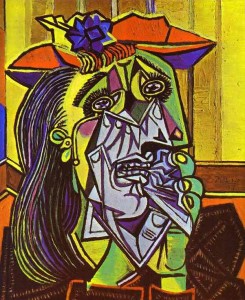 For a man who prided himself on his machismo and physicality, it was an embarrassing blow. Feeling isolated from his family and friends, overwhelmed by the war and bitter and angry over the declining health of a girlfriend, Picasso poured every ruthless emotion he had onto his canvases, turning his fractured sense of self into a new style: cubism.
Shaquille O’Neal: At 38, basketball great Shaquille O’Neal is preparing to duck under the TD Garden exit sign for good.  From what I’ve heard, he has no plans to open a sports-themed restaurant with a 7-foot wax replica of himself at the host stand and signed photos of his game-winning layups over the banquettes. Nor does he plan to become a real estate agent, coach, GM, sports announcer or Shopping Channel pitchman. Nuh uh. “I want to do something bigger,” he told The New York Times Magazine,” last weekend. By the time this MBA (yes, an NBA-er with an MBA) says goodbye, he plans to have defended his Ph.D. thesis from Barry University in Miami, Florida. “My topic is ‘How Leaders Utilize Humor or Aggression in Leadership Styles.'” O’Neal is determined to turn what, for most athletes, is the most depressing time of their life into a period of huge possibilities. Oh, and after he leaves the court, it’s no more “Shaq.” “I’m done with the nicknames,” says Professor O’Neal. Class dismissed.
 Michael Kinsley: He quit CNN for what? They’re calling it, “the Information Superhighway.” This was back in 1996, and after 10 years co-hosting CNN’s Crossfire, Kinsley left behind the studio lights and pancake makeup to become the editor in chief of Slate, a journal that couldn’t be bought on the newsstand or bound in volumes at the library; it was only available online. Now why would a Harvard grad, a Rhodes Scholar and a former editor at The Washington Post and The Economist willingly post himself in “Siberia” (that’s what the Worldwide Web was called back then)? Kinsley did it because he trusted his instincts about the internet’s potential, because he knew talent will travel, and because he has the guts to try new things.
 Renée Fleming: She’s opera royalty. Last summer, however, Fleming released “Dark Hope,” her first “rock” album. It’s a collection of covers, from Peter Gabriel to Mars Volta. “[I thought it would be] an interesting adventure,” she told the LA Times.
  “At this stage of my career, I’m facing a kind of maintenance program. I’ve been on this plateau, where there’s no place to go, other than to stretch myself artistically. And this seemed to fit.” Decide for yourself if you like her sound. Either way, you have to admire her courage to sing outside her comfort zone.
December 13, 2010
This is an update about Full of Beans, my favourite coffee shop on Dundas St. West. I wrote about FoB back in September when it first opened (here’s the post).

Image by Dennis Marciniak, courtesy of BlogTo.com
As of last week, Lori Nytko, FoB’s delightful owner and operator, has collected enough furniture from antique stores and hotel sales to unveil the back half of the store, a secret space previously hidden behind a wall of bookshelves.
Now you can put down your groceries and Christmas packages and sit in a plush arm chair …

Image courtesy of Lori Nytko
… or perch on a wrought iron café chair while you sip through the steam of one of her many speciality coffees. And, unlike the library, you can eat pastries and read the books. Just remember when you’re finished to stand the book upright and tap three times until you see a pile of crumbs on the table. Blow them away for good luck!

Image courtesy of Lori Nytko
This shot was taken before the rest of the furniture arrived. It gives you a good idea of the warmth and charm of the space.
Lift your head (Take that, SmartPhones!) and look around. Smell the coffee, peruse the books on FoB’s shelves, read the newspaper from front to back, or just enjoy the person sitting across the table from you.
December 12, 2010
It’s Sunday and we all want to read lovely things on this day of rest, so here you go:
By Lillian Ross
The two greatest American writers of my time are Ernest Hemingway and JD Salinger. Both have crossed from the 20th century into the 21st with their originality, substance and staying power intact. As a reporter and a friend – privileged to dabble in their area – it has been thrilling for me to watch, at first hand, the unique genius in both writers revealed more and more sharply over the years.
Both writers had a sense of humour all their own – surprising, inimitable, in conversation, in letters, as well as in their work. Salinger could keep me on the phone for hours, laughing into exhaustion, covering everything and everybody around us. He loved to read and he loved to write. Hemingway would say he loved the writing part, “but not what came afterwards”. What came afterwards for him was years of inexplicable censure for his having the courage and genius to give us lasting reading pleasure and enlightenment.
I have never understood the “afterwards” part, regarding both Hemingway and Salinger. We have seen dismaying efforts to bring Salinger down, too. Salinger loved the people he created and was protective of them until the day he died. He gave us Holden Caulfield. He gave us the Glass family. So why would some “literary” critics take such a censorious tone about Salinger’s personal life?
He was a delight to know, as a friend and a colleague since 1950, just before the publication of The Catcher in the Rye. He figured out his personal life, winding up with a nearly 30-year-long marriage, children, and grandchildren. He lived quietly in New Hampshire, enjoyed church suppers, never bothered anybody, and wanted to be left alone with his work. He was the smartest writer I had ever met and the most generous.
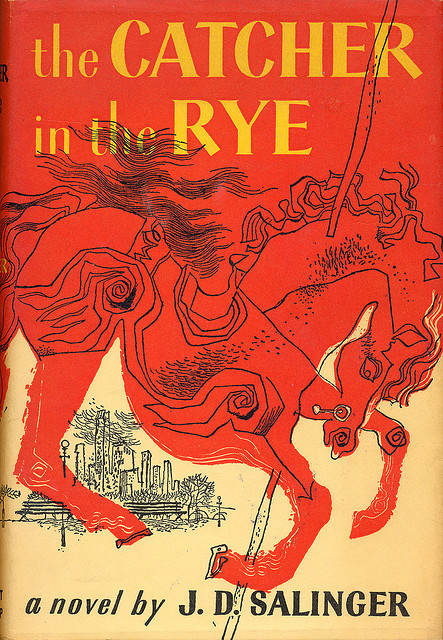
He shared with me a copy of the “Dear Jerry” letter Hemingway wrote to him when they were both serving in the second world war – a handwritten letter commenting on unpublished stories Salinger, who was then an unknown young beginner, sent him. “First you have a marvellous ear and you write tenderly and lovingly without getting wet,” Hemingway wrote. He added that he hoped he “didn’t sound like an easy praiser” and “how happy it makes me to read the stories and what a god damned fine writer I think you are”.
In 1966, Salinger told me he had come across “the rotten Muggeridge article on Hemingway in the current Esquire” and said “I feel I’d like to do something about the Muggeridge piece in particular and all the Hemingway ghouls in general, and I’m pretty sure you would, too…” Four years before that, Salinger told me that the critic Leslie Fiedler “had a go at Hemingway in the last Partisan Review”. He added: “What Fiedler needs more than anything else is to be wormed every six months or so. He’s a wretch, and he’ll never be happy till he thinks he’s proved himself better and more talented than the people he criticises.”
To me Salinger was always helpful. He told me early on, referring to my writing: “You’re yourself whether you’re writing fiction or fact. It’s very moving. I mean more than that, but that’s my first thought.” I’ve never had a better comment. When Salinger first met my son Erik, who was then a few months old, he sent me a letter, starting out:
Notes on your son.
1) Is an incomparably fine and lovable person.
2) Has beautiful eyes.
3) Sleeps in a very good position.
4) Has courtly manners.
5) Is a very very sweet little boy.
He was always giving you something with love, and it outlasted his lifetime. He shared with me his huge range of interests, all the way from wonderful stories and sayings by the 6BC philosopher Lao Tse, to detailed instructions about selecting, cooking, and refrigerating bean sprouts.
So why would people, especially the self-appointed authorities on literature, always want him to be someone other than himself? It didn’t take long, after the historic acclaim for The Catcher in the Rye and his stories, for a lot of negative psychoprattle about his creations to surface – along with unwelcome intrusions into his private life. He was being chided for loving the characters he had created too well, and readers were chided for loving them, too. Today, millions of readers all over the world continue to experience the joy of discovering and being charmed by his characters. They know, as Hemingway said, that JD Salinger wrote “tenderly and lovingly”, and was “a god damned fine writer”.
From The Observer, Sunday, December 12, 2010 (thanks to David Hayes for pointing this out)
December 7, 2010