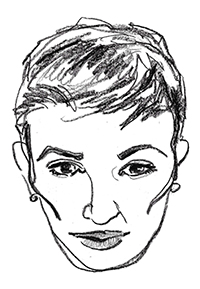
On some mornings, I get up thinking about Twyla Tharp (left), the American choreographer. And I’m not even a dancer, I’m a writer. I don’t know Twyla, but I do know that she moves like Fred Astaire (leading, not following) and once directed a line of classical ballerinas to sing en pointe. Years of studying the novels, poems, high kicks, howls and — louder still — the silence of generations of women before her inspired moves like that.
Lately, though, Twyla’s been crossing the globe picking up honorary doctorates (19 at last count). I don’t care about her trophies, to be honest. And I’m guessing that beneath all the thank yous, neither does she. The only thing an artist cares about is getting back their routine.
Apart from the artistry and sheer grace, I think a fierce commitment to routine and an unwavering allegiance to ideals are what draw so many writers to dancers. Wendy Wasserstein, the late playwright and Grand Dame of balletophiles, took the greatest pleasure in being a patron of the New York City Ballet. “While they danced, I sat in the audience and stored their fat,” she joked.
So I think about Twyla as I’m tying my running shoes in the early morning and heading out the door for the footpaths of High Park because I know, at that very moment, she’s climbing into the back of a New York taxi cab and telling the driver, “Take me to the Pumping Iron gym at 91st and First.” She believes the ritual of the cab is what counts the most, not the stretching and weight training she puts her body through once she’s at the gym. It’s all about the triumph of first steps over apathy, pain and fear.
In fact, Twyla has attached a quasi-religious significance to first steps. The repetition of beginnings is the only way to get the creative ball rolling, whether you’re staring at a blank page, an empty studio or a musical instrument waiting to be held. Performance anxiety comes when you think too much and move too little.
Those of us, then, who admire Twyla “the artist,” not Twyla “The Legend,” know that her trophies are really just icing on a life of stunning sameness.
The front hallway of the house I grew up in was a grotto of potted plants and hanging baskets placed in and amongst a collection of modern art made from highly polished cast steel.
A floating staircase linking the hallway to a second level cut through the middle of this exhibition of vines and metal in pure seventies fashion (think of Mike Brady* and Tarzan colliding in Chicago‘s Millennium Park). It always drew gasps from house guests as they handed us their coats, in the same way I’m sure the foyer in Toronto’s Metro Reference Library inspired nods of approval when it first opened in 1977. We laugh now, but everything about the seventies was earthy and overgrown.
One plant in our foyer had been steadily dropping its tendrils for 10 years at a rate of about a foot a year. Its planter was suspended from a macrame hanger made from a kit which featured a rope long enough to hook into the ceiling 25 feet above. Mum watered it every week. Leaning over the floating stairs in her quilted house coat, she’d give the planter a good soak and watch the liquid disappear into the soft earth. The plant dripped for about an hour after. Usually on us. It was part of mum’s morning routine, along with putting on the kettle, opening the curtains and watching the sun rise.
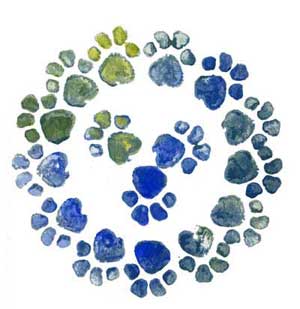
The tiles in the front hallway under that plant were oven-baked and dark brown. They matched everything else in the house except for the dog who used it as her horizontal canvas. That floor was forever in bloom with flower-print paw marks, especially in the spring. “Sit, Penny, sit!” You needed more than a damp sponge to wipe up the marks; water just seemed to spread the mud, leaving behind a milky film. I know because it was my job to keep the front hall tidy.
We put down two large rugs and frowned the dog into sitting on them until her feet dried. But something always lifted her rump and got her damp feet dancing and tail wagging. Every one of Penny’s moves was recorded on the floor. She didn’t care. And, come to think of it, neither did we.
* Apologies to my dad for the Mike Brady crack. You’re a much better architect than he ever was, Pops!
Hey all you cool kids! When it comes to apps, Caveat Emptor.
Technology’s war on boundaries continues with “Social Sleeping.” Here’s another case of, just-because-you-can-doesn’t-mean-you-should.
The iHome + Sleep app lets you “post updates to your social networks in the morning and at bedtime, and even wake to a summary of what your friends did while you were sleeping.” And, get this, you can also “check the weather, track your sleep habits, and sleep and wake to your iPod tunes,” and it’s FREE!
“One-third of your life just got a lot more fun,” say the creators.
OK, this is a slippery slope.Tell this dealer to go on his way. Get out the shotgun if you have to. You don’t want what’s in his pocket.
Writer Judith Warner observes, quite rightly, that our inability (and disinterest) in controlling ourselves is the defining social feature of our time. “Something is amiss in our inner mechanisms of restraint,” she tells The New York Times, because we’re losing the ability to self-regulate our appetite, emotions, impulses and cupidity. I like that word. It means “an eager desire to possess something.”
We’re hooked on bursts of pleasure, and this, saysPeter Whybrow, director of the Semel Institute for Neuroscience and Human Behavior at UCLA, has disturbed “the ancient mechanisms that sustain our physical and mental balance.”
So keep “social sleeping” to spooning, not fretting from a horizontal position about updating your Twitter account or following posts from that awesomely epic barhop down College St. you missed because you were tired.
Sleep is not for wimps, so keep social media out of the bedroom, and “Just Say No!”
Image: iPhone Handbook (Spring/Summer 2010, p. 21)
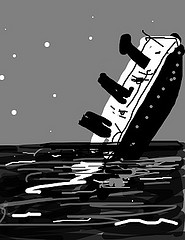
It’s really hard watching one generation replace another, especially when the older one is filled with heroes (I’m thinking of how technology is forcing the early retirement of some perfectly good minds). It’s like witnessing a grand ship sink … all the way down to the bubbles on the surface.
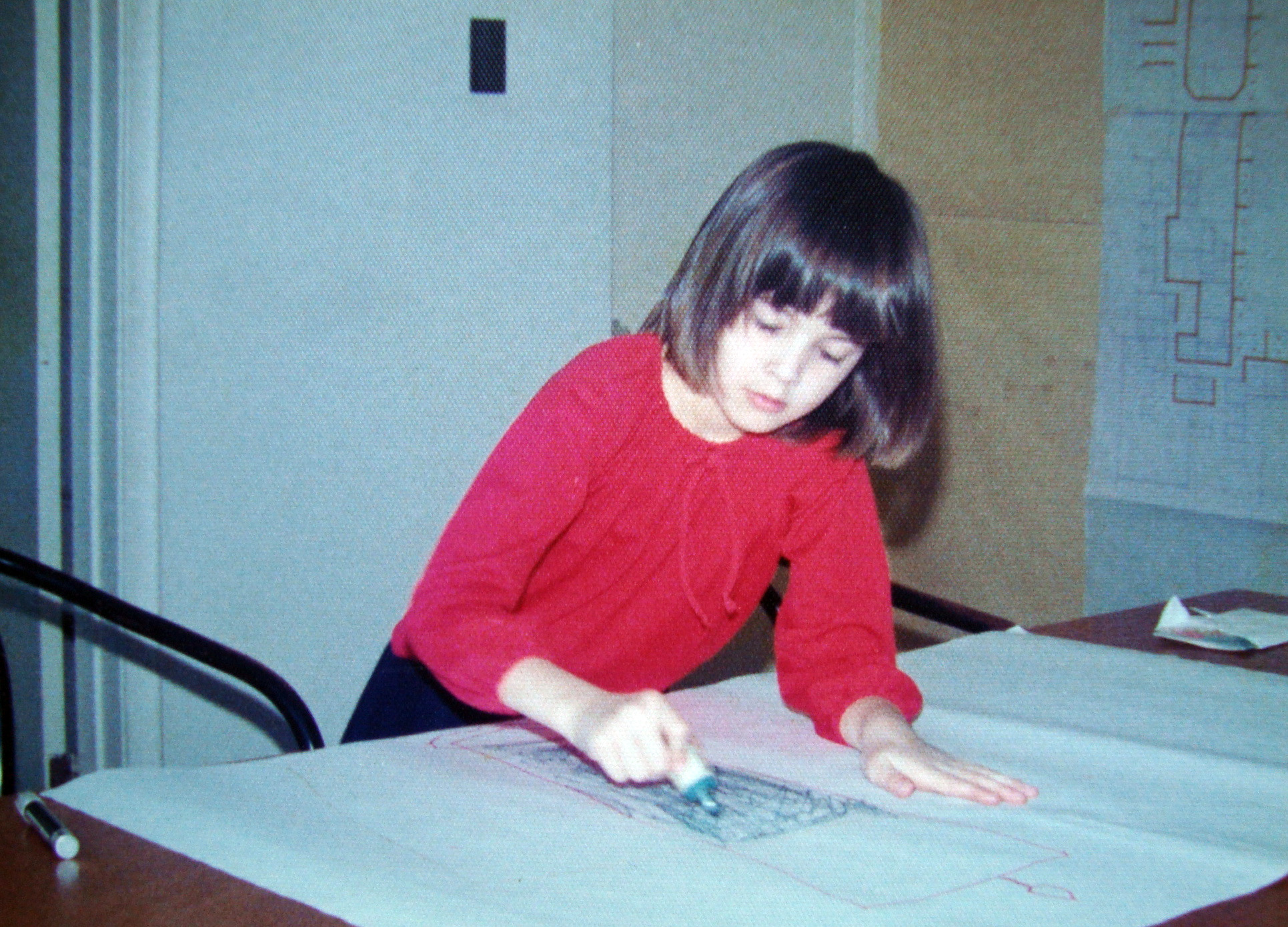
That’s me, age 6, in my dad’s office squeaking up a storm with some markers on the backside of a blueprint (he’s an architect). Look how shiny my hair is.
Of the hundreds of photos I have of myself — goofing around with friends, smiling for the school photographer or posing in front of a fountain in an Italian piazza — this one, snapped by my dad, stands out because it captures the essence of who I am, and have always been.
All the things I was instinctively drawn to as a girl — paper, pens, quiet work spaces and imaginary flights — have travelled with me through four decades of living. My blueprint now may be tilted up and backlit (read: my laptop), but I’m still applying myself with the same joyful intensity. That consistency is reassuring to me.
Look at what you were doing when you were a kid. Nothing changes when you grow up except that you get clouded vision from thinking about what you SHOULD do — to be rich, or successful, or to please your parents or peers … the possibilities are endless. I think that you can figure out who you are and what you should be doing by telling yourself the stories of your childhood.
[pullquote]The things you look back on most fondly speak volumes about where you belong now.[/pullquote]
What were you up to when you were six? Were you taking apart computers? Cutting up dresses? Running around brushing everyone’s hair? Now what are you doing? Are you being consistent?
Slip this charmer into your tote bag this summer. College co-eds, Lee and Jacqueline Bouvier, write and sketch their way across Europe in pursuit of the “Lah De Dah” set in One Special Summer. This slender volume shows that travel can still be a glamorous affair (it was 1951, afterall).
Read it and you’ll realize that Jacqueline really was following her heart when she became a book editor 25 years later. All of her expressive talents aligned in publishing.
*Okay, so “Society Pages” does follow the rich and famous every now and then, despite what my bio says up top. But this is The Hamptons of yore, not Kelly Ripa or Lindsay Lohan.
Before the sun sets on today, do at least one playful thing. Laughing out loud definitely counts.
If you’ve already laughed, do it again. You’ve got seven more hours to find something funny.
The progress of the world depends on it.
Really.
From an evolutionary standpoint, humans are supposed to be pretty playful creatures compared to, say, raccoons or ladybugs. The smarter the animal, the more it plays, scientists insist. The New York Times wrote about this last fall.
Play-deprived adults are often rigid, humorless, inflexible and closed to trying new options. Playfulness enhances the capacity to innovate, adapt and master changing circumstances. It is not just an escape. It can help us integrate and reconcile difficult or contradictory circumstances. And, often, it can show us a way out of our problems.
The rumours on Twitter were true. Global wooed and won her as the new co-host (with Leslie Roberts) of the network’s 6 o’clock News Hour.
Speaking of getting fired from City, Mroczkowski told the Toronto Star‘s Rob Salem, “There were a couple of tough days. Suddenly, after years in the business to be told that your experience, your work ethic, your passion and dedication are no longer valued … I was understandably upset.” As she said, “I just figured, ‘That part of [my] life is over. Time to look forward.'”
[pullquote]I just figured, ‘That part of [my] life is over. Time to look forward.'”[/pullquote]
Kudos to Global for recognizing her worth. Their website bio on the anchor also deserves tons of praise (words in bold are mine):
For more than 30 years, award-winning news anchor Anne Mroczkowski has brought local television audiences stories that have moved, shaken and stirred their hearts, minds and lives. Anne has been at the forefront reporting on major events – from the fall of the Berlin Wall to the global recession, from SARS to 9/11 plus, heartwarming stories including liver recipient, baby Lindsay Eberhardt as well as her ground-breaking documentary on infertility. Her ability to relate and connect with her viewers has made her a household name across the GTA.
If I’m nice to be around, I’m sure it’s because I get more rest than most folks.
I have enormous respect for sleep. I consciously avoid certain behaviors that will trip it up or mess with its mystery. I don’t, for example, blow cigarette smoke at it or push it away with too much alcohol and processed items claiming to be food. I’m abiding and gentle with it and we rendezvous at pretty much the same time every night. It rewards me for my consistency.
Looking around, though, I can tell I’m not on trend. Since the go-go eighties more people have been adopting a results-oriented approach to sleep. That same intense, winning drive they rely on during work, exercise and sex is is being applied to this state of natural suspension.
As a journalist who covers social trends, I feel the pressure to conform all the time. Editors — one of the most sleep-deprived groups on the planet — only have so many ways to tell a story and boiling down sleep, flatter abs and bigger orgasms into lists and blinking cover lines that claim you can achieve it all in ten easy steps attracts eyes and improves SEO, but …it completely misses the bigger picture. I wince at these kind of assignments and I try to avoid them. But if you Google me, you’ll see I don’t have a perfect track record.
When I feel discouraged by the direction society is taking (or I’m taking), that’s when I pick up the phone and talk to an expert. Call it blogging as free therapy.
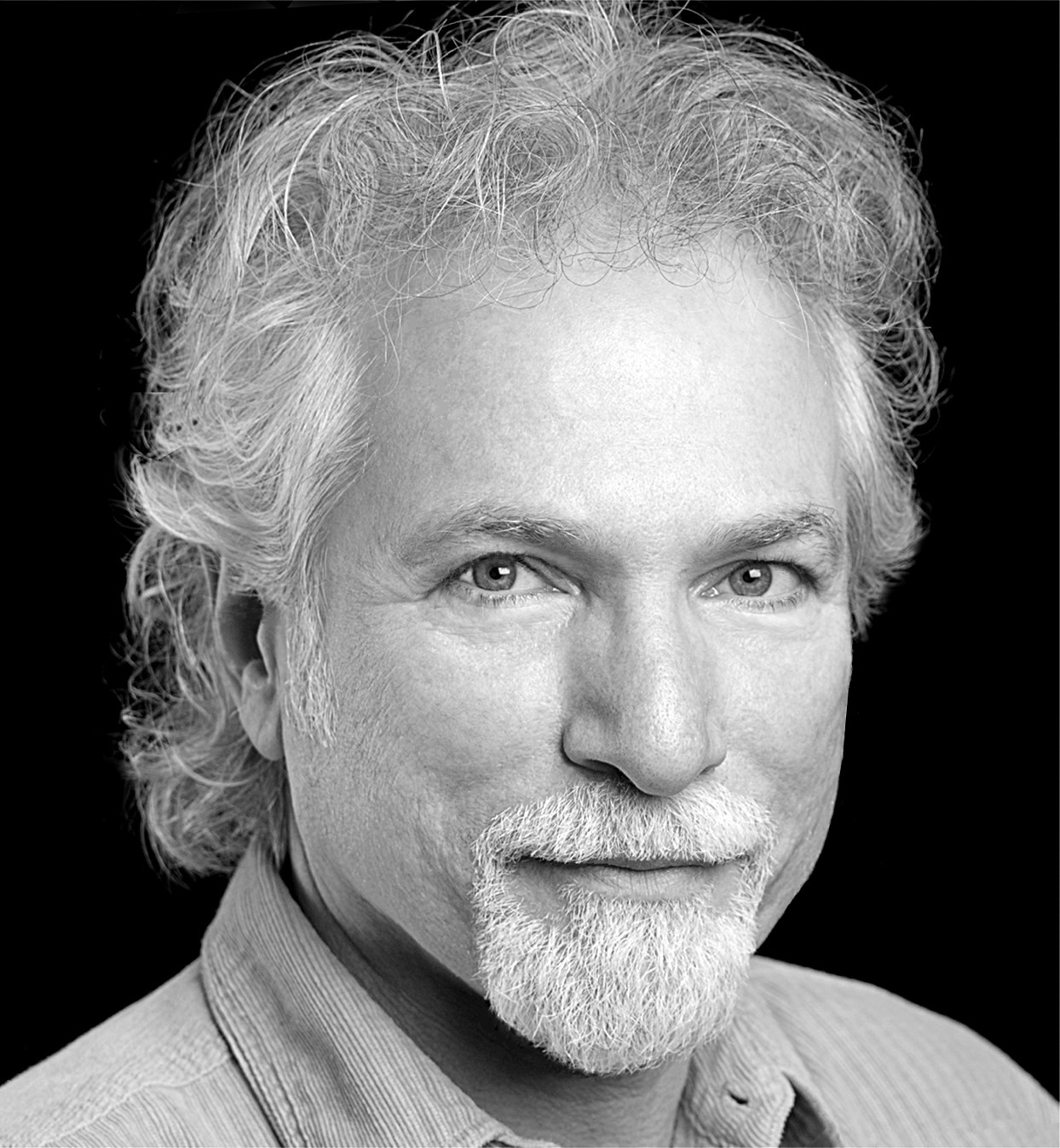
In my latest session, I spoke with Rubin Naiman, Ph.D., shown below. Rubin is the Integrative Sleep and Dream Health Director for the Circadian Health Associates and a clinical assistant professor of medicine at the University of Arizona’s Program in Integrative Medicine.
AGJ: What do you think of these sleep pods that offer busy executives a place to tune out for 20 minutes during the day?
Rubin Naiman: I don’t have a negative reaction, per se. My big concern is that sleep pods and spas that charge $15 for 20-minute power naps are a symptom of a larger cultural misconception, a faulty posture towards sleep. They’re a high-tech response to a low-tech question. The sleep pod, like any sort of tech-supported opportunity to catch up on sleep during the day, is a little like taking a vitamin or a supplement to be healthier. Unless you also make that part of a larger lifestyle effort— like eating well and exercising — it really does no good. In fact, it may do some harm in making people think they have a certain modicum of control.
The concept of power napping seems to come out of that need for control you just mentioned. Even the name— “Power Nap” — stresses me out. It’s like putting a ton of money on draining a halftime free throw.
When I was writing my book, Healing Night, the folks at Random House kept wanting to put the word “POWER” in the title. I resisted. Power is associated with waking consciousness. During the day we’re driven, we’re motivated, we have intentions, we have energy and we want power. The big mistake here is that we unthinkingly import waking, daytime postures and attitudes into the world of sleep and dreams. We’ve lost our sense that sleep is a different kind of consciousness compared to waking. It’s an altered state of consciousness.
How so?
Well, it’s not simply the lack of waking. We commonly use the phrase “dead to the world” when people are sleeping, which is interesting because it defines sleep as being, not waking. We have a very naïve, waking-world bias towards sleep as a rest period primarily to serve waking. It’s not. It’s an altered state of consciousness in and of itself.
It sounds otherworldy.
It is. There’s an old Beatles song called “Golden Slumbers” that talks about sleep as a way to “get back home.”
The lyrics were actually written by Thomas Dekker, 300 years before Paul McCartney. At that time, people believed sleep was a place, that you weren’t just “dead to this world,” but you actually went to anotherworld. There’s evidence that where we go in sleep is where accomplished meditators have learned to go. It’s a place that’s so deeply serene, so sublimely peaceful that most of us don’t have any waking world language to bring it back. For folks, like me, who lived through the sixties and experimented with psychedelics and looked at consciousness in different ways, we got it experientially — and we got it in our hearts — that there’s much more going on in sleep than we believe through the frame of our consensual, waking consciousness.
But culture today is less “Woo Woo.” Most of us aren’t sitting around dropping acid and learning to play the sitar [laughs]. We’re more hooked on science, on gadgets and data.
That’s true. We’re living in an Information Age.
… and most of us feel like we’re missing out on some opportunity if we’re not plugged in all the time (our need for more and more information is actually evolutionary, as I wrote back on January 30th)
Right, and I’d say our addiction to information is contributing to our mechanistic approach to sleep. The Sleep Cyle app from Apple is proof of that. It illustrates how we need to reduce everything to the physical world. In my field, psychology, there’s a trend right now toward neuroreductionism, or reducing everything in terms of brain mechanisms. There are all these studies now that show really interesting brain changes — EEG changes and neurocognitive changes — associated with meditating. People have been meditating for thousands and thousands of years, but now scans can show us how the brain in a meditative state produces more gamma waves associated with deep peace. That’s all fine. But you can lean on science so heavily that you won’t accept or trust the experience itself. When I meditate, I don’t need someone monitoring my brainwaves to tell me I’m peaceful, or monitoring my belly to tell me I’m hungry? I already know that.
But aren’t these scans useful?
Yes, but only when they’re part of a bigger picture. I’m a member of the American Academy of Sleep Medicine, and my colleagues are primarily physicians. They’re all interested in the brain, in physiology, in neurochemical shifts during sleep. I think all of those things are critically important, but, like I said, they miss the consciousness part, which I’ve made it my mission to emphasize. You can’t reduce sleep to brain mechanisms any more than you can reduce to love to a series of physical mechanisms. We know there are changes in the brain mechanisms that are the result of falling in love, but nobody would ever say they have discovered a technology that helps you fall in love and stay in love. Our mechanistic approach reduces sleep to these squiggly EEG tracings, to firing neurons and squirting neurochemicals. Intuitively, though, we all know it’s much more than that. Like love, we know the sweetness of a good night’s sleep. We know how it feels to descend into it and to come up out of it in next morning.
Do you think our scientific bent and addiction to information has made us forget how to rest?
Yes. I read a blogger recently who wrote that the average person today consumes more information in a month than people consumed in a lifetime 100 years ago. I don’t know where her data came from, but it points to a true direction. We overconsume food, information, even light (I’ve written about this a lot about how we’re overexposed to light at night). Some say that we’re even over-breathing.
But we’re not over resting.
No. We’re constantly questing. People don’t hit the brakes until the car is already in the garage. Most people don’t even try and slow down until they get into bed. Part of the problem is, we confuse rest with recreation. We think going to the movies is rest. It’s fun, but it’s not rest. In the same way we have to learn to walk before we can run, we absolutely have to learn to rest before we sleep. Also, tens of millions of people are confusing inebriation with rest. You know, I’m going to rest and smoke a joint, or a have a couple of beers.
Do you think we avoid slowing down because we’re afraid to be alone with ourselves?
I do. When we hit the brakes — which rest and sleep require us to do — everything we’ve stashed in the back of the wagon comes flying forward. Very few people have a true relationship with themselves when they’re at rest. That’s why they’re in constant motion.
How does this play out in our routines at bedtime?
I have data documenting what most people do at bedtime (this is US data, but it’s probably very similar in Canada). The vast majority of us are either sitting up in bed, reading or watching television. There’s a curious phenomenon happening here, and I’ve talked to thousands of people about it. As soon as people start to nod off, they won’t let themselves descend slowly into sleep. They’d rather go out like a light. If you go out like a light when your head hits the pillow, not only is that not a sign of a good sleep it’s a sign of an excessive sleep debt. It’s probably a symptom of a sleep disorder.
And the reason for that, I think, is that people are reluctant to spend 15 or 20 minutes alone in the dark with themselves. All of that stuff that they’ve been running from, that’s been clipping at their heels, starts to come up. There’s a growing mountain of personal psychological stuff, stress from the day, material that goes back to childhood that most of us never face. The only chance it has to come up is this little window of time when our guard goes down. Over the years, the background noise gets louder and louder and we need harder and harder stuff to put ourselves down. So people drink more and take more medication. I have this belief that, unconsciously, we maintain an excessive sleep debt to help us override our ghosts.
[pullquote]I have this belief that, unconsciously, we are deliberately sleep deprived so we can avoid being alone with ourselves.[/pullquote]
Can you improve your sleep by laying out your bedroom differently?
Yes. Most of us are accustomed to bringing lots of entertainment and gadgets into the bedroom. People work on their laptops in bed. They plug in their cell phones and iPods in bedroom outlets and sleep close to an electric plug-in clock. I suspect most of us sleep closer to our clocks than our spouses. Even the small amount of light from clock radios can trickle through closed eyelids and suppresses our melatonin production. Also, clocks give off an electromagmetic field which further suppresses melatonin. Finally, bedside clocks tell you what time it is. Knowing what time it is in the middle of the night immediately draws you back to waking world consciousness — so, not a good idea.
Globally speaking, are North Americans the worst sleepers?
We used to be. But today the entire industrialized world approaches sleep the same way. Take Spain. After it became a part of the European Union, it had to adjust and become connected to the rest of the continent to do business. Spain doesn’t shut down in the afternoon for two or three hours anymore. So no more siestas. The thing is, they’re continuing the rest of their lifestyle habits, including eating really late and staying up late. Now we’re seeing a significant jump in Spain in accidents and mishaps and other things associated with sleep loss.
How is the rise of coffee culture affecting sleep?
The smallest cup of coffee at Starbucks is called a “Tall.” I often ask my patients how many cups of coffee they drink a day and they usually say two or three, but I’ve learned to ask how big the cups are, and that’s when they get a bit shy (20 ounces). If you want a standard 8-ounce cup of coffee from Starbucks (called a “short”), they keep those cups hidden behind the counter.
What are you working on right now?
I’m researching something called Night Fever. It’s a new model for understanding sleep disorders. It basically says that we need to look at sleep in terms of a release of energy. When we sleep, we stop consuming energy from the world. At night, the body and the brain do exactly what the planet does when the sun goes down. All of the heat absorbed during the day begins to dissipate. If you monitor environmental temperatures when the sun goes down, it basically drops and steadily decreases through the night and reaches its lowest point just before the dawn before coming back up. That’s exactly what normal human body temperature does at night. We found people suffering from sleep disorders and depression have a suppressed amplitude. There should be a wave where the body temperature goes up in the day and down at night, but in insomniacs that wave is flattened. They don’t get as low at night. In some cases, we literally see a night fever. That’s where brain activity scans are useful because they can show us that. “Hot brain,” as we’re calling it, is a brain that won’t shut down. It keeps working; it keeps thinking; it keeps buzzing.
[pullquote]At night, the body and the brain do exactly what the planet does when the sun goes down. All of the heat absorbed during the day begins to dissipate.[/pullquote]
That perfectly describes the cultural climate right now.
It’s time we all chilled, mentally, spiritually and physically.
Alison has been blogging since 2009, and drawing for much longer. Society Pages looks at how technology challenges and shapes human nature and creativity, among other things. It isn't always pretty.










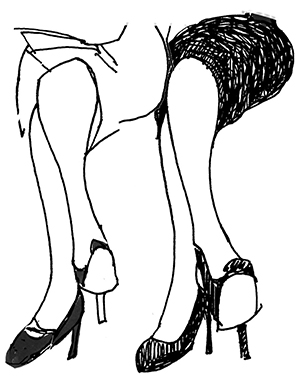




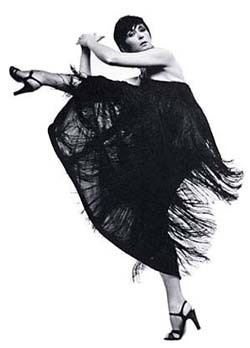 On some mornings, I get up thinking about Twyla Tharp (left), the American choreographer. And I’m not even a dancer, I’m a writer. I don’t know Twyla, but I do know that she moves like Fred Astaire (leading, not following) and once directed a line of classical ballerinas to sing en pointe. Years of studying the novels, poems, high kicks, howls and — louder still — the silence of generations of women before her inspired moves like that.
 The front hallway of the house I grew up in was a grotto of potted plants and hanging baskets placed in and amongst a collection of modern art made from highly polished cast steel.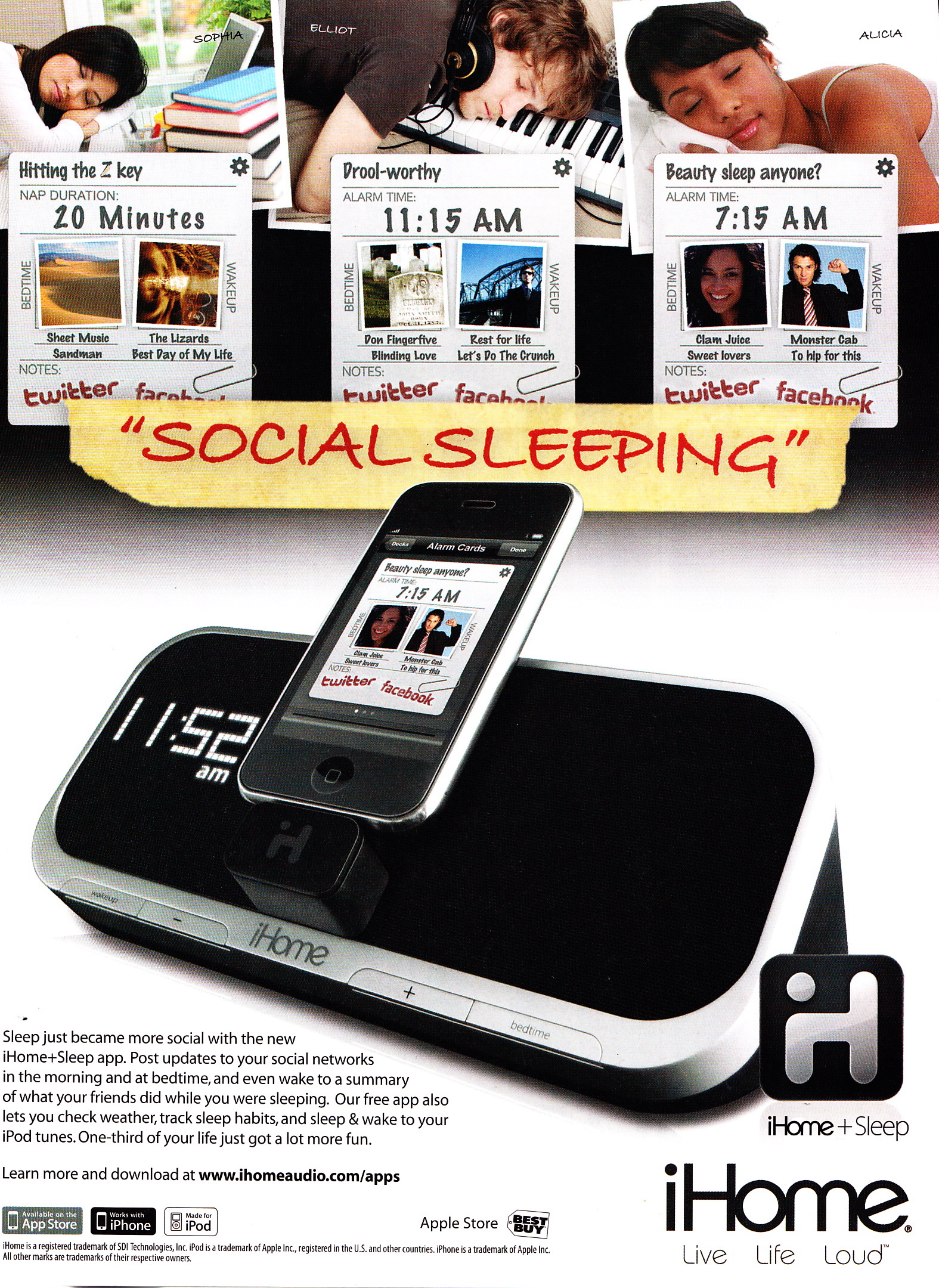


 That’s me, age 6, in my dad’s office squeaking up a storm with some markers on the backside of a blueprint (he’s an architect). Look how shiny my hair is.

 If I’m nice to be around, I’m sure it’s because I get more rest than most folks.
 it completely misses the bigger picture. I wince at these kind of assignments and I try to avoid them. But if you Google me, you’ll see I don’t have a perfect track record.
 AGJ: What do you think of these
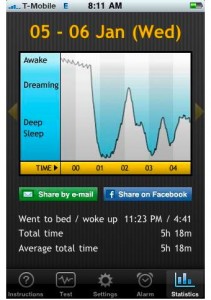 Right, and I’d say our addiction to information is contributing to our mechanistic approach to sleep. The Sleep Cyle app from Apple is proof of that. It illustrates how we need to reduce everything to the physical world. In my field, psychology, there’s a trend right now toward neuroreductionism, or reducing everything in terms of brain mechanisms. There are all these studies now that show really interesting brain changes — EEG changes and neurocognitive changes — associated with meditating. People have been meditating for thousands and thousands of years, but now scans can show us how the brain in a meditative state produces more gamma waves associated with deep peace. That’s all fine. But you can lean on science so heavily that you won’t accept or trust the experience itself. When I meditate, I don’t need someone monitoring my brainwaves to tell me I’m peaceful, or monitoring my belly to tell me I’m hungry? I already know that.
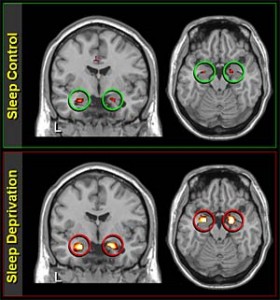 can reduce to love to a series of physical mechanisms. We know there are changes in the brain mechanisms that are the result of falling in love, but nobody would ever say they have discovered a technology that helps you fall in love and stay in love. Our mechanistic approach reduces sleep to these squiggly EEG tracings, to firing neurons and squirting neurochemicals. Intuitively, though, we all know it’s much more than that. Like love, we know the sweetness of a good night’s sleep. We know how it feels to descend into it and to come up out of it in next morning.
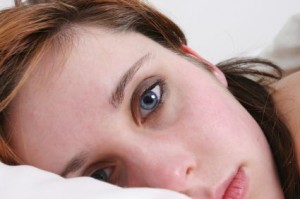 And the reason for that, I think, is that people are reluctant to spend 15 or 20 minutes alone in the dark with themselves. All of that stuff that they’ve been running from, that’s been clipping at their heels, starts to come up. There’s a growing mountain of personal psychological stuff, stress from the day, material that goes back to childhood that most of us never face. The only chance it has to come up is this little window of time when our guard goes down. Over the years, the background noise gets louder and louder and we need harder and harder stuff to put ourselves down. So people drink more and take more medication. I have this belief that, unconsciously, we maintain an excessive sleep debt to help us override our ghosts.
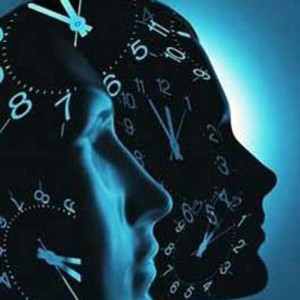 Also, clocks give off an electromagmetic field which further suppresses melatonin. Finally, bedside clocks tell you what time it is. Knowing what time it is in the middle of the night immediately draws you back to waking world consciousness — so, not a good idea.
 I’m researching something called Night Fever. It’s a new model for understanding sleep disorders. It basically says that we need to look at sleep in terms of a release of energy. When we sleep, we stop consuming energy from the world. At night, the body and the brain do exactly what the planet does when the sun goes down. All of the heat absorbed during the day begins to dissipate. If you monitor environmental temperatures when the sun goes down, it basically drops and steadily decreases through the night and reaches its lowest point just before the dawn before coming back up. That’s exactly what normal human body temperature does at night. We found people suffering from sleep disorders and depression have a suppressed amplitude. There should be a wave where the body temperature goes up in the day and down at night, but in insomniacs that wave is flattened. They don’t get as low at night. In some cases, we literally see a night fever. That’s where brain activity scans are useful because they can show us that. “Hot brain,” as we’re calling it, is a brain that won’t shut down. It keeps working; it keeps thinking; it keeps buzzing.