Alison Garwood Jones

Good work

March 8, 2013

I love Betsy Bauer’s Google Doodle today celebrating International Women’s Day.

international-womens-day-google-doodle-070313

Bauer has only been with Google six weeks. But, as Rebecca Jarvis of CBS This Morning noted, this opportunity is typical of Google where good work trumps hierarchy.

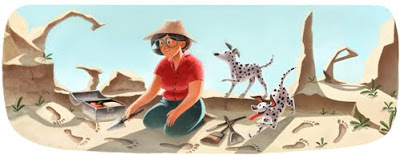
Here is Betsy’s first Doodle posted on February 5th in honour of Mary Leakey’s 100th birthday.
search

And this is what she said about it on her blog:

Today we celebrate the life and work of anthropologist/archaeologist Mary Leakey. In this Doodle, I wanted to highlight Leakey’s work in the most charming way possible. I began by focusing on her discovery of the fossilized Proconsul skull, but ultimately decided to depict a scene of her excavation of the Laetoli footprints. As a fun touch, I included her pet dalmatians, whom are often included in old photographs of Leakey.”

 Such talent!

Comment on this post »

Extra! Extra!

March 2, 2013

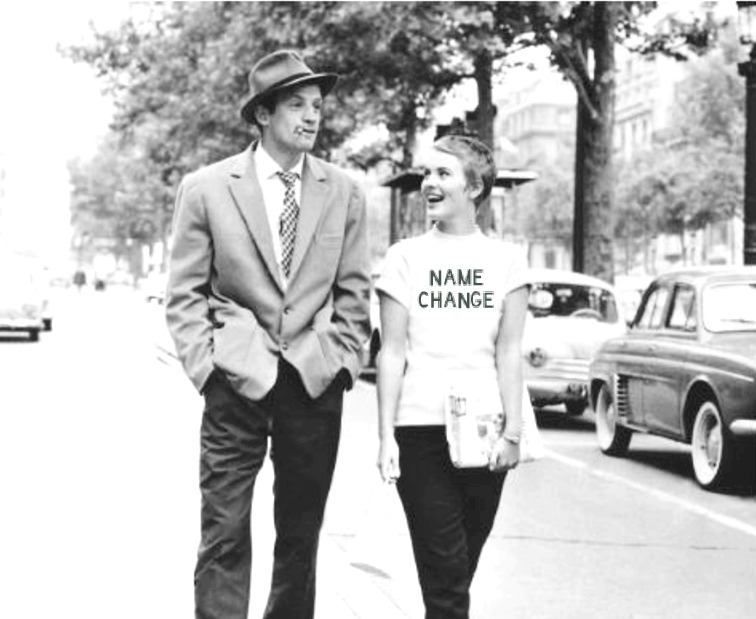
Jean Seberg Name Change

The paper I associate with postwar Paris, chocolate brioches dipped in milky coffee, and a certain soignée presentation of self is changing its name.

The International Herald Tribune is to become The International New York Times. I suppose it makes sense. It was always the global edition of the Grey Lady. But still …

Will the new name fit on the T-shirt?

Comment on this post »

La beauté

February 17, 2013

Good design in women is a human obsession.

A phenomenon distinct from the individual.

Beauty alters rooms.

It changes behaviour

And creates a sense of urgency

In everyone.

For the woman, beauty affects how she plans her life,

Both when she has it

And when she doesn’t.

Either way, society doesn’t let her forget it.

Beautiful women who brush off its significance

Are either coy,

Or in denial.

Maybe that’s because they know attraction and violence breathe the same air.

Being on top of the pecking order comes with a different set of responsibilities and expectations.

People question when beauty is hidden away — i.e. if it stays in on a Saturday night,

Or earns a Ph.D.

Somehow, it’s abandoning its responsibilities to others

To be seen

And admired.

We chastise and sometimes dismiss women

For being obsessed over the very things we can’t take our eyes off:

Their hair, their breasts, their tiny hands,

Their brain when they express profundity through those lips and animated eyes.

Beautiful women get used to being the eye of the storm,

And are incensed when they’re not.

Finally, when the storm clouds clear

And beauty’s draw has diminished,

And when those who would have her are fading too,

Life goes on.

Still,  good design in women, like our love of high-end cars and chairs,

Continues to preoccupy us.

Handing over the reins is built into the system.

Conceding gracefully is not.

Acknowledging life’s cycle is the ultimate gift you give yourself

And others.

Peace on earth,

And good will to women,

And men.


Comment on this post »

Mobile blinders

February 12, 2013


Newsstand blog imagePhoto by Jordan Taler with Brushes drawing by Alison Garwood-Jones

Newsstand sales of magazines and gum are both down. There’s a connection

David Carey, president of Hearst Magazines, is calling it “the mobile blinder effect.” Talking to the Financial Times, he said that people waiting in line at the grocery store and the newsstand are staring at their phone screens during this key impulse purchasing window, rather than looking at the magazine racks and candy spreads. The latest reports show gum sales in the US are down by 2.7 percent (or $3.5 billion) while sales of consumer magazines dropped almost 10 percent (8.2%) in the second half of 2012.

Adding more screaming headlines to the newsstand and more flavours of gum, like Eclipse Polar Ice and Extra Dessert Delights, are not bringing readers or chewers back. In the case of the gum, the dizzying explosion of flavours over the past few years actually cannibalized sales rather than attracting new consumers. “We’ve made shopping for gum very complicated,” Casey Keller, president of the North America division of Wm. Wrigley Jr. Co. told The Wall Street Journal. “We have 50 different varieties of gum in a convenience store, and that’s just Wrigley.”

Gum

Gum makers, including Wrigley’s, are considering a return to the classic flavours (remember mint?) and re-marketing gum as a “concentration aid” — something that will help video game addicts, students studying for exams and other high-strung types focus on the task at hand. They also want to make the packs small enough (6 pieces per) to fit into a smart phone pocket and cheaper than the cost of downloading an iTune (i.e. less than $1). Last year, the average price of a pack of gum in the US shot up to $1.58, whereas the average download was .99¢.

Magazines are also playing with pricing, offering cheap digital downloads. Whether they can make the consumer stop and stare, or care, is the current challenge. My pal Kat Tancock put it  best. Commenting on this story on D.B. Scott’s Canadian Magazines blogshe said:

“Competing in a busier space just means magazines have to prove their value rather than just taking advantage of impulse buys. Frankly, if bored shoppers are the only reason a magazine can keep going, it probably isn’t that good a magazine. Instead of trying to protect the old, dead business model, let’s work on creating great magazines that people really want to read.”

Otherwise, magazines could all come polywrapped with a pack of gum inside to help keep readers focused on the contents. I dunno, I’m chewing on it.

Comment on this post »

Good news

February 6, 2013

Canadian Weblog Awards

My blog turned 3 in January.

And on this sunny February day, I got this good news.

I was nominated in the “Life Category.”

Thanks guys.

Comment on this post »

Spilled milk

January 29, 2013

spilled_milk

UPDATED: January 30, 2013

Yesterday, The Globe & Mail, “Canada’s national newspaper,” fired took its literary editors, the crusty and intelligent team of Martin Levin and Jack Kirchhoff, off Books. I pounded my fist on the desk when I read this. Then I let out a cry in my condo that was heard only by the dogs down the hall. By the end of the day, word broke that Levin had been moved to Obituaries (the symbolism there is unfortunate). Kirchhoff’s new location in the building has yet to be determined (updates from insiders welcome).

What appears to be clear is that The Books Section will be no more will be a shadow of its former self. Last year it lost a ton of weight, going from a 20-plus page supplement (like The New York Times Book Review), to a handful pages in Focus, to … well, that too has yet to be determined. But it sounds like it’s living off sugared water.

These corrections were issued at the end of the day in a letter by Globe and Mail editor John Stackhouse who claimed Now Magazine got the story wrong, sending an army of bibliophiles on a rampage through social media. The veteran writer at Now didn’t even call the paper, Stackhouse noted. He went on to reassure readers,

The Globe is as committed as ever to both books coverage and book reviews. While space and style continue to change, the importance of books to the Globe does not. I continue to look forward to opportunities to innovate in this space as rapidly and creatively as possible, with the sort of energetic leadership that 21st-century book readers and publishersdeserve and demand.”

I hope Jack and Martin dust themselves off. Every day there’s something fresh to make print journalists uncomfortable in their own skin.

I’ve lost many writing jobs because of the economy and the rise of digital media, including a column in a national magazine shortly after the economic collapse in 2008. But even though we’ve known for years where the stampede is going too many of us are still crying, “No-o-o-o-o-o-o!” Yesterday, I noted the number of journalists screaming their disbelief on Facebook when this story broke. “Everything’s going to rat shit,” was the general tenor of the comment stream. Many of these journalists, I silently noted, were folks who have openly admitted on other occasions to no longer subscribing to The Globe.

I stopped subscribing to the paper I’ve written for many times (including full-page features with commissioned editorial cartoons) back in 2010. My reasons were the same as theirs. It dropped its freelance rates to a handful of nickels and it switched to more advertorial-style articles after the net highjacked breaking news, a move that has seriously diluted the quality of the commentary. The paper build-up on my coffee table goes without saying. But for many writers, the cachet of being in The Globe has been lost. That peaked, in my opinion, in the late nineties when competition from the new National Post sharpened everyone’s analysis and wit. What a line-up it was: Robert Fulford, Val Ross, David Macfarlane, Bronwyn Drainie … sigh.  I wasn’t even a journalist back then, just a hungry reader.

[pullquote]”If you don’t like change, you’ll like irrelevance even less.”[/pullquote]

The literary geek in me misses the late nineties. Music geeks tell me they feel the same way. Music had a similar burst of creativity before Napster unearthed our cannibalizing tendencies. Today, with Books gone on a potentially meat-free diet, Ian Brown and Ivor Tossell are the only two reasons I’d go to the Globe‘s website, but two reasons are not enough to make me invest in the entire package. My news consumption is messy and piecemeal. Just like yours.

So to my colleagues who hiss that things like blogging are ruining us, I say, you’re right.  But, as the aphorism goes, “If you don’t like change, you’ll like irrelevance even less.” There are no guarantees of success in anything (including blogging or what follows after achieving the “All Star” status on LinkedIn), but there are even fewer results if you don’t try.


 

Comment on this post »

Down came the snow

January 6, 2013

When her emotions were reeling

And her writing hand couldn’t keep up

— Or even find an entry point on the page —

She read obsessively.

Indiscriminately.

And, as Dylan Thomas liked to say,

With her eyes hanging out.

Comment on this post »

They leave me and I love them more

December 31, 2012

Good-bye 2012


Comment on this post »

Goodbye, Mommy

December 11, 2012

Catherine Lucy Garwood-Jones (1928-2012), Hamiltonian extraordinaire, died on Sunday, Dec. 9 after a ten-year battle with Alzheimer’s. Pre-deceased by her husband Trevor in 2011, Team “Cath and Trev” changed the face of the city they loved so much — he through architecture and she through her commitment to health care, education, music and family.

Catherine’s efforts to secure more funding and improved care for mental health patients across the province gets first billing here. Where others saw stigma, Catherine showed compassion, openness and a determination to see widespread attitudinal change towards mental health, and greater support for families. Volunteering on the Hamilton Wentworth District Health Council (HWDHC) from1976-80, and later with the Hamilton Program for Schizophrenia, Catherine was assigned to head up a community-based board to oversee funding for the first Community Mental Health Program in the province. Colleagues, including Dr. Stan Dermer, remember Catherine storming up the steps of Queen’s Park to lobby provincial Health Minister Dennis Timbrell for more funding. She got it. The “Catherine Garwood-Jones Lecture in Schizophrenia,” part of the Hamilton Program for Schizophrenia (HPS), is a testament to her commitment. This annual event, which kicked off in 1984, attracts leading scholars from around the world to McMaster University every fall.

Catherine did all this while raising three kids and working as the office manager and receptionist at Trevor Garwood-Jones Architects. Her flying fingers typed out the correspondence and specifications for every major design by her husband, including Hamilton Place, The Hamilton Convention Centre, The Art Gallery of Hamilton, and St. Peter’s Hospital.

Born October 22, 1928 in Cape Town, South Africa, the only girl in a family of five boys, Catherine moved with her parents and brothers to London, England after the war. In 1948, while attending the Royal College of Music, a dashing architecture student caught her eye at the Leytonstone Salvation Army Hall in Central London. She was standing on a ladder hanging a poster. They married in 1951 at the hall and moved to Hamilton in 1959 to begin a new life, which was soon to include three children, Peter, Richard and Alison, and years later, a cherished daughter-in-law, Doreen.

Over the years Catherine’s love of music, especially in a venue with great acoustics (like Hamilton Place), was something she shared with Trevor. A longtime member of the Women’s Committee of the Hamilton Philharmonic, Catherine and her husband were regular attendees at concerts and were huge supporters of the arts in all their forms, especially when made by their children.

The family would like to thank their friends and extended relatives for sharing their favourite memories. Special thanks go out to Dr. Kanwal Shankardass and the entire staff at the St. Peter’s Residence at Chedoke for years of loving care. Donations can be made to the Alzheimer’s Society of Hamilton and Halton. Visitation between 10:00 am and 2:00 pm on Friday, Dec 14 at St. Peter’s Residence at Chedoke, 125 Redfern Ave. Hamilton. Private service to follow.

Comment on this post »

Riding the tube

November 28, 2012

Photography by Emma-Lee

UPDATE: In June 2013, Emma-Lee’s album “Backseat Heroine” was the winner of Best Adult Contemporary album at the 2013 Independent Music Awards.

[I] was propositioned by a guitar picker this summer. Or, rather, the writer in me was. And that’s “ghitaahr pick’r,” if you say it like you’re June Carter Cash, as I’m wont to do. Music biopics, especially Walk The Line, and classics in rock journalism by the likes of Al Aronowitz and Nick Hornby have been casting a romantic spell over my storytelling skills for years, even occasionally messing with my flat Canadian accent. But, until a few months ago, I’d been paying my bills writing for other beats and not going to clubs, which made covering the music scene next to impossible.

My fortunes changed when a comet flew into my inbox in early September. A Toronto-based bluesy alt-country singer wanted to meet me, it read. I crunched down hard on my pencil.

The comet and I met at a downtown Second Cup on a Saturday afternoon last month. Her name is Emma-Lee, and she gave off a trail of sparks in her vintage leopard print coat, cowboy boots and old time Hollywood turban (in fuchsia). “I’m a crazy psychic Vegas cowgirl today,” she smiled, still covered in October air and enveloping me in a hug. Everyone turned to look, and an hour into our conversation a crusty old guy from the back of the shop forgot about his setbacks, pulled himself up, and came over to meet the woman he probably thought was Hedy Lamarr (it was the turban).

“Nice look,” he said, shuffling his feet like he’d crossed over to the girls’ side of a school dance. Emma-Lee acknowledged him as only a pretty woman could: with a pitch-perfect “thank you” that transitioned from boppy to stern in two beats. It had its intended effect. He left. For the rest of our interview, the entire shop sipped and stared. They all felt the presence of The X-Factor.

Turn and face the strange ch-ch-changes

[E]mma-Lee is a singer-songwriter navigating the music scene in the “bass ackwards” fashion now standard for Generation Y’s best and brightest. These kids don’t sit in the waiting rooms of record labels, clasping their demos and planning their dash past the president’s secretary. In the ultimate powerflip, the Old Guard pursues them (online) and make them offers they can’t refuse (you’d think). But these kids are questioning if it’s really worth it signing on with a big label? To them, the gift horse is looking a little long in the tooth.

“The level of development with artists from an early stage is not an area labels are doing anymore,” says David “Click” Cox, a former A&R man with Universal Music. “They aren’t discovering artists before the masses anymore, or introducing them. The playing field is wide open with technology ,” he adds, “and artists can be heard on a larger scale and discovered by everyone at the same time.”

If you need another sign how times are changing, Gen Y musicians also don’t beg DJs or TV programming directors to play their music the way that Johnny Cash and Jon Bon Jovi did in their day. Only a generation ago, an aspiring singer would have bought free rounds of shots for everyone at the discovery their videos had achieved heavy rotation on national TV. Not Emma-Lee. She’s missed her airplay on MuchMusic. Like most digital natives — nearly one-third, according to a recent report — Emma-Lee doesn’t own a TV and has no plans to buy one. “I’ve only watched my stuff on YouTube,” she says.

The old Dire Straights line about “Playing the guitar on MTV” is as foreign to Emma-Lee as Al Jolson on shellac would have been to Mark Knopfler in 1985 when “Money for Nothing” topped the charts.

In the last decade, because of the internet effect, all-music stations like MTV have become portals for reality TV and the odd music video, while staffing at record labels has dropped 60 percent. With little support from the usual suspects, talented and determined newcomers have taken hold of their music careers and mined the internet for almost all of their needs.

Photography by Emma-Lee

Emma-Lee, 29, cobbled together her first band mates through Craig’s List — “How else would I find them?” — and released her first album, 2008’s Never Just a Dream, an ethereal mix of pop, doo-wop and blues, on iTunes, MySpace and YouTube. She had no management backing her up, no booking agent, publicist or record label. Never Just a Dream was financed by a series of day jobs and a line of credit that Emma-Lee only just paid off.“I know this will be a marathon, not a sprint,” she told her Facebook fans, who have been following and supporting her every step of the way.

[pullquote]’Playing the guitar on MTV’ is as foreign to Emma-Lee as Al Jolson on shellac was to Mark Knopfler[/pullquote]

Myspace was a year old in 2004 when Emma-Lee began sharing her songs. She built the foundation of her social media following on this platform while working as a receptionist at the Rolls Royce dealership in downtown Toronto. “I had nothing else to do,” she says without apology. “The dealership had two cars on the floor, each worth half a million dollars, and there were only 8 people in Canada who could afford them. And they didn’t call me.”

Sitting at her desk next to the sedans, Emma-Lee logged in seven hours a day pushing her name and her music out onto Myspace. “I personally messaged people and asked them to check out my songs,” she says. “The positive feedback from total strangers fed my drive even more. I soon set a goal of getting 100 people to know about me every week.” Before long Emma-Lee had 21,000 followers. “There was first mover advantage, for sure,” she says. “At the time, nothing else like Myspace existed. People were actually interested in discovering new music.” Not long after, she booked her first live show at Healey’s in Toronto. Two hundred people come out and it was largely due to her outreach efforts on Myspace.

Emma-Lee later refocused her energy on Facebook when Myspace lost its mojo, and began tweeting up a storm when micro-blogging became de rigueur. The importance of building a top-notch website on WordPress was a no-brainer. Emma-Lee is also one of the few musicians who still send out a regular e-newsletter to all the followers who leave their e-mail addresses after live performances. Some would call that a quaint Web 1.0 strategy, but it came in handy when the singer needed to raise funds for her second album, 2012’s Backseat Heroine. “My fans,” she said, “donated almost $10,000 in presales through kapipal.com,” the site that allows you to “raise money for your dreams.” She thanked each and every one of them by mailing out signed CD’s, handwritten lyric sheets, and she even did a live house concert for one fan who donated $1000.

The star treatment

[E]ventually, Emma-Lee decided to let traditional media know what she was up to. Only after her first album was released online and she had been declared one of 2008’s best singer-songwriters by iTunes, Emma-Lee sent copies of the CD to music critics at The Toronto StarThe Globe and Mail and every newsstand rag she could think of. “I spent $600 on my first mail out.”

Again, with no agent or publicist, she took on the roles herself. “I called myself Dale Cole and became a man in all my emails and cover letters.” Her new identity was a combination of the names of two characters from her favourite TV show, Twin Peaks: special agent Dale Cooper and regional bureau chief Gordon Cole. “I never called anybody, I just emailed them as dalecolepublicist@specialagentrecords.com.” She started her own record label too, Special Agent Records, which she still maintains. “I felt this strange power as a man,” she says, looking back. “Besides, I thought it would be weird e-mailing publications as myself and begging them to listen to me.”

When Ashante Infantry, the music critic at The Toronto Star, received her CD, she raved in her review and gave it four out of four stars. A week later Brad Wheeler at The Globe and Mail made Never Just a Dream the “Disc of the Week.”

The publicity helped. It led directly to Emma-Lee being noticed the old-fashioned way. Larry Wanagas, the veteran talent manager who discovered and turned kd lang into an international singing sensation, saw The Star review and offered to manage Emma-Lee pretty much on the spot. She said yes and Wanagas re-released Never Just a Dream on his label, Bumstead Records. David “Click” Cox, mentioned earlier, also became interested in managing Emma-Lee and the three struck a “co-management” deal.

[pullquote]Larry Wanagas, the veteran talent manager who discovered and turned kd lang into an international singing sensation, rushed to represent Emma-Lee.[/pullquote]

“It was a redo with support and marketing,” says Emma-Lee, explaining how pairing with the label made it possible for the public to buy her CD at HMV and other brick-and-mortar music chains. “I didn’t have any offline distribution before that.” iTunes and Myspace were her only storefronts. Physical distribution wasn’t something Emma-Lee had even thought of until a desk clerk at the flagship Toronto HMV called her after the newspapers had reviewed her album and asked, “How do we get your CD in here? People are asking for it.” When Larry Wanagas made contact a few days later, she had her answer.

But in what’s becoming the order of the day, Emma-Lee chose to cut ties with Wanagas while working on the songs for her second album. “We had a falling out over different business philosophies and decided to part ways,” she says. David Cox stayed on as her manager. “I really wanted to be more hands on with developing artists,” says Cox. “And Emma-Lee is a creative visionary and very active online.” That’s why he left the labels and went independent to manage Emma-Lee and a second artist, Saidah Baba Talibah, through his company CLK Creative Works.

Photograph by Emma-Lee

All by myself

[W]hat’s clear is that the web has given artists greater leverage in the age-old struggle for creative control. That wasn’t possible for big voices a dozen years ago. Christina Aguilera peaked just before the internet rearranged the music industry forever. She bristled, rebelled and starved herself in the late nineties in response to the heavy-handed marketing tactics and vocal choices forced upon her by record execs.

“Free to be you and me” is practically the motto of the internet generation of artists. Emma-Lee art directs many of her own videos, chooses her own clothes, eats what she wants, and shoots most of her still photography (yet another talent). She gives away a lot of songs and pictures online because she’s learned that she can generate substantial revenue in other areas.

“Right now,” she says, “unless you have a huge audience to tour for, the only place to make money is in songwriting — for yourself and other people. Then getting those songs cut by other artists or getting them placed in TV and film.” Her songs have been featured on Beauty & The Beast, Degrassi, Dance Moms, Wilfred, Tyler Perry’s: Why Did I Get Married Too, Saving Hope and MTV’s Teen Wolf.

Last year she experienced a flurry of attention online when her song “Shot in the Dark” was featured on Dance Moms. “Basically, these two girls did a dance routine to my song and it went pretty viral.” As a result, she charted on the iTunes USA jazz chart and sold nearly 5000 singles from that exposure. If you search YouTube for “Emma-Lee Shot In The Dark” you will pull up dozens of young girls doing dance routines in their basements to her song.

In the past few months, the show Saving Hope has been pulling together ‘The Saving Hope Sessions,’and asking artists who’ve contributed music to the show to create live acoustic performances for the iPhone, which they’ll in turn promote. “They need the content, and we need the free publicity, so it’s amazing for us,” says Emma-Lee. One placement, she says, can be worth a tour in term of how much it equates to new fans who will follow her back on Facebook and Twitter. “Not to mention, a tour can leave you thousands of dollars in the hole and completely exhausted by the end of it.”

[pullquote] From a musician’s perspective, there’s never been a more exciting time to launch yourself. [/pullquote]

With no big production budgets or middlemen to report to, Emma-Lee has been producing and directing a stream of YouTube videos for the past several years. They all focus on what really matters: her voice. The “Backseat Sessions” are impromptu serenades that show a hitchhiking Emma-Lee singing for her ride in the back of cars and rickshaws. “I had a my friend director Hank Devos tag along.” This one’s a song Emma-Lee wrote called, “Just Looking,” and it ended up being the fourth track on her second album.

On another occasion, Emma-Lee created and posted this video of an off-the-floor acoustic recording of a song she wrote called, “Magical Flying Bathtub Machine.” “It’s just two of us. My friend Devrim [Eldelekli] on a nylon string guitar and me singing very gently and jazzy.” It became an iTunes bonus track later attached to her first album.

When you publicly post to YouTube, it’s anyone’s guess who will see your video and what they’ll do with it. Most of us hold our breath for a few shares or likes and move on when we get none. In Emma-Lee’s case, her iPhone lit up: “Hi, Emma-Lee, this is Jesse Cook. Could you give me a call?”

Cook, an internationally-acclaimed guitarist based in Toronto, stumbled upon Emma-Lee’s bathtub song and thought she had the perfect voice for his new project. Then he called and invited her to join him for a recording session at his west end studio. Planning his eighth studio album, he explained that he wanted to do a “blue mood” album with the emotional punch of Adele’s mega-seller 21, but he needed a singer to demo a couple of songs he was thinking of pitching to kd lang or Madeleine Peyroux. “He handed me Screamin’ Jay Hawkins classic tune, ‘I Put a Spell on You,’” recalls Emma-Lee. She sang, he listened, then called her again a few weeks later. “Hey listen, I’ve played the demos to a bunch of people and we just like you. Do you want to come and record some songs for the album?” She said yes. The album she is featured on is Jesse Cook: The Blue Guitar Sessions.

Cook and Emma-Lee did their first live performance together for a television taping of a concert special now airing on PBS. And as I write this, she is traveling with Cook on his “Blue Guitar Tour” which will make stops at the National Arts Centre in Ottawa and Toronto’s Massey Hall before wrapping up in mid-December. Emma-Lee took the photos for this blog post from her hotel room in Fredericton, NB, their second stop.

The parade of veteran musicians knocking at Emma-Lee’s door didn’t stop here. Two weeks before she left to go on tour with Cook, Emma-Lee sent her followers a note stating, “Chris Isaak [the rockabilly heartthrob] has selected me to open for his Toronto appearance at Massey Hall. Let’s all take a moment and reflect on the awesomeness of “Wicked Game” and “Baby Did A Bad Bad Thing.” Emma-Lee also couldn’t help noting that the singer she was opening for had a role as special agent Chester Desmond from Twin Peaks, the show that has played such a key role in her inspiration.

Sitting dead centre twelve rows back, I watched Emma-Lee under a single spotlight at Massey Hall do a half hour set. It was just a girl, her guitar and a stomp box to set the beat. Even the airborne dust caught in the glare of the spotlight moved at a mesmerized pace during her set. The whole time, all I could think was, “Boy, does she own that stage.” The sell-out crowd agreed.

Backstage, Chris Isaak removed his sequined jacket and placed it over Emma-Lee’s shoulders. “The first concert I ever attended was Bonnie Raitt at the CNE Grandstand, and you opened for her,” she told him. Isaak predicted that one day he would be opening for her. She posted the picture of them together on Facebook and the thumbs-up multiplied.

Chris Isaak and Emma-Lee backstage at Massey Hall, Toronto.

Skipping graduation

[A]s Emma-Lee tells it, her journey to now did not involve endless rounds of vocal training while she was still in pigtails, or overnight trips with the high school band. “I left school for a good three months before the end of grade 10,” says the Toronto-born, Markham-raised singer. “I had to get out. School made me feel really depressed and alienated.” This perplexed her parents. But when they realized they couldn’t force their daughter to go, they helped her escape. “I got a note from my psychologist excusing me from the remainder of the 10th grade,” the singer recalls. “I couldn’t focus on my work, and I can’t even recall what the note said. That time of my life is still a mystery even to me.”

Like any good Canadian girl, Emma-Lee got a job at the local Tim Horton’s, never suspecting a decade later that she’d be singing the “Time for Tim’s” jingle. Her parents (again, much to their credit) didn’t kick her out of the house after she dropped out. They circled the wagons, encouraging their daughter’s budding interest in music. “I got it from them,” she says.

Emma-Lee’s dad taught her to play the acoustic guitar and introduced her to his Beatles records and a stream of old jazz standards. Her mother shared her stories of singing in a large city choir in Toronto. Meanwhile, Emma-Lee tried on a number of vocal styles, including singing along to Whitney Houston, Mariah Carey and all the pop divas with the huge voices. “But most of those singers didn’t write their own songs,” she noted. “When I discovered women who did both, like Joni Mitchell and Fiona Apple, that inspired something new in me.” The strumming and writing on her bed increased.

Photography by Emma-Lee

Soon after, with the money she made ringing up coffee and donuts, Emma-Lee bought a pink Fender Stratocaster and a small amp and announced to her family, “I’m going to be a rock star!” She was no-nonsense about it. What’s more, it felt true.

The big smoke

[W]hile Emma-Lee was still working at Tim’s, the teenager started making more frequent train trips to Toronto. “I got into the electronic, jungle, techno and house music scene and would go to big city raves on weekends.” She was way too young to be doing any of the things she was doing and getting into all kinds of trouble. So much trouble, in fact, that pursuing her music took a back seat. “My guitar collected dust and the writing just stopped.”

Moving with her family to East York, Emma-Lee, now 20, fell in with a pack of drum-and-bass DJs and producers she met on the club scene. When one of them found out she could carry a tune, he invited her to his studio. “ I ended up writing a bunch of lyrics on the spot and recording them. That was the first time I’d ever heard my voice professionally recorded. And that was it for me. Finding my sound and realizing I had ideas to contribute made me feel like I had some kind of a purpose in life,” she says. “From that moment on, I became completely addicted to recording and performing live.”

After that, it didn’t take Emma-Lee long to pull together enough original material for her first album.

Sophomore follow-up

[B]y the time she got around to her second album, Emma-Lee was once again without the financial support of a big record label. “This time I applied for a grant from Factor. You’d be shocked to discover who uses this program — big name artists you’d think have enough money. You have to be good to get one, but you don’t necessarily have to have a distributor.” Emma-Lee won the $25,000 grant/loan and recorded with producers Marc Rogers and Karen Kosowski in February of 2011. This money, combined with pre-orders from fans allowed her to make the album of her dreams. After its completion, with the help of Cox she sent the album out to a number of labels and performed showcases to gain interest. This resulted in an artist-friendly offer from eOne Music Canada in the form of a single-album deal. “I’m still in control of everything creatively,” she explains, “but they help me market and distribute it which is fantastic.”

For her third album Emma-Lee is seriously considering going completely solo again. ”I still have my label, Special Agent Records,” she muses, “and I freakishly enjoy a lot of the business side of music. I can do all the marketing through social media and my own strategies I’ve learned from watching others over the years.” She pauses and stares off into the distance. “When I think about what it must have been like to be a musician in the seventies. So, wait, you mean you have to go out into the street and put up posters on walls and telephone poles and count on old-fashioned word of mouth …”

She slumps with exhaustion at the thought of old-school promotional tactics. Social media’s demands, by comparison, feel like a walk in the park.

Comment on this post »

error: Content is protected !!