




Janis
September 17, 2013
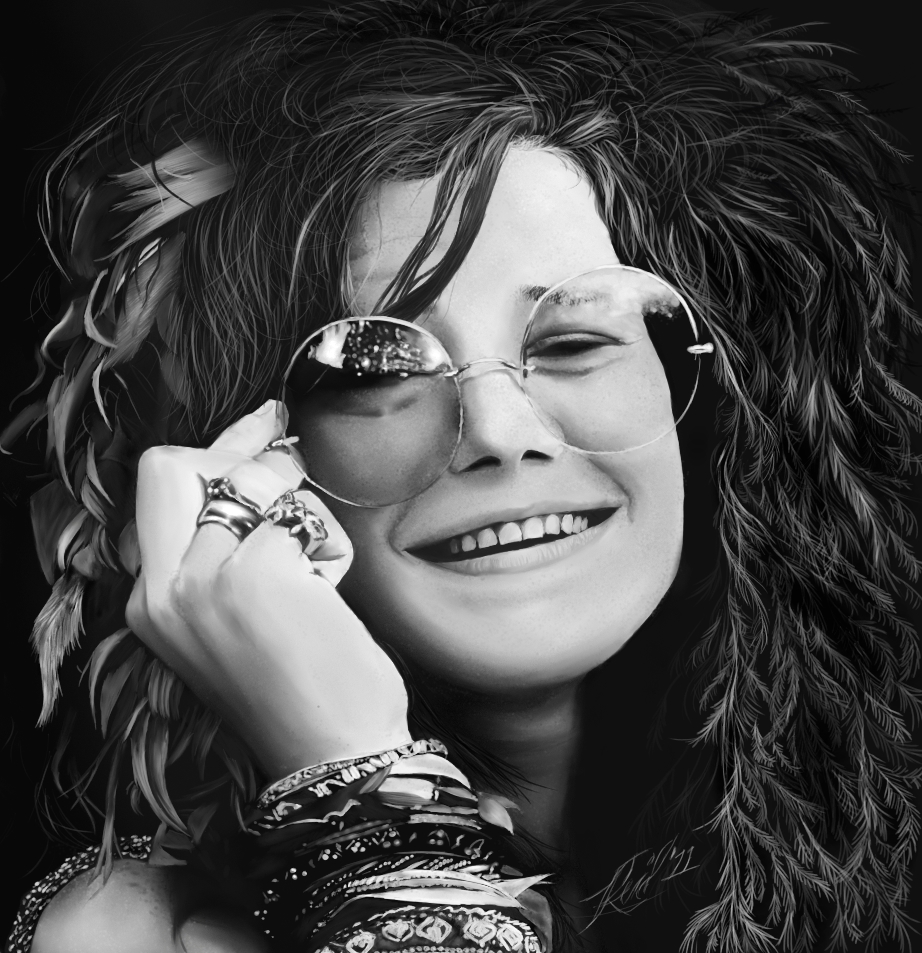
Photo: Still searching for credit
I just discovered Janis Joplin. It only took me 40 years and three Dick Cavett CD’s to realize what a comet she was.
My four year old self said she was a bad lady. She took drugs. My dad said so. I thought you were supposed to dismiss people like that, but he couldn’t take his eyes off her. That was suspect to me on many levels. I mean, she was so wild: the hair, the ostrich feathers, the vests, the bad complexion, the raspy scream. Meanwhile, he was so urbane: the glasses, the goatee, the top-of-the-line mechanical pencils, the arch inserts in the lace-up oxfords, the conductor’s baton he raised every time he put on a Beethoven LP.
Dad leaned forward and cupped his hands whenever Janis spoke. The only other time he did that was in meetings with fellow architects, or when Rod Laver had match point. With Janis, Dad made it clear he was listening to another human being. So did Dick. With Raquel Welch, who also appeared on Cavett (with Janis), Dad made it clear he was watching a woman. I could tell by the way he sat back in his recliner to take her in. Dick couldn’t do that. He was obliged to furrow his his brow at her quasi-intellectualisms and keep his eyes up, back straight. Watch it today and, I’m sorry to say, you’ll tolerate Raquel’s mannered replies for about 8 seconds before reverting back to her spectacular thighs. Janis was different. She held some key to life because Dad would shush me whenever I talked over the TV. I learned to hold my questions while she described life on the road, went off on Spiro Agnew or shouted about love with the guys in the Full Tilt Boogie Band.
If Raquel was everything a woman was supposed to be, Janis was not. Newsweek once called her “a volatile vial of nitroglycerin that blew the rock world wide open.” That was the good press (and she read it all). The bad press compared her to Lassie because of the way she panted and caught her breath after every song. That hurt. While Mick Jagger had his pick from a tidal wave of groupies, Janis had to weather being stood up by a string of dates. She connected the dots, from the dog comments to the one-time fiancé who disappeared from her life in her early twenties. And for her entire short life, Janis was haunted by the frat boys at her alma mater, The University of Texas at Austin, who branded her “the ugliest man on campus.” This was in the early sixties when she was starting to make a name for herself singing (bra-less) in clubs.
Later, in almost every press interview she gave, Janis tried to diffuse aggressive or mean-spirited reporters by explaining, “Everyone wants to be liked. I’m no different.” But it was impossible to ignore how against type she went. No one could imagine Janis wearing oven mitts. Or pushing a “reel” mower in capri pants. Or doing a French striptease — all typical housewife stuff back then. Then again, it was just as hard to imagine Raquel doing any of that, unless it was a domestic goddess shoot for a men’s magazine, which she must have agreed to at some point.
The funny thing is Janis and Raquel sought each other out at industry parties, as each made clear on Cavett’s stage. Janis didn’t dismiss Raquel for her glamour and Raquel didn’t dismiss Janis for her hard-living ways. The beatnik and the sex bomb traded stories about their lives. At the opening party for the film, Myra Breckinridge, Janis blew smoke in Welch’s teased hair and said she’d been asked to take part in an upcoming film. “Oh yeah? What part?” asked Welch. “I don’t know, yet,” said Joplin,” but it won’t be a virgin. I’m not that good an actress.” They both laughed. When Welch retold that story to Cavett’s audience, the ensuing laugh made Joplin shrug.
What’s touching about the dynamic between these two women is the way Janis patiently extracted meaning from Welch’s overly ornate way of speaking (she’s still talking that way with a lot of, “Yes, well you know …” and “In a manner of speaking…” ). This was especially true during one conversation they had about the polarization of the political left and right [in 1970], and the virtues of compromise versus patiently listening to the other side. Welch stood for compromise, Joplin believed in active listening. Cavett and the other guests (newsman Chet Huntley and screen legend Douglas Fairbanks Jr.) were forced to watch this rally in silence. The press framed it differently, of course, saying that the two “went at each other” on the Dick Cavett Show. They did go at it, but not like two cats but as comrades earnestly trying to interpret the news and events of the day. Cavett never stopped being fascinated by Joplin.
“Why is it there aren’t many of you super star rock ladies?” Cavett asked Joplin, which made her squeeze out a raspy giggle. “There’s Mama Cass, maybe. And Gracie Slick. But they just aren’t like you. I know a lot of ladies sing, but you’re not in the same category with Kate Smith.”
“It seems so natural to me,” said Joplin. “But it’s not feminine, what I do. I mean to get out and really get into the music and get to the bottom of the music instead of floating on the top where most chick singers do. They ‘woo, woo, woo’ on top of the melody instead of getting under it and into the feeling of the music. We did Europe last month and scared them to death.”
When asked, Janis could think of only one other singer who got to the bottom of a song: Tina Turner.
“Who?” asked Cavett [this was 1969. July 18 to be exact].
“Tina Turner.”
“I haven’t heard of her.”
“You will. She’s a fantastic singer, a great dancer,” said Joplin, reinforcing Turner’s hipness with the snap of both fingers. “A lot of people don’t know who she is. It’s too bad. She sings with the Ike and Tina Turner Review. Ike is her husband and band leader, and Tina’s the show.”
“Come by some night, Tina,” Cavett said looking right into the camera before breaking for a commercial from Bulova watches.
I could barely watch Janis’s last appearance on the Dick Cavett show (August 3, 1970). She was so drunk and stoned she failed to carry on a conversation with him. The thoughtful exchanges were gone. The audience never saw the two tumblers of Southern Comfort behind Janis’s chair. But they did see the styrofoam cup of “coffee” (Southern Comfort) she carried on stage, and the cigarette dangling from her lips. She was still sucking back on that cigarette at the mic, half a second before she broke into “Half Moon” and “My Baby.” Two months later, on October 5, 1970, Janis was dead. Cavett remembers hearing the news while he was standing in his kitchen listening to the radio. “For whatever reason, she liked doing my show,” he recalled in 2005. Cavett was grateful he helped create a record of her when she was very much alive. “She was a splendid soul,” he said. “Good hearted, energetic and she’d read Edith Wharton.” Daddy, you were right.
A Night With Janis Joplin is currently in previews on Broadway.
Canadian Originals
September 14, 2013
David Livingstone is a one-and-only kind of guy. The former editor-in-Chief of Elm Street, The Look and now Men’s FASHION, David has always approached style with a cultural historian’s sense of time and place and a rapier wit that could easily hold court with the likes of Fran Lebowitz or Truman Capote.
This was my Saturday smile, courtesy of the folks at MacKay & Co. Ladies and gents, I present you David Livingstone:
Demagogue Pinups
September 13, 2013
Several leaders have been caught by the paparazzi with their shirts off. But we doubt Barack Obama was pulling a John Kennedy Jr. when he was photographed topless on the beach while vacationing in Hawaii. Not when he wears mom jeans (undoubtedly sourced by the Secret Service, not Michelle).
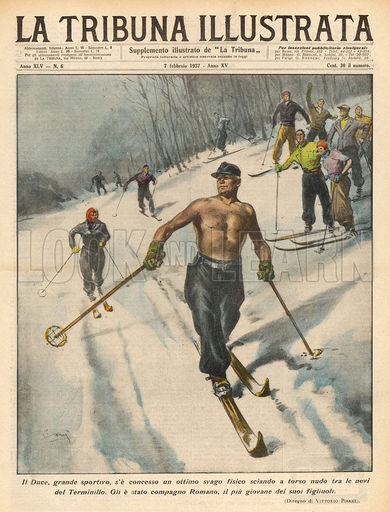
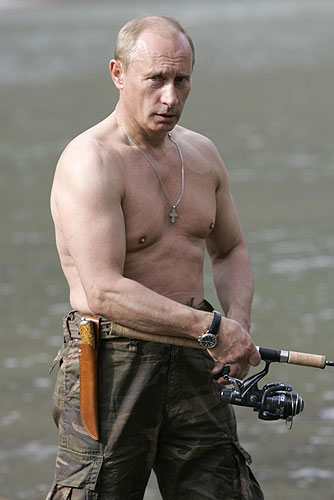
Then there are those (Mussolini) who go skiing topless in the Alps or hunting bare-chested in Siberia (Putin). And while we know two is not a trend (that takes three, silly), one hopes Obama and his team of advisors are connecting the historical dots.
In worlds where violence, misogyny and bigotry are encouraged, so are displays of physical prowess, particularly when the head of that regime knows everyone is looking.
Eew
Neverending story
August 23, 2013
Good looks are great. Even helpful. But when a brainy CEO agrees to be photographed like a mannequin thrown to the ground, it’s an insult to women and the men who admire them.
Would Mark Zuckerberg pose like this for GQ? Exactly.

Yahoo CEO Marissa Mayer posing for Vogue’s September issue.
Industry news
August 12, 2013
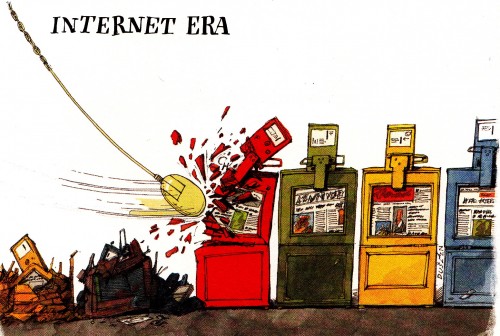
Two quotes about media stood out for me last week. Here’s the first:
“We’re not ever going to return to a stable status quo where editors know where their audience is and publishers know where their revenue stream is. We’re in an era of non-stop innovation and constant turmoil. [Don’t expect] any kind of settled new order.”
John F. Harris said this on CBS’s Face the Nation on Sunday. Harris, who co-founded Politico.com in 2006 after 20 years as a reporter with the Washington Post, was on the show to discuss the meaning of Jeff Bezos’s purchase of the Post.
While he didn’t say it, Harris’s web efforts have been largely credited with ending the Post’s dominance in the political arena. But that doesn’t bother me; seeing one organization overtake another isn’t troubling, it’s inevitable. But the thought of living in a state of “constant turmoil” does bother me. That’s when this story got personal.
The second quote is from editor Tina Brown who gallantly tried to steer a merger between the Daily Beast.com and Newsweek Magazine. We learned last week that it failed and that Newsweek is for sale again. Barry Diller, who put down half the financing for the merger, publicly admitted the end was near when he said last Spring: “I wish I hadn’t bought Newsweek. It was a mistake.” What’s more, the attempt to save Newsweek was “stupid.” The fate of The Daily Beast is also in question. I suspect the site won’t be missed if it drops off the landscape.
Loath to admit defeat, Brown, the much celebrated former editor of Vanity Fair and The New Yorker, let down her defences just once when she said last week:
“It doesn’t matter how talented you are right now. You used to be judged for your performance, but now it doesn’t matter what you do.”
That may be true. But what this quote really reveals is just how out of her depth Brown is. Knowing that your job pedigree means nothing any more is a very tough pill to swallow. The landscape Brown is operating in now may as well be Mars. That’s why fresh energy is so crucial at this stage of the media evolution.
But what happens when digital natives, the best and brightest of Gen Y, can’t even stand up to the “non-stop innovation and constant turmoil” Harris characterized so well? I’m witnessing Y’s in media dropping from our ranks after gunning to get in with five internships under their belt, multiple blogs to their credit and tons of cheerleading from family and friends. I didn’t see it coming when one especially bright light announced on Facebook last week: “It’s official. I just resigned from my magazine job. It’s off to teachers college I go!”
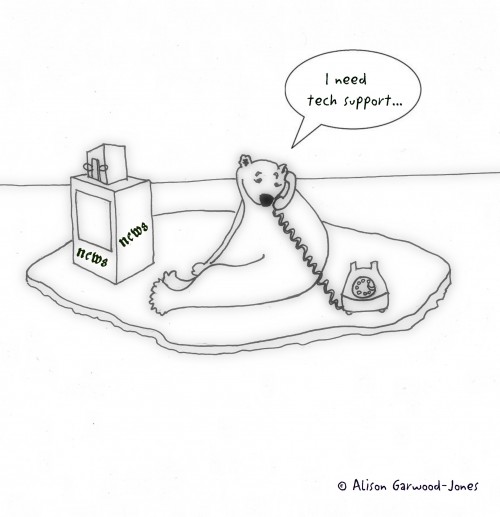
If, indeed, the turmoil doesn’t let up — and each week burps up some fresh hell in the form of layoffs, mergers, deaths, exploitative business models and unsustainable pacing — the only way to survive in media if you don’t want to get into teaching or PR is to skim the edges of the industry and avoid the eye of the storm. It’s a total shit show in there, where old and new are duking it out. Being on the inside promises certain swift death to sensitive writer types (like me).
In the suburbs of Freelance Nation you can take what’s thrown at you in the form of print and digital assignments and study the new world order up and down, far away from the frantic meetings. The answer, I think, will come from the sidelines where solitude feeds innovation and overhead is still hovering around zero.
The meaning of “is”
August 3, 2013
This one’s for the ladies. It’s about all those conversations with men that make you go, “Huh?”
True story: a male philosophy professor makes unwanted passes at a female graduate student, sending her innuendo-filled texts and e-mails. She calls him on it (even shows her boyfriend the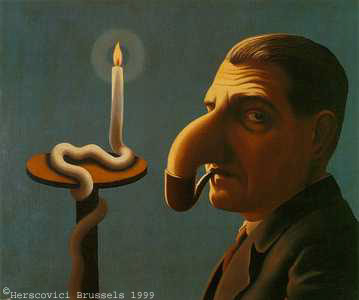 evidence). The professor refutes her interpretation of events, saying that proper understanding of their exchanges depends on a distinction between “logical implication and conversational implicature.” Exactly.
Rationalizations like these date back to Socrates and are largely responsible for the dearth of women teaching philosophy at the post-graduate level. Debating the Big Issues (life, death) share equal space, it seems, with willful distortions of the definition of harassment.
Women make up less than 20 percent of the faculty in philosophy departments in the U.S. and some say it’s because the men encourage a debate culture that alternates between face-to-face intellectual thug fests and obfuscations so slippery it’s laughable. The motivations behind the traditional practice of philosophy are getting more and more transparent as women speak up and assert their point of view.
The parsing reached its entertaining best, you’ll recall, with a guy most of us female humanists like — William Jefferson Clinton. His answer to the question, “Is there anything going on between you and Monica Lewinsky?” is your Saturday morning funny:
It depends on what the meaning of the word ‘is’ is. If the–if he–if ‘is’ means is and never has been, that is not–that is one thing. If it means there is none, that was a completely true statement …
Image: René Magritte, The Philosopher’s Lamp (1936)
The Burka Avenger
August 2, 2013
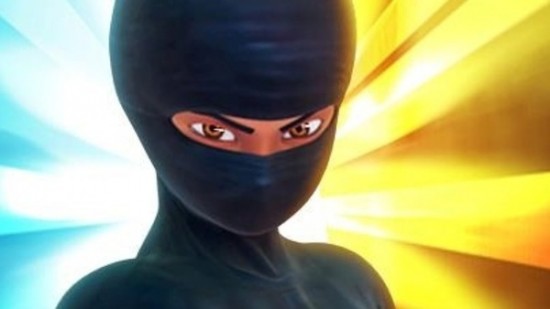
When Pakistani pop star Aaron Haroon read about girls schools in his country being evacuated and shuttered by extremists, he decided to take action.
He assembled a team of digital artists and editors in Islamabad (mostly men, but clearly good ones) to create a new superhero who is underscoring just how lame Disney’s Western princesses are. Dora the Explorer is the lone exception, and now she has an ally.
By day she’s Jiya, a mild-mannered Pakistani school teacher who opts not to cover her hair or face. Just by teaching and moving through life bare-faced, Jiya is already courageous and we haven’t even got to her alter ego yet.
In the face of evil and injustice, Jiya turns into The Burka Avenger. She wears the burka like batman sports his black leathery wings and mask, and throws quill-tipped pens like darts. She saves most of her strength, though, to clomp the enemy (twisty mustachioed Taliban members) over the head with books and, hopefully, knock some sense into them.
I can think of no occasion when the burka is a symbol of strength, freedom or hope — except in this case. Here Haroon has appropriated the Muslim symbol of oppression and turned it into an emblem of strength. This is not a justification for the burka, but it certainly turns its meaning on its head.
May the force be with Jiya and Malala Yousafzai. And may the pen be mightier than the sword someday sooner than later.