Alison Garwood Jones

From the vaults

April 9, 2010

p15-corn_1b

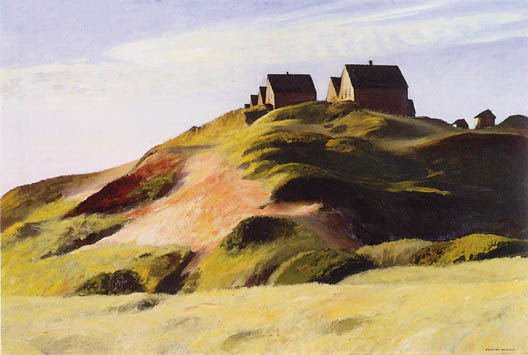
I like hills. Looking at them. Driving over them. Running down them. And sitting on them. I’ve left my footprints in the hills of Ireland and southern England, British Columbia and Italy. I even crossed a field similar to the one pictured above from my favourite Edward Hopper painting, Corn Hill (Truro, Cape Cod). Last December I went down to San Antonio, in part, so I could stand in silent communion in front of the painting in the McNay Art Museum.

DSC00869

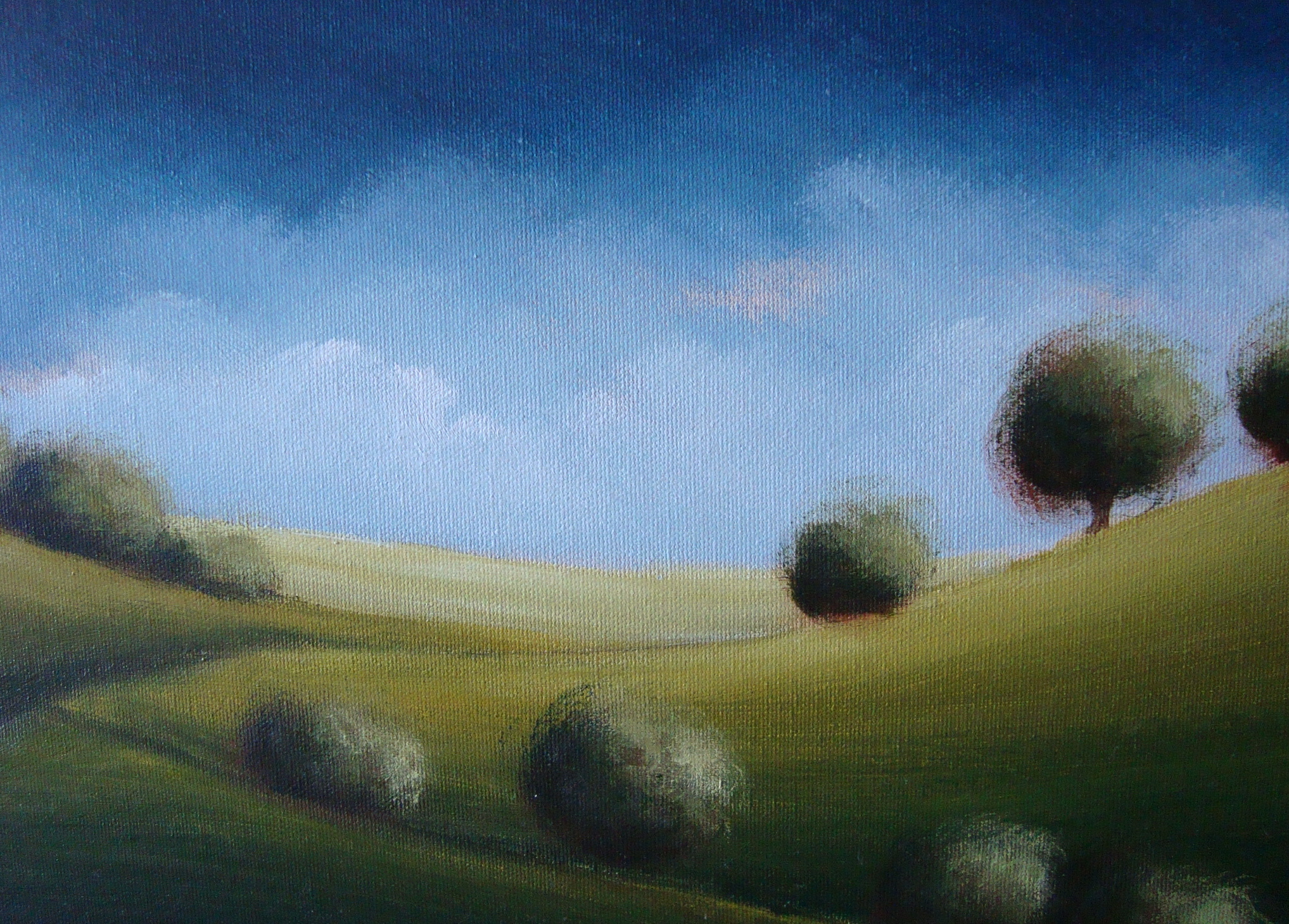
Zigzagging up and down the aisles of Toronto’s One of a Kind Show a few years ago, I came face-to-face with the hill country paintings of Michele Rose,  an Oakville artist. Rose’s “Summer Morn” (above)  now hangs above my desk. It reminds me of the many times my dad and I navigated the twists and turns of the Sussex countryside (en route to visit the rellies) in our sporty rented compact.

DSC00873

I thought you’d appreciate a detail.

DSC00875

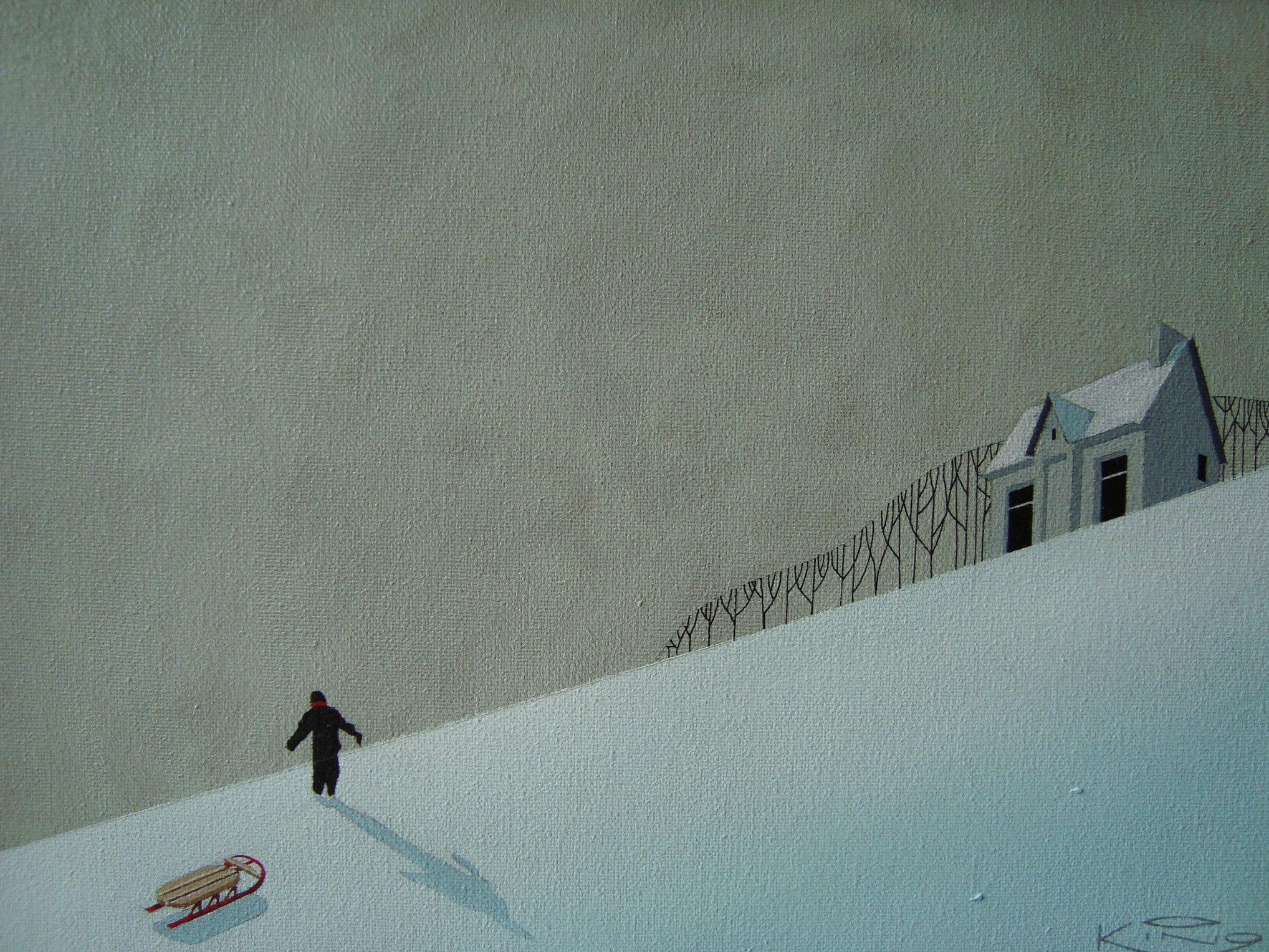
Here’s the last hill painting I’m going to show you before we break for the weekend. It’s by the Ottawa artist Andrew King, who used to be a cartoonist for the Ottawa Citizen. This canvas, also on my wall, is entitled Dinner Call. I bought it because, as kids, the same wooden sled hung in our garage. Also, whether it was winter or summer, my mum used to fling open the back door and holler at my brothers and me to come inside for dinner or our bath. The whole neighbourhood knew when she was cracking open the Mr. Bubble.

Let’s fade out with Cat Stevens.

Comment on this post »

In conversation with Bruce Mau

April 7, 2010

DSC_5191 Colour final-1 Photo: Dave Gillespie

I was feeling defeated the day I spoke to Bruce Mau, the Sudbury-born, world-renowned designer/thought leader. I called Mau at his Chicago studio back in January to talk about the environmental movement and to hear his ideas about design in a world without oil. We chatted a few days before he arrived in Toronto to speak at a conference on this topic at the Interior Design Show (I covered the conference for This Magazine).

That day, my belief in human potential was on the downswing, and Mau sensed it.  Blame Copenhagen. This was a few weeks after the missed opportunities at the Climate Summit where, according to Rick Mercer, Canada’s Jon Stewart, our prime minister hid in his hotel room the whole time, living on club sandwiches.

When I picked up the phone and dialed Mau’s number I was thinking that our use of fossil fuels was as widespread as a giant banyan tree whose roots had circled the planet to point of strangulation (OK, I have a fertile and metaphorical imagination). An earlier conversation with economist Anita McGahan, speaking from her office at the Rotman School of Management at the University of Toronto, was a sober reminder of the extent of our dependence (my dependence) on petrochemicals.

“Look around in the room you’re sitting in,” said Prof. McGahan, who teaches a course on “The End of Oil.” “Your carpets, the paint on your walls, the fire extinguisher in your kitchen, the water bottle on your desk — all are derived from oil. So are the fillings in your teeth, your eyeglasses, your clothes, your computer, your iPhone and anything in the room made of plastic…” Her list didn’t end there. “Our very infrastructure is petroleum-dependent, including our telecommunications, our water sewage systems and our agricultural industry, since petroleum-based fertilizers are juicing the agricultural productivity of the world.”

What McGahan said was fascinating. Still, I came away from our conversation feeling like separating my garbage was as impactful as throwing a deck chair off the Queen Mary.

Even if human nature weren’t so resistant to change, how could it when we’re this coated in plastic?

Enter Bruce Mau. I’m glad he exists. He has to be the most worldly (forgive me, Mr. Mau) “motivational speaker” on the planet.  Not to mention the most playful, quoting mots justes from sources as varied as Frank Gehry to Dr. Seuss. Talking to Mau, I felt challenged, perplexed and exhilarated, like I’d just experienced an IMAX screening of the earth shot up close then viewed from space astride a comet. Simply put, Mau has this ability to galvanize your belief in the possibility of change.

Spoiler alert: In this interview, Mau didn’t give me a definitive answer to our environmental woes, so don’t go searching for it. His example inspires us all to innovate our way towards new ways of living.

Q: Are we ready for the cost and sacrifice of a sustainable economy?

Bruce Mau: Actually, that’s the wrong way to start this conversation [laughs]. Journalists are always framing it that way. So long as we articulate sustainability negatively, people will think, “Hey, I’m not up for that.” This is not about cost and sacrifice, it’s about investment and opportunity.

You’re such an optimist!

Well, these are exciting times! We’re living in an intensive period of invention right now, akin to 1900 when the idea of pairing a motor and a wheel was new and exciting. There’s a real flourishing of the entrepreneurial spirit happening and it’s akin to the excitement a century ago when we were embracing a lot of new technology.

But then optimism turned to concern.

Yeah, at the end of the twentieth century we realized we have a whole new set of problems because of the way we defined the car. We need to redesign it [the car, and a lot of other things]. I like to frame it this way: the problems we have right now are problems of success, not failure. The car is not a problem because it failed, it’s a problem because it succeeded.

But we all need to go about our day. No one wants to be lectured about changing their habits.

Right, telling someone to get out of their car and only take public transportation won’t work. But seducing them with good design just might. We need to embarrass the old [oil guzzling] way of doing things by out-designing it with sustainable alternatives.

Do we have low design expectations for sustainable objects?

Absolutely! One area where we’ve failed in the environmental movement is in understanding how important aesthetics is to success. I don’t believe that a sustainable future will be uglier than an unsustainable one. I don’t believe that we can succeed in sustainability without making it more beautiful than the stupid way. But, again, a big problem we face in the environmental movement is that we’ve articulated our challenges negatively. What we really should be saying is: we’re going to use design to make the coolest new car that’s sustainable and more beautiful than any car you’ve ever seen. The Tesla is an electric car that blows away the Ferrari in terms of design, speed and performance, and it’s practically silent to operate. That’s how we’re going to win!

So what’s holding us back, then? Is it price?

Nothing. Tesla has a waiting list a mile long. General Motors didn’t get the memo. Having said that, I think people view our progress as way too slow. To some degree, that’s true. New plastics are being developed that don’t come from oil and it seems like it’s taking so long to implement them. But in the grand scheme of history, these changes are happening incredibly fast. The leap from books to cars to iPhones came about in a blink of an eye. We know we can do things, but it takes time to transform industrial structures.

OK, so where do we go from here?

It’s critical that we recognize and support the power we have as individuals. When you think about the tools we have at our disposal, it’s amazing. For centuries, kings and queens didn’t have access to the mobility and communications we all have now. My father was a miner in Sudbury. Had I been born fifty years earlier, I wouldn’t be contributing what I’m capable of. Today we’re connecting with one another across cultures, languages, religions and national boundaries. Social media and the internet are playing a big part in distributing power. Wrap your head around this: we’re doubling our capacity to move information every twelve months. That means we’re doubling the double. It’s not like we’re adding two times, we’re multiplying two times. That means we’re doubling our capacity to change the world. Over a twenty year period, we’ll increase our capacity a million-fold.

Philanthropy has been changing to reflect, as you say, the power of the individual. I’m thinking of cell phone distribution programs in the developing world and one laptop per child.

Exactly. One of the roles of philanthropy is to support this tool distribution. It’s no longer about gifts falling from the sky, it’s about helping people understand and experience their own power and building a capacity internal to the culture. Building a culture of capacity is, to a large extent, psychological. So much of it is understanding, I have the tools to do this. I have the freedom.

Do you think emerging superpowers, like India, understand the importance of “building a capacity internal to the culture” better than Canada or the US?

I went to a Red Hat Conference, recently. It was an open source software conference. The head of the India Institute of Technology took my aside and said, “You guys have no idea what open source means. For you, open source means changing your service provider.” For him, it means putting tools in the hands of 500 million kids for free. We’re living in a revolution and we’re not conscious of it because it’s so integrated. My studio is working with a lot of companies that are being transformed by these possibilities. Every day, media companies wake up and there’s a new competitor. We’re working with companies where their entire history is 10 years and the average tenure of an employee is five months. I wouldn’t be surprised if something is being developed in a dorm room right now that will be worth 2 billion dollars by the end of next year.

Thank you!

You’re welcome!

Comment on this post »

It’s SO hard to be interesting

March 31, 2010

Comment on this post »

Day traders: then and now

March 28, 2010

THEN (ca.1986-2008)

Day-traders

NOW

28trader_CA0-sfSpan

Four blog posts down, on March 19th,  I looked at the male-dominated culture of day trading.

After the hard lessons of September 2008 (September sure has proven to be a calamitous month, hasn’t it?), I wondered how and if we can change the recklessness of this species of capitalists?

“Do you put each trader in a single enclosed office space away from his buddies?” I asked.  I said that because researchers at the University of California published a study in March 2008 that found that men in group situations, like trading floors, are more likely to engage in risky decision making because they get caught up in issues of relative social status and dominance.

Well, I think I got an answer — or, at least, part of it — on my doorstep this morning. According to a front page story by David Segal in the business section of today’s New York Times, the Great Recession has given rise to a more mellow trader, while virtual trading is slowly starting to replace frenetic trading floors.

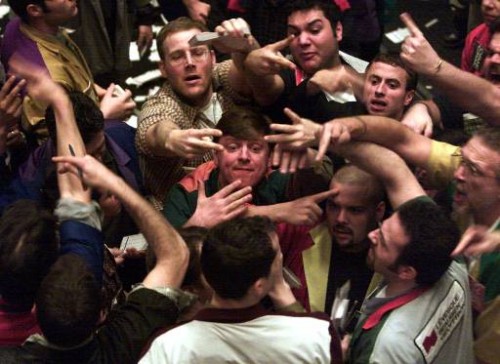
“You expect [all traders] to be revved up and antsy,” Segal points out. After all, the old way, summed up by the picture at the very top of this post, was a mosh pit of testosterone. “Remember the day traders?” asks Segal in the killer opening paragraph to his article. “They were hard to miss during the tech-stock mania a decade ago, when the NASDAQ seemed like a casino built by morons and a chimp with darts could pick winners.”

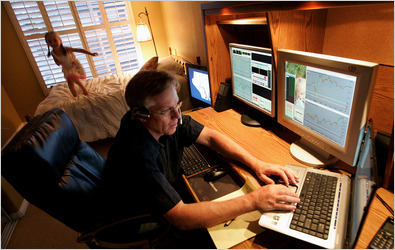
The Great Recession has sent many a day trader back to the comfort of his own home (I say “his” because they’re still almost all guys). The Red Bulls, the chest bumping, the swearing and the occasional spontaneous fist fights (à la the NHL) have been replaced by the hum of refrigerators, kids playing and dogs barking at the mail man, as evidenced in the second photograph by Times shutterbug, Sandy Huffaker.

The tone these home-based traders set, says Segal, is more akin to “members of a mellow Southern California rock band that split up 15 years ago. The most agitated [they] get while trading online is the occasional ‘goddangit.'”

These guys are a part of the new frontier in online trading. They use all the latest crowd-sourcing tools available on the internet: You Tube, Twitter and GotoMeeting, a Web conferencing service. Because trust in institutional investors (the chimps with the darts) is at an all time low, investors are starting to look elsewhere for answers, according to Segal. “[The old-style trader] nearly blew us all up with leverage,” says Howard Linzdon, co-founder of StockTwits, in an interview with the author.

That’s not to say that people aren’t hiring professionals to manage their investment portfolios. They are. Who has the time or the knowledge to do it all themselves? I sure don’t. More people, though, are rejecting the Gordon Gekkos and turning to sites managed by home-based traders, sites that believe in exposing the inner workings of trading transactions.

The Times article profiles a couple of guys who work for Today Trader (todaytrader.com), a two-year old internet venture that puts a premium on transparency. “Here is your chance to look over the ‘virtual shoulder’ of experienced traders executing LIVE stock trades,” says the website.” Watch and listen in REAL TIME using desktop sharing software and Internet audio as we execute trades throughout the day. A new way to learn how to Day Trade and Swing Trade.” It’s the latter-day equivalent of tuning in your transistor radio to listen to truck drivers bantering back and forth on their CB’s.

While this new breed of trader isn’t taking over from the mega institutions, like Charles Schwab, they are evidence of a shift in our culture, one brought about by the intersection of a falling economy and an ascending digital culture.

The partners at Today Trader, Steve Gomez and Andy Linloff (pictured above with his daughter jumping on the bed behind him), spend much of their day fielding questions posted in their chat room. Their Zen responses should convince you that change is afoot.

Segal describes one subscriber, Rick, who asks Gomez, “What do you guys do to stop kicking yourself (emotionally) about missed opportunity?” Mr. Gomez leans into his keyboard and taps out a response. “Not looking back, not kicking yourself for not catching the whole move. You’re never going to be perfect. Nobody is going to be perfect. … Our down days are every bit as instructive as our ups.”

Trends come and go. Let’s see if this one sticks.

Comment on this post »

Je ne suis pas flattée

March 24, 2010

SketchesDrawing

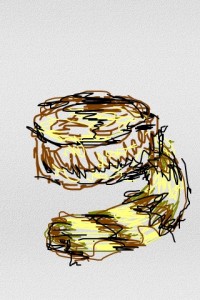
When French poet Jean Cocteau told Coco Chanel “you think like a man,” mad, she countered by grabbing a silk ribbon and tying it around her head (bow forward). “Chanel may have believed she was equal to any man,” writes Janet Wallach, “but she never confused the two sexes. Parity was important, but femininity was an imperative.”

Comment on this post »

R.I.P. Fess Parker

March 22, 2010

SketchesDrawing-1

Comment on this post »

Witnessing history is good for our health

March 22, 2010

SketchesDrawing

Comment on this post »

This one and only life

March 8, 2010

IMG_0045Beer turns lots of people into citizen philosophers, including me.

I was nursing a Guinness the other day with my friend, Ajeet, when, apropos of nothing, he sighed and announced, “Well, I’ve fulfilled my biological destiny. I’ve fathered a boy and a girl.” He didn’t elaborate, although I gave him the space to. All I remember is, the “dot, dot, dot” at the end of his statement sounded like it was turned all the way up to eleven.

Paleolithic Man was driven by the instinct to replicate himself (when he wasn’t outsmarting death). What choice did he have when saber-toothed tigers were crouching around every corner and the weather constantly threatened to wipe out his food options? Today’s comforts and conveniences, however, have relieved us of much of the physical struggle to survive, at least in the West. With snacks and beverages a given, we’ve turned our questing spirit over to identifying the purpose of life beyond survival (meaning: we stare into space and hoppy drinks a lot more and stay up all night having life-dissecting conversations).

To illustrate this — and this is totally unscientific — look at the number of breathless shout outs in the Twitter stream coming from travelers determined to share their sightings of the sun burning its way through the morning mist in India, or sinking behind the horizon in Africa. All, in my mind, confirm our need to reach for something indefinably greater. In my own romantic/existential hazes, I’ve felt an inexplicable urgency to draw and share the colours of the sky over Toronto created with a swirl of my finger across my iPhone screen. I’d say this makes me part of the growing contingent of smart phone owners who are using technology to bridge time and space and join forces with the universe.

Writer and poet, Edith Cobb, put it best when she said, “The need to extend the self in time and space — the need to create in order to live, to breathe, and to be — precedes, indeed, of necessity exceeds, the need for self-reproduction as a personal survival function.” And while this is not a quote fest, let me point out something else the singer/songwriter Judy Collins said to her friend, Gloria Steinem, when GS was weathering a case of the mean reds. Both knew that art was not some rarefied pursuit. “We have five senses because we’re supposed to use them,” explained Collins. “I think we each come out of the womb with some unique way of looking at the world, and if we don’t express it, we lose faith in ourselves.”

My main man Jeremy Rifkin, author of The Empathic Civilization, has something to say about this too. Rifkin sees a new role for the internet as a platform for collectively boosting our faith in ourselves and each other, and he reinforced this in January at a talk he delivered to the employees at Google, captured on YouTube.

Rifkin believes the net has this rare ability to “connect the central nervous system of the human race.” It’s like nothing we’ve ever seen before and it’s changing our consciousness, he says. He wants to see Google getting actively involved in extending our capacity for empathy and social change (especially in the raising of our biosphere consciousness).

I know what he means about connecting the central nervous system. Writing a letter doesn’t feel anything like the prickly rush I sometimes get after I lob my heartfelt ideas and sketches into cyberspace. And while speed is a part of it, it’s really about breadth. Letters are a contained experience (as they should be in certain cases). The net isn’t. There’s something about taking chances with more than one person that we’ve never experienced before, at least at this scale. As Rifkin explains it, the internet is feeding into our innate need to broaden and deepen our relationships and participate in “more expansive communities of meaning.”

The possibilities of the internet to spread empathy also raises new and more hopeful possibilities for re-imagining human nature. The Greed is Good characterization of human nature — born in the eighteenth century and alive today in our constant re-casting of Michael Douglas in his Gordon Gekko role from the movie, Wall Street — is still gospel, as Rifkin points out, but it’s no longer sacrosanct. The record amount of money raised for Haiti through Twitter made us rethink ourselves and our potential.

Indeed, Michael Douglas’s own personal relationships, especially the one with his son, have made him do a big re-think about his choices and his nature. His life shows how one father’s self-serving behaviour made the people closest to him lose faith in themselves. I get exactly the opposite feeling from Jeff Bridges’ relationship with his dad, Lloyd (wasn’t that a great Oscar tribute!). The Bridges family was (and is)  all about expressing and extending the best we have to offer.

I feel that way too about my friend Ajeet and his kids. So much for “dot, dot, dot.”

*Ajeet is not my friend’s real name.

Comment on this post »

Best before dates

March 4, 2010

Anne M - 2007.jpgAnne Mroczkowski has thought about it, but gender is one rabbit hole she doesn’t want to go down, at least not in public.

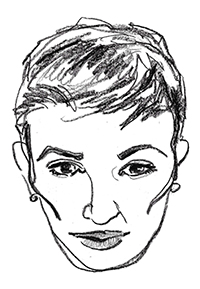

Last month, the award-winning journalist and co-host of Toronto’s CityNews at Six on City TV was fired. She was one of about 35 staffers handed their walking papers and one of seven on air reporters (six women and one a man) to go “poof” in these tough economic times. Mroczkowski’s longtime co-host, Gord Martineau, is now manning the ship on his own.

Two weeks ago when the CBC’s Anna Maria Tremonti sat down with Mroczkowski to talk about her 23-year career at City and ask what’s next, each tensed up over the issues of age and gender. Both women are highly accomplished, whip-smart and gracious, so the idea that one of them may be banging up against the invisibility curse so often bestowed upon women at a certain stage in their life and careers is downright deflating. For all of us. All those years of hard work and for what? The only thing Mroczkowski had to say was that she didn’t think she’d be working in front of the camera again.

Film directors Nora Ephron (Julie & Julia) and Nancy Meyers (As Good As It Gets and It’s Complicated) have thought about this too and are determined to give the growing contingent of accomplished, but invisible, women a place to go (at least in film). Their entertaining pictures depict women in their fifties and sixties with great jobs and satisfying sex lives, and no one goes, “Eeww,” or looks away (at least not in the mixed theatre crowds I’ve been in).

I should mention, this is hard to discuss in a public forum. I’m not some tough-minded broad who couldn’t give a shit about what others think of her. A side of me would still like people to think birds hang my laundry. But I’ll be that age some day and I hope I’m going to a good place. That’s why I’m asking questions now.

Of course, the challenge for women who ask a lot of questions (every woman I know) is that our searching dispositions and bald observations about life’s double standards can often be labelled as griping. So we make choices: the easy one is to keep quiet so everyone can hear the sound of the birds chirping; the hard one is to say what you think and weather the reaction.

That second option takes courage. Sometimes when I say what’s on my mind, the saried matchmakers in the Bollywood blockbusters I’ve seen invade my dreams at night (they will tonight, after this post). They dance and trill and issue warnings like, “Don’t say anything too intelligent,” in between all their wavy hand movements.

I can’t help but wonder what sort of fall-out this kind of behaviour will have on me personally in the long run? I should add, when I’m in full-on questioning mode it’s hard not to think of those movies where the feisty female lead has to die in the end because it’s too hard for the director and producers (mostly suits) to imagine what sort of life a woman could lead after she’s asserted herself. (Help me here, people, I’m trying to come up with an example I can link to. I know they exist; I’ve read enough Johanna Schneller film reviews [love her!] to know about this yet-to-be-named sub-category of chick flicks).

That’s why we need more directors and producers (women and men) telling cradle-to-grave stories of women’s lives on the big and small screens. No more of this stopping a quarter of the way through with a fairy tale wedding or a weepy cancer diagnosis. If this were to happen — if women could see all of the decades of their lives chronicled in technicolour — I predict the sale of wrinkle creams would go down because women wouldn’t have to rely as heavily on the promise of cosmetics to avoid being ignored. Aging wouldn’t be the stressor we’re currently shown and told that it is if ordinary women’s entire lives were honoured more publicly. After all, most of us keep living past 25, and then go on to outlive the men in our lives. Dove addressed this imbalance in their Campaign For Real Beauty, but, still, it left only a small ding on our culture.

Let me wind down this post by saying, I think we’re at a point in history when the great psycho-cultural question isn’t Freud’s, What do women want? We’re past that. The question du jour is, rather, What do we want from women? And women of all ages.

In a few short decades (and after centuries of deliberately under-performing), women in the West have shown en masse what they’re capable of in operating theatres, court rooms, newsrooms and beyond. But, apart from a few exceptions — like Meyers and Ephron, More Magazine and Zoomer Magazinepop culture persists in turning away from us the further along we are in life’s journey.

I’m hoping that the members of the generations who graduated with Anne Mroczkowski and Paula Todd, as well as Hillary Clinton and Margaret Wente, will reject this pattern of disappearance, especially in professions that show women aging before our eyes. Do we really want to stop looking at and listening to Mroczowski in favour of a recent college grad? If the answer to that is Yes, then how do we change that to a No, not necessarily? What steps does society have to take to open people’s minds and eyes to a new way of looking at women?

The biggest thing I’ve learned since I started this blog last month is that our view of human nature is remarkably flexible (or fickle!). Through the centuries, it has evolved from downright disturbing (we’re all sinners, according to the church; yeah, seething sexual monsters, added Freud) to empathetic and hopeful (remember the “mirror neurons” I described in my post on March 1st?).

If we’re that flexible, I’m thinking we may just be capable of changing our stance on women and aging from one of rejection to full acceptance.

Comment on this post »

The rise of Homo Empathicus

March 1, 2010

I’m adopted and so are my brothers. When I was born I beamed a lot and within weeks was matched with a family. But one of my older brothers spent the first seven months of his life bouncing around in foster care. Five different foster families returned him because he wouldn’t stop crying.

My mother was the first to hold him like she meant it, and that’s when he relaxed and discovered smiling. He was home. My dad told me that.

At the time, Dr. Spock’s Baby and Child Care was every parent’s Bible. Still, I sometimes wonder if Spock’s message was lost on the other families my brother didn’t click with. He encouraged parents to trust their instincts, show empathy and pick up their kids when they were upset. Mum read his book, but only because his research confirmed her take on life.

My dad, in case you’re wondering, didn’t read Spock (this was back when men still wore fedoras and trench coats and women donned aprons without an ironic grin, meaning: their two worlds never crossed). Had he read it, I don’t think he would have thrown a steaming diaper out the nursery window. “I didn’t know where I was supposed to put it,” he admitted years later.  It landed with a thud on the front lawn and my mother retrieved it when she returned home from the supermarket.

But back to my brother’s crying marathon. This was 1964 and there were still a lot of mothers, especially those influenced by know-it-all grandmothers, who adhered to the old school wisdom on child rearing that said too much affection would turn babies into needy, clingy adults. Let’em cry until there are no more tears, they’d say before returning to their euchre hand or Ed Sullivan. I think that happened to my brother, until he found the right family.

This hands-off approach was established in the foundling hospitals that warehoused orphaned and abandoned infants at the turn of the last century. Here fighting germs was more important than nurturing, explains Jeremy Rifkin in The Empathic Civilization. Being a detached and clinical caregiver was a holdover from the 18th century view of human nature: the one that said from the moment we’re born we’re rational and autonomous beings and should be cared for in such a way to ensure we continue to be independent and self-sufficient. My brother balked at this approach to human nature.

Today when we pick up a baby, we’re elated when we can get them to smile at us. Did you see that? we cheer, like we’ve just spotted a shooting star. As a culture, we understand the power of eye contact and touching, so when we reach out to a child it’s as much for us as it is them. But this approach is recent, and it’s largely due to the influence of science.

After centuries of living our lives under the assumption that we’re all sinners, and if not sinners then detached automatons, and if not automatons then self-serving hoarders and pleasure seekers, scientists are now finding that an empathic disposition is embedded in our biology (as it is with several other species of the mammalian kingdom, including monkeys). Biologists talk of “mirror neurons” lighting up in the premotor cortex of the brains of humans and monkeys when we feel empathy for another. This would explain why when one baby cries others in the adjacent cribs chime in, or why when an Olympic skater weeps because she’s thinking of her dead mother, tears spill down our faces too. Our tendency to match behavior is “involuntary” and “automatic,” say the experts, a “primary adaptive function.” (keeners, you can follow up on this in Rifkin, p. 112; he has amazing end notes citing all the recent studies).

But this response wasn’t described as a biological phenomenon until the 1980s, and surely we’ve been crying and caring for oneanother since the dawn of time. Rifkin figures empathy got pushed aside by historians and philosophers with a more bleak view of human nature. For a long time history only focused its lens on the pathology of power, he says. “More often than not [it] was made by the disgruntled and discontented, the angry and rebellious — those interested in exercising authority and exploiting others.” Now, with the encouragement of science we’re shifting our approach and finding kindred spirits among our fellow creatures. “Suddenly, our sense of existential aloneness in the universe is not so extreme.”

Rifkin thinks the deterioration of the environment may be forcing us to change the way we relate to one another (a future blog post, for sure). What researchers are learning about the way we evolve changes our most basic thinking about what it means to be a human being, he says.

It makes you wonder, as Rifkin does, if we really need to be “sending out radio communications to the far reaches of the cosmos in the hopes of finding some form of intelligent and caring life when what we [we’re] desperately seeking already exists and lives among us here on Earth”?

Comment on this post »

error: Content is protected !!