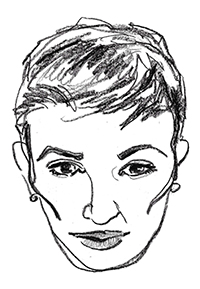
Feline masculinity: Benedict Cumberbatch






March 8, 2014
March 4, 2014
The bodies are buried.
The house is sold.
And the dust has settled.
But not for you.
You keep turning the soil.
You’re digging for worms, not coins,
And sinking further into the soil yourself.
But you’re a writer, you said,
Can’t you see this is material?
At your insistence, I took ownership of the package of bundled letters.
They sat undisturbed in my hall for three years as the leftover Viagra packs slowly expired.
You dropped those in the envelope to make a point about men and marriage,
Then chased your tail even faster.
On the day I finally opened the bulging scripture,
And saw the dedications to one goddess after the next,
My eyes gravitated, instead, to the array of hotel stationary logos.
Design history at my fingertips.
The sight of the word “pining” three times in one paragraph, though,
Made me shut the deck for good.
John Updike might have had a heyday with this story line.
And Gay Talese would have been remiss not to have added it to his sources,
But not today.
That moment of urgent originality has passed.
The shock of the new has died from constant exposure.
Besides, this needs heavy editing.
And I’m not the one to do it.
See it for what it is:
A souvenir from a time
(1960)
When domestic doubt took hold of great minds.
Along with The Pill and Vietnam, this rush of new storytelling
Took regular hits at America’s perfect paint job.
It dinged and keyed us, and crashed our ideals off cliffs and into guard rails.
Literature had finally stopped alternating between lofty treatises and virile adventures.
And homes were opened to air, light and a stream of words.
Over the decades,
The revelations multiplied.
The keyboards of much lesser writers clacked
As they tried to capitalize on this trend.
And the once chunky broth thinned to a dull, watery liquid.
But domesticity was on high boil again in the seventies
When Alice Munro and Mary Pratt elevated dirty dishes to high art.
Even the goings-on in janitorial closets got their due.
But if the subjects weren’t memorable,
The artistry was and is.
The cycle repeated itself.
As it always does.
Soon the zipless fucks and the fish on bicycles
Got papered over by a brand new batch of opportunists.
This time it was female newspaper columnists pressured by tasteless editors
To dedicate their inches to ticking clocks and The Great Size debate.
Looking at our package.
It’s not Updike or Munro.
It’s not even Harlequin,
But it is our reality.
I’ll keep the moons of Jupiter and the caged birds.
I’ll even keep the pompous Bertrand Russell books — and not because they’re first editions —
But for the soft pencil markings mapping one man’s head and heart,
Scribbled at a time when so much was at stake.
Our futures, no less.
But you keep the letters.
I’m putting this rabbit to rest.
February 20, 2014
Dear Jenny:
We’re heartbroken at Fionn’s.
I’m going to miss our life chats at the host stand. We listened hard to each other — sometimes unintentionally missing an incoming guest as we problem solved life’s big questions. We compared our dreams and upbringings: you in Russia, Michigan and Toronto; me in Dundas and Hamilton. You crossed timezones and cultures to get here. I crossed a highway. I admired your family’s chutzpah and how seriously you took being a big sister and a daughter.
Standing at the front, you laid out your goals and voiced your questions. You were in the throes of choosing between nursing and biology. I’d been there too once, only with different subjects. Know that you would have been a stand-out in whatever you chose. Anyone can memorize facts from a textbook, but you cared about people and systems and communities and wanted to be part of a system and a community that made a difference. You did that. You changed our community at Fionn’s for both the staff and the guests. No one missed what a sweet soul you were as you moved across the floor in your sparkly top and ballet flats to get back to your position at the door.
Good people elevate those around them. Thank you, Jenny, for doing that for us.
Your friend,
Alison xo
January 13, 2014

TESTIMONIALS
“An awesome workshop. The best use of my professional time in years.”
~ Jacqueline Kovacs, journalist and former editor in chief of Professionally Speaking magazine
“Just finished a fantastic social media workshop with @AlisonGJ. Head is full! *Highly recommended.”
~ Tweet by Alanna Cavanagh, award-winning illustrator
“Highly recommended. I’m already putting my newfound skills to work.”
~ Ian Wilms, President Terian Group, former chairman, Calgary Police Commission
THE DETAILS
“Social Media Marketing for Indie Entrepreneurs & Corporate Dropouts”: a 3-hour workshop with info-packed how-to slides & videos, plus lots of back and forth discussion about the shifting economy and evolving marketplace we’re all navigating.
WHERE: Fionn MacCool’s Irish Pub, 181 University Ave. at Adelaide, Toronto: I’ve booked a private room so we can take over. Complimentary Coffee. Lunch and bevvies will also be available (but not included in the workshop price)
WHEN: Thursday, February 6, 1-4 pm. Spaces are limited to 10 per class. I plan to keep class sizes small to spend time with each individual’s needs. This won’t just be me presenting, but a chance for each of you to share some of your stories/opinions on social media.
HOW MUCH: $100 + 13% HST = $113/person (e-transfers and personal cheques accepted up to 24 hours before class date).
THIS WORKSHOP IS DESIGNED FOR PEOPLE WHO
• run their own business and want to ramp up their social media efforts (but aren’t sure how or which platforms to focus on).
• who want to start their own business and haven’t, but know social media marketing is key to advertising their idea/wares/services.
• who are generally curious about the marketing landscape and know it is never going back to the old model of PR people and ad men telling us what we should want and when we should want it. Now the power is in our hands. That’s a big responsibility, so what do we do with it?
Among other things, this workshop will profile 5 independent businesses, including my own. I’ll tell the story of how each homegrown business is using and experimenting with social media to get their passion projects/services/wares off the ground. Two are journalists turned recipe bloggers, another are a husband and wife team running a crepe food truck, a third is the head of a company doing adrenaline tourism and the last is a clothing designer who is still working out of her home and cutting fabrics on her dining room table. All of these people have different takes on which platforms seem to be working better for them (i.e. Facebook, Twitter, Pinterest, Instagram, SnapChat, WordPress, YouTube/Vimeo/LinkedIn etc.)
January 6, 2014
Sara Angel is one of Canada’s leading visual arts journalists. Her latest vision, an online art museum, re-imagines Canada to the world through the works of our best painters and photographers. I sat down with Angel last fall to to find out how she coaxed Canada’s top museum directors to finally crack open their vaults and put their collections online. It’s been a longtime coming.
All photos by David Hou; Designed by Stuart Thursby

The best ideas are always the most obvious in hindsight. For Sara Angel, arts journalist, publisher and now Trudeau Doctoral Scholar in the Department of Art at the University of Toronto, her idea was simple: create a go-to website dedicated to Canadian art history, then go live to the nation’s computer screens, tablets and smart phones with a lineup of our most iconic works. Twenty years into the internet, you’d think we’d have this resource by now. But our spotty digital presence gave Angel — a self-described cultural nationalist since her days working the floor at Edwards Books & Art, her parents’ Toronto bookshop — the perfect excuse to invent the job she’d always wanted: re-imagining Canada to the world through our best painters and photographers. “I kept saying to myself, This needs to exist and how can I make it happen?” says Angel, living proof that necessity is still the mother of invention.
The nerve centre of the operation is the Art Canada Institute (ACI), a not-for-profit research organization Angel founded at Massey College, U of T, and affiliated with the Canadian Studies Program at University College. Starting this fall, Angel and her team of ACI writers, all top curators and professors from across the country, will unveil a series of 10 e-books a year on the work and lives of Canadian artists. If you thought Lawren Harris’s icy peaks looked good in person, you won’t believe their visual impact on iPad and smart phone screens. As Angel points out, museums from New York to Amsterdam are finally realizing that giving the public free access to high-res images of their collections is in their best interest — and, besides, they’ll never hold back Google.
In addition to the e-books, ACI plans to publish more in-depth printed monographs (yes, actual books) on artists based on what takes off in the e-book series. It will also curate online and real time exhibitions and symposiums in collaboration with Canadian museums and galleries. And perhaps for the first time ever, secondary schools from Port Alberni to St. John’s may actually start teaching Canadian art history to school children after teachers receive the online art curriculum Angel and her team have pulled together. “The French teach their children about the Impressionists,” says Angel, why can’t we teach ours about Tom Thomson?
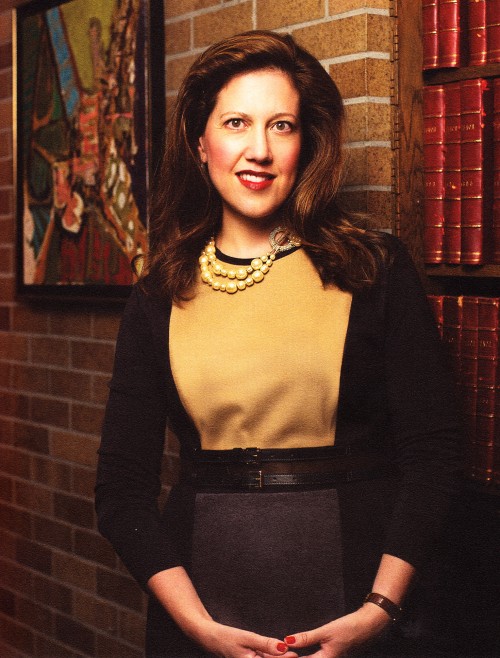 Signing up for a Ph.D after a 20-year career as a publisher, editor and journalist was both a longtime dream and a well-thought out strategy for Angel (above). Only with the proper academic credentials could she gain regular access to archives and vaults she depends on to build her vision. Also, there’s also a nice continuity to having the ACI at Massey College. Governor General Vincent Massey set up the college 50 years ago this year to provide, as he said, “an interface between town and gown.” Angel explains: “He wanted the gowns to bring their best ideas to the town and the world.” But whereas most academics would slip into abstract “art speak” and alienate the masses, Angel plans to hang on to her accessible journalistic voice and encourages others to do the same so they can give the country what forerunners like Pierre Berton managed to achieve in print: cinematic narratives of identity that just happen to be rip-roaring good reads. No slouch herself in the popular history realm, through her imprints Otherwise Editions and Angel Editions Angel has produced and curated runaway best sellers including Canada: Our Century (1999), The Trudeau Albums (2000) and The Museum of Canada: 25 Rooms of Wonder authored by Charlotte Gray (2005).
All are visual eye candy but the last one, in particular, served as the germ for her dream of building an online museum. “Canadian museums,” says Angel, “have yet to use online technology to the best of their ability to promote their own collections, and that’s unbelievable because all of that is possible now.” Angel thinks it’s because museums are still operating on an 18th century model. “The model hasn’t changed since the French Revolution, which is: erect a building, collect the stuff and the people will come. Clearly we’re not living in that sort of world anymore.”
Whereas, at one time, Canadians could be forgiven for their loose sense of community and lack of cultural awareness — this is what happens when you’re a sparse population divided by mountains, prairies, forests and great swaths of frozen desert — the internet has erased those divides and every other excuse we could think up or hide behind (the US). Digital technology is challenging us with an Expo ’67 sense of excitement and futuristic urgency to show up and represent. Directing the online art pavilion is Ms. Sara Angel, not just a boundary pusher, but a boundary eraser.
This article appeared last fall in the magazine, Canadian Fabric.
December 31, 2013
After you lose your parents,
You start to wonder if your family ever existed.
That feeling of being part of a team alters,
Then disintegrates over time.
New alliances form.
Continents and decades are crossed in a valiant search for that next Home.
Siblings become more like old classmates,
People you used to know because time and space brought you together before pulling you apart after graduation.
You turn to photos to review what was.
Paper prints with scalloped edges,
Rounded corners
And double prints.
Past selves and old contexts rush to the foreground,
And pop like firecrackers inside your rib cage.
Mommy and I sure used to hug a lot.
That was a good Christmas (an Easy Bake Oven!)
I swore I’d never throw out those boots.
Or let that friendship lapse.
Other keepsakes (Polaroids) are cracking like old paintings.
So soon?
Memories aren’t supposed to turn to dust this fast.
You start scanning and saving them to the cloud,
Loading the sky with memories,
And hoping loved ones outside the bounds of earth will protect your memories from the ravages of time.
December 27, 2013
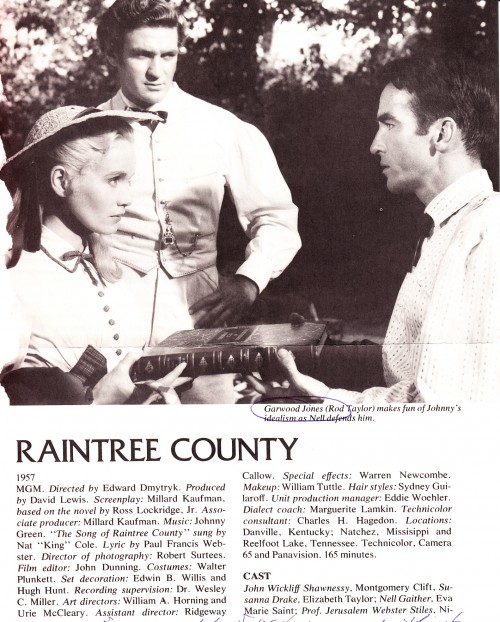
Two weeks ago I opened my mailbox to a cream-coloured envelop the size of a Christmas card and thought it was the leading edge of a swell of holiday greetings sent with a stamp. It was from Chris & Wally, one of my favourite husband & husband duos. These two friends always reach out on statutory holidays and birthdays, and with homemade cards which delights me no end.
As it turns out, a Christmas card from the guys arrived several days after this envelope. This was different. Lifting the flap, I found out my family name had been a character in the novel Raintree County, which hit the big screen in 1957 as a Civil War romance starring Elizabeth Taylor and Montgomery Clift. Rod Taylor played Garwood B. Jones, a sleaze ball Indiana Senator. He’s the tall one standing in the centre in the pic above. For the record: he’s wearing a three-piece heather grey wool suit during a swamp scene (the “Garwood B. Jones Suit” recently sold for $900 on iCollector.com).
So much for going on about the singularity of my family name (you can read about its origins in my last post). This Hollywood reference has never popped up in any of my Google searches, probably because it was buried in the back pages — weighed down, as it were, by that middle initial, “B.” I’m chuffed to bits about it. And I take it Chris was too because rather than photocopying the reference, he ripped the thick page from its binding — you can see the ripped edge on the left margin in the photo at the very top — circled the “Garwood Jones” parts in ballpoint pen, folded it twice and dropped it in the mail.
I’m slightly pained and very touched that the guys would destroy a book for me, but more to the point that they would relinquish a handful of their Monty pics for me. Clift has to be one of the few more tortured than debonair Golden Age actors, other than James Dean, who still pursues gay men in their dreams. I fully understand what a sacrifice this was.
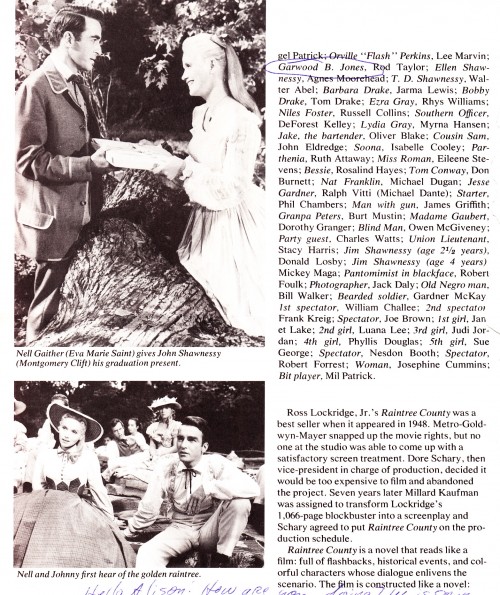
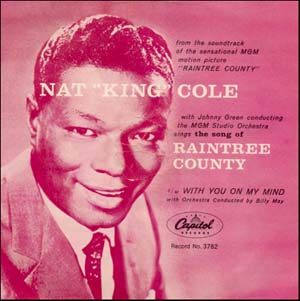
Skimming the novel, Garwood Jones (Taylor) revealed himself to be a greedy and manipulative man who took pleasure in mocking the idealism of Monty’s character, Johnny Shawnessy. That’s Johnny on the right (in the top pic). To the left is the angelic Eva Marie Saint who plays Nell Gaither, Johnny’s childhood sweetheart. Elizabeth Taylor plays the Southern hussy with the inky lashes who steals Shawnessy away right before she goes insane (for that, look down). It gets better: Nat King Cole sang the title song in the movie, a sweet number with harmonica solos reminiscent of “Moon River.” For all you film buffs, Raintree County was the most expensive film in MGM’s history (at that point). It was brought out to rival Gone With The Wind and shot using the new 65 millimeter widescreen process referred to as MGM Camera 65, the same effect used in that 1959 dust kicker, Ben Hur.
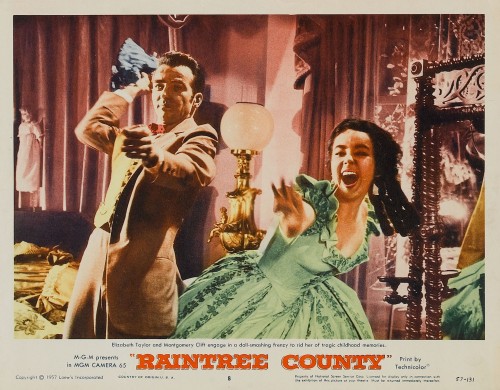
It’s interesting (to me, at least) to hear my name — one I associate with England and Wales and my fraternal grandmother’s determination to see her dead mother’s maiden name live on in history — pronounced with a Midwestern and Southern drawl. Hearing it in this context, I realize it’s tailor-made for a Southerners drawn-out pronunciation. Scarlett O’Hara would have turned my name into a syrupy dish: Ga-a-h-h —wood Jones. And as any genealogy buff will tell you, folks south of the Mason Dixon Line are famous for bestowing a mother’s surname as the Christian name for a first-born son — Beauregard, Harley and Leland are cases in point. I think that may have been the inspiration for the name Garwood in Ross Lockridge’s 1066-page novel Raintree County.
The Garwoods (my Garwoods) hailed from the town of Bury St. Edmunds in Suffolk, England. One of my forebears (an uncle to my fraternal grandmother) ran a vegetable stall in the town’s famed street markets. Every day he delivered a portion of his vegetables to the back door of the luxurious Angel Hotel. So it’s quite possible his carrots ended up on Charles Dickens’ plate. Mr. Dickens was a regular guest at The Angel in the late 1850s and early 1860s during the English leg of his reading tours. Meanwhile, back in America, the fictional Garwood B. Jones kept busy finding ways to escape combat in the Civil War. When Robert E. Lee finally surrendered in 1865, Garwood counted to ten, then ran for a seat in Congress against Shawnessy, Monty’s character. A one-time Republican, Garwood ran on the populist party ticket to increase his chances of winning, a move that drew the ire of Shawnessy. Monty’s natural brooding fed right into his indignation.
Here’s an excerpt of a conversation between the two men from Lockridge’s novel. I include it as a reminder of how human nature repeats itself in contemporary American and Canadian politics. And, most especially, in Toronto politics. Rob Ford has played the part of “The Great Commoner” with great success, giving the people what they want and protecting the interests of the many against the few. What makes an honest capitalist, or an honest politician? Garwood B. Jones thinks he knows:
“How do you do it, Garwood?” Mr. Shawnessy said. “How do you go on playing the part of the Great Commoner?”
“Up there on the rostrum,” the Senator said, “it’s the noble part of me that speaks. You fellows appeal to my baseness. To tell you the truth, I really appreciate Raintree County when I’m a thousand miles away from it. But if I had to live here for a month, I’d go nuts. It’s so–so goddamn wholesome and peaceful. By the way, what is your candid opinion of the program today? Did it go over?”
“You’re safe, the Perfessor said. “There’s one born every minute, and each one has a vote.”
“What made you think you needed to pull this big charade, Garwood?” Mr. Shawnessy said.
“I have to take cognizance of this new Populist movement,” the Senator said. “To be perfectly frank, I’m afraid of it. After winning every political contest I’ve been entered in for thirty years, I don’t intend to get stampeded out of office by this gang of amateur politicians and professional horse-thieves who call themselves the People’s Party.”
“Of which,” Mr. Shawnessy said, “I’m a member. The People’s Party is made up of the folks who are tired of a government of cynical understandings between politicians and businessmen. As for you, Garwood, you never belonged to the People’s Party-I mean the eternal and usually unorganized People’s Party. You always belonged to just one party, the Party of Yourself, the Party of Garwood B. Jones, and you never had but one platform-the advancement of Garwood B. Jones to the Highest Office Within the Gift of the American People.”
“Not so loud, John,” the Senator said, oozing laughter. “People will overhear you.” He leaned back in his chair, mellow and unperturbed.
“Yes,” he said, “I’ve always sought the advancement of Garwood B. Jones. He’s a magnificent guy, and I like him. But I’ve always furthered this wonderful bastard’s interests in strict observance of the American Way-by giving people what they wanted.”
“By appearing to give them what they wanted,” Mr. Shawnessy said. “The people want a chance to own their own land, to have economic security, to see government perform its function of protecting the interests of the many instead of the interests of the few. You’ll promise the same things that the People’s Party are promising, to keep your party and yourself in power, and once elected, you’ll go on doing what you’ve done before because it’s the easiest way and because it’s always been successful. You’ll continue to obey the voice of the Big Interests, while wooing the vote of the Little Interests.”
“My dear fellow,” the Senator said, using his big voice like a bludgeon, “you do me a great injustice. You speak of the so-called Big Interests as if they were gangs of criminals. Who built this vast country? The Big Interests–that’s who. These men are also feathering their own nests–but they’ve discovered that the best way to feather your own nest is to advance the interest of people generally. The honest capitalist like the honest politician is the servant of the people. He’s a man of superior imagination and daring whose ability to do his country good has earned him the just reward of continued power and wealth, by which he can continue to do good.”
December 11, 2013
Having an unusual name is like hitting the jackpot from a search engine standpoint. There are plenty of Alison Joneses in the world, and even more when you throw in the alternate spellings of Allison/Allyson/Alyson/Alisson. But Google suggests that I am the only Alison Garwood-Jones.
I went to high school with an Alison Jones, a star field hockey player with a shiny bowl cut. After graduation, rumour has it she started running with a crowd that convinced her to change her name to Siobhan. I never heard about Siobhan again in alumni updates. I hope she’s happily middle aged. Alison Jones is also the name of the publisher of the Quill & Quire, the Toronto-based trade magazine covering Canadian book publishing. Back when I was regularly writing for Quill, the publisher released a note one day acknowledging our situation with a cursive hat tip.
If social media’s tagging, likes and shares start making SEO rankings irrelevant, as some are predicting they will, the Garwood tethered to my Jones will cease to be algorithmically auspicious — and that’s ok. I live and die by the singularity of my content, not my name.
But maybe you’ve wondered, why the hyphen and who’s Garwood? It’s not my married name.
Alison Catherine Garwood-Jones was first printed on my passport back when the soixante-huitards were beating down doors and fences. My hair in that passport was, like now, Barbara Feldon short — although not by choice. It was all I’d been able to grow since my arrival on planet earth.
I should also point out, my double-barrelled name is not proof of my lifelong association with the Town & Country set. I’m sure I could have gained acceptance into that tribe if I’d chosen to play my cards differently, like blowing all my savings (or someone else’s) on a Cartier tank watch and equestrian boots. I ended up instead chasing words, not money (and men who like words, not money).
Jones was the name of my dad’s family, plus about one quarter of the population in the British Isles in the last century. And no one was trying to keep up with them. These Joneses were a tribe of fun-loving Brits who, through the teens and early 1930s, travelled the English countryside in a Barnum & Bailey horse drawn caravan. Yes, my forebears were carnies. When my dad was a little boy growing up in various villages outside of London he often recalled his seven uncles and aunts pulling up to the house in the caravan and noisily spilling out and onto the nearest tree limbs and fence tops, where they would swing and do tightrope moves. The circus (of Joneses) had come to town.
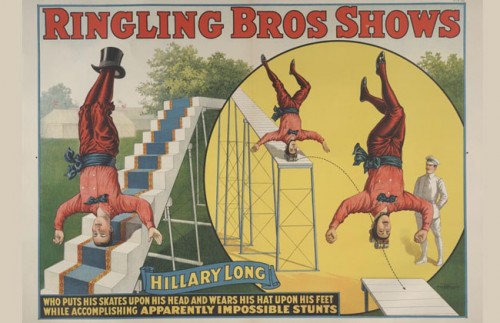
Hillary Long was not one of my relatives, but they were probably like him.
Uncle Johnny on trapeze was the biggest show off of them all, and the one the ladies loved best. He drank, smoked and slicked back his black hair while practicing and performing in tight cotton onesies. When I asked my dad if any of his aunts had grown a beard for the act, he laughed hard but never confirmed.
Grandpa Maurice (Dad’s dad) was the only sibling who wasn’t in show business. He chose, instead, to became an engineer and married Maude Alice Hartop (nicknamed “Jo” because she and her friends were so intense about the Little Women storyline). Jo’s mum died in childbirth. Her dad remarried and ran a popular musical instrument shop on a bustling street in London. I wonder if it was on Tin Pan Alley?
Jo grew into a Gibson Girl and became a bike riding telephone operator back when the switchboards covered the entire wall and phone calls were connected via thick cables. Jo, being a suffragette, thought her sons should carry forward her family names too, so my Dad became Trevor Garwood-Jones (named after her mother’s family name) and his brother became Maurice Hartop-Jones, named after her father’s family. She loved drawing and music and the poems of the prophet Kahlil Gibran, and she loved that I loved all this too.
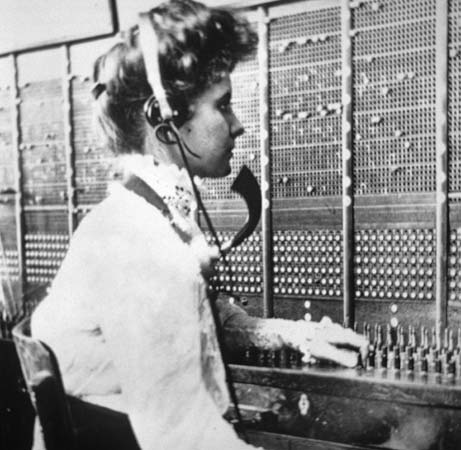
This is not grandma, but it was taken during the time when she too was a switchboard operator.
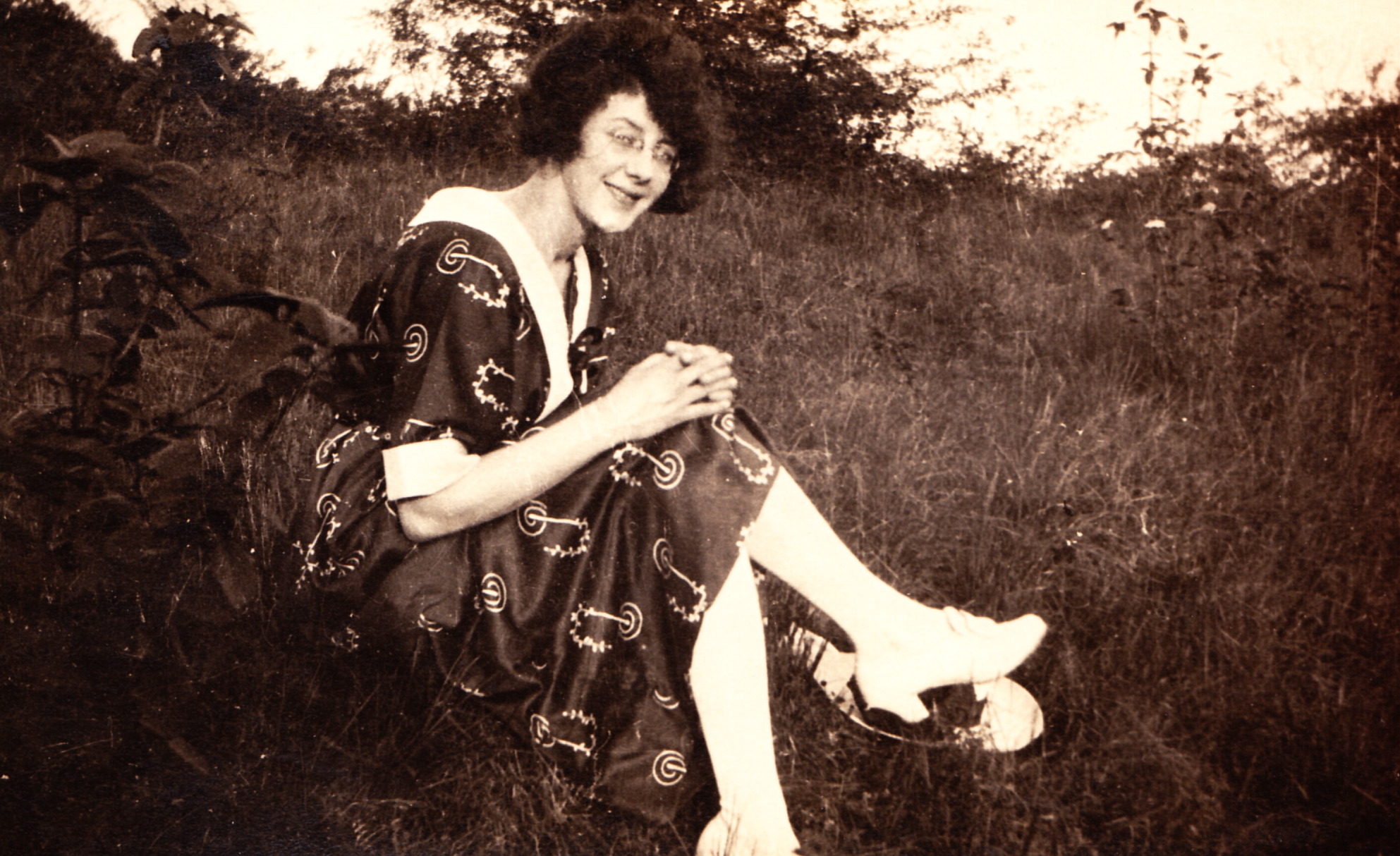
This is my grandmother, “Jo” in 1919.
December 3, 2013
Donald Lau is the most published author in the English language. He doesn’t tap out novels or write newspaper articles. Nor is he a blogger. He writes cookie fortunes. Amazingly, Lau’s record still stands even after a decade of writer’s block brought on by the pressures of political correctness. (PC has done no favours for any writers).
For whatever reason, Lau snapped to and is back to composing for the Wonton Food Company Inc. headquartered in Brooklyn, NY. Writing is something he does when he’s not being VP of accounts payable and receivable.
Some of Lau’s latest gems, as told to Mo Rocca :