Alison Garwood Jones

Is this how we think of ourselves?

February 23, 2010

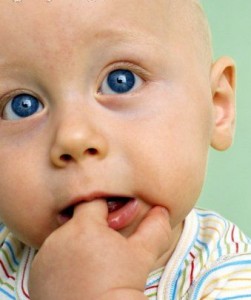
Coochie CooYou laugh, but there was a time when we used to stare at a bouncing newborn baby and the first thing that came to mind was: You’re a depraved sinner. Better luck to you in the next life.

For 1500 years this view of human nature dominated because The Church defined our consciousness. And who were we to argue? says author Jeremy Rifkin in his latest page-turning tome, The Empathic Civilization.

By the eighteenth century, the philosophers of the Enlightenment (the majority of them economists) proposed a new take on human nature for the Western world. Now when we looked at that baby, we thought: You’re a rational, detached and autonomous creature, a blank slate waiting to be filled. These same secular thinkers predicted that the first word to be inscribed on that slate would be “Land.” Why? Because eventually every baby would grow up and want some, along with a drawstring sac full of coins.

For much of the eighteenth century, then, capitalism defined our consciousness and was responsible for our view of human nature. And who were we to argue? continues Rifkin.

By the 19th century, post-Enlightenment thinkers, like Jeremy Bentham, were getting a little more touchy-feely. Picking up that same baby, Bentham cooed, You’re a materialist. Just watch,  you’re going to do everything in your power to avoid pain and maximize your pleasure. So when that baby cried, how he must have fumed before pushing the wretched creature off on a woman.

When the Austrian neurologist, Sigmund Freud, took over crib-side and inspected that baby through his round spectacles, he stroked his beard and took the pleasure principle one step further. Among other things, he proclaimed that breast feeding was an act driven not by hunger but the infant’s insatiable erotic desire to suck on its mother’s breast. In the twentieth century, the libido defined our consciousness and gave rise to a therapeutic approach to human nature that would have made a Medieval serf and a Victorian noblewoman scratch their heads. Mass advertising was quick to pick up on our sexiest take on human nature yet.

Today when we look at that newborn baby, do you want to know what we think about him (after we stop marveling over how tiny his fingers are)?

That, dear reader, I’ll share with you in my next post.

As Rifkin says, the work of evolutionary biologists combined with the effect of technology is challenging every single one of our old assumptions about human nature. It’s changing the way we relate to each other and, ultimately, the way we live out our lives.

Comment on this post »

I write, you write, we all write

February 17, 2010

“What does your son do?” asked a friend of François Zola.

“Nothing. He writes.” replied Zola, an engineer (mostly of bridges and dams) and father of the journalist and best-selling novelist, Emile Zola.

This conversation took place in the late nineteenth century, long before there were phones or the internet, so it was still possible for someone who wasn’t a regular newspaper reader to remain clueless that the younger Zola had hit it big with his pen.

But what strikes me about this quote (apart from the lack of paternal pride), and the reason I’m sharing it with you, is that I think it brings to light a pretty common misconception that’s having a huge affect on my life and anyone who’s chosen to write for a living. It’s the misconception that writing isn’t real work (i.e. it’s impractical compared to, say, bridge building) and anyone can do it (unlike, say, bridge building or calculus — even drawing). But we all write sentences. And texting is boosting our daily writing output even more.

Introduce this nonchalant attitude about writing to a tool like the internet (where FREE is still the business model of choice) and you can wave “bye, bye” to journalism as a viable career path.

Case in point: When a former editor at a internationally-acclaimed magazine got in touch with me in December to ask if I’d write health features for a new online publication she’s editing, this was her elevator pitch to me: “I’m hoping there is some way we might be able to work together. … The site is quite high volume in terms of the number of articles we’re publishing per month, [but]  the content isn’t as in-depth as perhaps some of the magazine pieces we’re used to, [but, still, there] are opportunities here. Each story [400-500] words should only take you an hour and we don’t require any quotes or interviews. They’re nice to have, of course, but not necessary.”

God help me if I’m assigned a subject I’m not well versed in, like heart disease, breast cancer or AIDS. What am I supposed to tell the reading public if research is discouraged in favour of a quick turnaround time? I can’t make this stuff up and I don’t want to rewrite aggregated content, which doesn’t offer anything new on the subject and can perpetuate previously published errors. My editor friend closed her email with, “We pay $25 per story [standard for the net, but I’d get $500 or more if it were for a print magazine] and I estimate that each one could be written in about an hour… so $25 per story can work out to $25/hour… not bad!”

No story done well (and accurately) takes an hour. An average story takes about three days of researching, interviewing and writing and I can’t live on $25 for three days of work, but someone in India or China can, so I suspect outsourcing will be her next move. A month later, I noticed this same editor posted on her own blog Harlan Ellison’s hilarious, now viral, YouTube rant about the indignity and ridiculousness of working for free. Clearly, the new rules of journalism are getting to her too.

But this post is not about Alison’s financial survival (I’m moonlighting, begging and borrowing to avoid stealing). I don’t expect you to care about my solvency. But you should care about journalism and the stuff you’re reading online. I hope, like me, you’re casting a critical eye on the evolution of our digital economy and culture, especially the direction group dynamics are taking us (remember: wikis aren’t fact checked). If the dissemination of accurate information is breaking down in favour of an endless, infinitely expanding RSS feed, then we need to be willing to correct ourselves when human nature starts taking us down the wrong path.

Just because we can do something doesn’t mean we should.

Comment on this post »

The Internet Age heralds a shift in human nature

February 12, 2010

Facebook (est. 2004 in a stinky Harvard dorm) took almost five years to attract its first 150 million users, but only eight months to double that number, says The Economist in a Special Report on Social Networking.

As a social platform initially designed to share tipsy pics and Saturday night plans, it’s becoming clear, and pretty fast, that Facebook has created a shift in human nature so significant it will require the funding of new university departments and specialized chairs to track and analayze its influence (I predict, before long, Social Media Studies will swallow campus Centres for Information Technology, which now sound so Web 1.0 — you know, so Felicity with her Palm Pilot and clam shell MacBook Pro).

The buzz that circled the world started around February 2009. That’s when Facebook and Twitter moved outside the world of twentysomethings and began seriously pecking at global business and communications. (at least, that’s the first time I noticed national newspapers in Canada, like The Globe & Mail, talking about this new Twitter thing. The rise of Twitter quickly fed back into the growth of Facebook as people started cross-linking their networks).

But changes in technology are not what’s significant here, says Cathy N. Davidson, a humanities professor at Duke University in Durham, N.C. What’s significant and “shocking,” she says, is our changed behavior. “The interactive process has replaced linear progress as the highest form of human endeavour.” As she explains it, “[What] the Internet Age teaches us [is] that we must be able to change, adapt and colloborate in situations where the end result is unpredictable.”

We’re not used to unpredictable end results, as history will attest. For at least five centuries we have equated scientific and technological progress with social change that’s continuous, consistent and irreversible, even predictable. The rich and the royal (think: the Medicis, the queens of England, France and Spain and countless popes in centuries past) fed and lodged artists and inventors, then hoarded their inventions (compasses, canons and square-rigged sails) and used them to expand and maintain their empires. (here I tip my hat to the research of Theodore Caplow)

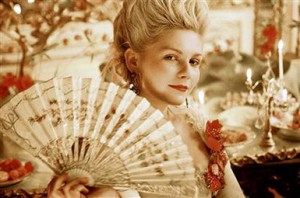
But the internet is toppling the monopolies of our modern day Medicis, not to mention changing the fortunes of the inventors by distributing their wares to more users. More importantly, our definition of power is being re-written right before our eyes. The sand castle-like collapse of print media in the last year, and the impotence of its longtime rulers (think: Rupert Murdoch) is a good example of how the Internet Age is forcing the elite to share their power with the people. We all own (and tell) the news now, and like the troops who raided Versailles Marieand strong-armed Marie Antoinette into the back of a carriage, who doesn’t love a freshly toppled monopoly and access to the halls of power? (Look, for example, at this nine year old blogger in the front row of Paris fashion week back in January. Similarly, last year Anna Wintour, Vogue’s Queen Bee, had to sit beside a 13-year old blogger. O. M. G.).

There’s been nothing like this overthrow in the history of mankind. Now anyone with a PC has a front row seat as it unfolds. I mean, think about it: the majority of those who lived through the most active phase of the Industrial Revolution were never aware of it.

Not us. We’re talking and linking about it like crazy.

Comment on this post »

Things are looking up

February 10, 2010

Push Send

Just when I thought smart phones were fast becoming the device of choice for philanderers, and sexting the most dominant literary form on these gadgets (“U look good naked,” etc., etc.), a new study shows that we’re using the email accounts on our phones and computers to spread more enlightening news.

An article by John Tierney in yesterday’s New York Times indicates that there’s hope for human nature, after all — not to mention long-form journalism which has been battered by quick ‘n quippy platforms, like Twitter and text messaging.

Tierney reports that from August 2008 to February 2009, researchers at the University of Pennsylvania followed the most popular articles e-mailed from the Grey Lady’s website and tracked the results every fifteen minutes; they even used computer algorithms to analyze the ratio of emotional words in the articles that generated the most traffic. It turns out, not only are we hooked on sharing stories with positive themes but we gravitate the most to long articles covering intellectually-challenging themes.

High on the list of stories that have gone viral: science articles on cosmology (that’s the branch of astronomy dealing with the evolution of the universe). Quirky also does well, like the story of the flock of free-range chickens found roaming the streets of Manhattan. But, to their delight, researchers kept finding that the most e-mailed articles had “a quality that went beyond surprise.” “An article about square watermelons is surprising,” Jonah Berger, the study’s lead researcher, told The Times. “But it doesn’t inspire that awed feeling that the world is a broad place and I’m so small,” he said. Berger and his team defined this quality as a feeling of “self-transcendence, a feeling of admiration and elevation in the face of something greater than the self.” It involves the opening and broadening of the mind.

Asked why we appear to be “spreading the awe” (my quotes) more enthusiastically than, say, passing on recipes or practical health or financial tips, which are also popular topics, Berger has a theory. “Emotion, in general, leads to transmission, and awe is quite a strong emotion,” he told The Times. “If I just read this story that changes the way I understand the world and myself, I want to talk to others about what it means. If [someone else] reads the article and feels the same emotion, [in the end] it will bring us closer together.”

So push “Send” and spread the awe, then bask in the closeness. I know I will.

Comment on this post »

Momento mori

February 9, 2010

Momento Mori

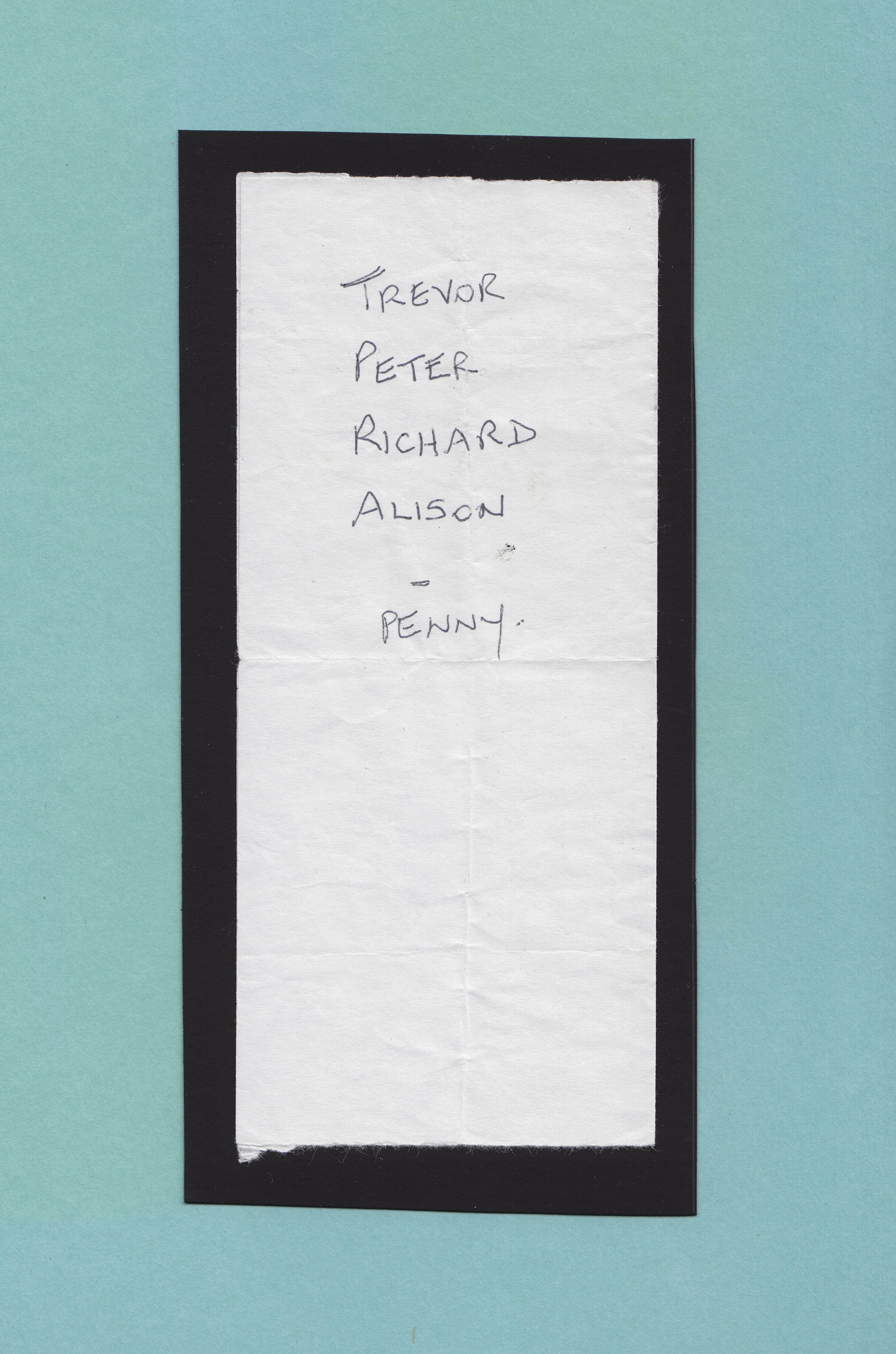
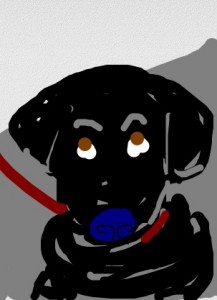
Alzheimer’s Tale: Several years ago, I found this folded piece of paper in the pocket of my mother’s favourite cardigan. This was just before my dad and I gave away her clothes to the Salvation Army and my last reminder that she didn’t want to forget us. ~ Penny is the family dog.

Comment on this post »

On the move

February 4, 2010

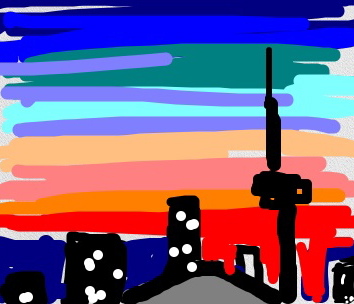
Toronto at dawn

You can never tell by looking at a person why they feel the need to run in the dark at 6:00 am, but pretending to know their story is like a parlour game to me. That guy was told by his doctor he has diabetes and exercise will lower his blood sugar. Her divorce just came through and she’s working through her disillusion. That gal’s obviously anorexic and will probably shut her office door at noon and do 100 sit-ups for lunch.

Walking is my cure for life’s hard knocks, for those times when human nature flashes its twisted or stubborn side at me. Moving helps thin out the sludge of doubt and occasional sadness streaming through my body. When I learned, for example, that it takes more energy to stand still than it does to move — a scientific fact that obviously whistled right over my bowl cut back in grade six — I had my explanation for why I feel more tired when I don’t haul ass than when I do.

Like most people, I suffer from questions (big life questions) that come in sickly waves on bad days and quirky pokes on good ones. There’s no order to these questions, no narrative arc or tidy focus, just a spray of tea leaves in need of a good translator. I attend to these questions on my walks. But when moving doesn’t generate any clarity, I still come back to my apartment ready to face the day with a genuine lightness of being that lasts until about 3:00 pm, by which time every endorphin in my body has been reabsorbed and putting a smile in my voice requires a Golden Globe-winning performance.

Here comes one of the morning regulars. He’s got his dog’s leash looped around his wrist and both hands shoved deep inside his pants pockets. As usual, his eyes are cast down and blinkered by his upturned lapels — not like a prepster, more like a twilight misanthrope. Sketches PennyAs we pass by oneanother on the sidewalk, his dog interrupts a sniffing session, as intense as an addict hoovering up a line of powder, and looks up. I smile my first smile of the day … at a Labrador. I’m pretty sure the exchange registers in his brain because when I look back, the dog turns and does the same before his owner gives the leash a sharp yank sending the pooch’s ears flying across his head.

The Running Room types are already on their fifth kilometer by the time they zoom past me. The mini water bottles ringing their waists are nearly drained at this point, like the half-fired cartridge belts worn by squadrons of Desert Storm troopers. I like to think I’m achieving the same health benefits in twice the time and a quarter of the equipment budget. The troopers, of course, have a corner office with a view waiting for them and overseas markets to check, so speed is crucial. By contrast, across the park, gathered under a large maple tree, a group of Asian senior citizens sway in unison to a Tai Chi routine. When they’re not doing Tai Chi, they’re doing laps around a gravel path circling the park. They’re just as committed as the storm troopers, but more Zen in their methods of keeping body and soul together.

Watching these seniors, I think I’ve pinpointed a cultural difference. In all my years of walking, I’ve rarely, if ever, noticed blue-haired old ladies from Rosedale marching up grassy hills towards the rising sun with as much focus as the Mrs. Lees of the world. The same goes for the sassy and opinionated black women I know, ladies in their seventies with tropical names like Hyacinth. The Baby Boomers, no doubt, will change this. But, for now, the Rosedale dowagers and the Hyacinths of the world are in their kitchens at this hour, plugging in the kettle or frying up dumplings for their snoring husbands.

In parks across Toronto, though, you can always cross paths with ancient, bow-legged Asian women wearing over-sized sun visors (even before the sun has peaked) and arch-dropping dollar store sneakers (“Made in China,” of course). I’ve watched the most intrepid of these ladies break free from the gravel paths in the park and scale the surrounding toboggan hills BACKWARDS in those cheap shoes. Maybe they’re widows, and when the leave the park they’ll go home to watch over their grandkids? Or, maybe they plan to walk down the street to the family store, where they’ll stack pears into perfect pyramids for the remainder of the day?

I read once that during Mao’s Cultural Revolution, China’s entire population would rise before dawn, turn on identical battery-operated transistor radios, and do group calisthenics to a distant M*A*S*H-like announcer calling out the commands, “Three more, two more …” Imagine a billion people simultaneously bending over to touch their toes or jumping up and hitting the ground at the same time. How that didn’t loosen tectonic plates and set off a tsunami across Japan and Indonesia, I don’t know. Maybe it did?

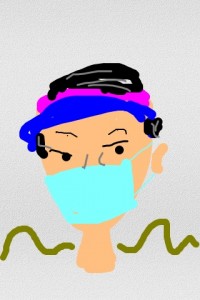
Back in Toronto, a few of the old women in the cheap running shoes are donning surgical masks. Are they still worried about SARS? Or have they shifted their fears to H1N1? Smog AlertMaybe their memories of all those belching smoke stacks in the Far East have them playing it safe. After all, trade winds have carried choking coal dust from Chongqing, China’s “Smog City,” with its 30 million masked inhabitants, all the way to North America in as little as two days.

I wonder what David Suzuki, Al Gore and Barack Obama must think of this as I tackle the hill myself. How impotent Obama must have felt when he walked (some say stormed) in uninvited into that closed-door meeting between China and India at the Copenhagen Conference on climate change last December. His charm was powerless to their carbon emissions. But what do you do when two rising superpowers feel entitled to their own industrial revolution?  After all, we had ours by burning every fossil fuel imaginable.

I suppose it was only a matter of time before our hope and Obama’s spectacular potential came face to face with the stubborn and entitled side of human nature.

I turn around and head home. I’ve got much smaller challenges waiting for me at my desk.

Comment on this post »

The long goodbye …

February 2, 2010

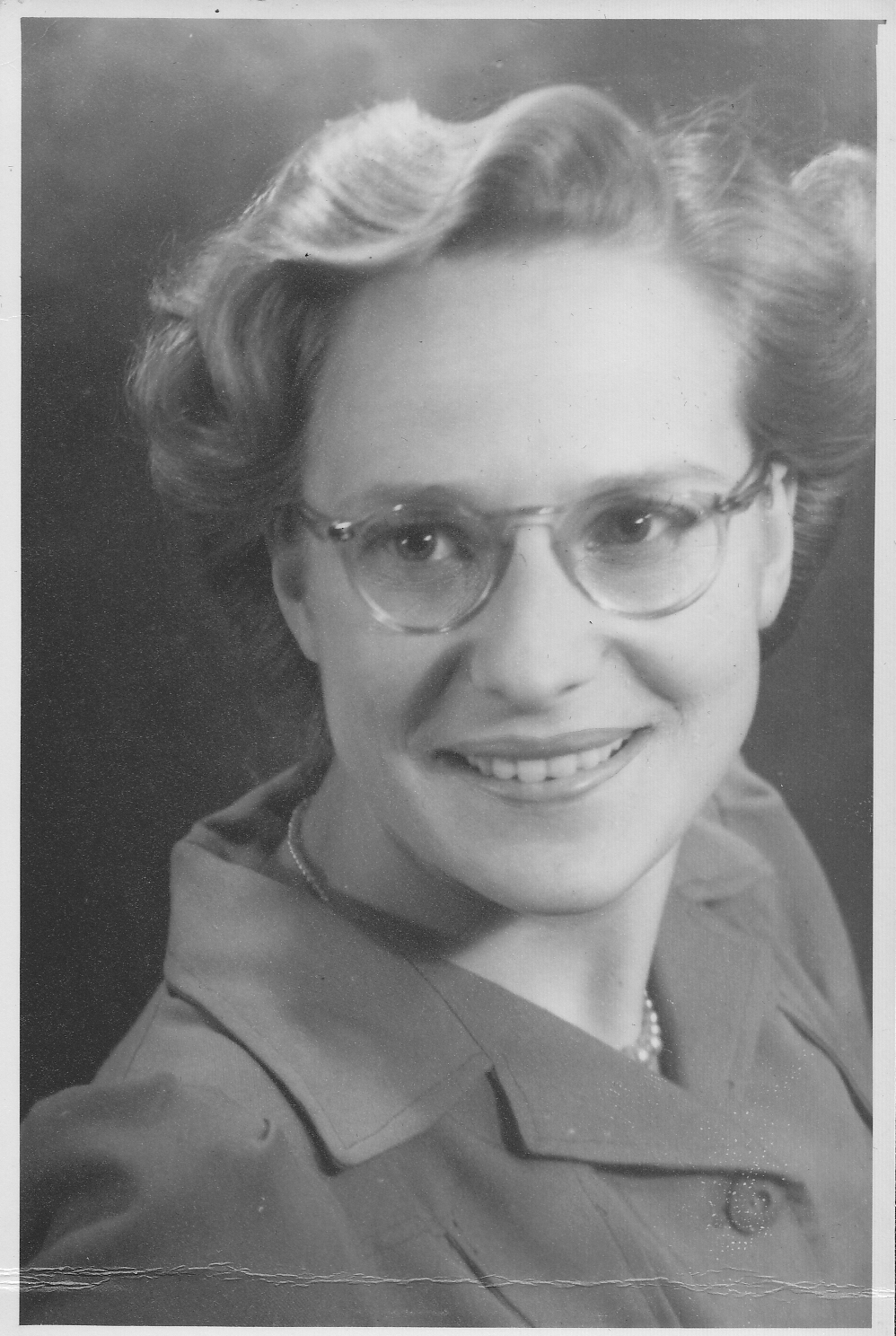
Catherine Garwood-Jones

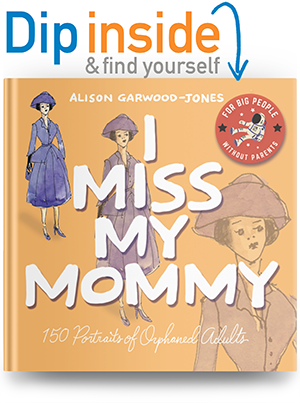
I got a lot of moving feedback the first time I wrote about my mother, Catherine, here in  The Long Goodbye, published four years ago on this blog. After she died in December 2012, I expanded on the story of our relationship and turned it into a magazine piece for Glow Magazine. You can read that version here. I dedicate my work to my brothers, Peter and Richard.

M


My mother knew her entire adult life what was coming. But confirmation arrived the day she shuffled into the kitchen, swung open a few cupboard doors, then turned to me and asked, “Where are the singing noodles?” From that day forward, I stopped leaning on mum and started extending a protective hand. Before long, pots began appearing in the oven, car keys in the fridge, and sticky notes with basic English words started multiplying across every surface of the house — all quirks of the onset of Alzheimer’s.

Nothing erases human nature like Alzheimer’s. The imprint of the disease is the same in everyone who gets it. They all disappear down the same path, exhibiting more or less the same set of behaviors. Most go from nervous fusspots crying “No, no, no” (the last word in their drained vocabulary) to silent bodies with gawping mouths and fixed stares. Mum’s mum gave her a preview of what was in store before she died of the disease thirty-five years ago. That’s why I prefer to think about what made my mother unique before age flicked a switch inside her body and unleashed this great leveler.

For someone born before the Crash of ’29 my mother had a remarkably liberal view of a woman’s place in the world. By the time I came along she was already in her early 40s and so excited to have a girl, after two boys, that she later told me she regularly whispered in my infant ears, “Ah, someone who’ll understand.” Right from the start, she knew we’d be confidantes and that we’d have each other’s backs until the end.

One thing that set my mother apart was that, once I was out of the house, she never ever tapped on her watch and asked, Where are my grandchildren? To me or my brothers. Her own struggles to conceive sensitized her to this loaded topic. But it was more than that. She had this rare ability to honour the life of the individual. That meant that other people’s unconventional choices never sent her into a tailspin. Not like some women in the neighbourhood.

In her day, of course, women attached themselves to men like the stateless to life boats, their fortunes rising and sinking with their rescuers. All too often, you married the man you wanted to be: aspiring novelists teamed up with practicing writers (becoming their first readers, typists, editors, and, sometimes, their ghost writers) while nurses said “I do” to doctors, and vowed to always pass the scalpel but never perform with it. Mum, on the other hand, believed in developing a person’s potential, not thwarting it. So when I grew up and decided that filling a blank page constituted a large chunk of my identity, she was right there with me. She didn’t go out of her way tutor me about love, and I think that was deliberate. At that point I had no interest in living an integrated life. What were guys to books? When we did talk men, she just smiled, looked me in the eye and said, “You”ll have to figure that one out on your own.” Confounding, but true.

All the while she kept feeding and watering my individuality, so that every time I came home to visit my parents at Christmas or Spring Break, there was a new book at the end of my bed touching on one of my many interests: painting, history, culture, biography. Those books have moved with me to every house I’ve lived in since university. There’s the doorstopper, Paintings in the Musée d’Orsay, the elegant Complete Guide to Chinese Brush Painting Techniques and Anne Morrow Lindbergh’s Gift from the Sea, an ode to the many forces that shape a woman’s life.

Mum expressed a lot of things before Alzheimer’s pulled her under. Because she knew she was about to lose everything the declarations just poured out. “I want you to be happy,” she said, still not serving up a prescription for how I should get there. “I love that guy,” she’d smile, pointing to my dad while he was pushing a grocery cart down the produce aisle or, more likely, watching the Golf Channel. She must have said “I love you” to him more times in her last year (of speech) than in the final two decades of their sixty plus year marriage. Most times, he was too busy staring at the TV, wincing at a missed putt, to hear.  But he knew, and we knew because she was telling the whole room, the entire store … no, the entire world. I’m glad I witnessed this as an adult. The romantic in me is forever believing in love’s power to cut through chaos, disappointment and change as it did with my parents. He had her back, and she his.

A few months before we handed mum over to the care of a team of nurses (she was beyond consulting on this), she called me and left a message on my answering machine. Something in me said, This is the last time she’s going to know how to pick up the phone and dial my number. That hunch proved true. I played her message over and over that week, then popped a blank tape in my ghetto blaster and pushed “record” so I’d have her voice with me forever.

It’s been seven years since she left that message and I haven’t listened to the tape since. I can’t. In that moment in time, she put aside her doubt and fear for herself and with a shaky, lilting voice let me know, “I miss you, Alison, and I just wanted to let you know I think about you every day and hope that everything’s going well in Toronto. I love you. Bye.” From the commotion, I could tell she missed placing the receiver in the carriage on the first try. That vulnerability makes my knees buckle every time I think about it.


Comment on this post »

Is the internet making you sick?

January 30, 2010

information overload

An article published earlier this month in the New Scientist is claiming that a high-information diet is bad for your health. “No one ever tells you how dangerous this stuff can be,” says the author, “they just go on pumping it out, hour after hour, day after day [and we’re all] consuming it without a clue about the possible consequences.” Whoever said that surfing the net is like drinking from a fire hose nailed this moment in time.

This is only my second blog post and I see no reason to avoid telling you that the internet is making me sick. It’s giving me the vapours — and I mean that in the Victorian sense of feeling overwhelmed and dizzy as opposed to the steamier definition laid out in the Urban Dictionary. I never remember feeling this tired during the heyday of newspapers and magazines, even with skyscrapers of unread magazines piling up around me (which I’m slowly replacing with apps).

But eye strain, headaches, rounded shoulders and feeling burnt out weren’t the focus of the New Scientist piece. That’s the article I wished they had published. Instead, the author talked about the dangers and releasing too much information too soon, and, specifically, how we rushed to publish the genome in 2005. By putting this information online, some people are worried that we’re making it easier to recreate pandemics, like the 1918 influenza that killed my Uncle Albert before his second birthday. These same people say that pacing the release of sensitive information will protect our health.

I like the idea of pacing and not because I’m afraid of bio-terrorism, but because I need structure. I need back a life that includes the internet (my life circa 2001), not one that IS the internet. I call that protecting my mental health.

I’m addicted to information. But my behavioral ticks, like constantly hitting the refresh button on my email, are probably your behavioral ticks too. I haven’t reached the point where I’m taking my iPhone into the washroom, I’m too busy in there reading back issues of Toronto Life. But now researchers are saying that the compulsion to check our inbox and read everything you can get your hands on is evolutionary. As the author in the New Scientist piece explains it, new information has always brought us evolutionary advantages; it led to inventions like the spiked club, the longbow, gun powder and the printing press, to name a few. Our flying fingers and darting eyes are just human nature’s way of trying to get an edge of the competition (and out-clubbing them)

Still, the printing press never cranked out sentences this fast. And that’s what makes this technological revolution different, and so much more tiring. Now more than ever, says Nick Bostrom, director of the Future of Humanity Institute at Oxford University, we need “to develop a more reflective and qualified view about the value of knowledge.”

I guess that starts one blog and one website at a time.

Comment on this post »

Fiction and human nature

January 29, 2010

Books, glorious books!

There’s a reason why Shakespeare feels completely fresh the further we move away from his time, and why the spine is cracked on almost every page of a book by Alice Munro and Philip Roth, at least in my collection. I don’t see that sort of wear and tear on the covers of my Erich Segals or John Grishams, but I still like to read them for the empty calories they dish up. I pass those books on or leave them on airplanes, but I hold on to Alice and Philip —perhaps a little too tightly.

Munro and Roth both grab me with their honest take on human nature. Their pointed descriptions of characters’ motivations and actions prickle my skin to the point where I’ve often wondered, did someone install video surveillance in my apartment, then e-mail the files to these authors? Is there a hanging folder with my name on it in their drawers?

Despite this imagined attention, I don’t treat these writers very well in return. I defile their pages with an elaborate system of marks, which might explain why I can’t count a book dealer amongst my circle of friends. In my defense: I spare first editions of the classics by not even hunting for them since I know I’ll devalue any book that ends up meaning something to me (that sounds slightly disturbing when I read it back to myself). Dots in the margins highlight the passages of magical thinking I wish I’d come up with. These dots range from a soft grey to a hard black pressed with such force it creates a dip or a pimple that goes on for several pages depending on which direction you move through the book. Pages with corners folded down indicate ideas I know I’ll refer to again: top corner down for insightful observations about human dynamics, bottom corner up for the sections that reflect my life and choices back at me with an uncanny accuracy. I don’t like other people looking at my copies of The Moons of Jupiter or The Dying Animal for this very reason.

My compulsion to get involved with what I’m reading makes Munro and Roth exhausting authors. Whoever said reading was a sedentary exercise must have been dozing with a book across their face by a less accomplished observer of human nature. With Munro and Roth, I often have to put their books down to deal with the rush of energy their ideas generate. Recognition makes me jump to my feet, walk into other rooms for no good reason, or run to the bathroom mirror to examine my face. At some point, I come back for more universal truths from the people in the fictional kitchens, studies and bedrooms they describe. I have a friend who says he regularly stops to do push-ups when he’s reading Roth. That’s probably why a lot of people take the easy route and read Grisham instead. He entertains, but he never rattles your teacups (or tones your biceps)

Of course, Shakespeare’s grasp on human nature is legendary, but I’m not even going to pretend to have mastered his wordplay when Munro and Roth are so straightforward. Kenneth Branaugh’s screen adaptations of the Bard’s stories were a huge help to me. They always inspired me to go back to the text, especially to the characters Emma Thomson articulated with such sparkling naturalism. But now that “Ken and Em” are over I guess I’ll only ever understand Much Ado About Nothing and Henry V. Their chemistry in these two flicks was spellbinding! By contrast, I find Stratford productions of Shakespeare too exaggerated and formal, the actors’ posture and voices are too ramrod straight. I don’t come away feeling like I understand people any better. I just feel tense.

“Society Pages” is my attempt to understand people better. Clearly I’m fascinated by insightful fiction, but I’m also drawn to the growing field of evolutionary psychology (in particular, Steven Pinker’s work on human nature) and TV shows, like Mad Men, that showcase our innate tendencies before legislation stepped in to correct them (or bury them).

I’m convinced that part of the reason we stampede to Mad Men is because the bottom-pinching sexism it depicts is alive and well today. Laws since 1960 may have evolved to include women, but in private (and in bars) human nature has this way of bypassing progress. That’s why when Betty Draper (January Jones) says, in between sharp exhales of her cigarette, “As far as I’m concerned, as long as men look at me that way, I’m earning my keep,” we still know exactly what she means. The same goes for the quip Roger Sterling (John Slattery) makes moments after hearing Sterling Cooper has lost the Dr. Scholl’s account. “With every closed door there’s an open dress,” he says through a scotch-fueled wince. Does his reaction feel any less true because it’s 2010 and not 1960?

Notions about women as objects still share the stage with more recently updated truths that acknowledge the full range of their strengths as individuals. Beauty is one of those strengths, but it also happens to be the one that gets most attention and abuse from both sexes. The laws that protect a woman’s humanity will always struggle to keep pace with our less enlightened assumptions about them. That’s because we’ll never totally get rid of those assumptions. The same goes for racism. Despite all we know about human potential and all the energy we’ve put into erasing discrimination, it exists because posturing and status seeking at the expense of others is, you guessed it, a persistent part of human nature. The inequities we’ve written into religion don’t help matters.

But, hey, there’s good news too! I believe just as strongly that human nature can be wildly generous, optimistic and empathetic. And I’ll be writing about that in this blog, and backing it up with more than just my own hunches but the latest research from the experts.

I know how I feel, and now I want to know how YOU feel. So post a comment and let’s see where these topics take us.

It’s gonna get interesting!

Comment on this post »

error: Content is protected !!